
Tailspot Blenny Care Guide: Tank Size, Diet, Compatibility and Reef Safety
The Tailspot Blenny is one of the most recommended fish for small saltwater and reef tanks, prized for its algae-grazing habits, low bioload, and constant personality at the glass. This guide covers exactly how big a tank it needs, what to feed it, whether it's truly reef safe, and which mistakes cause the most trouble for new keepers.
Identification and Size
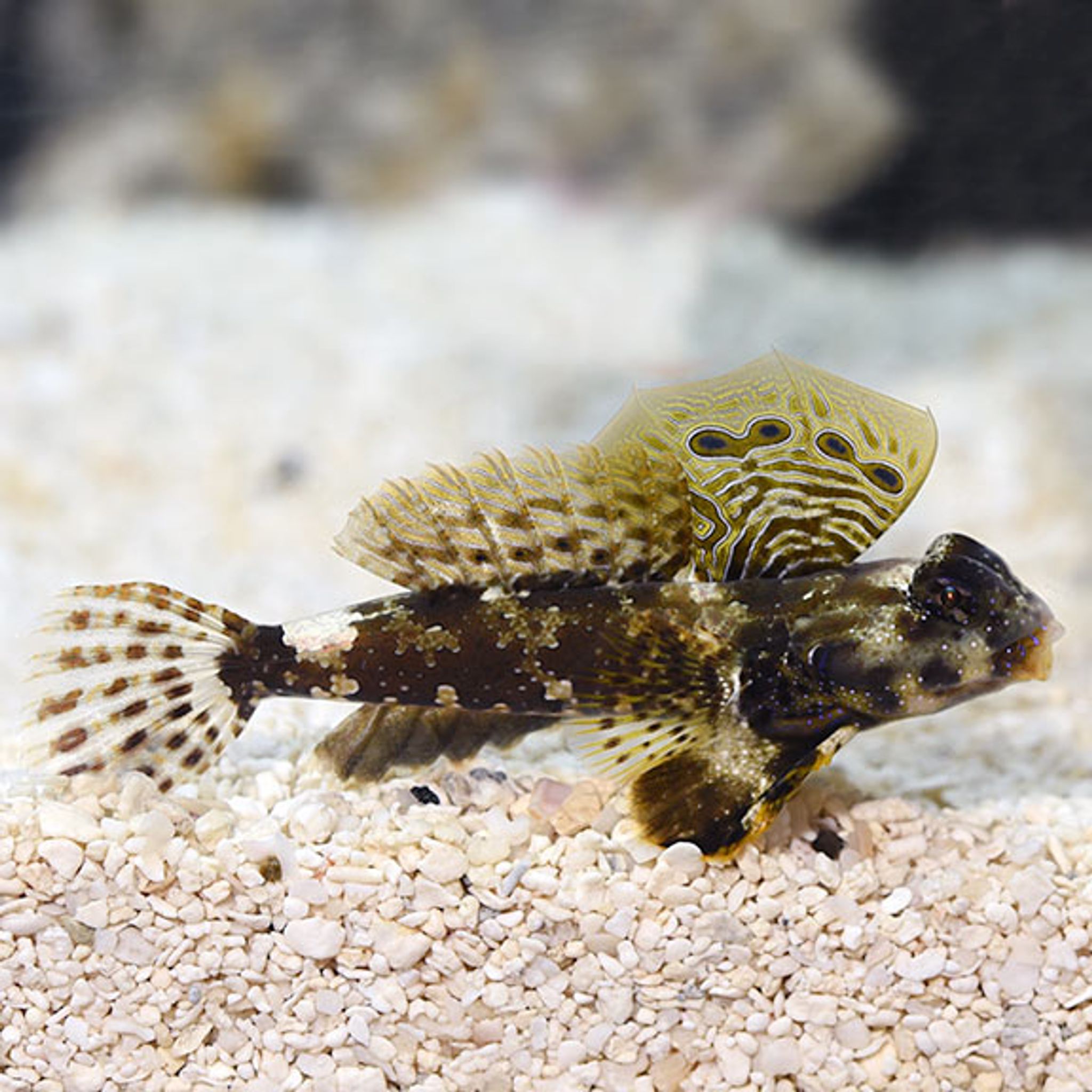
The Tailspot Blenny (Ecsenius stigmatura) is a small combtooth blenny with a mottled brown-to-tan body, large expressive eyes, and the blunt, "smiling" face typical of the group. Its defining feature is a distinct dark, ocellated (eye-like) spot at the base of the tail, on the caudal peduncle, which gives the species its common name.
- Max size: roughly 2–2.5 inches (5–6 cm), making it one of the smallest marine blennies commonly sold.
- Lifespan: typically 3–5 years in a well-maintained aquarium with a consistent diet — a range most care sheets skip but is worth planning around.
- Lookalikes: the bicolor blenny and other Ecsenius species are frequently mislabeled at fish stores. Check specifically for the tail-base spot before buying, since general body shape and coloring can look similar across species.
Minimum Tank Size
A single Tailspot Blenny can live comfortably in a 10-gallon (38 L) tank — treat this as the safe floor rather than a suggestion. Casual forum chatter sometimes claims 5-gallon pico tanks work, and technically a single small blenny can survive in one, but that little water leaves almost no margin for the temperature and chemistry swings that hit small volumes hardest. It isn't a setup to recommend to a beginner.
If you want to keep more than one blenny, or a Tailspot alongside a similarly shaped bottom-grazer, scale up:
| Stocking goal | Recommended tank size |
|---|---|
| One Tailspot Blenny | 10 gallons (38 L) minimum |
| Tailspot + goby (different niche) | 10–20 gallons (38–76 L) |
| Two Tailspots or two similar blennies | 40+ gallons (150+ L), heavily rock-dense |
Even at 40+ gallons, doubling up on blennies is not guaranteed to work — some keepers report success, others see constant chasing and stress regardless of tank size. One blenny per tank is the safe default. Only attempt two if you have ample rockwork with separate territories and are prepared to remove one fish if aggression appears.
Water Parameters
Tailspot Blennies are hardy but should still be kept to reef-standard water quality:
- Temperature: 72–78°F (22–26°C)
- pH: 8.0–8.4
- Specific gravity: 1.020–1.025
- Alkalinity: roughly 8–12 dKH
- Ammonia/nitrite: 0 ppm, always
- Nitrate: as low as practical, ideally under 10–20 ppm — the fish can tolerate more, but it shouldn't be pushed there deliberately
Critically, this fish needs an established, mature tank — several months old, with visible film algae and diatoms coating the rock and glass. Do not add a Tailspot Blenny to a freshly cycled, sterile-looking tank; it depends on that grazing surface from day one.
Cycling Before You Add a Blenny
The nitrogen cycle (ammonia to nitrite to nitrate) must fully complete before any fish goes in, even a hardy blenny. Cycling typically takes 4–6+ weeks, and test kit readings should show 0 ammonia and 0 nitrite before stocking. Algae-eating fish specifically need the tank aged even longer than that minimum, since enough film algae and diatoms must accumulate to sustain them from the moment they're introduced — a bare, freshly-cycled tank has zero biofilm no matter how good the water parameters read.
Diet and Feeding
Tailspot Blennies are omnivores that lean strongly herbivorous. In a healthy tank, they graze algae and biofilm off live rock and glass almost constantly during daylight hours. That natural grazing should be supplemented with:
- Nori or dried seaweed, clipped into the rockwork
- Herbivore or algae-based pellets
- Spirulina flakes or wafers
- Occasional frozen mysis or brine shrimp for protein
The single most common care mistake with this species is under-feeding. In an algae-poor or "too clean" tank — especially after a cleanup crew of snails and hermit crabs has stripped the rock bare — natural grazing simply isn't enough, and the fish will slowly starve. Signs include a sunken belly and gradual lethargy over weeks. If your rockwork looks spotless, start supplemental feeding daily rather than waiting for a problem to show.
Buying Tips: Spotting a Healthy Fish
Before purchasing, check the fish's body condition in the dealer tank:
- Full, rounded belly — a sunken or pinched profile is a starvation warning sign common in blennies held too long without algae
- Clear eyes, not cloudy
- Active grazing behavior visible in the tank, rather than constant hiding
- Unclamped fins held open normally
- Ask whether the fish has been quarantined, and quarantine it yourself even though it's a hardy species — new reefers often skip quarantine on tough fish "because it seems too tough to get sick," which is exactly the assumption that lets a parasite slip into a display tank.
Aquascaping and Behavior
Tailspot Blennies need plenty of live rock with caves, crevices, and perch points to feel secure. They like to wedge into small holes — an empty barnacle shell or a piece of PVC fitting glued into the rockwork is a popular DIY perch and hiding spot.
Expect a behavioral arc after introduction:
- First 1–2 weeks: shy and skittish, may hide often or dart at sudden movement
- After settling in: bold, active, and inquisitive — often perching on rock or coral to survey its territory and "checking in" on the aquarist at the glass
- Locomotion: hops from perch to perch rather than swimming freely in open water
Give it dim lighting and minimal disturbance for the first few days after a standard drip acclimation to reduce stress-driven hiding or refusal to eat.
Secure the lid. Blennies are notorious jumpers, particularly when stressed or during territorial disputes, and an open top is a common way to lose one overnight.
Reef Safety
The overwhelming consensus is that the Tailspot Blenny is reef safe. It does not eat coral polyps, mobile invertebrates, or clams as a rule, and most keepers report zero coral interaction over the life of the fish.
The honest caveat: a minority of hobbyist reports describe individual fish nipping or irritating soft corals — star polyps, torch or frogspawn-type LPS, and zoanthids come up most often — usually while grazing on nearby rock. This is uncommon, not typical behavior for the species, and best understood as an individual-fish or feeding issue rather than a species trait. A well-fed blenny in a mature tank has little reason to sample coral tissue. "Reef safe" doesn't mean zero risk, though — watch any new fish's behavior around prized corals for the first few weeks regardless of its reputation. You can browse reef-friendly options, including soft corals, on FishyHub to plan stocking alongside your blenny.
Compatibility
Tailspot Blennies are peaceful toward unrelated species and generally get along with:
- Clownfish, cardinalfish, small wrasses, dartfish
- Gobies, which occupy a different niche entirely
- Shrimp, snails, hermit crabs
- Most corals and anemones
They can be territorial or outright aggressive toward other blennies or similarly shaped, similarly colored bottom-grazers sharing the same small footprint. Avoid pairing with large predatory or aggressive fish — lionfish, groupers, triggers, large angels — that might see a 2-inch blenny as prey or simply bully it. Also avoid overcrowding the bottom of the tank with multiple grazers competing for the same algae and hiding spots. If you're shopping for a Tailspot or considering related species, the full Blennies category is worth browsing for comparison.
Nano Tank: Blenny or Goby?
A common beginner debate, and the answer is: not mutually exclusive. Blennies like the Tailspot are rock-perching algae grazers that add personality and pest-algae control. Gobies are substrate sifters or hoverers, often paired with a pistol shrimp, and don't graze algae at all. Because they occupy different zones — rock versus sand — many nano tanks successfully house one of each without conflict.
Similar Species: Starry Blenny
The Starry Blenny is a close comparison point for anyone considering a Tailspot:
| Trait | Tailspot Blenny | Starry Blenny |
|---|---|---|
| Size | 2–2.5 in (5–6 cm) | Similar, slightly larger |
| Pattern | Brown/tan with tail-base ocellated spot | Brown/gray with white "starry" spots |
| Diet | Herbivore-leaning grazer | Herbivore-leaning grazer |
| Tank maturity needed | Yes, must have established algae | Yes, must have established algae |
| Temperament | Peaceful except toward other blennies | Peaceful except toward other blennies |
Both species can starve in an ultra-clean system and both need the same mature-tank setup described above, so the choice mostly comes down to color preference.
Saltwater Nano Tank Basics
In small volumes (10–20 gallons), water parameters swing faster than in larger systems, so weekly small water changes of 10–15% and consistent testing matter more than they would in a big display. Stock lightly — one to two small fish plus a modest coral load — and lean on mechanical and chemical filtration, such as a media reactor or a protein skimmer sized for the tank, to help stability. The Tailspot Blenny is frequently cited as an ideal first nano fish precisely because of its small bioload and algae-control benefit, and it's often listed alongside clownfish, firefish, and royal gramma as a top pick for color and personality per gallon, thanks to its constant head-tilting curiosity even though its coloring is modest compared to showpiece reef fish.
Breeding
Tailspot Blennies occasionally spawn in home aquaria. They're cavity/egg-layers: the male guards the eggs in a hole until they hatch. Sexing is difficult, relying on subtle differences in genital papilla shape and size, and the species isn't commonly bred commercially — most stock available is wild-caught or tank-raised by a small number of specialist breeders. If you want to attempt it, undisturbed cave space and a stable, mature tank matter more than any special technique.
Frequently Asked Questions
Is the Tailspot Blenny reef safe?
Yes, as a general rule. It doesn't eat coral polyps, mobile invertebrates, or clams. Rare individual fish may nip at soft corals if underfed, so keeping it well fed in a mature tank minimizes that risk.
What is the minimum tank size for a Tailspot Blenny?
Ten gallons (38 L) for a single fish. If you want to keep more than one, or pair it with another bottom-grazer, go up to 20–40+ gallons with dense rockwork.
What do Tailspot Blennies eat?
They graze algae and biofilm off rock and glass throughout the day, supplemented with nori, herbivore or algae pellets, spirulina flakes or wafers, and occasional frozen mysis or brine shrimp for protein.
Can I keep two Tailspot Blennies together?
It's risky in small tanks due to territorial aggression toward their own kind. It's sometimes possible in larger, rock-dense tanks (40+ gallons), but success isn't guaranteed even there.
Will a Tailspot Blenny fight with my goby?
Generally no. Blennies perch on rock while gobies work the sand or hover near burrows, so the two rarely compete for the same space.
Why is my Tailspot Blenny hiding and not eating?
It's usually one of two things: new-tank stress, which typically resolves within 1–2 weeks, or an algae-poor tank that needs supplemental feeding started right away.
How long do Tailspot Blennies live?
Typically 3–5 years in a well-maintained aquarium with proper diet and stable water parameters.
Are Tailspot Blennies hard to breed at home?
Breeding is uncommon but documented. The main obstacles are reliably sexing the fish and providing an undisturbed cave for the male to guard eggs.
Ready to stock your nano reef? Browse available Tailspot Blennies and other algae-grazing fish in FishyHub's Marine Fish category.


