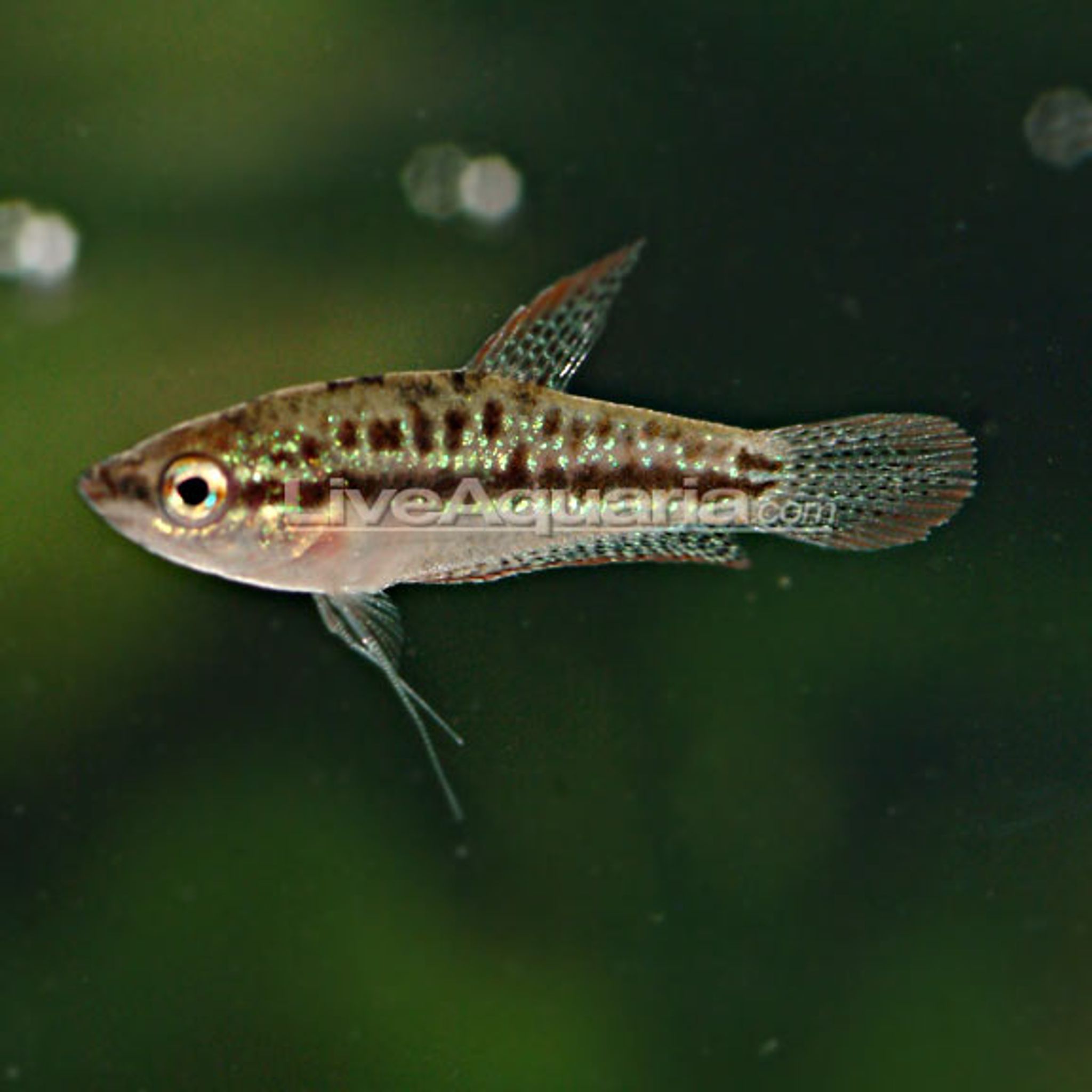

Sparkling Gourami Care Guide: Tank Size, Diet, Water Parameters and Temperament
The sparkling gourami (Trichopsis pumila) is a pea-sized labyrinth fish that gulps air at the surface and makes an audible croaking sound when it spars or courts. This guide covers exact tank size, temperature, pH, diet and tank mate answers so you can set up a calm, densely planted home where this species can show its full color and behavior.
Species Snapshot
Sparkling gouramis, also called pygmy gouramis, come from slow, heavily vegetated ditches, rice paddies and swamps across the Mekong basin — Thailand, Cambodia, Laos and Vietnam. As a labyrinth fish, they have an accessory breathing organ and must reach the surface regularly for air, which shapes almost every part of their care.
| Trait | Detail |
|---|---|
| Scientific name | Trichopsis pumila |
| Adult size | 1–1.5 in (2.5–3.8 cm), rarely to 1.6 in (4 cm) |
| Lifespan | 3–5 years, sometimes longer |
| Temperature | 75–80°F sweet spot (24–27°C); tolerates 72–82°F (22–28°C) |
| pH | 6.0–7.0 ideal; tolerates 5.5–7.5 |
| Hardness | 2–15 dGH (about 35–270 ppm) |
| Minimum tank | 5 gal (19 L) for one fish |
| Temperament | Peaceful toward other species; males spar with each other |
Body color runs brown to olive with iridescent blue-green spangles, red-edged fins and vivid blue eyes. Coloring shows best over dark substrate with moderate, not bright, lighting — a bare or overlit tank tends to wash the pattern out and make the fish skittish.
Tank Size and Setup
Because sources disagree sharply on minimum tank size, here's a practical breakdown by group size and footprint:
| Group | Minimum tank | Notes |
|---|---|---|
| 1 fish | 5 gal (19 L) | Floor size for a single sparkling gourami |
| Pair or trio | 10 gal (38 L) | 1 male + 2 females is a solid ratio |
| Multiple males | 15–20+ gal (57–76+ L) | Long, low footprint so each male can claim a territory |
Claims that call for 10 gallons per individual fish are excessive for a fish under 1.5 inches — the numbers above reflect realistic stocking for the species' size and behavior, not a scaled-up formula borrowed from larger gouramis.
A tight-fitting lid is mandatory. Sparkling gouramis jump, and the air pocket just above the waterline needs to stay warm and humid so the labyrinth organ works properly. Leave a small gap under the lid rather than sealing it airtight, so the fish can still access fresh air.
Scape and Flow
- Planting: Go dense. Stem plants, crypts and Vallisneria give cover and grazing surfaces for the microfauna these fish pick at between meals.
- Floating cover: Red root floaters, frogbit or salvinia dim the light and make the fish feel secure, while leaving open patches for gulping air.
- Hardscape: Driftwood, caves and leaf litter add hiding spots and break sightlines between rival males.
- Flow: Keep it minimal. A sponge filter or a baffled hang-on-back or canister filter works well. Strong current stresses the fish and interrupts bubble-nest building — if fish are hiding low, clamped-finned, or struggling to hold position at the surface, the flow is too strong. Diffuse output with a spray bar angled at the glass, a sponge prefilter, or extra baffling.
Water Parameters
| Parameter | Ideal range | Tolerated range |
|---|---|---|
| Temperature | 76–80°F (24–27°C) | 72–82°F (22–28°C) |
| Spawning temperature | 80–84°F (27–29°C) | — |
| pH | 6.0–7.0 | 5.5–7.5 |
| General hardness | 2–15 dGH (~35–270 ppm) | — |
| Ammonia / nitrite | 0 ppm | 0 ppm |
| Nitrate | Under 20 ppm | — |
Softer, slightly acidic water brightens color and can trigger spawning, but captive-bred sparklings adapt well to neutral tap water once acclimated — you don't need to chase extreme numbers for a display tank. If your tap water tests hard or alkaline, target the middle of the tolerated range rather than forcing it down to wild-caught levels.
Only add fish to a fully cycled tank, change 20–30% of the water weekly, and use test strips or a liquid kit to confirm ammonia and nitrite stay at zero and nitrate stays under 20 ppm.
Diet
Sparkling gouramis are micropredators, not general omnivores — plant matter is optional at best, and the bulk of the diet should be animal protein. Their mouths are tiny, so oversized pellets will be ignored or cause weight loss over time.
- Staple: Small, protein-rich flakes, crumbles or micro pellets, crushed if the pieces are too large.
- Regular additions: Live or frozen baby brine shrimp, daphnia, cyclops and chopped bloodworms, offered several times a week.
- Supplemental grazing: Live plants and leaf litter culture microfauna that the fish pick at between feedings — a useful bonus in a heavily planted or blackwater-style tank.
- Feeding schedule: Small amounts once or twice a day is enough; these are grazers, not gorgers.
In a mixed tank, faster or bolder feeders can out-compete sparklings at the surface and leave them thin. Target-feed with a pipette near cover, or choose calmer tank mates from the start.
Temperament, Sexing and Sound
Sparkling gouramis are peaceful toward other species but can be shy in a bare tank. Among themselves, males hold loose territories and spar by flaring fins and croaking — this rarely causes real damage as long as there's enough cover and space to retreat. A single male with two or more females works well in smaller tanks; a group of 5–6 with more females than males suits a larger, well-planted setup. They aren't true schooling fish, so there's no need to force a large group — pick a ratio that favors females and gives everyone a place to hide.
Sexing is genuinely difficult. Males run slightly larger and more colorful, with longer, more pointed dorsal and anal fins. A more reliable trick is backlighting a fish with a flashlight: females show a visible yellowish, triangular ovary behind the belly that males lack.
The croaking sound is the species' signature trait. Both sexes make a soft croak or purr using specialized tendons on their pectoral fins — not the pelvic fins, as some sources claim. In a quiet room you can often hear it during courtship displays or territorial disputes between males.
Tank Mates
Good companions are small, calm species that won't outcompete sparklings for food or nip at their fins:
- Chili rasboras or harlequin rasboras
- Ember or neon tetras
- Pygmy or other small corydoras
- Kuhli loaches
- Otocinclus
- Nerite snails
- Adult Amano or ghost shrimp
Avoid tiger barbs and other fin nippers, large or boisterous gourami species, cichlids, and bettas. On shrimp specifically: adult dwarf shrimp are generally safe, but sparklings will happily eat shrimplets, so don't expect a shrimp colony to hold steady numbers in the same tank. You can browse compatible options in FishyHub's small community fishes and shrimp selections when planning a stocking list.
A Note on Bettas
Sparkling gouramis and bettas are both labyrinth fish with the same bubble-nest breeding behavior, but they should not share a tank. Aggression risk and competition for the same surface territory make this pairing a poor choice, regardless of tank size.
Breeding Basics
The male builds a small bubble nest, often tucked under a floating leaf. During spawning, the pair embraces beneath the nest and releases small batches of eggs — dozens in total rather than hundreds. Eggs hatch in about 24–48 hours, and fry become free-swimming a few days after that.
The male guards the nest and fry. Remove the female once spawning finishes, then remove the male once the fry are swimming freely, since males can eat their own young at that stage. Keep the air above the water warm and humid throughout — fry need roughly three weeks to fully develop their labyrinth organ, and a cold, dry air gap can stunt that development.
Fry feeding sequence:
- Infusoria or vinegar eels for the first days
- Microworms as they grow
- Baby brine shrimp once large enough to take it
Related Small Gouramis
If sparkling gouramis have you interested in the wider labyrinth-fish family, a few relatives are worth knowing about before you buy on looks alone:
- Croaking gourami (Trichopsis vittata): A close cousin and noticeably larger at around 2.5 inches, with similar sound-making behavior but different space needs.
- Samurai and licorice gouramis (Sphaerichthys and Parosphromenus species): These need blackwater conditions around pH 4–6, dim light, very soft water and mostly live foods, making them considerably harder to keep than sparklings. Samurai gouramis are mouthbrooders rather than bubble-nest builders, which is a completely different breeding strategy.
Optional Blackwater/Leaf-Litter Setup
A leaf-litter layer of catappa leaves, alder cones and a peat component lowers pH, adds tannins and provides extra cover. Sparkling gouramis don't require this, but they benefit from it, and the leaf litter cultures the same microfauna that supplements their diet. This setup also happens to be a stepping stone toward keeping the more demanding blackwater gouramis mentioned above.
Common Mistakes and Troubleshooting
| Mistake | Result | Fix |
|---|---|---|
| No lid | Jumping fish, cold air exposure | Fit a snug lid with a small air gap |
| Strong HOB current | Hiding, washed-out color | Baffle output or switch to a sponge filter |
| Bare, bright tank | Pale, skittish, off-feed fish | Add dense planting and floating cover |
| Fast tank mates | Sparklings starve at feeding time | Target-feed or choose calmer species |
| Several males in 5–10 gal | Chronic stress from territory disputes | Add plants/sightline breaks or move extras to a bigger tank |
| Only large pellets offered | Weight loss over time | Size down food and add frozen options |
| Temperature swings | Ich outbreaks | Use a reliable heater and quarantine new stock |
Rapid Breathing and Illness
Occasional trips to the surface for air are completely normal for this species — that's the labyrinth organ at work. Constant gasping, however, points to a problem: check ammonia and nitrite first, then confirm temperature is stable and consider low dissolved oxygen from overcrowding or poor flow.
Fin rot is usually secondary to poor water quality or fin nipping by tank mates rather than a standalone infection. Address the water first with a 25–50% change, then treat with an antibacterial such as erythromycin, or a low dose of aquarium salt, if symptoms persist.
Wasting disease (mycobacteriosis) shows up as progressive thinness despite normal feeding, skin lesions and a bent spine. It's incurable and can only be confirmed by necropsy, and it's zoonotic, so wear gloves if you have open cuts while handling an affected tank. Quarantine new or symptomatic fish for 4–6 weeks, and rule out internal parasites first, since those are treatable with a dewormer and can mimic similar symptoms.
Wild-caught imports tend to carry more parasites than captive-bred stock, so consider a preventive deworming step during quarantine for wild-caught sparklings specifically.
If a fish's condition is clearly terminal and suffering is ongoing, humane euthanasia uses clove oil in two stages: a sedating dose first, followed by a much higher overdose. Never euthanize a fish by flushing it live or freezing it.
Frequently Asked Questions
Do sparkling gouramis really make noise?
Yes. Both males and females produce a soft croaking or purring sound using specialized tendons on their pectoral fins, most noticeable during courtship or territorial disputes in a quiet room.
Can one live alone in a 5-gallon tank?
Yes, a single sparkling gourami does fine in 5 gallons (19 L) with dense planting and a secure lid. A trio in 10 gallons (38 L) will show off more natural behavior, including sparring and courtship.
How many can I keep in a 10-gallon tank?
Three works well — ideally one male and two females. This ratio reduces aggression between males while still letting you see territorial and courtship behavior.
Can sparkling gouramis live with shrimp?
Adult dwarf shrimp are generally safe alongside sparkling gouramis. Shrimplets, however, are small enough to be eaten, so don't count on a shrimp colony maintaining stable numbers in the same tank.
Can they live with a betta?
Generally no. Both are labyrinth fish competing for the same surface territory, and the aggression risk isn't worth it even though tank requirements overlap.
Why is my sparkling gourami hiding or pale?
The most common causes are a fish that's still settling in after being new to the tank, too little plant cover, flow that's too strong, or bullying from faster or more aggressive tank mates. Address cover and flow first, then reassess tank mates if the behavior continues.
How do I tell males from females?
Look at fin shape and color first — males have longer, more pointed dorsal and anal fins and richer coloring. If that's inconclusive, backlight the fish with a flashlight to check for the female's visible yellowish, triangular ovary behind the belly.
Are sparkling gouramis good for beginners?
Yes, provided the tank is fully cycled before fish go in and they're offered small, meaty foods rather than large pellets. Their main requirements — a lid, gentle flow and calm tank mates — are easy to meet with basic planning.
Ready to start a nano planted tank built around this species? Browse current stock in FishyHub's gourami category to find sparkling gouramis and their relatives.


