Pufferfish Statistics: Popular Species, Prices & Search Trends
Pufferfish are one of the most searched fish on FishyHub: "puffer" is a very high-volume search term and "pea puffer" a high-volume one. On the US marketplace, freshwater puffers sit in the mid-range price tier in USD terms with a very wide spread between species, while marine puffers sit a step higher in the upper mid-range. Both groups have moderate listing supply and rising momentum, so search interest currently runs well ahead of the selection on offer.
Key Findings
- FishyHub search data shows "puffer" is among the highest-volume search terms on the marketplace, and "pea puffer" is a high-volume search.
- FishyHub marketplace data shows freshwater puffers sit in the mid-range price tier in the US, with a very wide price spread between species.
- FishyHub data shows marine puffers sit in the upper mid-range price tier in the US, above freshwater puffers, with a moderate price spread.
- On FishyHub, both freshwater and marine puffers have moderate listing supply in the US, a narrower selection than the very high search interest would suggest.
- FishyHub data shows new puffer listings rising for both freshwater and marine puffers on the US marketplace.
- FishyHub data shows snails, the staple puffer food, have high supply and sit in the entry-level price tier in the US.
Why Puffers Draw So Much Search Interest
Puffers have personality that few aquarium fish can match. They watch their owners, beg at the glass, and hunt snails with obvious intent. Their eyes move independently, their faces look almost cartoonish, and the ability to inflate makes them widely known outside the hobby. That curiosity shows in search: shoppers type "puffer" far more often than they search for many fish that sell in greater numbers.
Interest also comes from the pea puffer, a tiny freshwater species that fits a small planted tank. It made puffer keeping possible for hobbyists without room for a large aquarium, and it has its own strong search presence on FishyHub.
Popular Puffer Species in the US
FishyHub groups puffers into two categories, freshwater and marine, rather than tracking each species. The species below are the ones US hobbyists most commonly keep, grouped by type and listed alphabetically; they are hobby context, not FishyHub rankings.
Freshwater and dwarf puffers
- Amazon (South American) puffer - a peaceful, schooling species, unusual among puffers.
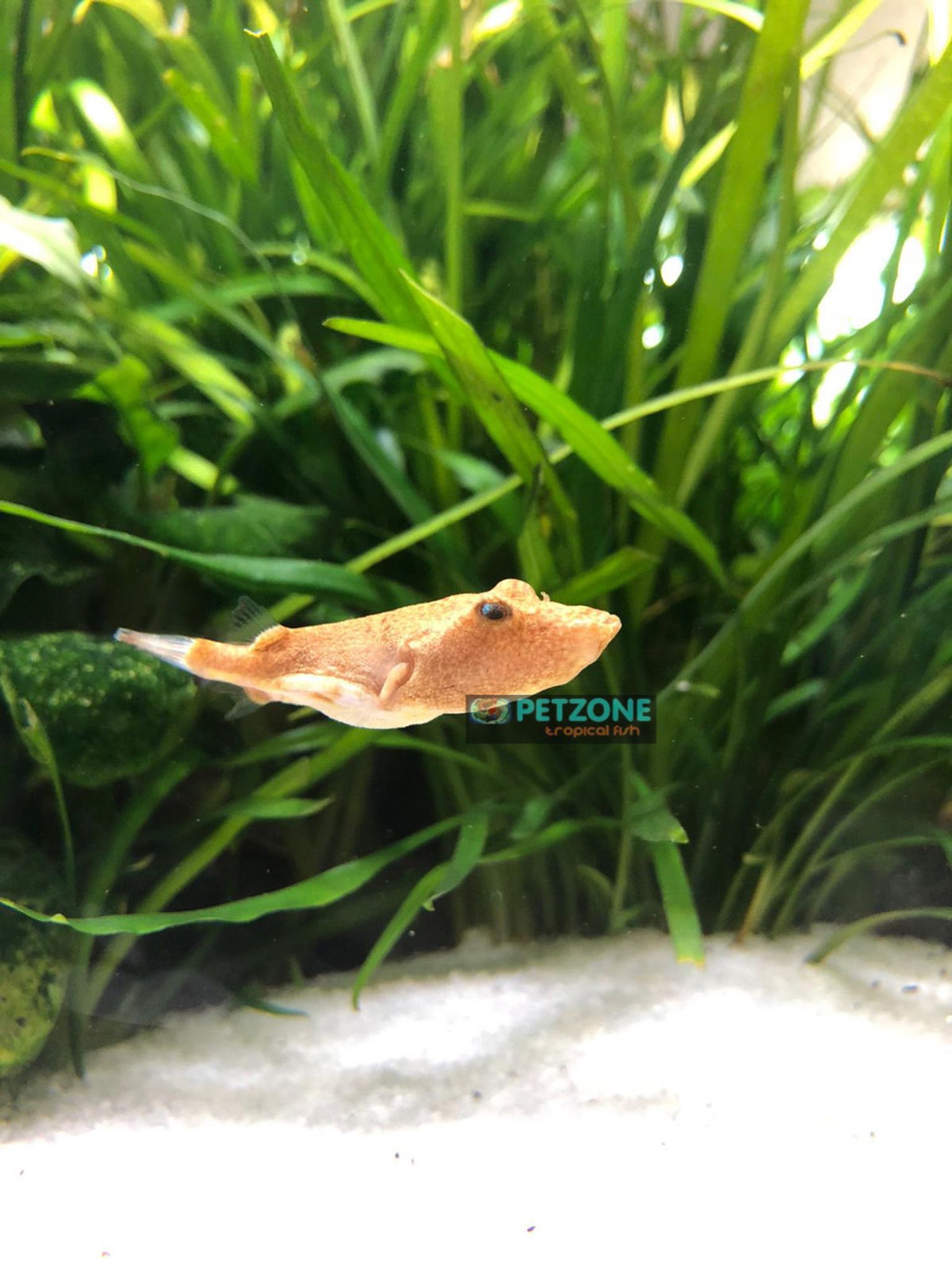
- Dwarf (pea) puffer - small, bold and suited to a heavily planted nano tank.
- Red-eye puffer - a small Southeast Asian species with striking eyes and strong territorial instincts.
Brackish puffers
- Green spotted puffer - sold as a freshwater fish when young, but needs brackish and then near-marine water as it grows.
Large freshwater puffers
- Fahaka puffer - a large, aggressive African species for a dedicated tank.
- Mbu puffer - the giant of freshwater puffers, needing a very large aquarium; a true specialist fish.
Marine puffers
- Dogface puffer, porcupine puffer and stars-and-stripes puffer - larger fish for fish-only marine systems.
- Saddled (valentini) toby - a smaller marine puffer, sometimes kept in larger reef-adjacent setups with care.
Puffer Prices in the US
| Group | Price tier | Price spread | Listing supply |
|---|---|---|---|
| Freshwater puffers | Mid-range | Very wide | Moderate |
| Marine puffers | Upper mid-range | Moderate | Moderate |
Why freshwater puffer prices vary so widely
The freshwater puffer category covers fish with very different supply chains. Pea puffers and green spotted puffers are imported in quantity and stay at the lower end. Fahaka and Mbu puffers are imported less often, grow large and need dedicated systems, so they sit at the top of the range. Rare wild species from Southeast Asia and South America add to the spread. That is why FishyHub sees a very wide spread inside a group whose overall tier is mid-range.
Why marine puffers cost more
Marine puffers are wild-caught, travel further, and need careful acclimation. Most are larger fish, so they ship individually and need bigger bags and boxes. The moderate spread reflects a more uniform set of species than the freshwater group.
Supply and Search: A Gap Worth Noting
The clearest pattern in FishyHub's puffer data is the gap between curiosity and selection. Puffer search interest is very high, but listing supply is moderate for both freshwater and marine puffers in the US. For buyers, this means:
- Popular species, especially pea puffers, may not always be listed, so it helps to check back as new listings arrive.
- New listings are rising, so the selection is improving.
- Buyers should expect fewer sellers to compare than for community fish like tetras, which have very high supply.
The Hidden Cost: Feeding a Puffer
Puffers have beaks that grow continuously, and they need hard-shelled food such as snails to keep them worn down. Many keepers breed their own snails or buy them in batches. On FishyHub's US marketplace, snails have high supply and sit in the entry-level tier, and "snail" is one of the most searched terms on the marketplace. For a puffer keeper, a steady snail supply is a running cost to plan for alongside the fish itself.
Keeping Puffers in a US Home
Most freshwater puffers are tropical and need a heater in American homes, particularly through northern winters. Puffers are also messy eaters, so strong filtration and frequent water changes matter. Green spotted and other brackish puffers need marine salt and a hydrometer or refractometer as they mature.
When buying online, puffers ship by overnight courier in insulated boxes like other tropical fish. Large species and marine puffers are bagged individually. Buyers in the Alaska, Hawaii & territories zone can expect longer transit and higher shipping costs than buyers in the Midwest & Central, East Coast & Northeast, South & Southeast and West Coast & Mountain West zones. This is general hobby context, not FishyHub shipping data.
Puffer Trends for 2026
- Interest stays high: "puffer" and "pea puffer" remain strong searches on FishyHub.
- Supply is catching up: freshwater and marine puffer listings are both rising on the US marketplace.
- Nano puffers suit the move toward smaller planted tanks, which helps explain the pea puffer's search presence.
Methodology
This page is based on FishyHub marketplace activity in the US over the period from October 2024 to October 2026. We looked at active freshwater and marine puffer listings, listed prices and how widely they range, new listings over time, and shopper search terms. Findings are reported as tiers and directions, not figures.
The US marketplace is new and has no order history in this data, so popularity is described through listing supply and search interest. Search terms combine the US and Singapore markets. FishyHub groups puffers into freshwater and marine categories rather than by species, so the species named here come from general hobby knowledge. The data covers fish sold by independent merchants on FishyHub, not the wider US trade or local fish stores.
Frequently Asked Questions
How much does a pufferfish cost?
On FishyHub's US marketplace, freshwater puffers sit in the mid-range price tier with a very wide spread between species, and marine puffers sit in the upper mid-range.
What is the most popular pet pufferfish?
The pea puffer has strong search interest on FishyHub, with "pea puffer" a high-volume search term. It is popular because it stays small and suits a planted nano tank.
Are pufferfish hard to find?
FishyHub data shows moderate listing supply for puffers in the US, below the very high search interest, though new listings are rising.
What do pet pufferfish eat?
Most puffers need hard-shelled food such as snails to keep their beaks worn down, along with frozen foods like bloodworms.
Are marine puffers more expensive than freshwater puffers?
On FishyHub's US marketplace, marine puffers sit in the upper mid-range tier, above the mid-range tier for freshwater puffers.
How to Cite This Page
Source: FishyHub, "Pufferfish Statistics: Popular Species, Prices & Search Trends" (2026), https://fishyhub.com/us/blogs/blog-detail/pufferfish-statistics-popular-species-prices-and-search-trends


