Neocaridina Shrimp Care Guide: Setup, Feeding, Water Parameters and Breeding
Neocaridina shrimp are the most forgiving ornamental invertebrate you can add to a planted freshwater tank, tolerating a wide range of water conditions while breeding readily once things settle down. This guide covers realistic tank setup, safe parameter ranges, a practical feeding routine, and exactly how a colony reproduces on its own so you know what to expect from week one through the first shrimplets.
Species Basics
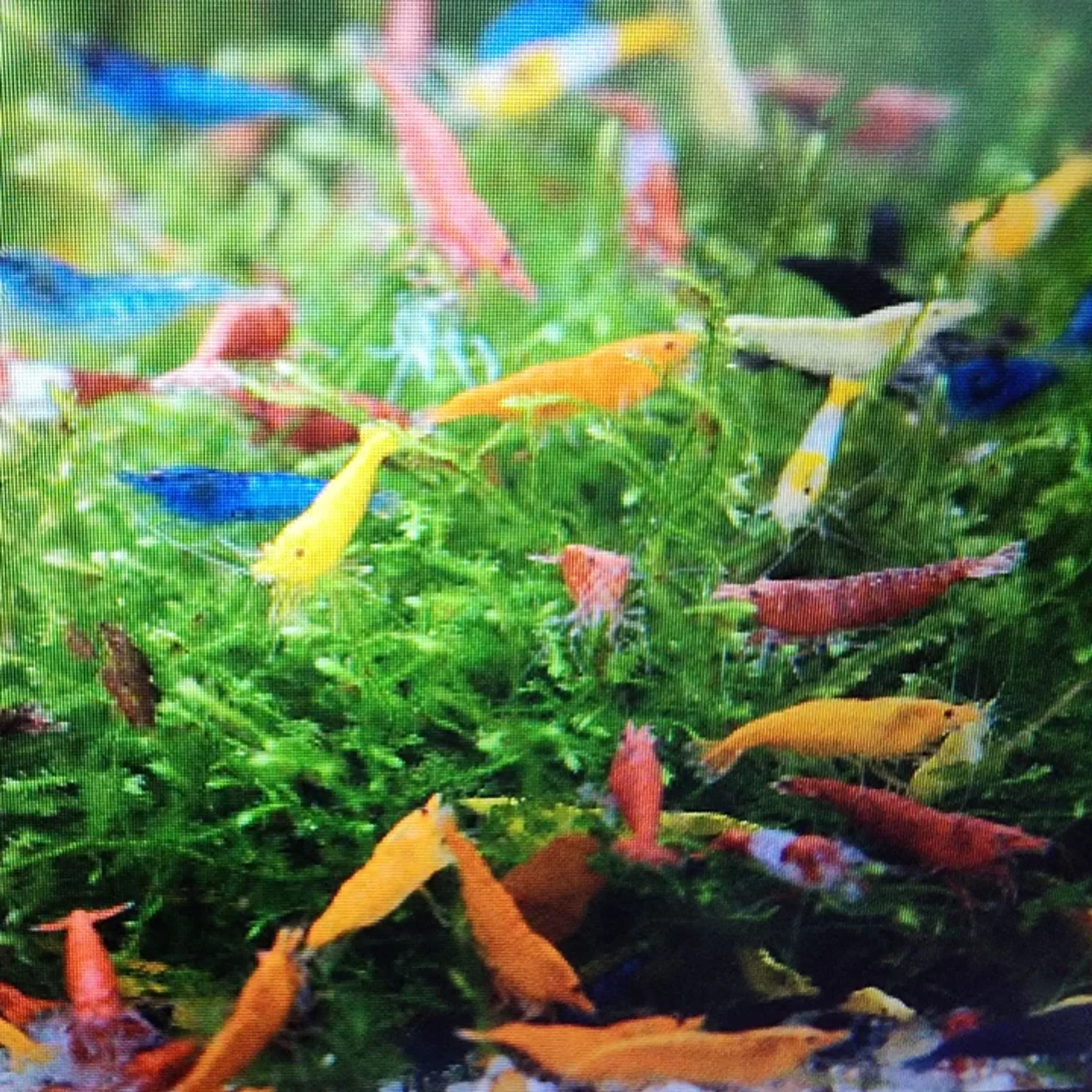
Nearly every color morph sold in the US traces back to a single species, Neocaridina davidi, native to streams in Taiwan and China. Decades of selective breeding for color, not wild collection, produced the palette hobbyists know today:
- Cherry/red shrimp
- Yellow
- Blue velvet and blue dream
- Blue pearl
- Black rose
- Orange/orange pumpkin
- Chocolate/carbon
- Rili patterns (see below)
Because these are all one species bred for pigment, most Neocaridina available through US sellers are captive-bred, not wild-caught — a point worth checking when you're comparing stock (more on that further down).
Tank Setup
Tank Size
- 5 gallons (19 L) is a workable floor for a small starter group.
- 10+ gallons (38+ L) is genuinely recommended for a self-sustaining breeding colony. A larger volume buffers temperature and chemistry swings, offers more grazing surface for biofilm, and makes routine maintenance far less fussy than a nano cube.
Cycling and Acclimation
Only add shrimp to a fully cycled tank that already has an established biofilm layer on hardscape and glass — never a freshly set-up one. A brand-new tank has no food source and no beneficial bacteria to buffer waste, and shrimp starve or crash quickly in that environment.
Once the tank is ready, drip-acclimate for over an hour. Neocaridina are notably more sensitive to sudden swings in temperature or chemistry than to the absolute numbers themselves, so slow, gradual acclimation matters more than hitting an exact figure on day one.
Filtration
Use a sponge filter or a hang-on-back filter fitted with a pre-filter sponge or fine mesh over the intake. Bare intakes will pull in and kill shrimplets. Keep flow gentle — Neocaridina aren't strong swimmers and prefer calm water columns.
Substrate and Décor
Inert substrate (plain gravel or sand) works fine for Neocaridina — unlike the pickier Caridina genus, they don't need an active, buffering substrate. Fill the tank with:
- Driftwood
- Leaf litter (Indian almond/catappa leaves, alder cones)
- Rocks
- Dense plant cover (Java moss, guppy grass, other mosses)
These furnishings grow biofilm continuously and give shrimplets and freshly molted adults places to hide from predation and from each other.
Lighting
Standard planted-tank lighting suits Neocaridina fine; there's no special requirement. Just avoid very bright light over bare substrate with no plant or algae cover — it raises stress and predation risk, especially right after a molt when shrimp are soft-shelled and exposed.
Water Parameters
Neocaridina are far more tolerant of parameter swings than Caridina shrimp (crystal reds, bee shrimp), which need cooler, softer, more acidic, and much more stable water. Still, staying inside the ranges below gives the best odds of a thriving, breeding colony.
| Parameter | Safe Range | Notes |
|---|---|---|
| Temperature | 65–82°F (18–28°C) | Breeding sweet spot is 72–78°F (22–26°C); higher temps speed up metabolism and reproduction but shorten lifespan |
| pH | 6.5–8.0 | A few sources tolerate up to 8.5 |
| GH | 4–8 dGH | Some colonies tolerate up to 10–12 dGH |
| KH | 0–4 dKH | Low KH is acceptable; some buffering helps molt stability |
| TDS | ~100–300 ppm | Useful if you're monitoring with a TDS meter |
| Ammonia/Nitrite | 0 ppm | Non-negotiable |
| Nitrate | Under 20 ppm | Keep it low with regular small water changes |
A Simple Testing Routine
For beginners, a basic weekly routine covers most of what matters: test GH and KH with liquid test kits to track mineral stability, and use an affordable TDS meter as a quick daily or weekly stability check — a sudden jump or drop in TDS often flags a chemistry shift before it becomes visible in the shrimp. Many US municipal water supplies already run relatively soft, so test your tap water before assuming you need to remineralize it; some areas need no adjustment at all.
Water Changes
Favor small, frequent changes — roughly 10–20% weekly — over large, infrequent ones. Stability matters more than chasing pristine numbers. Always match temperature and dechlorinate the new water, and where possible match its GH/KH to the tank to avoid swings that trigger stress or failed molts.
Feeding Neocaridina Shrimp
The primary diet is biofilm and algae, grazed continuously off every surface in the tank. In a mature, well-planted setup, this alone can sustain a colony indefinitely.
Supplement 2–4 times a week (established tanks with heavy biofilm can stretch to every 2–3 days) with:
- Sinking shrimp-specific pellets or wafers — look for ones with added calcium for shell health
- Blanched vegetables: zucchini, cucumber, spinach, kale, carrot
- Occasional protein, such as bloodworms, fed sparingly
- Leaf litter as an ongoing biofilm booster
Feed only what's cleared within 2–3 hours, and remove leftovers to prevent ammonia spikes. Never feed anything containing copper — shrimp, like all invertebrates, are highly sensitive to it, and copper-based fertilizers or fish medications can wipe out a colony even in small doses.
Molting
Shrimp molt regularly to grow, shedding their exoskeleton entirely. During and just after a molt they're soft-shelled, vulnerable, and often hide — sometimes appearing motionless enough to look dead. Stable GH/KH and reliable calcium availability are what prevent stuck or failed molts.
Don't panic over a discarded exoskeleton in the tank. Many keepers leave it in place so the colony can eat it back for the minerals it contains.
Sexing Neocaridina Shrimp
By roughly 2–3 months of age, males and females are easy to tell apart:
- Females are larger, with a more rounded, curved underbelly built to hold eggs, and often show a visible saddle — a patch of developing eggs, usually yellow or orange, visible through the back near the head when she isn't already carrying eggs.
- Males are smaller and slimmer, with color intensity that varies by strain.
For breeding, start with 10 or more shrimp total to guarantee both sexes are represented and to maintain enough genetic diversity for a healthy colony.
The Breeding Cycle
Neocaridina need no special triggers to breed — given stable water, they reproduce readily in home aquariums. After a molt, a female releases pheromones into the water; a male fertilizes the eggs as she carries them. She's then described as "berried," carrying roughly 20–30 eggs (with a wider cited range of 20–50) under her tail and swimmerets.
Egg-carrying duration is commonly cited around 30 days, though the practical range runs 2–5 weeks depending on temperature — warmer water speeds up development. Eggs hatch as fully-formed miniature shrimp; there's no free-swimming larval stage, so shrimplets immediately fend for themselves, grazing biofilm alongside the adults.
Shrimplets need the same water quality as adults, but benefit from extra powdered or crushed food and protection from filter intakes and any tankmates that might see them as a snack.
If a new colony seems slow to get going, be patient — it can take a few months for a group to settle into a tank before breeding activity really picks up.
Selective Breeding for Color
Crossing two different color morphs of Neocaridina davidi usually produces lower-grade or wild-type (brownish) offspring, since all the color strains share the same gene pool and traits recombine unpredictably. To maintain or intensify a color line:
- Cull the palest or least colorful individuals each generation — rehoming rather than culling outright is a common approach
- Keep only one color line per tank if color quality matters to you
Rili Shrimp
Rili shrimp are a patterned variant — alternating clear/translucent bands with solid color, as in red rili or blue rili — that arose from selective breeding within Neocaridina davidi color lines. Care is identical to standard Neocaridina; the appeal is purely the banded pattern.
Choosing Shrimp by Color and Grade
Sellers commonly grade Neocaridina by color saturation and coverage, typically across low, medium, high, and premium tiers. Higher grades cost more because they require more careful, ongoing line-breeding to maintain consistent, saturated color. If you're building a display colony rather than chasing show-quality stock, lower or mid grades are a practical, budget-friendly starting point; you can browse current stock across shrimp available on FishyHub to compare options.
Domestically Bred vs. Imported Stock
Domestically bred shrimp generally acclimate faster, arrive healthier, and carry a lower risk of disease or parasites compared with imported stock, while also supporting more sustainable sourcing practices. It's a detail worth asking about when comparing sellers.
Cost Expectations
Pricing varies by color, grade, and seller, but as a rough guide: common low-to-mid grade colors (cherry, yellow) tend to sit at the affordable end, while premium high-saturation grades and less common patterns command a noticeably higher price per shrimp due to the extra line-breeding effort involved.
Neocaridina vs. Caridina
| Neocaridina | Caridina | |
|---|---|---|
| Examples | Cherry, yellow, blue dream | Crystal red/black, bee shrimp, tiger shrimp |
| Water hardness | Tolerates moderate GH/KH | Needs soft, low-mineral water |
| pH preference | 6.5–8.0 | Cooler, more acidic |
| Stability needs | Forgiving of swings | Needs very stable parameters |
| Substrate | Inert substrate is fine | Often needs active/buffering substrate |
| Beginner friendly | Yes | More demanding |
The two genera don't interbreed, so mixed color surprises aren't a genetic risk. The real issue is that their ideal water chemistry diverges enough, and they compete for the same biofilm and hiding spots, that co-habitation is tricky to manage well. Pick one genus per tank unless you're deliberately running a compromise setup.
Tank Mates
Neocaridina breed best in species-only tanks, where every shrimplet gets a fair shot at survival. If you do want to mix, stick to very small, peaceful, slow fish that won't actively hunt shrimplets:
- Small rasboras
- Otocinclus
- Small, peaceful tetras or livebearers in larger tanks
- Nerite or mystery snails
Avoid bettas, larger tetras, cichlids, and most fish generally capable of eating shrimp. Even fish marketed as "shrimp-safe" will pick off some babies given the chance — tank density and hiding spots matter as much as species choice. If you're stocking a shared tank, browsing small community fishes can help you find genuinely low-risk options.
Population Management
Healthy colonies can outgrow their tank. If numbers climb faster than you'd like, options include rehoming excess shrimp, upgrading to a larger tank, or keeping a very light stocking of a compatible fish to provide mild, natural population control without threatening the colony's growth overall.
Quarantine for New Stock
New shrimp and new plants are common ways parasites like Vorticella, Scutariella, or planaria enter a tank. Rinse or briefly dip new plants before adding them, and consider a short quarantine period for new shrimp in a separate container before introducing them to an established colony — a simple habit that prevents most avoidable outbreaks.
Common Mistakes to Avoid
- Adding shrimp to an uncycled or too-new tank with no biofilm, leading to starvation
- Large, sudden water changes causing molt failures or mass die-offs
- Copper exposure from tap water, fertilizers, or fish medications
- Bare filter intakes or excessive flow pulling in shrimplets
- Overfeeding, which spikes ammonia and fouls water quality
- Housing shrimp with fish that eat shrimplets, then wondering why numbers never grow
- Crossing color morphs carelessly and ending up with muddy, low-grade offspring
- Mistaking a molted exoskeleton for a dead shrimp and throwing it out — it's a valuable food source
- Underestimating how long a new colony takes to settle in before breeding starts
Frequently Asked Questions
How many Neocaridina shrimp should I start with?
Aim for 10 or more to ensure both sexes are represented and to maintain enough genetic diversity for a healthy, self-sustaining colony.
Do Neocaridina need a heater?
Not usually, if room temperature stays within roughly 65–82°F. A heater helps in colder climates or if you want to consistently hit the 72–78°F breeding sweet spot.
Can I keep Neocaridina with betta fish or larger fish?
Generally no. Most bettas and larger fish will eat shrimplets and often adults too, making it very difficult for a colony to grow.
Why aren't my shrimp breeding?
The usual culprits are unstable or incorrect water parameters, insufficient food, too new a tank, or simply a colony that hasn't settled in yet — this can take a few months even under good conditions.
Can different color Neocaridina be kept together?
Yes, but they will interbreed and offspring will trend toward wild-type or lower-grade coloration over generations. Keep one color line per tank if preserving quality matters to you.
What's the difference between Neocaridina and Caridina shrimp?
Neocaridina is hardier with a much wider tolerance for temperature, pH, and hardness. Caridina needs cooler, softer, more acidic, and far more stable water, making it a better fit for more experienced keepers.
How long do Neocaridina shrimp live?
Roughly 1–2 years, with warmer water generally speeding up their life cycle and cooler, stable conditions tending to stretch it slightly longer.
Do I need to feed my shrimp every day?
Not necessarily. Mature tanks with good biofilm can be fed every 2–3 days without issue — overfeeding is a bigger risk to a colony than underfeeding.
Ready to start or expand a colony? Browse current Neocaridina and other freshwater shrimp on FishyHub to compare colors and grades before you buy.


