Most Popular Betta Colors According to Marketplace Data
On FishyHub's US marketplace, betta popularity follows the fish's form first and its color second: halfmoon plakats draw the strongest buyer interest of any betta, followed in the next interest tier by halfmoons, and those two forms are where most color choice is offered. FishyHub files bettas by finnage and type rather than by color, so there is no color-by-color sales table. What the data does show is which forms carry the color shoppers want, and which color words they type into search.
Key Findings
- FishyHub marketplace data shows halfmoon plakat bettas attract very high buyer interest in the US, the strongest interest tier of any betta form.
- FishyHub data shows US demand for halfmoon plakats is ahead of listed supply, even though supply for the form is high.
- On FishyHub, giant halfmoon plakats are the US betta where demand most clearly outpaces supply, with only limited listings.
- FishyHub data shows halfmoon bettas draw high buyer interest in the US, with demand and supply roughly balanced.
- FishyHub data shows the US betta category has a wide price spread, which reflects how strongly color and grade move the price of a fish.
- FishyHub data shows crowntails sit in the entry-level price tier in the US, while halfmoons sit in the upper mid-range.
- FishyHub search data shows shoppers look up bettas with color words such as albino, black and pink, and with specific phrases like "pink betta" and "blue alien male".
- FishyHub data shows activity is rising across every US betta form the marketplace tracks.
Why the Data Is Organized by Form, Not Color
A betta's color is only part of what a buyer pays for. The same red or blue can appear on a long-finned halfmoon, a short-finned plakat, a crowntail or a veiltail, and the form changes how the fish looks, swims and is priced. Sellers on FishyHub therefore list bettas under the form, then describe the color in the listing.
That means color popularity has to be read in two steps:
- Which forms buyers are drawn to (the interest and demand tiers below).
- Which colors are offered and searched for within those forms (search terms and hobby knowledge).
Which Betta Forms US Buyers Want
| Betta form | Buyer interest | Demand vs supply | Price tier |
|---|---|---|---|
| Giant Halfmoon Plakat | Moderate | Demand clearly outpaces supply | Upper mid-range |
| Halfmoon | High | Balanced | Upper mid-range |
| Halfmoon Plakat | Very high | Demand ahead of supply | Mid-range |
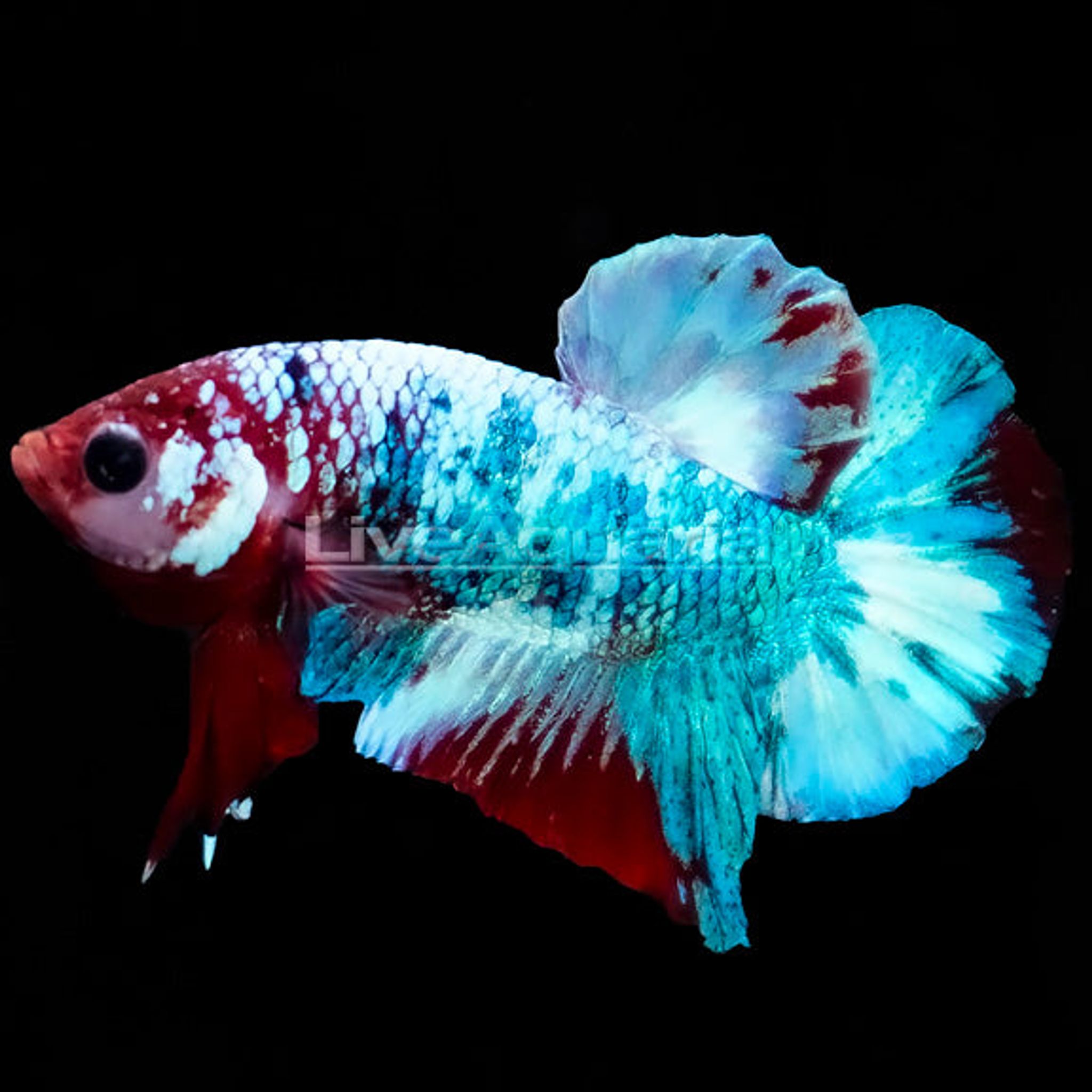
Halfmoon plakats stand out. They combine the short, sturdy fins that make a plakat active and hardy with the wide, even tail spread of a show halfmoon, and they are bred in an unusually broad palette. For a US buyer that means more color choice at a mid-range price, which helps explain the interest.
Giant halfmoon plakats are a smaller, keener audience. They grow much larger than a standard betta and take longer to raise, so few are listed, and the buyers who want one outnumber the fish available.
The Colors Behind the Popular Forms
Within halfmoons and halfmoon plakats, sellers on FishyHub list a wide range of color types. From hobby knowledge, the colors US keepers most often ask for fall into these groups, listed alphabetically:
- Black and dark types: black orchid, black samurai and melano lines, prized for contrast.
- Blue and metallic types: royal blue, steel blue, turquoise and "alien"-style metallic scaling.
- Koi and marble types: patchy red, black and white patterns that change as the fish matures.
- Nemo and multicolor types: orange, red, yellow and black in one fish.
- Red types: solid red and red dragon, a long-standing favorite.
- White and pale types: platinum white, albino-looking pale fish and pink-toned lines.
FishyHub search data supports this picture. Shoppers across the marketplace search with color words such as "albino" (a high search tier), "black" and "pink" (moderate), and with specific color-and-type phrases such as "pink betta" and "blue alien male". These searches combine the US and Singapore markets, so they show what betta shoppers look for in general rather than a US-only result.
Why Color Moves Price So Much
FishyHub data puts the overall US betta category in a wide price spread. The forms themselves sit in neighboring tiers, so most of that spread comes from what happens inside a form: grade, symmetry and, above all, color.
- Clean solid colors are harder to breed than mixed ones. A solid black or a pure white with no stray color takes careful line breeding.
- Patterned fish are individual. A striking koi or nemo is one of a kind, so sellers price the fish, not the color type.
- Metallic and dragon scaling adds a premium because it is newer in the hobby and more variable.
The opposite end shows up too. Crowntails sit in the entry-level tier in the US with limited supply; they are an older form, and color matters less to their price than to a halfmoon's.
What This Means for US Buyers
- If you want a particular color, start with halfmoon plakats or halfmoons. That is where FishyHub sellers offer the most choice.
- Expect competition on giants. Giant halfmoon plakats sell into demand that outpaces supply, so a good fish may not wait.
- Check shipping season. Bettas are shipped by overnight courier in insulated boxes. Buyers in the Midwest & Central and East Coast & Northeast zones need heat packs in winter, while the South & Southeast zone has summer heat to plan around. The Alaska, Hawaii & territories zone is further away and costs more to reach.
- Plan for a heater. Unlike in the tropics, most US homes run cooler than a betta likes, so a small heater is part of the setup.
Methodology
This page is based on FishyHub marketplace activity in the US over the period from October 2024 to October 2026. We looked at active betta listings, listed prices and how widely they range, buyer interest (wishlists, likes and "my tank" saves from FishyHub users on US-listed products), new listings over time, and FishyHub search terms. All findings are reported as tiers and directions, not figures.
FishyHub records betta form, not color, as a category, so color popularity is described from search terms and hobby knowledge rather than from color-level sales data. The US market is new and this data has no US order history, so popularity here means listings and buyer interest, not purchases. Search terms combine the US and Singapore markets. FishyHub does not report state-by-state figures, and the data does not measure the wider US betta trade outside the marketplace.
Frequently Asked Questions
What is the most popular betta color?
FishyHub does not track sales by color. Interest is strongest for halfmoon plakats, which come in the widest range of colors, and shoppers search often for color words such as albino, black and pink.
What type of betta is most popular in the US?
On FishyHub, halfmoon plakats draw the strongest US buyer interest, with halfmoons in the next tier. Demand for halfmoon plakats is ahead of supply.
Why are some betta colors more expensive?
Clean solid colors, unusual patterns and metallic scaling take more selective breeding, so they sit higher within a form's price range. FishyHub data shows US betta prices spread widely for this reason.
Are crowntail bettas cheap?
On FishyHub's US marketplace, crowntails sit in the entry-level price tier, below halfmoons and halfmoon plakats.
How to Cite This Page
Source: FishyHub, "Most Popular Betta Colors According to Marketplace Data" (2026), https://fishyhub.com/us/blogs/blog-detail/most-popular-betta-colors-according-to-marketplace-data


