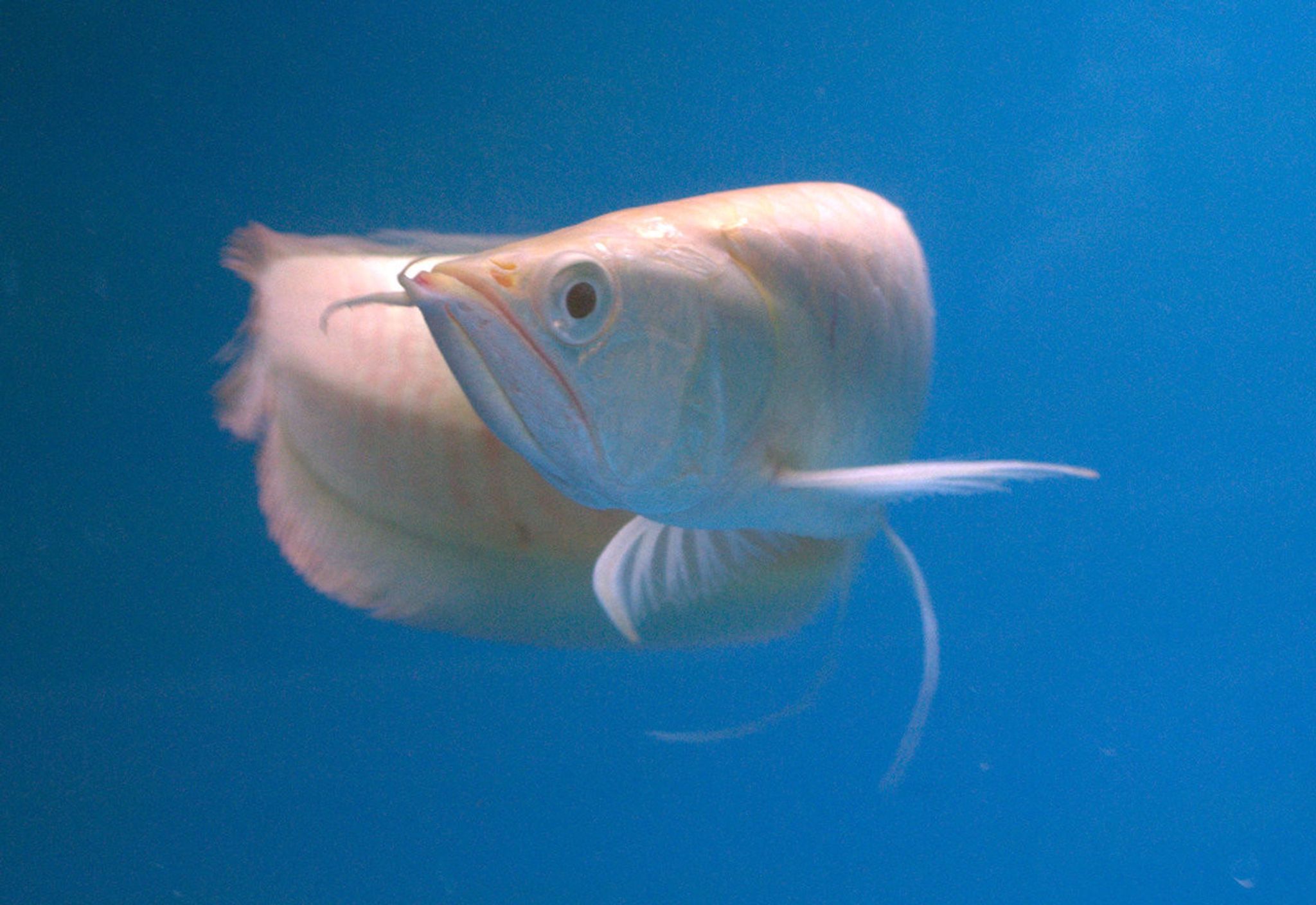
Most Popular Arowana Varieties: Silver, Crossback, Super Red & More
In the US, the most widely listed arowana on FishyHub is the silver arowana, priced in the upper mid-range, while black and jardini arowanas are rarer collector-tier fish. Super red and crossback arowanas, the stars of the Asian arowana world, do not appear in FishyHub's US listings, because Asian arowana are a protected species that cannot legally be traded in the US. For American keepers, the arowana market is a South American and Australian one.
Key Findings
- FishyHub marketplace data shows silver arowanas have moderate supply in the US, the most widely listed arowana on the marketplace.
- FishyHub data shows silver arowanas sit in the upper mid-range price tier in the US, with a wide price spread.
- FishyHub data shows black and jardini arowanas sit in the collector / premium price tier in the US, with limited supply.
- FishyHub data shows the US arowana category as a whole is a collector-tier group, alongside flowerhorns and monster fish.
- FishyHub data shows activity is rising for silver, black and jardini arowanas in the US.
- FishyHub data shows no US listings for super red or crossback arowanas, which are Asian arowana varieties.
- FishyHub search data shows "arowana" is among the most searched fish terms on the marketplace, with the misspelling "arrowana" also common.
US Arowana Varieties on FishyHub
| Variety | Origin | Supply | Price tier | Price spread | Momentum |
|---|---|---|---|---|---|
| Black Arowana | South America | Limited | Collector / premium | Not enough data | Rising |
| Jardini Arowana | Australia and New Guinea | Limited | Collector / premium | Not enough data | Rising |
| Silver Arowana | South America | Moderate | Upper mid-range | Wide | Rising |
The US market on FishyHub is new, and this data has no US order history, so popularity is read from listings and search, not purchases.
Silver Arowana: The US Mainstay
The silver arowana is the arowana most Americans have seen. It comes from the Amazon basin, is bred and collected in numbers, and is usually sold as a juvenile with its yolk sac only recently absorbed. That availability puts it in the upper mid-range price tier, a tier below its rarer relatives.
The wide price spread comes from size and quality. Small juveniles are inexpensive for an arowana, while large, well-shaped fish with clean, straight barbels and no eye droop cost much more. Silver arowanas grow very large and need a tank to match, which is the main cost a new keeper should plan for.
Black and Jardini Arowanas: The Collector Tier
- Black arowana: also from South America, this species is born almost black with a yellow stripe and lightens to a blue-grey silver as it grows. It is collected seasonally from the wild, so supply is limited and prices sit in the collector tier.
- Jardini arowana: also called the pearl or Australian arowana, it is more heavily built than the silver, with red-tipped scales. It is known as a feisty fish that is best kept alone, which suits a dedicated collector.
Both are rising on FishyHub's US marketplace, but listings remain limited.
Why Super Red and Crossback Are Missing
The super red, crossback (also called Malaysian golden), red tail golden and green arowanas are all color forms of the Asian arowana. The species is listed as endangered, and US law does not allow it to be imported or sold, even when the fish come from licensed farms with certificates and microchips as they do in Asia.
That is why the US arowana market looks so different from Singapore's or Malaysia's. American keepers who admire the red and gold Asian varieties turn instead to:
- silver arowanas, for their size and movement;
- black arowanas, for their color change as they grow;
- jardini arowanas, for their red-tipped scales and character.
Anyone offered an Asian arowana inside the US should treat it as a legal red flag.
Keeping an Arowana in the US
Arowanas are large, fast surface feeders that jump. A tight-fitting lid, a long, wide tank and strong filtration are essential. Most US homes need a heater to keep arowanas at tropical temperatures, especially in the Midwest & Central and East Coast & Northeast zones in winter.
Arowanas ship by overnight courier in insulated boxes, usually as juveniles because adults are too large to ship easily. Shipping a large fish across the West Coast & Mountain West or the South & Southeast zone is costlier than for small fish, and orders to the Alaska, Hawaii & territories zone cost more again. FishyHub does not report arowana activity by state.
Methodology
This page is based on FishyHub marketplace activity in the US over the period from October 2024 to October 2026. We looked at active arowana listings by variety, listed prices and how widely they range, new listings over time, and FishyHub search terms. Findings are reported as tiers and directions, not figures.
The US market has no order history in this data, so popularity reflects listings and search, not purchases. The legal status of Asian arowana in the US is general background, not a FishyHub finding. Search terms combine the US and Singapore markets. FishyHub does not report state-by-state figures.
Frequently Asked Questions
What is the most popular arowana in the US?
On FishyHub, the silver arowana is the most widely listed arowana in the US, in the upper mid-range price tier.
Can you buy a super red arowana in the US?
No. Super red, crossback and other Asian arowana varieties cannot legally be traded in the US, and FishyHub shows no US listings for them.
Which arowana is the most expensive in the US?
On FishyHub, black and jardini arowanas sit in the collector / premium tier, above silver arowanas.
How big does a silver arowana get?
Silver arowanas grow very large and need a long, wide, covered tank. Plan the tank before buying the fish.
How to Cite This Page
Source: FishyHub, "Most Popular Arowana Varieties: Silver, Crossback, Super Red & More" (2026), https://fishyhub.com/us/blogs/blog-detail/most-popular-arowana-varieties-silver-crossback-super-red-more


