
Lionfish Care Guide: Tank Size, Diet, Compatibility and Reef Safety
Lionfish are among the most striking predators in the marine hobby, but "lionfish" covers species with very different space needs, from a 30-gallon dwarf to a 180-gallon volitans. This guide breaks down tank size by species, how to wean a lionfish onto frozen food, which tankmates actually survive alongside one, and exactly what to do if you get stung.
What Is a Lionfish?
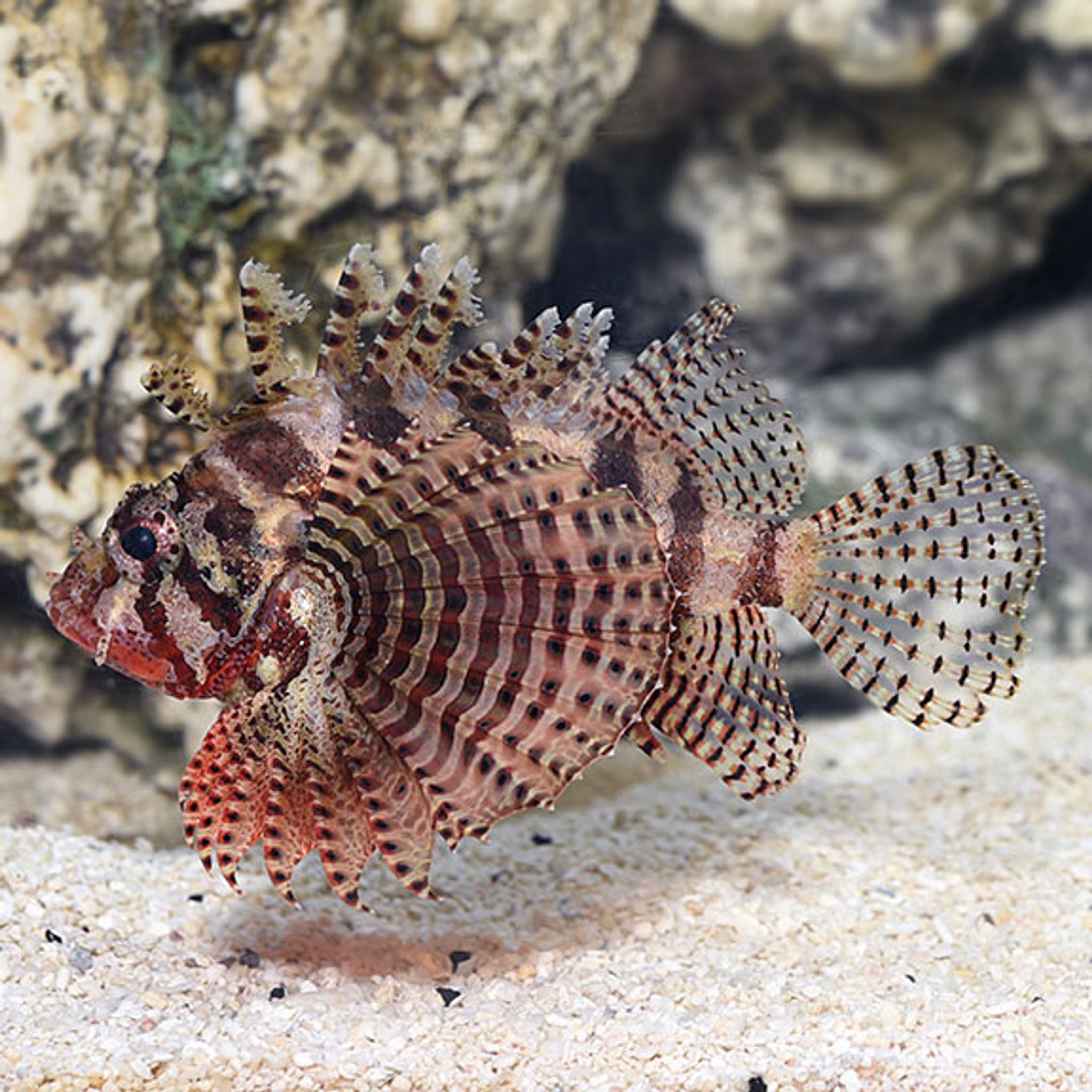
Lionfish belong to the genus Pterois — the common (or red) lionfish and the volitans lionfish are the fish most people picture, with fan-like pectoral fins and bold zebra striping. Two smaller relatives, the fuzzy dwarf lionfish (Dendrochirus brachypterus) and the fu manchu lionfish (Dendrochirus biocellatus, named for its branched, whisker-like appendages near the mouth), are also sold as "lionfish" but stay far smaller. All of them sit in family Scorpaenidae alongside true scorpionfish, waspfish, and rhinopias — relatives worth knowing about before you buy, since they're often displayed near lionfish in the trade.
Color pattern is mostly cosmetic. Common/red lionfish show maroon-and-white banding, volitans run larger with brown-and-white bands, and radiata color forms show up occasionally — none of this affects care requirements, only the species itself does.
Tank Size by Species
This is the single most important decision, and it has to be made based on adult size, not the 2–3 inch juvenile in the shop.
| Species | Adult size | Minimum tank | Recommended tank |
|---|---|---|---|
| Volitans / common lionfish (Pterois) | 12–15 in (30–38 cm) | 125 gal (473 L) | 180 gal (681 L) |
| Fuzzy dwarf lionfish (D. brachypterus) | 6–7 in (15–18 cm) | 29 gal (110 L) | 50 gal (189 L) |
| Fu manchu lionfish (D. biocellatus) | 4–5 in (10–13 cm) | 30 gal (114 L) | 40+ gal (151+ L) |
Sources disagree on the dwarf lionfish floor — some list 20 gallons, others insist on 50. Treat 29 gallons as an absolute minimum and 50 gallons as the responsible target, especially once you add tankmates or rockwork the fish needs for cover.
Volitans-type lionfish grow quickly in their first year and routinely outgrow a starter tank within months. Buy for the adult you'll have, not the juvenile in front of you — this is the single most common lionfish-keeping mistake.
Water Parameters
Lionfish are unusually forgiving compared to many marine fish, tolerating brief lapses in water quality better than, say, a wrasse or anthias would. That's not a license to skip maintenance — stable numbers still matter for a fish you're hoping keeps for 10–15 years.
- Temperature: 74–80°F (23–27°C)
- pH: 8.1–8.4
- Specific gravity: 1.020–1.025
- Ammonia / nitrite: 0 ppm
- Nitrate: under 20–40 ppm
Diet and Feeding
Lionfish are strict carnivores and ambush piscivores — in the wild they eat live fish and crustaceans, and many wild-caught adults will initially refuse anything that isn't moving.
Weaning onto frozen food
The goal is to get a lionfish off live food and onto frozen meaty foods as quickly as possible, both for nutrition and to avoid a live-food-only habit that gets expensive and risky (live feeders can carry disease). The standard technique:
- Start with live feeder fish or shrimp only if the fish won't eat anything else.
- Introduce a feeding stick or tongs, wiggling a thawed piece of silverside, krill, or shrimp to mimic movement.
- Gradually reduce live food frequency as the fish starts striking at the stick-fed piece.
- Rotate frozen foods — silversides, krill, squid, shrimp, and clam — for variety once training succeeds.
Avoid feeder goldfish entirely: they carry a thiaminase enzyme that breaks down thiamine and are a common disease vector. If live food is unavoidable during weaning, feeder guppies or mollies dosed with a vitamin supplement are a safer bridge.
How often to feed
Feed juveniles roughly every other day and adults 2–4 times per week, adjusting by body condition rather than a fixed schedule. Lionfish beg persistently at the glass and will happily overeat — daily feeding is the leading cause of obesity and fatty liver disease in captive lionfish. A healthy adult lionfish should look full but not visibly round or bloated between feedings.
Compatibility and Tankmates
Lionfish are ambush predators, not aggressive fin-nippers — but their hunting instinct is absolute. The rule of thumb: anything smaller than the lionfish's head will eventually be eaten, regardless of how peaceful or established it seems.
Safe tankmate categories (large, robust, similar-or-bigger fish):
- Tangs and larger angelfish
- Triggerfish
- Puffers
- Groupers, including panther and miniatus grouper
- Moray eels and large wrasses
Never safe: small peaceful fish, gobies, blennies, clownfish, shrimp, crabs, and small hermit crabs — all fit in a lionfish's mouth sooner or later.
A small, peaceful reef fish like the harlequin bass is sometimes discussed alongside predatory marine setups, but it is not a safe lionfish tankmate for the same reason: it's simply too small.
Keeping multiple lionfish
Multiple lionfish can share a large enough tank if they're introduced together as juveniles of similar size. Adding a smaller lionfish to an established tank later is risky — the resident fish will out-compete it for food or, in the worst case, eat it outright.
Is a Lionfish Reef Safe?
Here's where marketing language gets loose, and it's worth being precise: "won't eat coral" and "reef safe" are two different claims.
- Volitans/common lionfish: not reef safe. They generally leave coral tissue alone, but they will clean out a cleanup crew and pick off any small fish in a reef tank. Many keepers house them in fish-only-with-live-rock (FOWLR) setups with hardy corals and no small fauna instead.
- Dwarf and fuzzy dwarf lionfish: commonly labeled "reef safe," but the qualified version is more accurate — reef safe with caution. They don't touch coral and are small enough not to disturb an aquascape, but they'll still eat any shrimp, crab, or small fish that fits in their mouth.
- Fu manchu lionfish: same pattern as dwarf lionfish — coral-safe, not small-tankmate-safe.
If you keep a dwarf lionfish in a reef tank, plan your cleanup crew and small fish stocking around it, not the other way around.
FOWLR Tank Setup Basics
A fish-only-with-live-rock tank is the classic lionfish environment, and for good reason:
- Live rock gives the fish structure to hover near and ambush from, which supports natural hunting behavior.
- No delicate coral to protect means fewer parameter constraints and more flexibility in feeding and lighting.
- Strong filtration and protein skimming matter more than in a typical reef tank, because meaty feedings 2–4 times a week create a heavier bioload than flake or pellet feeding. Undersized filtration is a common reason FOWLR tanks with big predators see water quality crashes.
This setup pairs naturally with other large predatory fish — groupers, triggers, and puffers all thrive in the same style of system as a lionfish.
Venom and Sting Safety
This is the topic most new lionfish keepers are anxious about, and it deserves a direct answer rather than a footnote.
The dorsal, pelvic, and anal fin spines are venomous, but they're a defensive tool — a lionfish will not attack you. Stings happen from careless hands, not from the fish hunting you. A sting causes intense, throbbing pain and swelling, and sometimes nausea or dizziness. It's rarely life-threatening to a healthy adult but can be more dangerous for children, older adults, or anyone with an allergic reaction.
First aid if you're stung
- Immerse the affected area in water as hot as you can tolerate, roughly 110–115°F (43–46°C), for 30–90 minutes. Heat denatures the venom's proteins and is the primary way to relieve pain.
- Clean the wound afterward and monitor it for signs of infection over the following days.
- Seek medical attention for multiple stings, signs of an allergic reaction, or if pain and swelling don't improve with hot water immersion.
Preventing a sting in the first place
- Never hand-feed a lionfish — use a feeding stick or tongs every time.
- Move slowly during tank maintenance; sudden movement is what triggers a defensive fin spread.
- Use a net or a container to relocate the fish rather than reaching in with your hands.
- Watch body language: a lionfish that spreads its fins wide feels cornered and is signaling you to back off.
Behavior and Lifespan
Lionfish are nocturnal to crepuscular ambush predators — expect them to hover near rockwork or overhangs during the day and become active hunters at dusk and night. They're not aggressive toward keepers, and they're notably hardy and disease-resistant compared to many marine fish. With good care, a lionfish can live 10–15 years, so the tank size and tankmate decisions you make on day one are decisions for over a decade.
Quarantine and Acclimation
Quarantine any new lionfish for 2–4 weeks, the same as you would any marine fish. Use this window to confirm a solid feeding response before moving the fish to a large display — some wild-caught specimens are picky eaters at first, and it's much easier to troubleshoot that in a small quarantine tank than after the fish is loose among rockwork in a 150-gallon display.
Related Predators Worth Knowing
A few relatives and companion species come up often in lionfish research:
- Frogfish, sold under anglers & frogfish, are another ambush-predator group with extreme camouflage. They're sedentary and, like lionfish, need tankmates that can't be swallowed whole.
- Barracuda occasionally get paired with lionfish in predator-tank discussions, but they're a next-level commitment — juveniles are sold small but grow into large, costly, hard-to-house adults, and they're not a beginner recommendation.
- Pygmy waspfish, rhinopias, and other scorpionfish are close relatives of the lionfish but are far more specialized and delicate — rhinopias in particular are finicky feeders and poor shippers, so treat them as an advanced-only branch of the same family rather than a lionfish alternative.
- Panther grouper and miniatus grouper are common "big tank" tankmate references — a panther grouper needs 300+ gallons as an adult (reaching around 27 inches) and eats the same category of meaty foods as a lionfish, making it a natural stocking partner in a large FOWLR system.
Frequently Asked Questions
How big of a tank does a lionfish need?
It depends on species. Volitans/common lionfish need 125–180 gallons as adults, while dwarf, fuzzy dwarf, and fu manchu lionfish can be kept in 30–50 gallons.
Are lionfish reef safe?
Generally no for volitans-type lionfish, since they eat small fish and invertebrates even though they leave coral tissue alone. Dwarf lionfish are safe around coral but still eat small tankmates, so the accurate label is "reef safe with caution," not simply "reef safe."
What do lionfish eat in a home aquarium?
Start with live feeders only if necessary, then wean onto frozen silversides, krill, shrimp, squid, and clam using a feeding stick. Feed juveniles about every other day and adults 2–4 times a week — not daily.
What happens if you get stung by a lionfish?
You'll get a painful, throbbing sting with swelling and sometimes nausea. Treat it with hot water immersion at 110–115°F for 30–90 minutes, and seek medical care for multiple stings or an allergic reaction.
Can you keep multiple lionfish together?
Yes, if they're added together as juveniles of similar size in a large enough tank. Adding a smaller lionfish later risks it being bullied or eaten by the established fish.
What fish can live with a lionfish?
Other large, robust fish such as tangs, big angelfish, triggerfish, puffers, groupers, and moray eels. Avoid anything small enough to fit in the lionfish's mouth, including gobies, blennies, clownfish, and small crustaceans.
How long do lionfish live, and are they hard to keep?
Lionfish typically live 10–15 years and are considered hardy and disease-resistant. The real challenges are tank size, the live-to-frozen diet transition, and safe handling — not water chemistry sensitivity.
Is a lionfish a good fish for a first saltwater tank?
Not ideally, mainly due to space requirements and sting risk rather than water quality demands. A hobbyist with some basic marine experience and the right tank size can manage one well.
Browse available marine fish on FishyHub to compare lionfish species and plan tankmates before you buy.


