
Lawnmower Blenny Care Guide: Tank Size, Diet, Compatibility and Reef Safety
The lawnmower blenny (Salarias fasciatus) is one of the most recommended algae-eating fish in the marine hobby, but it is not a hair-algae cure and it will starve in the wrong tank. This guide covers realistic tank size, water parameters, diet, compatibility, and reef safety, plus how to tell whether your tank is actually ready for one.
Species Overview
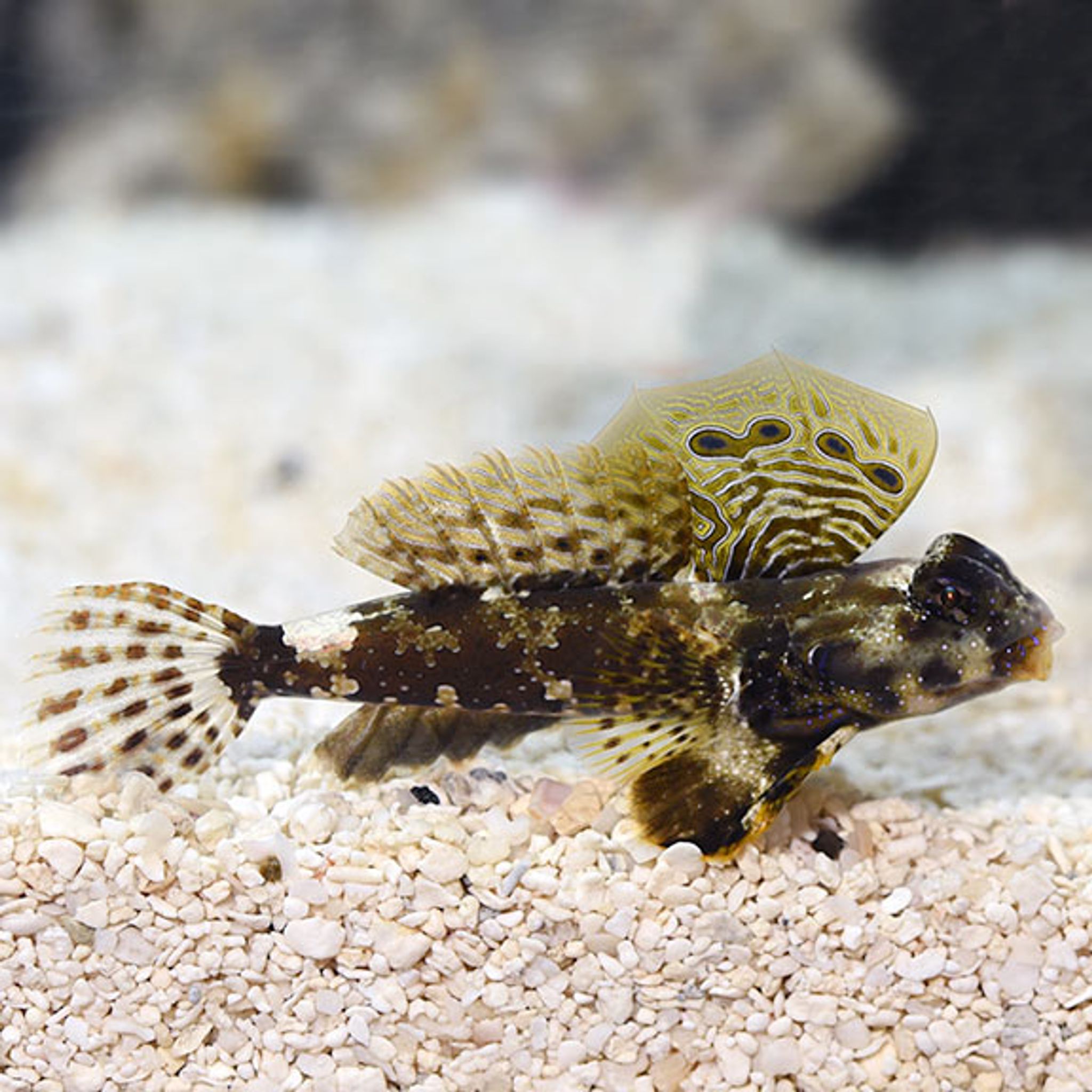
The lawnmower blenny goes by several common names — Algae Blenny, Sailfin Blenny, Jeweled Blenny, and Jeweled Rockskipper — and belongs to the combtooth blenny family (Blenniidae). Its natural range spans the Indo-Pacific — from the western edge near East Africa and the Red Sea, across to Samoa in the east, and down to the Great Barrier Reef.
Identifying features:
- Mottled camouflage pattern in cream, gray, green, and brown that can shift in intensity with mood and surroundings
- A broad, frog-like mouth built for scraping algae off hard surfaces
- Bulbous eyes that move independently of each other, giving it a wide field of view while it perches
- Adult size of roughly 4–5 inches (10–13 cm)
Rather than swimming continuously like most reef fish, a lawnmower blenny hops from perch to perch across rockwork, resting on a ledge to survey its territory between grazing passes.
Tank Size and Setup
Sources disagree on the minimum, ranging anywhere from 30 to 55+ gallons. The realistic answer depends less on a flat number and more on rock surface area and tank maturity, since that surface is where the blenny's food actually grows.
| Tank size | Suitability |
|---|---|
| 20–30 gal (76–114 L) | Juvenile only, short-term, in a system that will be upgraded |
| 40–50 gal (151–189 L) | Realistic minimum for one healthy adult with room to graze |
| 55+ gal (208+ L), heavily rocked | Comfortable long-term home; supports more algae turnover |
| 100+ gal (378+ L), multiple algae zones | Only setting where a second blenny might coexist |
A bigger tank with more live rock isn't just "nice to have" — more surface area means more standing algae and biofilm, which directly translates to a steadier food supply. If you're keeping more than one lawnmower blenny (uncommon, and only advisable in very large systems), plan on roughly 20–30 extra gallons (76–114 L) of volume per additional fish, along with separate grazing territories.
Is Your Tank Ready? A Quick Checklist
Before adding a lawnmower blenny, confirm:
- The tank has been running for several months, not weeks — a brand-new, algae-free tank will starve it
- You can see a visible film of algae or diatoms on rock and glass
- Live rock offers plenty of crevices, ledges, and open perches
- You have a backup feeding plan ready (see Diet below) in case display algae runs thin
If you can't check all four boxes, wait, or start with dried seaweed feeding from day one.
Water Parameters
Lawnmower blennies do fine in standard reef parameters — no special requirements beyond what most reef fish and corals need:
| Parameter | Target range |
|---|---|
| Temperature | 72–78°F (22–26°C) |
| pH | 8.1–8.4 |
| Specific gravity (salinity) | 1.020–1.025 (aim 1.023–1.025 for reef tanks) |
| Water flow | Moderate to fairly high |
Live rock is non-negotiable here — it supplies both grazing surface and the crevices the blenny uses to hide and rest between grazing bouts.
Diet: What Lawnmower Blennies Actually Eat
Most consumer-facing care sheets frame this fish as a pure algae grazer, but a closer look at their actual feeding behavior suggests detritus and filamentous algae make up a significant share of the diet too, not just the soft film algae and diatoms usually pictured. In practice, treat the lawnmower blenny as a broad grazer of algae, biofilm, and detritus rather than a specialist for any one algae type.
Starvation, not disease, is the single biggest husbandry risk with this species. An established tank with a real, regenerating algae crop is a prerequisite before adding one — not an optional bonus.
Feeding Schedule
- Algae plentiful: supplement a few times per week
- Algae sparse: feed daily, sometimes multiple times a day, to prevent weight loss
- Always: keep plant matter as the majority of the diet; mysis or brine shrimp can be offered occasionally but shouldn't dominate
Supplemental Foods
- Dried seaweed or nori, clipped to a rock or feeding clip
- Herbivore or spirulina-based pellets and flakes
- Algae wafers
- Blanched vegetables — zucchini, lettuce, cucumber
- Occasional mysis or brine shrimp (as a minor addition, not a staple)
Reviving a Starving Blenny
A pinched or sunken belly, lethargy, and hiding are the classic warning signs of an underfed blenny. If you spot these, act immediately: increase feeding frequency to multiple times daily, offer a variety of textures (soft nori alongside pellets), and target-feed near its favorite perch if tankmates are outcompeting it. Recovery is possible if caught early, but repeated starvation cycles shorten lifespan.
Shop live specimens and stock up on prepared foods to have on hand before your fish's algae supply runs thin — browse lawnmower and other blennies and herbivore foods and supplements together.
Behavior, Temperament, and Compatibility
Lawnmower blennies are peaceful toward most community and reef fish, but they are territorial about their grazing niche:
- Gets along with: most peaceful reef fish, clownfish, gobies from unrelated niches, and other non-competing grazers
- Avoid pairing with: other blennies, algae-grazing gobies, and dragonets — they compete for the same food and space
- Watch for tension with: tangs and angelfish, which may spar over grazing territory even though they aren't direct competitors for the same food type
- Same-species pairing: not recommended except in very large (100+ gallon) systems with multiple, separated algae zones
Reef Safety
A well-fed lawnmower blenny is generally considered reef safe, but "reef safe" here is conditional, not guaranteed. Once available algae and detritus run low, an underfed blenny may start opportunistically nipping at LPS or SPS coral polyps, or picking at clam mantles. The fix isn't avoiding the fish — it's keeping it consistently fed year-round, not just during the first few weeks after purchase.
Lifespan and Health
Expect a lifespan of roughly 3–5 years in captivity, with good husbandry being the main lever you control. Chronic starvation and unstable water quality are the two factors most likely to shorten it; wild lifespan may run longer under natural, unlimited food supply.
Like other saltwater fish, lawnmower blennies are susceptible to marine ich and velvet, especially when stressed or introduced without quarantine. Because most specimens available in the trade are wild-caught, quarantine is particularly important — plan on 2–4 weeks in a separate quarantine tank before adding one to a display or reef system, ideally with monitoring (and treatment if needed) for common parasites before the fish joins established livestock.
Breeding in home aquaria is very difficult and not a realistic hobbyist goal. Sexual dimorphism is subtle (males may show slightly elongated anal fin rays), they are egg-layers, and spawning is tied to seasonal cues that are hard to replicate at home.
Algae ID: Know What You're Dealing With Before Blaming the Fish
Not all algae is the same, and a lawnmower blenny only handles some of it.
Algae the blenny actually eats well:
- Light green or brown film algae
- Diatoms (often a light brown dusting on glass and rock)
- General biofilm and detritus
Nuisance algae that usually needs separate treatment:
- Hair algae — thick, stringy mats; usually a sign of excess nutrients
- Bryopsis — a feathery, dark-green filamentous algae that most fish, including lawnmower blennies, largely avoid; genuinely hard to eradicate
- Cyanobacteria — a slimy red, green, or black film (technically bacteria, not true algae) that signals excess nutrients and low flow
- Golden algae (chrysophytes) — a lesser-known bloom type often tied to new-tank cycling or nutrient imbalance, distinct from the "hair" or "film" categories most guides discuss
Position the lawnmower blenny as ongoing maintenance for the first group, not a fix for the second.
Root-Causing Nuisance Algae: Phosphate and Nitrate Control
Hair algae, bryopsis, and cyanobacteria are driven mainly by excess phosphate and nitrate — from overfeeding, overstocking, or aging rock and substrate. A grazer only manages the symptom; the durable fix is reducing the nutrient supply:
- Use RO/DI water to eliminate phosphate and nitrate coming in with tap water
- Run GFO (granular ferric oxide) media to actively pull phosphate from the water column
- Improve protein skimming to export organics before they break down into nutrients
- Reduce feeding volume and frequency if overfeeding is the source
Manual Hair Algae Removal
For an active hair algae outbreak, combine these steps rather than relying on any single fix:
- Manually remove it by siphoning or scrubbing with a toothbrush
- Reduce light duration or intensity temporarily
- Increase nutrient export — water changes, GFO, or carbon dosing
- Add grazers (blenny, snails, urchins, hermit crabs) to maintain the tank afterward, not to clear the initial bloom
Algae Turf Scrubbers
An algae turf scrubber is a mechanical nutrient-export device that deliberately grows algae on a screen under intense light, pulling phosphate and nitrate out of the water before nuisance algae can use them elsewhere in the tank. It's a higher-maintenance option, but a useful complement to livestock-based grazing when nutrient levels are stubbornly high.
Caulerpa: The "Good" Macroalgae
Not all algae growth is a problem. Caulerpa is a cultivated macroalgae commonly grown in refugiums specifically for nutrient export, and some keepers use trimmings as supplemental food for blennies and tangs. It's worth distinguishing from nuisance blooms since the two get lumped together in casual conversation.
Alternative and Complementary Algae Eaters
A lawnmower blenny isn't the only option, and it isn't always the right one. Consider the full toolkit:
| Option | Best for | Notes |
|---|---|---|
| Lawnmower blenny | Larger tanks (40+ gal) with established film algae | Territorial with its own kind; needs consistent feeding |
| Molly Miller blenny | Smaller or nano reef tanks | Atlantic/Caribbean native, generally smaller, considered slightly easier and more universally reef safe |
| Astraea, turbo, and nerite snails | Any size tank | Reliable, low-conflict film algae grazers |
| Emerald crabs | Reef tanks needing an all-rounder grazer | Also eat some nuisance algae types |
| Sea hares | Targeted red/brown/green algae outbreaks | Strong grazers but short-lived (~1 year); need 75+ gal (284+ L) tanks; release irritant ink if stressed |
| Urchins | Larger, established reef systems | Effective grazers but can dislodge frags while moving |
Lawnmower Blenny vs. Molly Miller Blenny
Both fill a similar algae-grazing niche, but the Molly Miller blenny is generally smaller, native to Atlantic and Caribbean waters, and considered a somewhat hardier and more universally reef-safe choice by many keepers. If your tank is on the smaller side, or a lawnmower blenny's territoriality and size feel like a mismatch, the Molly Miller is worth checking before you decide.
A Simple Decision Framework
- Tank is 40+ gallons with visible film algae and open rock territory: lawnmower blenny is a solid fit
- Tank is smaller or a nano reef: Molly Miller blenny or snails are the safer choice
- Problem is an active hair algae or bryopsis outbreak: fix nutrients and remove manually first; add grazers afterward for maintenance
- You want a hands-off, invertebrate-only solution: snails, hermit crabs, or an emerald crab
- Nutrient levels are chronically high despite grazers: add an algae turf scrubber alongside livestock
Browse snails and crabs for a livestock-only cleanup crew.
Common Mistakes to Avoid
- Adding one to a brand-new tank — no algae means starvation within weeks
- Expecting it to clear an existing hair algae or bryopsis bloom — treat the nutrient cause first
- Keeping two in an average tank — triggers territorial aggression
- Reactive feeding — waiting until the belly looks pinched before supplementing
- Skipping quarantine — risks introducing ich or parasites to an established reef
- Not enough live rock or hiding spots — increases stress and reduces available grazing area
Frequently Asked Questions
How big of a tank does a lawnmower blenny need?
Plan on 40 gallons (151 L) minimum for one adult in an established tank with visible algae growth. More room and more live rock surface area is always better, since that surface is what feeds the fish.
What do lawnmower blennies eat?
Mainly algae film, diatoms, and detritus off live rock, supplemented with dried seaweed, herbivore or spirulina pellets, algae wafers, and blanched vegetables like zucchini or cucumber — especially once display algae runs thin.
Are lawnmower blennies reef safe?
Generally yes when well-fed, but the safety is conditional, not guaranteed. An underfed blenny may nip at coral polyps or clam mantles once its usual food source runs low, so consistent feeding is the real safeguard.
Can you keep two lawnmower blennies together?
Not recommended in typical home aquariums — they're territorial toward their own species and toward other algae-grazing gobies or dragonets. It's only realistic in very large systems (100+ gallons) with multiple separate algae zones.
How long do lawnmower blennies live?
Roughly 3–5 years in captivity with good care. Starvation and unstable water quality are the two biggest factors that shorten lifespan, so consistent feeding matters more than almost any other care detail.
Will a lawnmower blenny eat hair algae or bryopsis?
It prefers softer film algae, diatoms, and detritus, so it will help with light maintenance but won't eliminate an established hair algae or bryopsis problem. Fix the underlying nutrient levels and remove the algae manually first, then let the blenny maintain the tank afterward.
What's the difference between a lawnmower blenny and a Molly Miller blenny?
Both graze the same general algae niche, but the Molly Miller blenny is smaller, native to the Atlantic and Caribbean, and considered by many keepers to be a hardier, more universally reef-safe option — a good fit for smaller or nano reef tanks where a lawnmower blenny's size and territoriality would be a mismatch.
Ready to add a grazer to your reef? Browse live marine fish on FishyHub, including lawnmower and Molly Miller blennies, to find the right fit for your tank size and algae situation.


