
Knifefish Care Guide: Tank Size, Diet, Water Parameters and Temperament
Most people typing "knifefish care" into a search bar are picturing the black ghost knifefish, the sleek, all-black fish with a ribbon-like fin that glides backward as easily as forward. This guide covers everything that species needs — tank size at every life stage, diet, water chemistry, and temperament — and also explains where it fits among its more extreme relatives, so you don't confuse a manageable pet with a fish that needs 500 gallons.
Meet the Black Ghost Knifefish
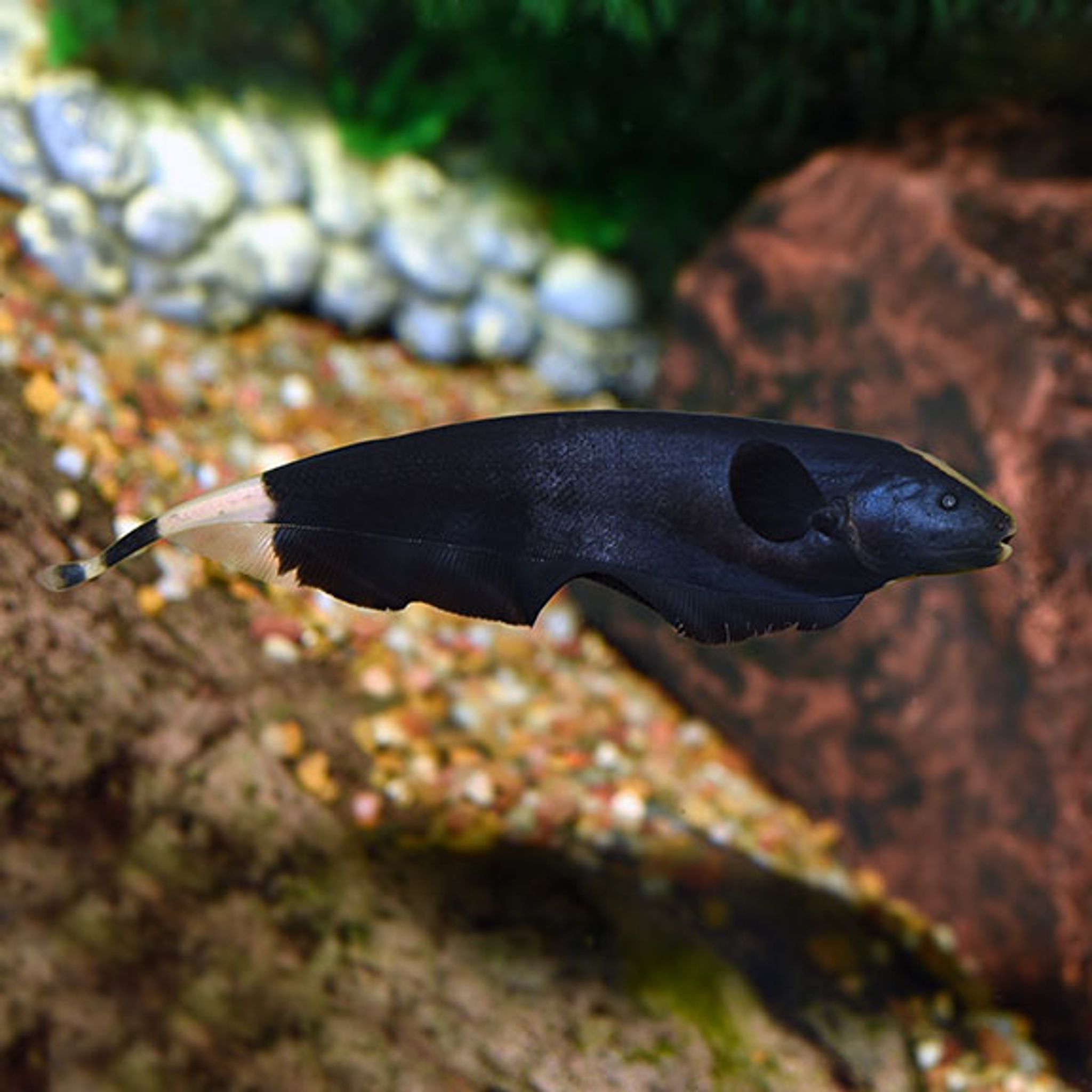
The black ghost knifefish (Apteronotus albifrons) comes from slow-moving rivers and flooded forest margins across the Amazon basin, including parts of Venezuela, Peru, Brazil, and Paraguay. It's easy to identify: a solid black to dark gray body, a long undulating anal fin running almost the full length of its underside, two pale rings near the base of the tail, and a white blaze on the tip of its nose.
It's a weakly electric fish, part of the same order (Gymnotiformes) as several other "knifefish," and that trait shapes almost everything about how it should be kept.
How Electrolocation Works
Black ghost knifefish have poor eyesight and are active mostly at night, so they navigate using electrolocation instead. A specialized electric organ in the tail generates a continuous, low-voltage electric field around the body. Objects, prey, and even other fish disturb that field in subtle ways, and the fish reads those distortions through sensory receptors along its skin. It's the same general principle used by the elephant nose fish (via an organ near its chin) — a way to "see" in dark, murky water where vision alone doesn't work. This field is for sensing, not defense; it isn't strong enough to be felt by a person and has nothing in common with the shock an electric eel can deliver.
Adult Size and Lifespan
Black ghost knifefish are commonly reported to reach 18–20 inches (46–51 cm) in captivity, with some individuals occasionally growing larger; a home-tank fish in the 12–16 inch range is more typical, but new keepers should still plan for a large-bodied adult, not the 4–6 inch juvenile sold in stores. With good water quality and diet, they can live around 10 years, and up to 15+ years isn't unusual under excellent care.
Tank Size: Plan for Growth, Not Just Today
This is where most first-time knifefish keepers go wrong: they buy a small juvenile, put it in a modest tank, and never upgrade as the fish grows into an 18-inch adult. Tank-size advice online varies wildly — anywhere from "30 gallons is fine" to "you need 100+ gallons" — because most sources give one static number instead of tying it to growth stage. Here's a more useful, stage-based approach:
| Life stage | Approximate length | Minimum tank size |
|---|---|---|
| New juvenile | 4–6 in (10–15 cm) | 30 gal (114 L) |
| Growing sub-adult | 8–12 in (20–30 cm) | 55–75 gal (208–284 L) |
| Full-grown adult | 15–20 in (38–51 cm) | 75–125+ gal (284–473+ L) |
If you plan to keep more than one, add roughly 50–100 gallons per additional fish — territorial conflict, not lack of swimming room, is the main risk of crowding them.
Shape matters as much as volume. Choose a long, low-profile tank over a tall one. Black ghost knifefish swim along the bottom and mid-water level using a rippling motion of that long anal fin, and horizontal swimming space suits that far better than height.
Water Parameters
These fish have skin that lacks scales over much of the body, which makes them more sensitive to water quality swings than typical community fish.
| Parameter | Target range |
|---|---|
| Temperature | 73–82°F (23–28°C) |
| pH | 6.5–7.5 (mildly acidic to neutral) |
| General/carbonate hardness | 0–10 dGH/KH (soft water) |
| Ammonia / nitrite | 0 ppm, always |
On pH, sources disagree — some cap it at 7.0, others allow up to 8.0. A 6.5–7.5 range is the safer, more consistent target; the fish can tolerate brief swings outside that but does best mildly acidic to neutral and stable.
Because they produce a fair amount of waste for their size (a side effect of a high-protein carnivore diet), run strong biological and mechanical filtration, sized generously for the tank. Weekly partial water changes of 20–25% are a reasonable baseline to keep ammonia and nitrite pinned at zero and reduce the risk of skin lesions or secondary infections.
Substrate, Décor, and Lighting
- Substrate: Soft sand or smooth, fine gravel. Sharp-edged gravel can scrape the fish's sensitive, largely scaleless underside as it forages and rests near the bottom.
- Hiding spots: Caves, driftwood, PVC pipe sections, and dense plant cover are essential, not optional. This is a shy, nocturnal fish, and without secure daytime hiding places it stays stressed and often loses its appetite.
- Lighting: Keep it dim or subdued. Floating plants that diffuse overhead light work well. A knifefish that hides constantly under bright lighting is behaving normally, not sick — it's simply waiting for evening.
Diet and Feeding Schedule
Black ghost knifefish are strict carnivores. In the wild they hunt insect larvae and small invertebrates after dark; in the aquarium, offer:
- Frozen or live bloodworms
- Brine shrimp
- Blackworms or tubifex worms
- Small feeder shrimp
- Chopped prawn or shrimp meat
Most knifefish, especially young ones, refuse dry flakes and pellets outright. Feeding only dry food is a common mistake that leads to a fish that appears to be starving or steadily losing weight. Some individuals can eventually be trained onto sinking carnivore pellets by mixing a few pellets in with frozen food each feeding and gradually increasing the ratio over several weeks — patience matters more than speed here.
Feed in the evening or after lights go out, matching the fish's natural nocturnal rhythm. Once-daily evening feeding is the standard recommendation for adults; juveniles that are still growing can benefit from two to three smaller feedings a day. Whatever the schedule, offer only what's eaten within a few minutes — uneaten protein-rich food fouls water quickly.
Temperament and Tankmates
Black ghost knifefish are generally peaceful toward fish that are a different size and shape from themselves, but they are intolerant of their own kind in anything less than a very large tank. Two knifefish housed together in a modest setup frequently results in territorial aggression and injury, so keeping a single fish is the safer default for most home aquariums.
Good tankmates are mid-to-large, peaceful community fish that won't nip its long fin and are too big to be seen as food:
- Larger tetras and silver dollars
- Larger barbs and rainbowfish
- Angelfish and gouramis
- Peaceful South/Central American cichlids, such as the electric blue acara
- Plecos and corydoras
- Rope fish and bichirs
Avoid fin-nippers (small barbs and similar species can shred the exposed fin), very small fish or fry that a full-grown knifefish will eventually treat as a snack, and aggressive or territorial cichlids that may harass it. You can browse compatible options in FishyHub's Plecos, Corys & Bottom Dwellers and Angelfish, Discus, Rams & Cichlids categories when planning a community tank around one.
Health, Handling, and Medication Sensitivity
The lack of scales over much of the body makes black ghost knifefish more prone to physical injury and secondary infection than typical scaled fish. A few practical notes:
- Handle gently and rarely. The body is slim and flexible, and rough handling or a stressful transport can cause injury.
- Be cautious with medication. Many standard ich treatments and copper-based medications are flagged as harsh on scaleless fish. Check labels for scaleless-fish safety, or use half-strength dosing and alternatives when treating disease.
- Watch water quality closely. Skin lesions, cloudy eyes, or unusual lethargy often trace back to lapsed water changes or ammonia/nitrite creeping above zero.
Breeding: Set Expectations Low
Breeding black ghost knifefish in home aquariums is exceptionally rare, and hobbyist information on the subject is inconsistent. Some sources describe specific conditions — soft, acidic water and secluded spawning sites — while others note that sexing the fish is difficult and reliable spawning triggers simply haven't been well documented. Treat this as a fish to enjoy and care for, not one to plan a breeding project around.
Knowing Your Knifefish: The Wider Family
"Knifefish" as a search term covers species with wildly different care requirements, and this is the gap most guides skip. Before buying, confirm exactly which fish you're looking at:
| Species | Typical adult size | Tank needed | Notes |
|---|---|---|---|
| Black ghost knifefish | 18–20 in (46–51 cm) | 75–125+ gal | Community-tank friendly, the pet-trade standard |
| Tiger/banded knifefish (Gymnotus spp.) | Large, variable | Large tank | True knifefish, nocturnal, predatory, intolerant of conspecifics |
| Clown knifefish (Chitala ornata) | 2–3+ ft | 250+ gal | Predatory, far too large for most home setups |
| Electric eel | Up to several feet | 500+ gal | Generates up to ~600V; expert/public-aquarium species only |
| Elephant nose fish | Around 9 in | Community-sized | Not a true knifefish, but shares electrolocation and similar care needs |
Elephant Nose Fish: A Related Look-Alike Lifestyle
The elephant nose fish (Gnathonemus petersii) isn't a true knifefish — it's African, not South American — but it shares the same weakly-electric, nocturnal, shy lifestyle, using a chin-mounted sensory appendage instead of a tail organ. It wants soft, acidic water, sand substrate, live or frozen foods, and calm tankmates that won't outcompete it at feeding time. Anyone who likes the idea of a black ghost knifefish but has a smaller setup often finds this a comparable alternative in temperament and care style.
Clown Knifefish, Tiger Knifefish, and Electric Eel: Not the Same Fish
The clown knifefish is a true knifefish but grows to two or three feet or more and needs a tank in the 250-gallon range — an impulse buy at four inches long that quickly outgrows nearly every home aquarium. The tiger or banded knifefish (Gymnotus species) is smaller in the trade but still nocturnal, predatory, and intolerant of its own kind, needing a substantial tank of its own. The electric eel sits at the extreme end of the family tree: not a realistic pet-trade fish, capable of generating up to roughly 600 volts, and requiring 500+ gallons and expert-level or public-aquarium care. All three are genuine relatives of the black ghost knifefish, but none should be mistaken for it at the store.
A Cautionary Look-Alike: The Payara
The payara, or vampire tetra, isn't a knifefish at all, but it turns up in the same "exotic predatory South American fish" searches. It's notorious for two long fang-like teeth, needs a tank of 100+ gallons, is strictly predatory, and has an extremely poor survival track record in home aquariums. It's worth knowing by sight specifically so it doesn't get bought on impulse alongside a knifefish.
Other Freshwater Oddities Worth Knowing
If unusual, ambush-style freshwater fish interest you, leaf fish (both South American and African species) are worth a mention. They camouflage as dead leaves, ambush prey rather than chase it, typically need live food, and do best with calm, non-competitive tankmates — a similar "specialist feeder, specialist setup" profile to the knifefish family.
Common Mistakes to Avoid
- Buying a 4–6 inch juvenile and never upgrading the tank as it grows past a foot long
- Housing two knifefish together in a tank that's too small, leading to territorial injury
- Offering only dry flakes or pellets, causing the fish to refuse food and lose weight
- Keeping tank lighting bright all day, so the fish hides constantly and looks "never seen"
- Using full-strength ich or copper-based medication on a scaleless-skin species
- Skipping regular water changes, leading to skin lesions or cloudy eyes
- Adding nippy fish like small barbs that damage the long fin
- Rough handling during moves or transport, injuring the fish's delicate body
Frequently Asked Questions
How big does a black ghost knifefish get?
Commonly 18–20 inches (46–51 cm) in captivity, occasionally larger. Always plan your tank size around the adult fish, not the small juvenile you bring home.
What size tank does a black ghost knifefish need?
A minimum of 30–40 gallons works for a young fish, but plan to upgrade to 75–125+ gallons as it approaches full size. A long, low-footprint tank is preferable to a tall one.
Can you keep two black ghost knifefish together?
Only in a very large tank. They're prone to territorial aggression toward their own species, so a single-fish setup is the safer choice for most keepers.
What do black ghost knifefish eat?
A carnivorous diet of frozen or live bloodworms, brine shrimp, blackworms, and chopped shrimp or prawn. Most refuse dry flakes, especially as juveniles, though some can be slowly trained onto sinking carnivore pellets.
Are black ghost knifefish electric?
Yes, weakly electric. They emit a low-voltage field for electrolocation and navigation in the dark — this is a sensing tool, not a defensive shock like an electric eel produces.
Is a black ghost knifefish the same as an electric eel?
No. Both belong to the knifefish relatives known as Gymnotiformes, but the electric eel is a much larger, dangerously high-voltage species needing an enormous tank, while the black ghost knifefish is a manageable, if large, community-tank fish.
Why is my knifefish hiding all day?
This is normal nocturnal behavior. Black ghost knifefish hide during the day and become active to feed and swim at night, especially in a tank with dim lighting and adequate hiding spots.
What fish can live with a black ghost knifefish?
Peaceful, similarly sized or larger community fish work best — larger tetras, silver dollars, gouramis, cichlids like the electric blue acara, plecos, corydoras, and rope fish. Avoid tiny fish that could be eaten once the knife matures and aggressive fin-nippers.
If you're ready to plan a tank around a black ghost knifefish, browse compatible freshwater species in FishyHub's Freshwater Livestock category to build out a community that fits its size and temperament.


