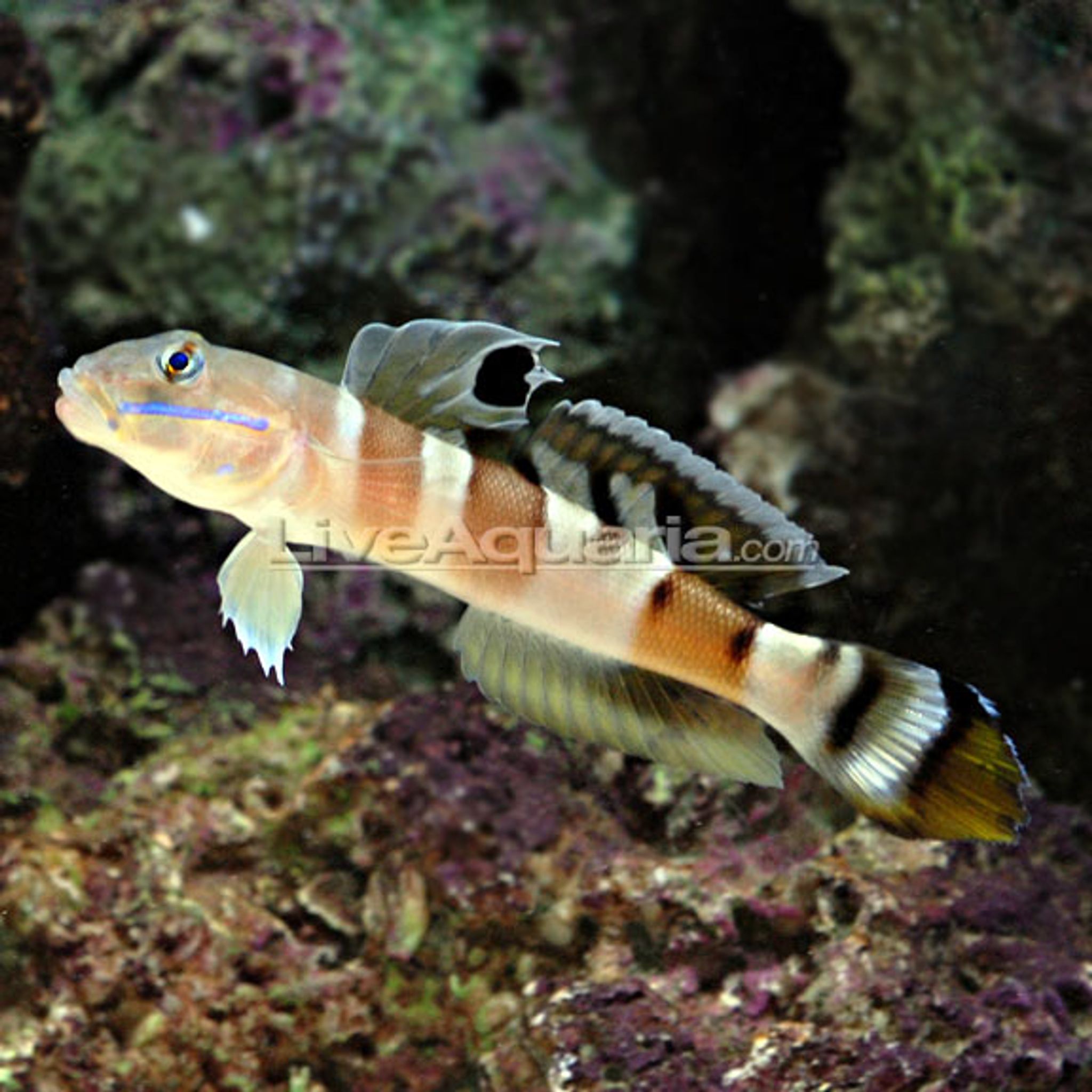

Is Yellow Watchman Goby Reef Safe? Coral and Invertebrate Compatibility Explained
Yes — the yellow watchman goby is fully reef safe. It doesn't eat, sting, or peck at coral polyps, and it leaves clams, snails, and most shrimp alone. The real thing to manage isn't predation at all; it's burrowing, which can disturb frags placed too close to its tunnel.
The Short Answer: Reef Safe, With One Real Caveat
The yellow watchman goby (Cryptocentrus cinctus), also sold as the yellow shrimp goby or prawn goby, reaches about 3.5–4 inches (9–10 cm) as an adult. It's a carnivore that hunts zooplankton and meaty scraps drifting near the sandbed — coral tissue simply isn't on the menu.
That means it's compatible with:
- Soft corals — leathers, zoanthids, mushrooms
- LPS — torches, chalices, blastomussa
- SPS — acropora and other stony corals in mixed reef displays
- Clams, snails, hermit crabs, urchins, and most cleanup-crew shrimp
Where sources tend to disagree is on how to frame this. Some describe the goby as "reef safe with no caveats," while others flag digging as a real practical problem. The accurate framing sits between the two: it is reef safe in the sense that matters most — it will not damage coral tissue — but its burrowing habits require you to think about placement.
Why Digging, Not Diet, Is the Actual Risk
As a burrowing species, a watchman goby constantly moves sand to maintain its tunnel. Left unmanaged, this can:
- Bury small frags sitting directly on the sandbed
- Topple frag plugs or loose rock near the burrow entrance
- Undermine rockwork that isn't anchored to the tank bottom, risking a collapse
None of this is the goby attacking your coral — it's incidental excavation. The fix is entirely about aquascape design, not about avoiding the fish.
Placement Checklist to Protect Corals
- Mount valuable frags on elevated rock ledges, frag racks, or plugs rather than loose on the sand
- Identify the sand-to-rock border the goby favors and keep prized coral several inches away from that zone
- Set rock directly on the glass bottom of the tank, not resting on sand, so digging can't undermine the structure
- Leave a deliberate open patch of sand near the rockwork so the goby has somewhere to dig that isn't under your aquascape
A simple way to think about it: give the goby its own excavation zone, and keep the coral display zone elevated and separate.
Tank Setup for a Reef-Safe Watchman Goby
Substrate and Rockwork
The goby needs a real sand bed to burrow in — a mix of fine sand and some coarser coral rubble or gravel gives tunnel walls enough structure to hold. Recommendations for depth vary from about 3 inches up to 4+ inches; a practical range is 3–4 inches (7.5–10 cm), adjusted for tank size. Rock should always sit on the tank floor itself, never balanced purely on sand.
Tank Size
| Setup | Minimum tank size |
|---|---|
| Single yellow watchman goby | 20 gallons (76 L) |
| Mated pair, or goby + pistol shrimp | 30 gallons (114 L) |
Some sources cite tanks as small as 10–20 gallons for a single fish, but 20 gallons is the safer consensus minimum for a stable reef display with room for an aquascape.
Water Parameters
| Parameter | Target range |
|---|---|
| Temperature | 75–80°F (24–27°C) |
| pH | 7.7–8.5, aim for 8.1–8.4 |
| Salinity (specific gravity) | 1.020–1.026, aim for ~1.025 |
| Ammonia / nitrite | 0 ppm |
| Nitrate | Under 20 ppm (lower for SPS-heavy tanks) |
Flow and Diet
Keep flow moderate rather than strong directly over the sandbed — high current makes it hard for the goby to hold position and, if paired, hard for a pistol shrimp to keep its burrow intact. Feed meaty foods at least once daily: frozen or live mysis and brine shrimp, plus marine pellets or flakes.
The Pistol Shrimp Partnership
One of the more compelling reasons reefers choose this fish is its mutualistic relationship with pistol shrimp, most commonly Alpheus randalli or the tiger pistol shrimp (Alpheus bellulus). The shrimp digs and maintains a shared burrow while the goby stands guard outside, keeping an antenna in contact with the shrimp. When danger appears, the goby flicks its tail or fins as a signal, and both animals retreat into the tunnel.
This pairing is entirely optional — the goby does fine on its own — but the behavior is far more active and interesting to watch with a shrimp partner.
Introducing a Pair Correctly
- Wait until the tank has been stable for several months before adding a pistol shrimp.
- Add the pistol shrimp first and let it settle and start digging for a few days.
- Introduce the goby afterward, once the shrimp has a burrow established.
Reversing this order, or rushing the shrimp into a newly cycled tank, reduces the odds of a successful bond.
Compatibility With Other Invertebrates
Beyond its pistol shrimp partner, the yellow watchman goby is compatible with cleaner shrimp, hermit crabs, snails, urchins, and general cleanup crews you'd stock from a marine invertebrates selection. The one caution isn't about the goby at all: a molting pistol shrimp is soft and defenseless, so avoid housing it alongside predatory or aggressive shrimp and crabs that might attack it during that vulnerable window.
Temperament and Tankmates
The watchman goby is peaceful toward fish and invertebrates it isn't competing with, but it is territorial toward its own species and similar shrimp gobies unless the two are a genuinely bonded pair. Keeping two unmated watchman gobies in the same tank generally leads to fighting.
Avoid pairing it with boisterous or aggressive tankmates — large wrasses, aggressive dottybacks or pseudochromids, or big predatory fish — that could bully, stress, or outright eat it.
Jumping Risk and Overflow Safety
Watchman gobies are known jumpers, especially when newly introduced, startled, stressed, or without a secure burrow established yet. A tight-fitting lid or canopy with no gaps — including around cords and overflow cutouts — is essential, not optional. Once the fish has a secure burrow, jumping risk drops noticeably, but the lid should stay in place regardless.
Overflow boxes are a related hazard: choose a specimen too large to fit through overflow slots, or screen the overflow, so the fish can't disappear into the sump.
A Good Choice for Beginner Reefers
The yellow watchman goby is frequently recommended as one of the best beginner saltwater fish for a reef tank. It's hardy, peaceful, visually striking with its bright yellow body and blue speckling, and tolerates standard reef parameters well. It doesn't require a shrimp partner to thrive, which makes it a low-pressure entry point for anyone curious about shrimp-goby symbiosis before committing to a full pistol shrimp setup. Browse current gobies availability to compare options for a first reef fish.
Sourcing: Wild-Caught vs. Captive-Bred
Most yellow watchman gobies sold in the trade are wild-caught rather than captive-bred, which is a distinction many care guides skip. Because of that, acclimation and quarantine matter more than they would for a captive-raised species — take extra care with slow drip acclimation and a full quarantine period before adding a wild-caught specimen to an established reef.
Common Mistakes to Avoid
- Placing valuable frags directly on the sandbed near the burrow — they get buried, knocked over, or scavenged by a pistol shrimp for tunnel-building material.
- Skipping a tight lid because the fish is a bottom-dweller — watchman gobies jump often, especially early on.
- Resting rockwork on loose sand instead of the tank floor — digging can undermine it and cause a collapse that crushes coral or livestock.
- Adding a pistol shrimp too early, before the tank has matured.
- Introducing the goby before the shrimp when trying to establish a bonded pair, or not giving the shrimp settling time first.
- Housing multiple unmated watchman gobies together — expect territorial fighting.
- Assuming the fish needs a shrimp to survive — it doesn't; pairing only adds behavior and display value.
Frequently Asked Questions
Will a yellow watchman goby eat my coral or clams?
No. It's a carnivore that feeds on meaty foods and zooplankton, not coral tissue, so it's reef safe in the sense that matters for your corals and clams.
Does it need a pistol shrimp to be happy?
No. It thrives solo. Pairing with a pistol shrimp is a bonus that adds more natural, active behavior and a more interesting display, but it isn't required for the goby's wellbeing.
Can it live with cleaner shrimp or hermit crabs?
Yes, generally. The only real concern is that a molting pistol shrimp is vulnerable and shouldn't be housed with aggressive or predatory shrimp and crabs — the watchman goby itself isn't a threat to any of them.
Will it dig up my sand bed and ruin my aquascaping?
It will move sand and reshape the area around its burrow. Mitigate this by anchoring rock directly to the tank floor and elevating any prized coral away from the burrow zone rather than placing it loose on the sand.
What's the minimum tank size?
20 gallons (76 L) for a single goby, and 30 gallons (114 L) for a mated pair or a goby-and-pistol-shrimp combo.
Does it need a lid?
Yes. It's a known jumper, particularly when new to the tank or startled, so a tight-fitting lid with no gaps around cords or overflow cutouts is strongly recommended.
Is it reef safe with SPS corals specifically?
Yes. It doesn't target SPS tissue at all — just avoid placing SPS frags loose within its digging zone near the burrow.
Can two watchman gobies live together?
Only if they're a genuinely bonded mated pair. Otherwise, expect territorial aggression between them.
If you're planning a reef-safe stocking list around a yellow watchman goby, browse corals to find soft, LPS, and SPS options suited to an elevated-frag layout that works around its burrowing habits.


