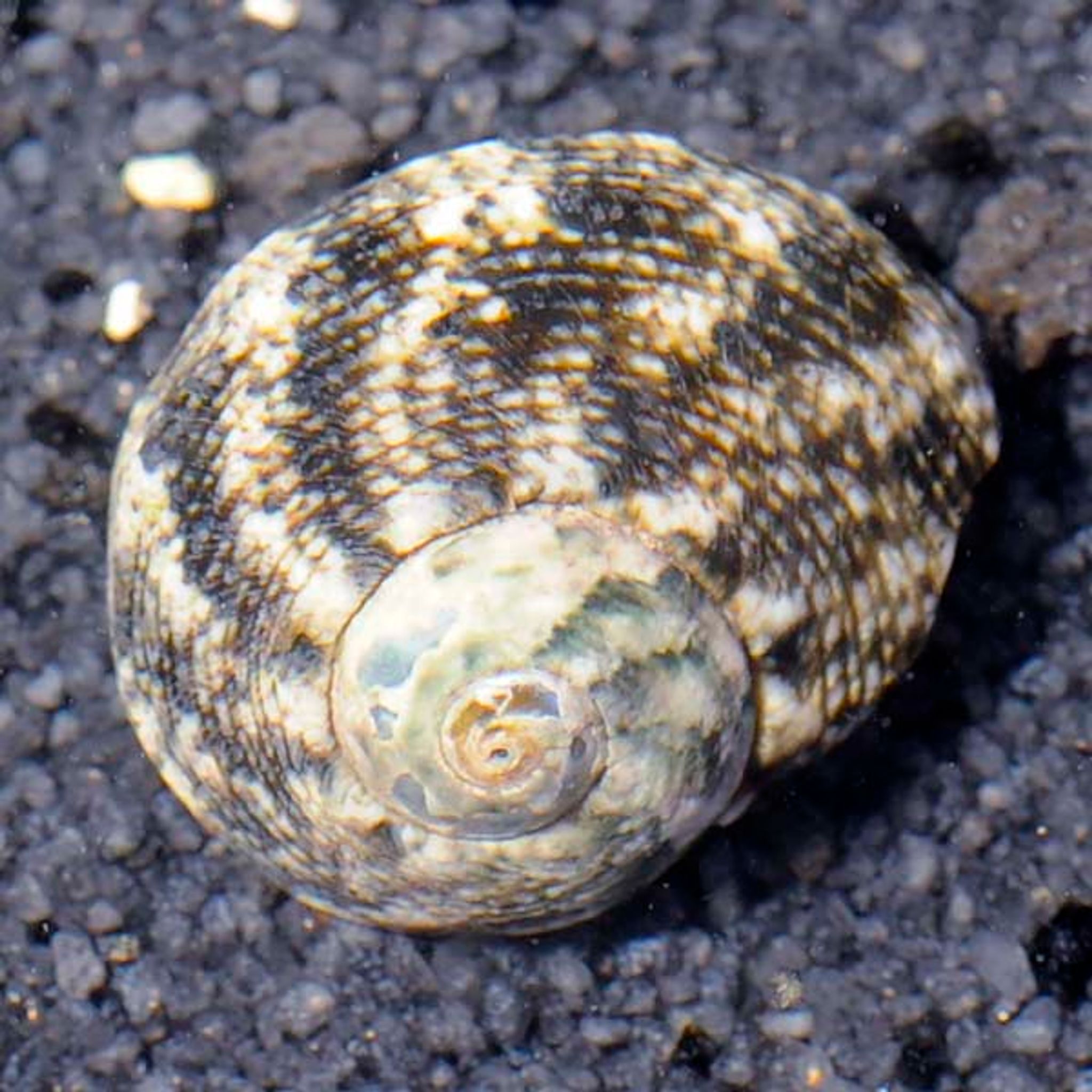

Is Turbo Snail Reef Safe? Compatibility With Fish, Coral and Invertebrates
Yes, turbo snails are reef safe — they do not eat, sting, or damage coral tissue of any kind. The real compatibility issue isn't predation at all: it's their sheer size and grazing strength, which can topple unsecured frags and loose rock if a tank isn't set up to handle them. This guide walks through exactly how to stock, place, and pair turbo snails so they clean algae without causing collateral damage.
The Short Answer: Reef Safe, With a Physical Caveat
Turbo snails (commonly the Mexican turbo, along with Turbo fluctuosus and Turbo bruneus) are strict herbivores. They graze film algae, hair algae, diatoms, and cyanobacteria off glass, rock, and sand — they have no interest in coral polyps, LPS or SPS tissue, zoanthids, or anemones. There's no documented mechanism by which a turbo snail stings or consumes coral.
The risk that does exist is mechanical, not biological. A turbo snail can grow to 1.5–4 inches (4–10 cm) across the shell and is surprisingly heavy and strong for a grazer. As it plows across rockwork hunting for algae, it can:
- Knock over unglued frags or frag plugs
- Dislodge loose rock in an unstable aquascape
- Bury or shade a low-growing coral by pushing debris or rubble onto it
None of this is coral predation — it's bulldozing. The fix is straightforward and covered below.
Setting Up a Tank So Turbos Can't Cause Damage
Before adding turbo snails to any established reef, take these steps:
- Epoxy or reef-safe glue every frag to its base rock or plug rather than resting it loosely.
- Secure loose rock into a stable aquascape — dry-fit and pin structural rocks so nothing shifts under 4 inches of shell and muscle.
- Avoid nano tanks under roughly 20 gallons (76 L) with delicate frag racks, or at least skip turbos there in favor of smaller grazing snails.
- Favor larger, established tanks (40+ gallons / 150+ L) with mature, secure rockwork, where a turbo has room to graze without bumping into fragile colonies.
There's no universal hard minimum tank size in circulation — some hobbyist guidance says a single turbo can work in a 10-gallon tank, while more conservative advice reserves them for larger, established systems only. The practical middle ground: scale your caution inversely with tank size. The smaller and more frag-dense the tank, the more essential gluing everything down becomes, and the more you should lean toward a mid-size or larger tank if you want to keep more than one.
Diet and Algae Control: What Turbos Actually Eat
Turbo snails are excellent generalist grazers for:
- Film algae on glass
- Hair algae
- Diatoms
- Cyanobacteria films on rock and sand
They will not reliably eat coralline algae. Coralline is a calcareous, hard-encrusting red algae, and turbos generally leave it alone in favor of softer, easier-to-graze film and hair algae. Some generic cleanup crew lists lump turbos in as "algae eaters" without this distinction, but the specific behavior is consistent: if you want dedicated coralline grazing, that's a job for sea urchins, not turbo snails. The upside is that a turbo-based cleanup crew is effectively coralline-friendly by omission — it won't compete with your coralline for space.
As a rule of thumb, one large turbo snail can keep roughly 20–25 gallons (75–95 L) of rockwork clean of nuisance film and hair algae under normal bioload.
Stocking Rate: How Many Turbo Snails Per Gallon
| Situation | Recommended stocking |
|---|---|
| Standard long-term maintenance | 1 turbo per 5–10 gallons (19–38 L) |
| Active hair/film algae bloom (temporary) | 1 turbo per 2–5 gallons (8–19 L), then reduce |
| Per-snail rockwork coverage | ~20–25 gallons (75–95 L) of algae-covered surface per large turbo |
Trade cleanup crew lists frequently recommend snail counts well above what a tank can sustain long-term. Overstocking doesn't make a cleanup crew work better — once the algae supply runs out, extra turbos simply starve. Finding empty shells scattered around the tank a few weeks after adding a large batch is usually a sign of overcrowding, not disease. It's better to understock modestly and supplement with a gel food or algae wafer between blooms than to overstock and let snails die off.
Fish Compatibility
Turbo snails coexist peacefully with the vast majority of community and reef fish. The exceptions are fish species known for picking at or cracking open snails and other invertebrates:
- Six-line wrasses and other aggressive wrasse species
- Triggerfish
- Puffers
- Larger angelfish
- Some hawkfish
If your stocking plan already includes any of these, expect occasional snail losses and factor that into your cleanup crew budget rather than assuming a compatibility failure. You can browse compatible options in marine fish categories that skip the more aggressive invert-pickers, and check specific listings under wrasse species before combining them with a snail-heavy cleanup crew.
Invertebrate Compatibility
Turbo snails generally do fine alongside other reef cleanup crew members and corals, since they're competing for rock space rather than preying on each other:
- Peaceful reef shrimp — cleaner, fire, and peppermint shrimp are non-issues
- Other CUC snails — nassarius, cerith, trochus, and nerite snails coexist without conflict
- Corals and anemones — safe as long as they're secured per the setup guidance above
The one real invertebrate conflict is hermit crabs. Larger or more numerous hermit crabs will actively evict and kill turbo snails to steal their shells — a classic cleanup crew conflict that catches new reefers off guard. If you're running both, keep hermit numbers low or choose smaller, less aggressive hermit species.
Water Parameters and Acclimation
Turbo snails do well within standard reef parameters:
| Parameter | Target range |
|---|---|
| Temperature | 72–78°F (22–26°C) |
| pH | 8.1–8.4 |
| Specific gravity | 1.023–1.025 |
| Alkalinity (KH) | 8–12 dKH |
| Calcium | 350–450 ppm |
| Magnesium | 1200–1350 ppm |
Sources vary slightly on the "ideal" temperature — some lean toward the low 70s, others toward the mid-to-upper 70s. Treat 72–78°F as the safe working band; turbos tend to tolerate the cooler end of reef temperatures better than many tropical fish do. Stable calcium and alkalinity matter most for shell integrity, so swings in those parameters show up as weak or pitted shells before anything else.
Turbo snails are sensitive to sudden salinity and temperature changes. Drip acclimate over 1.5–3 hours rather than floating the bag and dumping the snail in. A large share of "reef-unsafe" complaints trace back to fast acclimation shock, not any real incompatibility — the snail dies within a day or two and gets blamed on the species rather than the process.
Like all snails and invertebrates, turbo snails are highly sensitive to copper-based medications. Never treat a reef tank containing turbo snails (or any inverts) with copper — it's lethal to them, so any fish disease treatment needs to happen in a separate quarantine system instead.
Common Mistakes and Troubleshooting
- Overbuying for tank size — leads to algae exhaustion and shell die-off within weeks.
- Skipping frag security — toppled corals get buried, shaded, or physically stressed.
- Rushing acclimation — shock and early death get misread as "not reef safe."
- Assuming an upside-down snail is dead — turbo snails and many other snails cannot reliably self-right. If you find one flipped, gently turn it back over yourself; left too long, an inverted snail is vulnerable to predation by hermit crabs, shrimp, or fish, or can die from prolonged inversion alone.
- Combining turbos with an aggressive hermit crab colony without expecting shell-eviction losses.
- Using copper medication in a display tank that still houses turbo snails.
- Expecting turbos to solve coralline algae or dinoflagellate problems — they're the wrong tool for both.
Telling a Flipped Snail From a Dead One
A live, simply-inverted snail will usually still have its foot extended or slowly working to right itself, and the operculum (the shell's "trapdoor") stays closed or responsive when touched. A dead snail typically has a gaping, unresponsive operculum and a strong ammonia or sulfur-like odor — that smell is your clearest signal to remove it before it fouls the water.
Ammonia, Algae, and Why More Snails Isn't Always the Fix
Persistent nuisance algae is often a symptom, not the underlying problem. Algae competes directly with beneficial bacteria for ammonia before that ammonia converts to nitrate, and a tank that keeps growing film or hair algae despite a full cleanup crew is frequently signaling an ongoing ammonia source — overfeeding, a dead spot with poor flow, or biofiltration that hasn't matured yet. Adding more turbo snails treats the symptom while leaving the cause in place, and it also raises the risk of overstocking. Fixing the underlying husbandry issue is more effective than continually expanding the cleanup crew.
It's also worth remembering that turbo snails themselves add to a tank's bioload — they produce waste and consume oxygen like any other livestock. Stocking rate advice isn't purely about matching algae supply; it's also about not adding more waste production than your biofiltration and nutrient export can handle.
Dinoflagellates: A Different Problem Turbos Can't Fix
Dinoflagellate outbreaks look superficially similar to hair algae but behave very differently, and turbo snails (along with most typical cleanup crew snails) largely will not eat dinoflagellate mats or strands. Relying on snails to clear a dino outbreak usually just wastes livestock. Effective approaches instead include:
- Rebalancing nutrients (avoiding nitrate and phosphate bottoming out, which favors dinoflagellates over competing algae)
- UV sterilization
- Manual siphoning during the outbreak
- Sometimes dosing silica to encourage diatoms, which compete with dinoflagellates
Passive Nutrient Export Reduces the Grazing Burden
Refugiums, algae turf scrubbers, and algae reactors are complementary tools worth considering alongside a cleanup crew. By exporting excess nutrients before they fuel nuisance algae growth, these methods reduce the algae load your turbo snails and other grazers would otherwise need to keep up with — useful context when you're trying to balance cleanup crew size against a tank's actual nutrient production rather than just adding snails indefinitely.
Protecting Coralline Algae Growth
Since turbo snails don't graze coralline, a turbo-based cleanup crew is effectively protective of it by omission. To help coralline spread — typically at a rate of roughly 0.5–1 inch (1.3–2.5 cm) per year — focus on:
- Stable calcium, alkalinity, and magnesium within reef-standard ranges
- Moderate lighting intensity
- Avoiding grazers that do eat it (sea urchins, in particular)
Comparing Common Turbo Snail Types
| Type | Typical size | Hardiness | Best use case |
|---|---|---|---|
| Mexican turbo | Larger, up to 4 in (10 cm) | Very hardy | Heavy hair algae in larger, established tanks |
| Turbo fluctuosus | Mid-size | Hardy | General maintenance in medium to large reefs |
| Turbo bruneus (tropical turbo) | Smaller to mid-size | Hardy | Tanks wanting a slightly less bulky grazer |
Exact size and behavior can vary by individual and supplier, so treat this as a general guide rather than a strict rule.
Quarantine Before Adding to an Established Reef
Snails can carry pest hitchhikers on their shells even when the snail itself is harmless, so a brief dip or inspection protocol before introduction is worth the extra step on any established reef — much the same logic used for coral and live rock. It's a commonly overlooked precaution specifically for snails, since the focus of most quarantine advice tends to center on fish.
Lifespan Expectations
In captivity, turbo snails commonly live 1–2 years, noticeably shorter than the 3+ years they can reach in the wild. The most common causes of early death are starvation once available algae runs out and prolonged inversion that goes unnoticed. Realistic stocking and periodically checking for flipped snails address both.
Frequently Asked Questions
Are turbo snails safe with coral?
Yes. Turbo snails don't eat coral tissue of any kind, but their bulk can knock over unsecured frags while grazing, so glue coral and rock down before adding them.
Will turbo snails eat coralline algae?
No, not reliably. They prefer film and hair algae and generally leave coralline algae alone, which is actually good news if you're trying to grow coralline.
How many turbo snails per gallon?
A general guideline is one turbo snail per 5–10 gallons (19–38 L) for ongoing maintenance. You can temporarily add more during a heavy algae bloom, then reduce the count once it's under control.
Can turbo snails live with hermit crabs?
With caution. Larger or more numerous hermit crabs may kill turbo snails to take over their shells. If you're keeping both, limit hermit numbers or choose smaller, less aggressive hermit species.
What fish will eat or harm turbo snails?
Invert-eating fish such as six-line wrasses and other aggressive wrasses, triggerfish, puffers, larger angelfish, and some hawkfish are the main risks.
Why do I keep finding my turbo snail upside down?
Turbo snails can't easily self-right. Gently flip them back over when you find them, since prolonged inversion leaves them vulnerable to predators and can eventually be fatal.
What size tank do turbo snails need?
There's no strict minimum, but they do best in larger, well-established reef tanks — commonly cited around 20–40+ gallons (75–150+ L) — with secure aquascaping rather than small nano tanks with delicate frag setups.
Do turbo snails need special water parameters?
No special parameters beyond standard reef conditions. Stable calcium, alkalinity, and magnesium matter most for shell health, and copper-based medications should never be used in a tank housing turbo snails.
Once your aquascape is secured and your stocking math checks out, browse the current selection of marine invertebrates on FishyHub to round out a cleanup crew that fits your tank's actual algae load.


