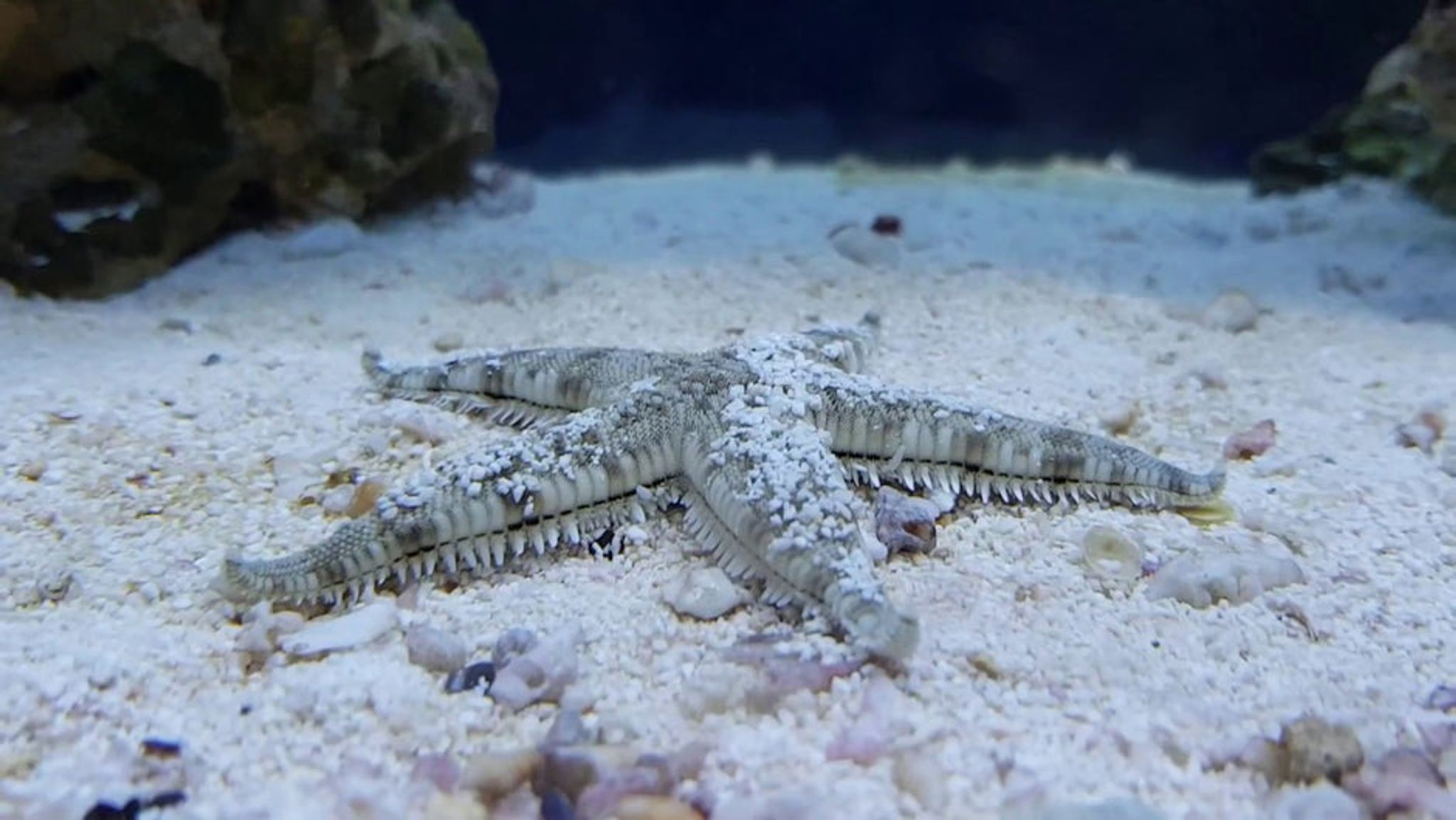

Is Sand-Sifting Starfish Reef Safe? Compatibility With Fish, Coral and Invertebrates
A sand-sifting starfish is reef safe in the sense that matters most to coral keepers: it will not eat or sting your corals. The catch is that it feeds on the living community inside your sand bed, and in a small or young tank it can strip that population bare within weeks. Whether one belongs in your system depends less on "is it reef safe" and more on whether your tank can feed it.
What "Reef Safe" Actually Means Here
Reef safety usually gets treated as one yes/no label, but with this animal it splits into two separate questions:
- Coral safety: Does it damage coral tissue? No. It stays on and in the sand rather than climbing rockwork, so it will not sting, eat, or smother your corals.
- Ecosystem safety: Does it damage the tank's supporting biology? Potentially yes. It is a carnivorous micro-predator that consumes the copepods, amphipods, worms, and small mollusks living in your substrate — the same infauna that feeds mandarin fish, wrasses, and juvenile corals' surrounding food web.
So the honest verdict is: reef safe for corals, conditionally risky for tank ecology. A tank that's large, mature, and has a deep sand bed can support one comfortably. A newer or smaller tank cannot, and the animal usually starves quietly rather than causing any dramatic damage.
Know Which Animal You're Actually Buying
"Sand sifting starfish" is a trade name applied loosely to several genera, and mislabeling at the point of sale is common. Knowing the difference matters because their care needs and survival odds are not interchangeable.
| Common trade name | Typical genus | Diet | Reef-tank outlook |
|---|---|---|---|
| True sand sifting starfish | Astropecten spp. | Carnivorous — pods, worms, small mollusks | Hardest to sustain; needs a large, mature sand bed |
| Marble/orange starfish | Fromia spp. | Detritus and biofilm grazer | Hardier, but still needs established live rock |
| Linckia (blue) starfish | Linckia spp. | Grazes biofilm/detritus | Notoriously difficult to keep fed long-term |
| Sand-sifting sea star | Archaster typicus | Omnivorous, burrows in sand | More tolerant of moderate tank sizes than Astropecten |
If a store tag simply says "sand sifting starfish" with no species name, ask before buying, or look closely at body shape: Astropecten has a flattened, angular body with comb-like spines along the arm edges and moves quickly across (and under) the sand. That silhouette is your best in-store clue that you're looking at the higher-risk, true sand sifter rather than a more general-purpose grazer.
What It Eats — and Why That's the Whole Risk
This starfish does not eat algae, and it will not meaningfully clean up leftover fish food the way a snail or hermit crab does. Its actual diet is:
- Copepods and amphipods
- Bristleworms and other small worms
- Small mollusks and mollusk eggs
- General detritus and micro-fauna buried in the substrate
Because it hunts indiscriminately through the sand, it doesn't distinguish "pest" worms from beneficial pods that your fish and corals depend on. A tank with a thriving, self-renewing infauna population can absorb that predation. A tank without one gets stripped out — and once the food is gone, so is the starfish, usually within a matter of months rather than years.
Tank Size and Maturity Requirements
Recommendations across sources vary widely — some say 30 to 50 gallons (114–189 L) is workable, others insist on 75 gallons (284 L) or more. The more useful way to think about it is sizing by sand-bed capacity and maturity, not raw gallons:
- Minimum size: 75 gallons (284 L) or larger, favoring bigger and older systems.
- Sand depth: at least 4 inches (10 cm) of live sand bed to sustain a self-renewing food source.
- Tank age: established for 6–12 months minimum, with a visibly active, mature sand-bed community.
- Stocking: one starfish per 75–100+ gallons of sand-bed area — never add multiples to a smaller system.
A simple self-check before buying: if your tank is under a year old, under 75 gallons, or already hosts several other sand-sifting animals, hold off. Those three factors are the biggest predictors of a starfish starving.
Feeding: Reading the Warning Signs
Because it lives under the substrate, you can't target-feed it the way you would a fish, but there are clear signs the pod population is running low:
- Arm tips lifting or curling instead of lying flat against the sand
- Noticeably reduced digging and surface activity
- Visible thinning of the arms or central disc over several weeks
If you catch these early, you can supplement rather than wait for a total collapse:
- Push sinking pellets or frozen mysis/brine shrimp gently under the sand surface near where it feeds
- Seed the tank with additional live copepods or amphipods periodically
- Reduce other competing detritivores temporarily to ease pressure on the shared food supply
A starfish that looks fine one week and is gone or badly wasted a few weeks later is the classic pattern of undetected starvation — watch for the early signs rather than the final outcome.
Fish and Invertebrate Compatibility
With fish, this starfish is broadly peaceful and poses no direct threat. The main concern runs the other way — a handful of fish and invertebrates are known starfish predators or opportunists:
- Pufferfish and triggerfish
- Some larger wrasses
- Harlequin shrimp, which specifically prey on starfish, including this species
- Large hermit crabs, which may pick at an injured or molting individual
With other invertebrates, the issue is competition rather than aggression. Nassarius snails, conchs, sand-sifting gobies, and other cleanup-crew animals draw from the same limited pod population. Stacking several sand-sifting species into one small system doesn't spread the workload — it accelerates depletion for all of them and increases the odds that more than one animal starves.
If you're stocking a mixed cleanup crew, browse marine invertebrates with an eye toward total bioload on the sand bed, not just adding variety for its own sake.
Water Parameters and Acclimation
Standard reef targets apply, with a few echinoderm-specific sensitivities layered on top:
| Parameter | Target range |
|---|---|
| Temperature | 72–78°F (22–26°C) |
| pH | 8.1–8.4 |
| Salinity | 1.023–1.025 SG |
| dKH | 8–12 |
| Nitrate/Phosphate | Low |
Use slow drip acclimation — like most echinoderms, this starfish is sensitive to rapid swings in salinity or temperature. Handle it as little as possible: never leave it out of water for more than a few seconds, avoid touching the delicate skin or tube feet, and don't force movement. Rough handling can trigger autotomy (self-amputation of an arm) as a stress response; many starfish species can regenerate a lost arm over time, but it's a slow, stressful process best avoided entirely.
Medication Warning: Copper Is Lethal
Copper-based medications are fatal to virtually all starfish and other echinoderms. Never treat a display tank containing one with copper, even for an unrelated fish disease. If a copper treatment is needed anywhere in a shared system, the starfish (and other invertebrates) need to be moved out first. High nitrate levels also add chronic stress, reinforcing the value of keeping water quality tight.
Quarantine Considerations
Standard quarantine practice for fish doesn't translate cleanly to this animal. A bare-bottom QT tank has no sand-bed fauna to sustain it, so a prolonged stay there risks starvation before it ever reaches the display. Best practice:
- Use slow drip acclimation into QT, same as for the display
- Avoid copper-based treatments entirely
- Keep the QT period short, and monitor for ammonia — a stressed, food-deprived animal in a bare tank is a fragile combination
- Move to the display system as soon as health is confirmed, ideally into an established sand bed rather than a fallow tank
Alternatives Worth Considering
If your tank doesn't meet the size and maturity bar, several lower-risk sand-cleanup options exist:
- Nassarius snails — scavenge detritus and leftover food, minimal pod predation, browse snails
- Sand-sifting gobies — sift sand for food but at a much smaller individual bioload than a starfish, see gobies
- Sea cucumbers — process sand-bed detritus with less predatory pressure on pods, see cucumbers
- Conchs — graze algae and detritus on the sand surface
These can also pair with a sand-sifting starfish in a genuinely large, mature system, but stacking them all into a small tank just spreads the same starvation risk across more animals.
Sourcing and Sustainability
Sand-sifting starfish are not practically bred in home aquariums, and virtually all specimens sold in the trade are wild-collected. For conscientious buyers, that's worth weighing alongside the husbandry challenge — an animal that's difficult to keep alive long-term and comes exclusively from wild populations is a heavier commitment than a typical cleanup-crew snail. Buying from a tank where the animal hasn't been sitting unfed for an extended period also matters; a specimen that arrives already food-stressed has a much shorter runway in your tank.
Common Mistakes to Avoid
- Adding one to a tank under 6 months old or under 75 gallons
- Assuming it will control algae or clean up leftover food like a snail
- Missing early decline signs and only noticing after it has died and decomposed in the rockwork, risking an ammonia spike
- Overstocking multiple sand-sifting animals in one small system
- Exposing it to copper dosed elsewhere in a shared system
- Handling it roughly or pulling it out of water for photos
Frequently Asked Questions
Is the sand sifting starfish safe for a reef tank with corals?
Yes, directly — it does not eat or damage coral tissue and stays on the sand rather than climbing onto rockwork. The real risk is to the sand bed's microfauna population, not to your corals.
What does a sand sifting starfish eat?
It's a carnivorous micro-predator that eats copepods, amphipods, worms, small mollusks, and detritus buried in the sand. It does not eat algae or leftover fish food in any meaningful amount.
How big a tank does it need?
Most guidance points to 75 gallons (284 L) minimum, with a deep, mature sand bed of 4+ inches (10+ cm). Smaller or newer systems risk starving it within weeks to months.
Why did my starfish die suddenly?
Almost always food depletion from an exhausted sand bed, or copper exposure from a medication dosed elsewhere in the system. Check your tank's age, size, and any recent treatments.
Can it live with other starfish or cleanup crew?
Yes, but they compete for the same limited pod population. Fewer total sand-sifting animals per tank is safer than stacking several species together.
Is it reef safe with fish?
Generally yes, and it poses no threat to tankmates. Avoid known starfish predators like pufferfish, triggerfish, and harlequin shrimp, which specifically target starfish.
How do I know if it's starving?
Watch for lethargy, arm tips curling or lifting off the sand, and reduced digging activity. If you see these signs, start supplemental feeding right away rather than waiting.
Can they regrow lost arms?
Many starfish species can regenerate a lost arm over time if the central disc is undamaged, but the process is slow and stressful, and regeneration isn't guaranteed in every case.
Before adding a sand-sifting starfish to your system, take an honest look at your tank's age, size, and existing sand-bed activity — the animal's survival depends almost entirely on that assessment. Browse marine invertebrates on FishyHub to compare cleanup-crew options sized to your tank.


