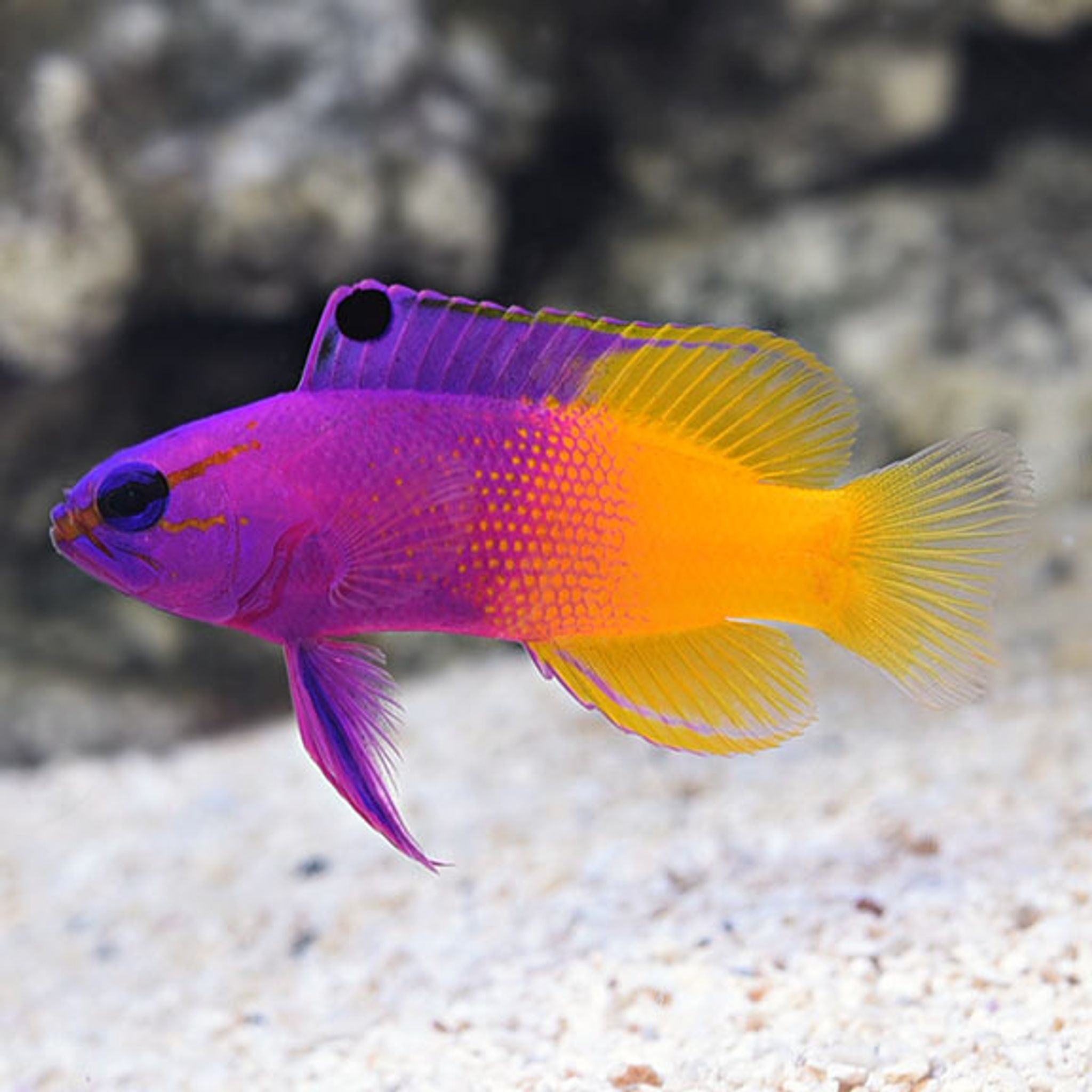
Is Royal Gramma Reef Safe? Coral and Invertebrate Compatibility Explained
Yes, the Royal Gramma (Gramma loreto) is reef safe — it will not nip, peck, or otherwise damage stony coral, soft coral, zoanthids, clams, or anemones. But "reef safe" and "100% invertebrate safe" are not the same claim, and this fish blurs that line more than most beginner guides admit.
Reef Safe vs. Invertebrate Safe: Two Different Questions
These two phrases get used interchangeably online, which causes real confusion when stocking a mixed reef tank.
- Reef safe means a fish leaves sessile, coral-type animals alone — it won't graze on coral polyps, host destructively in anemones, or damage zoanthid mats. On this measure, the Royal Gramma has essentially universal agreement: it does not eat coral.
- Invertebrate safe is a broader and looser claim covering mobile invertebrates too — shrimp, hermit crabs, snails, copepods, and amphipods. Here, the Royal Gramma is conditionally safe, not automatically safe.
The reason for the gap is biology: a Royal Gramma is a micro-predator, not a pure planktivore. In the wild it hunts zooplankton, copepods, amphipods, isopods, and other small crustaceans drifting near reef caves. In a tank, it will happily eat mysis shrimp, brine shrimp, frozen plankton, marine flake or pellet food, and even bloodworms — and it applies that same hunting instinct to anything small and mobile living in your rockwork.
Which Invertebrates Are Actually at Risk
Size, not species, is the deciding factor. A Royal Gramma isn't targeting "shrimp" or "snails" as a category — it's targeting anything it can fit in its mouth.
Generally at risk (small or juvenile):
- Very small ornamental shrimp, including juvenile peppermint shrimp
- Tiny hermit crabs
- Small turbo snails and other small gastropods
- Copepod and amphipod populations (grazed down over time, not eliminated)
- Larval and pest snails
Generally left alone (established/adult):
- Adult cleaner shrimp
- Larger hermit crabs
- Adult snails
- Sea stars
- Feather dusters and most other sessile invertebrates
A practical stocking heuristic: avoid adding a Royal Gramma to a tank where ornamental shrimp or snails are smaller than roughly a quarter of the gramma's own body length. Below that threshold, they read as prey rather than tankmates.
Compatibility Runs Both Directions
It's worth flipping the question, because a few reef-adjacent animals can actually threaten the Royal Gramma itself:
- Large carpet anemones
- Elephant-ear-type corallimorphs and large mushroom corals
- Aggressive mantis shrimp
- Large crabs
These can capture and eat a gramma given the chance, so "is my coral safe from the fish" and "is my fish safe from the invertebrates" are both legitimate questions in a mixed reef.
Timing and Setup: Reducing Predation Risk
Two management choices matter more than most care sheets mention:
- Sequence your stocking. Add small mobile invertebrates first and let them grow to a safer size, or add the Royal Gramma last, after your cleanup crew is established.
- Run a pod refugium. A dedicated copepod or amphipod refugium offsets the grazing pressure from the gramma's natural hunting behavior without pulling pods away from the display tank's cleanup crew.
Also worth setting expectations correctly: "reef safe" does not mean the fish helps control pests. A Royal Gramma will not manage algae or aiptasia — it's non-destructive to coral, not a cleanup-crew species.
Tank Size, Setup, and Water Parameters
Royal Grammas top out around 3 inches (7.5 cm) as adults, but their space needs are driven by behavior more than raw volume.
| Setup | Minimum Tank Size | Notes |
|---|---|---|
| Single Royal Gramma | 30 gallons (114 L) | Practical floor; rockwork matters as much as volume |
| Mated pair | 50–60 gallons (190–227 L) | Needs separate caves and line-of-sight breaks |
| Small group | 100+ gallons (380+ L) | Only with abundant, complex rockwork |
Some general beginner-fish roundups skip a minimum size altogether, but 30 gallons is the realistic floor once you account for the amount of cave structure this fish needs to feel secure.
Rockwork is non-negotiable. The Royal Gramma is a deep-water, cave-dwelling species that prefers dim, shaded overhangs. Placing it in an open aquascape with minimal structure causes chronic stress and constant hiding — provide layered caves and overhangs from day one.
Water parameters are standard reef range, with nothing gramma-specific required:
- Temperature: 72–78°F (22–26°C)
- pH: 8.1–8.4
- Specific gravity: ~1.020–1.025
- Alkalinity: 8–12 dKH
A reef tank running corals and invertebrates alongside a Royal Gramma also benefits from a protein skimmer to export waste and stabilize water quality and oxygenation — an in-sump unit for larger setups, or a hang-on-back skimmer for nano or no-sump tanks.
Behavior: Peaceful With Others, Territorial With Its Own
The Royal Gramma is peaceful toward dissimilar tankmates but genuinely territorial over its chosen cave. It will chase intruders, especially fish that share its shape or coloring — most notably other Royal Grammas and dottybacks.
Keep only one Royal Gramma per tank, unless you have a bonded pair or a very large tank with multiple sightline breaks. Two unpaired grammas in a modest tank will chase constantly — this is normal territorial behavior, not illness, and it's not fixed by more filtration or water changes. The fix is one fish per cave zone, or a much bigger footprint.
You'll also often see a Royal Gramma swimming upside-down or sideways under ledges. That's completely normal orientation behavior for a cave dweller, not a sign of distress.
One more setup note: the Royal Gramma is a notorious jumper. A tight-fitting or weighted lid is essential — a loose cover is one of the most common and preventable losses with this species.
Good Tankmates and Fish to Avoid
Compatible tankmates include clownfish, gobies, cardinalfish, peaceful wrasses, chalk bass, firefish, blennies, dwarf angels, and peaceful tangs. You can browse many of these directly, including clownfish and wrasse, when planning a mixed community.
Avoid pairing with:
- Royal dottybacks — an aggressive mimic species frequently confused with the gramma, and prone to conflict with it
- Other purple or gramma-shaped fish
- Large predatory or aggressive fish, including lionfish, eels, and large triggers or snappers
Similar Basslets and Reef-Safe Alternatives
If you like the Royal Gramma's temperament but want variety, several close relatives offer comparable reef safety and care needs:
- Blackcap Basslet
- Chalk Bass
- Swissguard Basslet
- Candy Basslet
These species share the same cave-dwelling habits and non-destructive relationship with coral, making them easy to combine with a Royal Gramma in a larger system with enough separate territories.
Beyond basslets, the Royal Gramma sits within a broader group of colorful, reef-safe fish that hobbyists commonly pair for activity and color contrast — anthias being a common example, since they add movement in the water column without touching coral.
Which Tank Type Suits a Royal Gramma
Across the five basic saltwater tank types, the Royal Gramma is versatile but not universal:
- FOWLR (fish-only-with-live-rock): Well suited.
- Full reef: Well suited, and genuinely reef safe with corals.
- Nano reef: Less ideal — small footprints create crowded rockwork and territory conflicts.
- Species-only or specialty tanks (seahorse, etc.): Not relevant — different flow, feeding, and tankmate needs.
Feeding and Lifespan
Feed 1–2 times daily, or several smaller feedings, offering only what the fish will consume in 2–3 minutes. A diet of mysis shrimp, brine shrimp, frozen plankton, and quality flake or pellet supplements the copepods and amphipods it grazes naturally.
Watch total meaty food input in a reef tank — overfeeding is a common cause of nutrient swings that stress coral, even though the fish itself isn't the coral's problem. With good care, a Royal Gramma typically lives 5–8 years.
Breeding Note
Compared to many marine fish, Royal Grammas are relatively easy to pair and breed in captivity. They use cave-like PVC sections or rock crevices as spawning sites, which makes them an approachable species for hobbyists interested in trying marine breeding on a small scale.
Common Mistakes to Avoid
- Stocking mismatch: Adding a gramma to a tank with only very small or juvenile shrimp and snails, then being surprised when numbers decline — size-match invertebrates or add the gramma last.
- Territorial pairs gone wrong: Housing two grammas, or a gramma plus a royal dottyback, in a small tank and misreading the resulting chasing as illness or an undersized tank, when the fix is one fish per cave.
- No lid: A loose-fitting cover is an open invitation for this fish to jump out.
- Skipping rockwork: An open aquascape without caves causes chronic stress in a species built for shaded overhangs.
- Overestimating pest control: Reef safe does not mean cleanup-crew capable — it won't touch algae or aiptasia.
- Overfeeding meaty foods: Excess nutrient input stresses corals sensitive to water quality swings.
It's also worth quarantining any new Royal Gramma before adding it to an established reef — a step many general care guides skip, despite it being standard best practice for new marine fish of any kind.
Frequently Asked Questions
Will a Royal Gramma eat my coral?
No. It does not eat, nip, or host on stony or soft corals, zoanthids, or clams. This is the one claim where "reef safe" applies without caveats.
Will a Royal Gramma eat my cleaner shrimp or snails?
Adult and established specimens are usually safe. Very small or juvenile shrimp, hermit crabs, and snails carry some risk, since the gramma is a natural micro-predator of small crustaceans.
Can I keep two Royal Grammas together?
Generally not recommended in tanks under roughly 50–60 gallons with separate caves. They're territorial toward their own kind and toward similarly shaped or colored fish like dottybacks.
What tank size does a Royal Gramma need?
A 30-gallon (114 L) tank is the practical minimum for one, with larger volumes needed for pairs or small groups. Abundant rockwork and cave structure matter as much as raw gallons.
Is a Royal Gramma good for beginners?
Yes. It's hardy and easy on water quality, plus peaceful with dissimilar fish and an easy diet — but it needs a securely lidded tank and enough hiding spots to thrive.
What fish should I avoid keeping with a Royal Gramma?
Avoid royal dottybacks and other similarly shaped or colored aggressive fish, along with large predators like lionfish, eels, and large triggers or snappers.
Can a Royal Gramma harm my copepod or amphipod population?
It will graze on pods over time as part of its natural diet. This is normal and generally not a concern in an established reef with an ongoing pod culture or refugium.
Do Royal Grammas need special water parameters for a reef tank?
No. Standard reef parameters — temperature, pH, salinity, and alkalinity in typical reef ranges — suit them fine without any species-specific adjustments.
Ready to plan your stocking list? Browse the full range of marine fish on FishyHub to find Royal Gramma companions that match your tank size and reef setup.

