
Is Pom-Pom Crab Reef Safe? Compatibility With Fish, Coral and Invertebrates
Yes, the pom-pom crab is considered reef safe. It doesn't eat coral tissue, doesn't harass healthy fish, and rarely bothers other invertebrates — the only real caveat is a mild, indirect sting risk from the tiny anemones it carries in its claws. Here's exactly how it behaves around each type of tankmate, and what setup keeps it thriving.
What Is a Pom-Pom (Boxer) Crab?
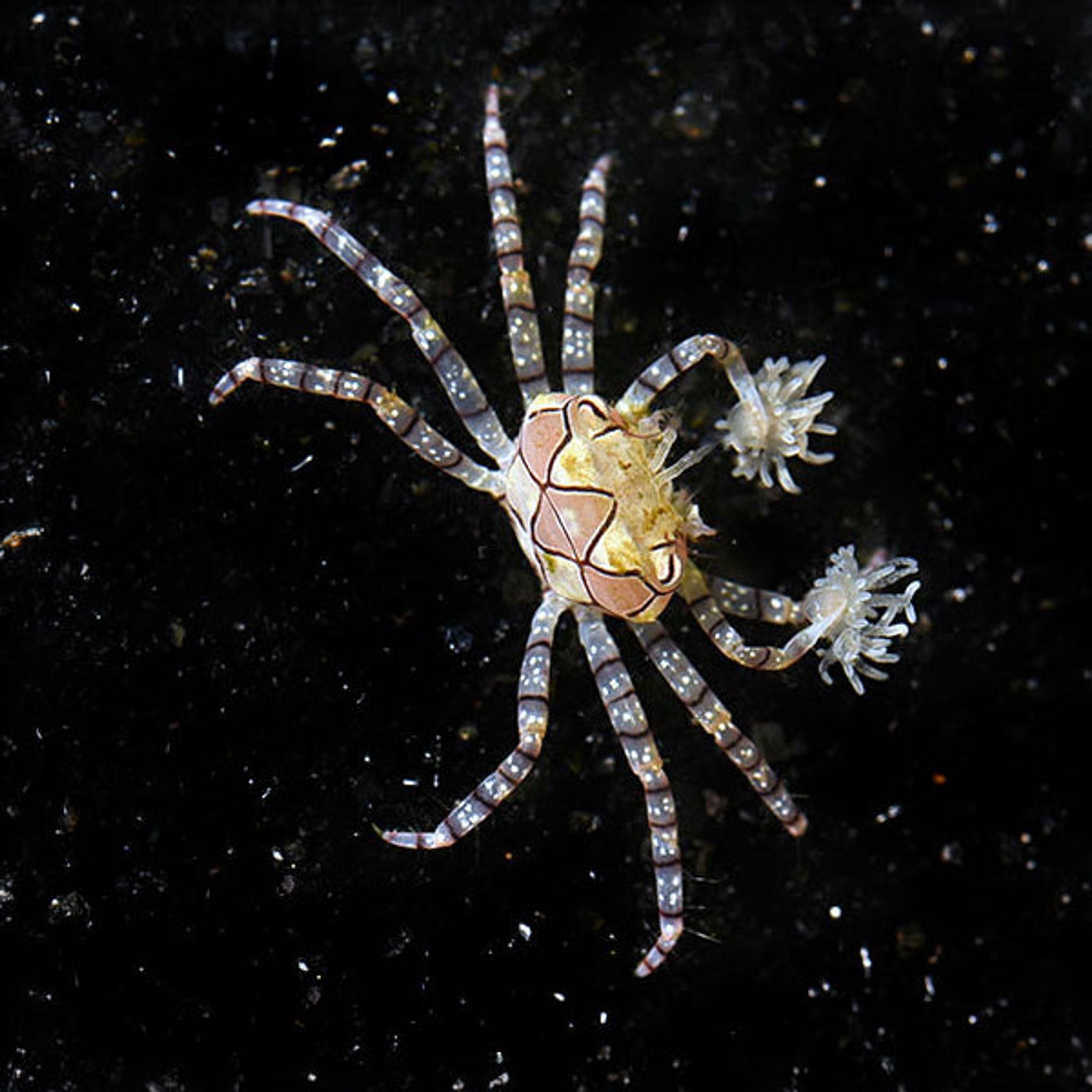
The pom-pom crab belongs to the genus Lybia, most often sold as Lybia leptodactyla or Lybia tessellata. It's also called the boxer crab because of its signature move: holding a small anemone, usually Triactis producta (occasionally another species), in each claw and waving them when threatened.
This is a marine species, and that distinction matters. A number of "pom-pom crab" listings you'll find while researching actually describe an unrelated freshwater or brackish crab with fuzzy claws — a completely different animal with different care needs. This article covers only the saltwater Lybia boxer crab that carries live anemones, the one sold for reef tanks.
Key identification points:
- Size: roughly 0.5–1 inch (1–2.5 cm) carapace width — genuinely tiny, easy to lose track of in anything but a nano or pico tank.
- Claw-waving display: the "pom-pom" motion is primarily defensive, used to ward off predators by presenting the anemones' stinging cells. It's secondarily a feeding tool. It is not an attack behavior directed at tankmates.
- The anemone relationship is mutualistic, not parasitic: the anemones get carried to food sources and fed scraps the crab misses, while the crab gains a defensive weapon and a way to capture particles it couldn't catch on its own. Neither partner is harmed by the arrangement, which is worth knowing if the idea of "carrying a stinging animal" makes you uneasy.
The Anemone-Cloning Behavior
One of the more unusual facts about this species: if a pom-pom crab loses one of its anemones (during a fight, an accident, or handling), it doesn't go hunting for a replacement. Instead, it splits the remaining anemone into two halves, and each half regenerates into a full, matching anemone over time. This fragmentation behavior means a crab can restore its symmetrical claw display on its own, given a stable environment and enough time — no intervention needed on your part.
Reef-Safe Verdict, Category by Category
The pom-pom crab's small size and scavenging lifestyle mean it interacts very differently with fish, coral, and invertebrates than most reef crabs.
| Tankmate category | Compatibility | Notes |
|---|---|---|
| Reef fish (gobies, blennies, clownfish, etc.) | Safe | Too small and non-aggressive to threaten fish; no fin-nipping or predation reports |
| LPS/SPS/soft coral | Generally safe | No coral-eating; mild indirect sting possible if the anemone brushes coral tissue while foraging |
| Snails, hermit crabs | Safe | Scavenger, not a predator; may occasionally out-compete slower feeders for food |
| Cleaner shrimp, other small shrimp | Safe | No predatory behavior toward crustaceans its own size or smaller |
| Larger crabs, arrow crabs, aggressive wrasses, triggerfish, puffers | Risk to the pom-pom crab | These can prey on or harass it, especially right after a molt |
| Other pom-pom crabs | Safe in groups | Not territorially aggressive toward its own species if hides are adequate |
Fish Compatibility
A pom-pom crab poses essentially no threat to fish of any size found in a typical reef tank. It's a bottom-dwelling scavenger, not a hunter, and its claws are occupied holding anemones rather than grasping at fins. If you're stocking a nano reef, this crab pairs fine with peaceful choices from marine fish such as small gobies or blennies.
Coral Compatibility
The crab itself does not eat, sting, or settle on stony or soft coral. The only realistic risk is indirect: while foraging across rockwork, the crab could brush an anemone-tipped claw against a coral polyp, delivering a mild sting. This is uncommon and rarely causes visible damage given how small the anemone is relative to most coral colonies. If you're stocking sensitive LPS pieces from the LPS hard corals selection, this risk is worth knowing but not a reason to avoid the crab.
Invertebrate Compatibility
Snails, hermit crabs, and cleaner shrimp all coexist well with pom-pom crabs. Because the crab scavenges rather than hunts, it won't attack other crustaceans. The most common friction reported by keepers is competitive, not violent: a pom-pom crab can be quick to claim food scraps, occasionally out-competing slower snails or shrimp during feeding rather than harming them directly.
Pom-Pom Crab vs. Other Nano Cleanup Crew Crabs
Buyers cross-shopping cleanup crew options often compare the pom-pom crab against other small crabs sold for reef tanks. Here's how the risk profiles differ:
| Crab | Reef safety | Typical role |
|---|---|---|
| Pom-pom (boxer) crab | Reef safe | Scavenger/detritivore; not a cleanup specialist |
| Emerald crab | Generally reef safe, can turn opportunistic | Algae grazer, occasional pest-anemone eater |
| Red mithrax (Mithraculus) crab | Reef safe when well-fed | Algae control; can nip coral if underfed |
| Hermit crabs (various) | Reef safe | General scavenger; may bother snails for shells |
The pom-pom crab stands apart from this group because it isn't stocked for algae or pest control — it's kept for its unusual behavior and its low, predictable risk to a mixed reef.
Ideal Tank Setup
- Minimum tank size: 5 gallons (19 L) is workable for a single crab in a mature nano reef; 10+ gallons (38 L) is the better call if it will share space with fish or other bottom dwellers, since more rubble and rockwork reduce stress and competition.
- Rockwork: live rock rubble, small crevices, and an established, biofilm-rich substrate are essential — this is a shy species that spends most of its time tucked away.
- Water parameters: standard reef conditions apply, nothing species-specific — temperature 74–78°F (23–26°C), salinity 1.023–1.026 SG, stable pH around 8.1–8.4, and low nitrate/phosphate.
- Lighting: not critical for the crab itself, since it isn't photosynthetic-dependent, though the anemones it carries may benefit from some ambient light and the food capture it supports.
- Housing multiples: pairs or small groups can share a larger tank without territorial conflict toward each other, as long as there's enough rubble and hiding space to reduce competition.
Feeding Routine
The pom-pom crab is an omnivorous scavenger. Its anemones "wipe" food particles and stinging cells across surfaces, and the crab eats whatever they capture along with general detritus and biofilm. In a mature, established system, it can survive on this alone — but occasional targeted feeding supports better growth and coloration.
Practical feeding notes:
- Offer finely chopped meaty frozen foods (mysis, brine shrimp) once or twice a week rather than daily.
- Feed at night or use a turkey baster to place a small amount directly near the crab's hiding spot — this avoids the common nano-tank problem of faster fish or shrimp intercepting the food before the crab reaches it.
- Watch for signs of insufficient feeding: shrinking or pale anemones and a visibly thinning crab both indicate it isn't getting enough on its own.
Predator Risk and Tankmates to Avoid
The pom-pom crab is more often the target than the aggressor. Its small size and soft post-molt body make it vulnerable to:
- Larger crabs and arrow crabs
- Aggressive or large wrasses
- Triggerfish and puffers
- Other opportunistic predators that will take advantage of a soft-shelled crab
Pair it instead with peaceful, small reef fish and passive invertebrates, and give it plenty of rubble to retreat into — especially in the days around a molt.
Molting
Like all crustaceans, the pom-pom crab sheds its exoskeleton periodically. A fresh shed looks strikingly like a dead crab, complete with claws and anemones attached, and it's commonly mistaken for a mortality. Leave it in the tank — it will be consumed or reabsorbed, and the crab itself is usually hiding nearby, soft and vulnerable until its new shell hardens. Consistent calcium and iodine dosing, in line with general reef supplementation, supports healthy molts.
Sourcing and Choosing a Healthy Specimen
Because the crab is so small, the usual "does this animal look healthy" checks are harder to apply than with fish. Look for:
- Both anemones present and full-sized — a mismatched or missing anemone suggests recent stress or damage (though it will regenerate over time).
- Active claw-waving when the crab feels disturbed — a strong defensive display is a good sign.
- Readiness to retreat into rubble rather than sitting exposed and motionless, which can indicate stress or lethargy.
A stressed specimen typically shows a shrunken or dull anemone and reduced activity even when approached.
Quarantine Considerations
Standard quarantine is complicated by this crab's size — it's easy to lose in a bare QT tank or lose track of behind equipment. A covered tank with a layer of rubble rock gives it somewhere to hide without disappearing into overflow or intake gaps. Many keepers accept a shorter, simplified QT protocol for this species given how low its disease and pest risk tends to be compared to fish, but slow drip acclimation should still be followed, since it's sensitive to rapid parameter or temperature swings like most small reef crustaceans.
Common Mistakes to Avoid
- Removing a molted shell (and assuming the crab died). It's just an exoskeleton — leave it be.
- Assuming the boxing display means aggression. It's a defensive bluff, not a predatory move against tankmates.
- Skimping on rubble and hiding structure, which leads to chronic stress or makes the crab an easy target.
- Panicking over a missing anemone and trying to source a replacement — the crab will clone its remaining anemone given time and stability.
- Housing it with large, semi-aggressive tankmates like sizeable wrasses or arrow crabs that can harass or eat it.
- Confusing this species with freshwater "pom-pom crab" listings, which describe an entirely different animal with different requirements.
If you're building out a reef community around this crab, browse marine invertebrates and the anemone selection on FishyHub to round out a compatible, low-conflict setup.
Frequently Asked Questions
Is a pom-pom crab reef safe?
Yes. It doesn't eat coral and isn't aggressive toward tankmates. There's a minor, indirect sting risk to coral tissue if the crab's anemone brushes against a polyp, but this is uncommon and rarely damaging.
Will a pom-pom crab sting my fish or coral?
The anemones it carries can deliver a mild sting on contact, but this is used defensively or for feeding, not as an attack on tankmates. Direct injury to fish or coral is very uncommon.
What does a pom-pom crab eat?
Detritus, biofilm, and particles captured by its anemones make up most of its diet in an established tank. Occasional small meaty foods like chopped mysis or brine shrimp help support growth and coloration.
What tank size does a pom-pom crab need?
A 5-gallon (19 L) tank is workable for a single crab in a mature nano reef. A 10-gallon (38 L) tank or larger is better if it will share space with fish or other bottom dwellers, since it allows for more rubble and rockwork.
What happens if my pom-pom crab loses an anemone?
It splits the remaining anemone into two halves, and each half regrows into a full anemone over time, restoring a matching pair without needing a new anemone from outside the tank.
Can I keep more than one pom-pom crab together?
Yes. They aren't strongly territorial toward each other, so pairs or small groups can share a larger tank as long as there's enough rubble and hiding space to reduce competition.
What eats pom-pom crabs, or what should I avoid keeping with them?
Larger predatory or semi-aggressive tankmates — arrow crabs, big wrasses, triggerfish, puffers, and larger crabs — pose the main risk, especially while the pom-pom crab is soft after a molt.
Why is my pom-pom crab hiding all the time?
This is normal. Pom-pom crabs are shy and spend most of their time tucked into rockwork, emerging to forage when they feel secure or under cover of darkness.


