Is Pajama Cardinalfish Reef Safe? Coral and Invertebrate Compatibility Explained
Yes, the Pajama Cardinalfish (Sphaeramia nematoptera) is reef safe — it won't nip, peck, or sting a single coral in your tank. The nuance is that "reef safe" and "invertebrate safe" aren't the same claim, and this fish will happily eat anything small enough to fit in its mouth. Here's exactly where the line sits, plus the stocking and setup details that make this one of the easier fish to plan a reef around.
Meet the Pajama Cardinalfish
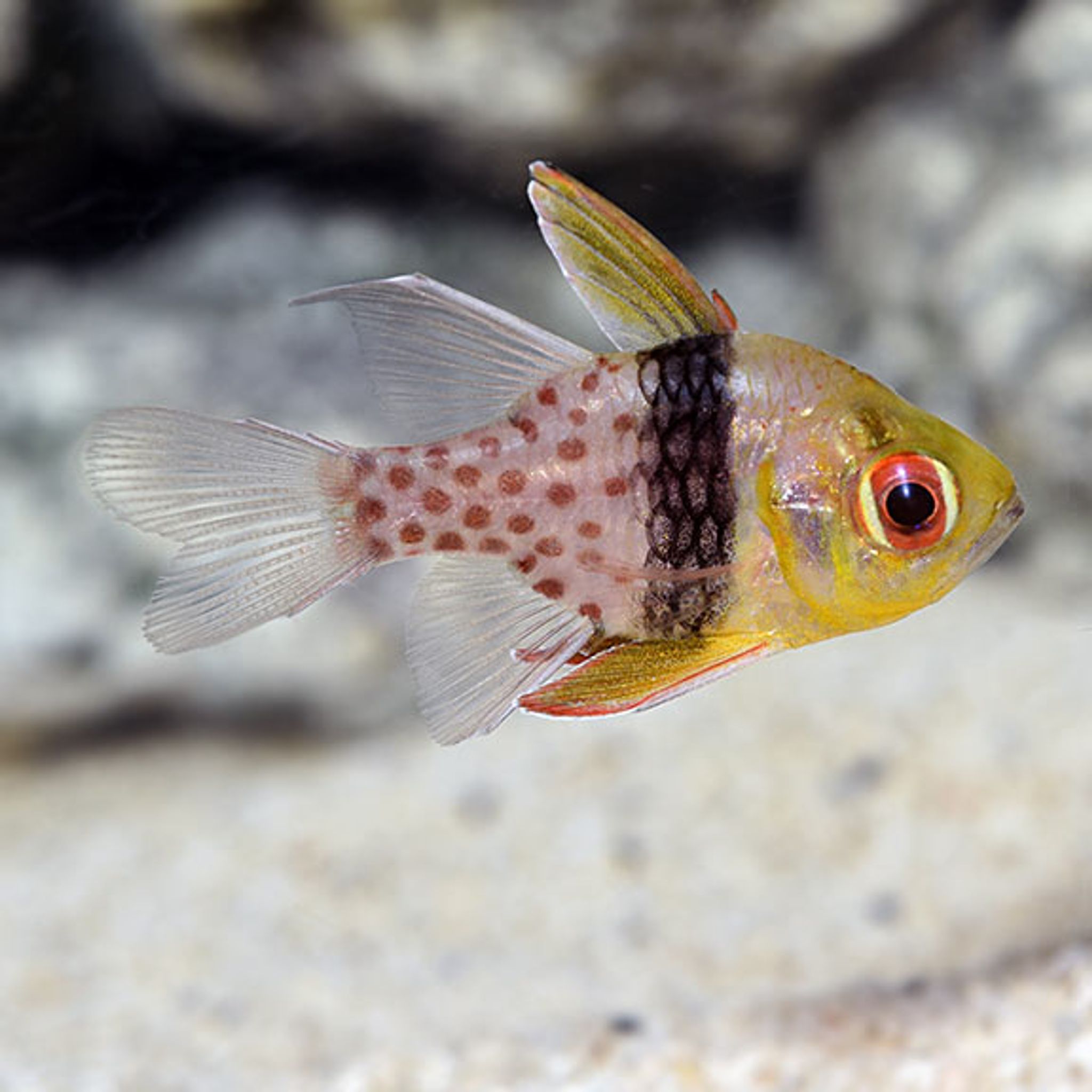
Also sold as the spotted or pyjama cardinal, this fish is easy to identify at a glance:
- A translucent front half with large eyes and a dark band running through them
- A yellow, black-spotted rear half and tail, which gives the "pajama" pattern its name
- A round, compact body shape, rarely exceeding 3 inches (7.6 cm)
It's a shoaling species in the wild, hovering in loose clusters over reef structure rather than patrolling open water, which is part of why it behaves so calmly in a home aquarium.
The Reef Safety Verdict
For corals, the answer is unambiguous: Pajama Cardinalfish do not interact with coral tissue at all. They are safe to keep alongside:
- Soft corals — leathers, mushrooms, zoanthids, and polyps
- LPS (large-polyp stony) corals — torch, hammer, frogspawn, and similar species
- SPS (small-polyp stony) corals — Acropora, Montipora, and other fast-growing stony types
- Giant clams and anemones — no nipping or hosting-related stress
If your stocking plan centers on coral, this fish adds essentially zero risk. That's a big part of why it's frequently recommended as an early reef fish for hobbyists building their first coral-focused system — you can browse LPS hard corals or soft corals for a new tank without worrying about compatibility with this species.
Where the Real Risk Lives: Small Invertebrates
"Reef safe" only describes coral behavior — it says nothing about mobile invertebrates. Pajama Cardinalfish are opportunistic micro-predators, and the deciding factor is always size. If a shrimp, crab, or worm can be swallowed whole, it's fair game; if it's grown past that size, it's ignored.
At risk:
- Ornamental shrimp fry and very young juveniles
- Small or newly molted crab juveniles
- Bristleworms and other small mobile crustaceans
Generally safe once mature:
- Adult cleaner shrimp and peppermint shrimp
- Adult hermit crabs and emerald crabs
- Snails and feather dusters (sessile or shell-protected, and too large to swallow)
The practical takeaway: this isn't a fish that hunts down established clean-up crew members. It's a fish that will snack on anything small enough to disappear in one gulp — including its own species' fry if breeding occurs in the display tank.
A Simple Compatibility Chart
| Tank inhabitant | Risk level | Notes |
|---|---|---|
| Soft, LPS, and SPS corals | None | No nipping behavior recorded |
| Giant clams and anemones | None | Not targeted or bothered |
| Snails | None | Shell size and behavior protect them |
| Feather dusters | None | Sessile, not perceived as prey |
| Adult cleaner/peppermint shrimp | Low | Safe once past juvenile size |
| Adult hermit/emerald crabs | Low | Safe once past juvenile size |
| Shrimp fry or juvenile shrimp | High | Small enough to be eaten whole |
| Juvenile crabs, bristleworms | Moderate to high | Size-dependent; smaller specimens most at risk |
If you're stocking a clean-up crew alongside this fish, buying adult- or larger-bodied specimens from a supplier — rather than the smallest juveniles available — meaningfully reduces predation risk. You can compare options in the marine invertebrates category, including marine shrimp sized for reef tanks.
Tank Size and Schooling Behavior
Because this species naturally shoals, keeping a group produces calmer, more natural behavior than a single fish:
- 20 gallons (76 L): workable minimum for one or two fish
- 30+ gallons (114 L): recommended for a proper school of 5–6, giving enough swimming room and hiding spots to spread out minor pecking-order squabbles
- 40+ gallons (151 L): more comfortable long-term for a full school, especially in a mixed reef community
Odd-numbered groups of 3 or more tend to distribute hierarchy-related nipping better than pairs. A single specimen is fine and will still display normal feeding and hiding behavior, just without the schooling dynamic.
Bioload note: a school of 5–6 small cardinals adds noticeably more waste than a single specimen, though still less than most mid-size reef fish. In a nano reef, factor this into your overall stocking and skimmer capacity rather than treating group size as a purely behavioral decision.
Temperament and Tankmates
Pajama Cardinalfish rank among the most peaceful marine fish commonly available. That peacefulness cuts both ways — they coexist beautifully with other calm species but get outcompeted by boisterous ones.
Good tankmates:
- Gobies, blennies, and firefish
- Small, peaceful wrasses
- Clownfish and chromis
Avoid pairing with:
- Tangs and other fast, competitive eaters
- Aggressive damsels or dottybacks
You can browse compatible wrasse species or check the dedicated cardinalfish selection when planning a peaceful community stocking list.
Lighting, Feeding, and Water Parameters
This species is crepuscular-leaning — most active at dawn and dusk, and shy under bright midday reef lighting. Provide caves, overhangs, and shaded rockwork so it has somewhere to retreat during peak light hours.
Water parameters:
| Parameter | Target range |
|---|---|
| Temperature | 74–78°F (23–26°C) |
| Specific gravity | 1.023–1.025 |
| pH | 8.1–8.4 |
| Alkalinity | 8–12 dKH |
| Nitrate | Low, though tolerant of typical reef swings |
Feeding: an easy eater that accepts flake, pellet, frozen mysis or brine shrimp, and finely chopped meaty foods. Feed 2–3 small meals daily, ideally during dim lighting periods to match its natural feeding rhythm rather than at bright midday.
Breeding: A Paternal Mouthbrooder
Most reef fish either scatter pelagic eggs into open water or lay eggs on a surface that a parent guards. Cardinalfish do neither — they're paternal mouthbrooders. After spawning, the male collects the fertilized eggs and incubates them in his mouth for roughly 3–4 weeks, during which he typically eats very little or not at all.
This trait can actually happen in home aquaria under stable conditions. Males are identifiable by a longer second dorsal fin, which helps hobbyists spot potential breeding pairs. If fry do hatch in a display tank, expect them to be at risk from tankmates, including adult cardinals themselves — the same size-based predation logic that applies to shrimp fry applies here too.
Pajama vs. Banggai Cardinalfish
The two species are frequently confused. Both are reef safe, but they differ in practice:
- Banggai Cardinalfish are more aggressive toward their own species and pickier eaters, sometimes refusing prepared foods early on.
- Pajama Cardinalfish are calmer in groups and accept a wider range of foods immediately, making them the easier choice for most community reef tanks.
Beginner Saltwater Setup Tips
Because Pajama Cardinalfish are so often recommended as an early reef fish, a few setup basics help this species (and the tank as a whole) thrive:
- Cycle with live rock or live sand rather than a fish-in cycle, so the fish isn't exposed to ammonia spikes
- Use a refractometer, not a hydrometer, for accurate salinity readings
- Run lighting on a timer, roughly 10 hours a day, to establish a stable photoperiod
- Start with the largest tank your space allows — more water volume means more stable parameters
- Install a protein skimmer to manage organic waste, especially with a full cardinal school
- Use GFCI outlets and drip loops on all electrical equipment near saltwater
- Research before buying — plan your full stocking list rather than adding fish on impulse
Common Mistakes to Avoid
- Assuming "reef safe" covers every invertebrate. It doesn't — shrimp fry and juvenile crustaceans remain at risk regardless of coral compatibility.
- Keeping a single fish in a bright, open tank with no hiding spots. This causes chronic stress and poor feeding; add rockwork caves and keep lighting moderate.
- Housing with aggressive, fast-swimming competitive eaters. Tangs and boisterous damsels will outcompete cardinals for food; choose calm tankmates or target-feed if needed.
- Adding a single new cardinal to an established group. This can trigger pecking-order aggression — introduce a full group together, or add during a broader tank rearrange.
- Overfeeding at midday. Feed smaller amounts at dawn, dusk, or during dim lighting to match natural activity.
- Skipping quarantine. Like most wild-caught marine fish, Pajama Cardinalfish are susceptible to marine ich and velvet. Their deep body shape and shy nature can also make early symptoms easy to miss in a display tank, so a full quarantine period before introduction is worth the extra time.
Frequently Asked Questions
Will Pajama Cardinalfish eat my cleaner shrimp?
Generally no, once the shrimp has reached adult size. Juveniles and shrimp fry are the ones actually at risk, since they're small enough to be swallowed whole.
Are Pajama Cardinalfish safe with coral?
Yes. There is no known coral-nipping behavior in this species across soft, LPS, or SPS corals, or with giant clams and anemones.
How many Pajama Cardinalfish should I keep together?
A group of 3–6, with odd numbers preferred, spreads out mild hierarchy squabbles better than a pair. A single fish is fine too, just less naturally social.
Do Pajama Cardinalfish need a big tank?
Not necessarily. A 20–30 gallon (76–114 L) tank supports a small group comfortably; larger tanks simply give a full school more room to shoal and hide.
What do Pajama Cardinalfish eat?
Flake, pellet, frozen mysis or brine shrimp, and finely chopped meaty foods. They're not picky eaters, which sets them apart from pickier relatives like the Banggai Cardinalfish.
Can Pajama Cardinalfish live with clownfish, gobies, or wrasses?
Yes. They're compatible with most peaceful community and reef fish, including clownfish, gobies, blennies, and small wrasses.
Are Pajama Cardinalfish the same as Banggai Cardinalfish?
No. They're related but distinct species — Pajama Cardinalfish are generally more peaceful toward their own kind and easier eaters, making them the better pick for most reef communities.
Do Pajama Cardinalfish breed in home aquariums?
Yes. They're paternal mouthbrooders, meaning the male incubates fertilized eggs in his mouth for about 3–4 weeks, and pairs can spawn successfully under stable, well-maintained conditions.
If you're building a coral-focused reef around a peaceful schooling fish, you can browse the full range of marine fish on FishyHub to find compatible tankmates for your setup.

