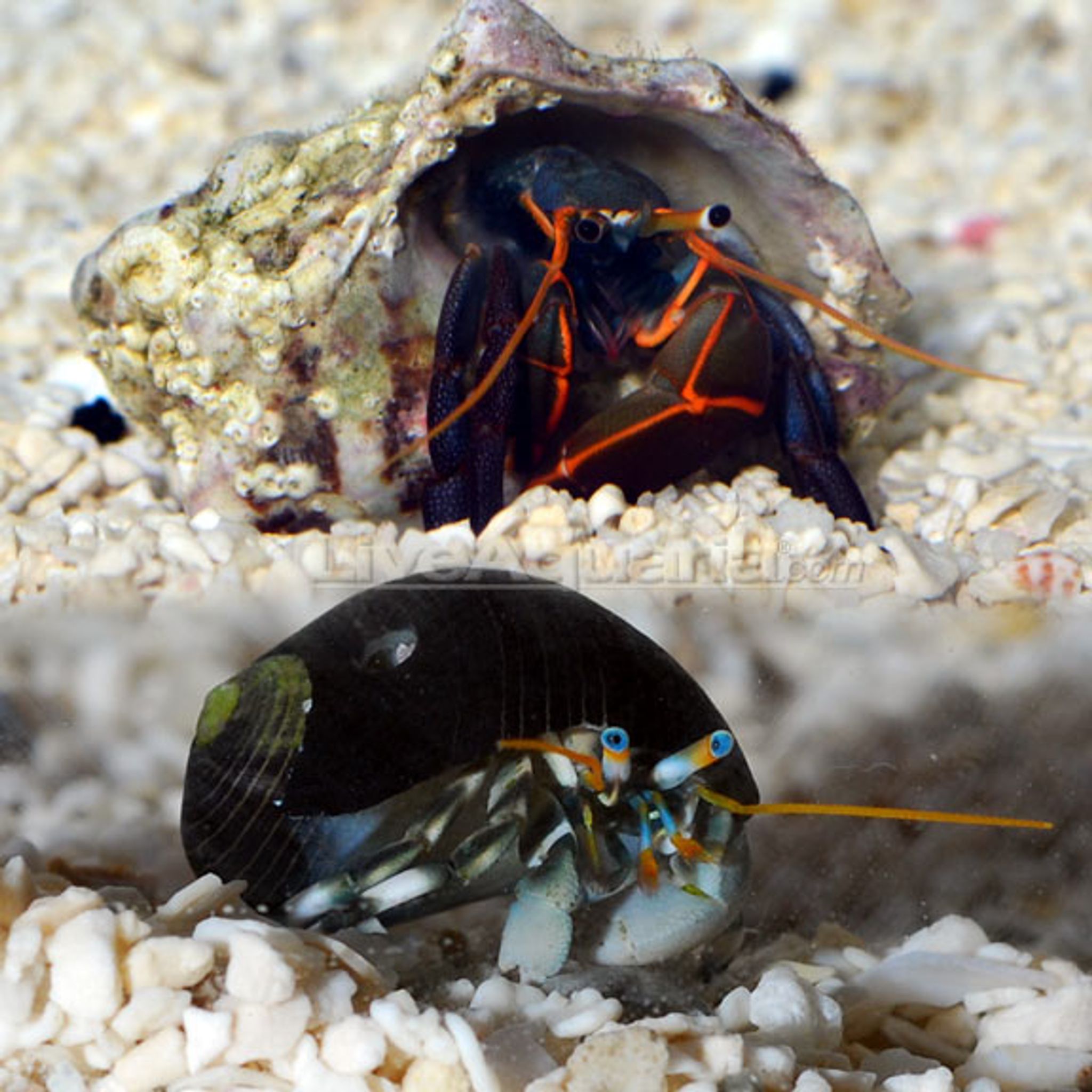

Is Hermit Crab Reef Safe? Compatibility With Fish, Coral and Invertebrates
Most marine hermit crabs sold for cleanup crews are reef safe, but the label comes with conditions. Get the species, size, stocking density, shell supply, and feeding wrong, and the same "safe" crab that ignores your coral for months can start bothering snails or irritating polyps. Here's the full picture, not just a yes-or-no.
The Short Answer
Small marine hermit crabs (under about 1 inch / 2.5 cm body size) don't sting or eat coral tissue, and they're compatible with nearly every peaceful reef fish. The risk isn't from a single crab doing something dramatic — it's from overstocking, shell shortages, and underfeeding, which push otherwise harmless scavengers into opportunistic, destructive behavior. Reef safety is a management outcome, not a fixed trait of the species.
Choosing Reef-Safe Hermit Crab Species
Not every hermit crab sold in the hobby belongs in a reef tank. Stick to small, algae-grazing species and avoid anything marketed for fish-only or brackish setups.
| Species (common US name) | Adult body size | Reef suitability | Notes |
|---|---|---|---|
| Scarlet/red leg hermit | Under 1 in (2.5 cm) | Excellent | Active grazer, widely used cleanup crew staple |
| Blue leg hermit | Under 1 in (2.5 cm) | Excellent | Hardy, tolerant of parameter swings |
| Left-handed/red-footed hermit | Under 1 in (2.5 cm) | Good | Slightly bolder, still reef-appropriate |
| Dwarf/blue-knuckle hermit | Under 0.5 in (1.3 cm) | Excellent | Good for nano reefs |
| Halloween hermit | 1 in (2.5 cm)+ | Fair | More ornamental, weaker algae cleaner |
| Giant red hermit / large land species | 2 in (5 cm)+ | Avoid in reef tanks | Can topple frags, crush small inverts, bully fish |
Body size is the deciding factor. Species that stay under an inch move gently over rockwork; larger hermits have enough mass and claw strength to knock over frag plugs, crush small snails, or intimidate slow-moving fish.
Will Hermit Crabs Eat My Coral?
No — reef-safe hermit crabs don't consume coral tissue. The real risk is mechanical, not predatory:
- Hermits climb over live rock and coral skeletons as part of normal foraging.
- Their sharp legs and claws can irritate soft coral tissue and fleshy LPS species — hammer, torch, and frogspawn corals are the most sensitive.
- Repeated contact can cause a coral to keep its polyps retracted for extended periods, which some hobbyists mistake for a water-quality problem.
Opinions differ on how serious this is. Some sources treat hermit-coral contact as essentially harmless; more cautious reef keepers warn that sustained leg traffic suppresses polyp extension over time. The practical middle ground: risk from a single crab is low, but it scales with crab density. If a coral positioned near live rock stays closed for several days running, thin out the hermit population or relocate the coral before assuming it's a chemistry issue. Browse LPS corals if you're stocking fleshy species that warrant extra caution around a crowded cleanup crew.
Will Hermit Crabs Kill My Snails?
Sometimes, and it's almost always tied to shell supply or hunger rather than routine predation. Hermit crabs are opportunistic omnivores: a crab that's outgrown its shell or is going hungry will attack a snail — especially a slow-moving or already-stressed one — to steal its shell, and may eat the occupant afterward.
Some snail types fare better than others:
- Nerite and astrea snails, with strong trapdoors (opercula), are comparatively harder targets.
- Turbo and margarita snails can be more vulnerable in some tanks, though outcomes vary with crab density and shell availability.
The fix isn't fewer snails — it's more shells and steadier feeding, covered below.
Fish Compatibility
Hermit crabs are peaceful toward nearly all community reef fish and pose essentially no threat to healthy, active tankmates. The compatibility risk actually runs in the other direction:
- Triggerfish, larger wrasses, puffers, and some angelfish will eat small hermit crabs given the chance.
- Hermits generally leave healthy fish alone entirely.
- A hermit may pick at a sick or already-dead fish — that's scavenging behavior, not active predation.
If you're stocking a mixed reef with any of those larger predatory species, expect your cleanup crew's hermit numbers to decline over time regardless of how well you manage shells and food. Check current stock in Marine Fish before pairing a cleanup crew with more assertive tankmates.
Compatibility With Other Invertebrates
Hermit crabs generally coexist fine with shrimp, starfish, and urchins. The exception is theoretical rather than common: very small or slow ornamental shrimp could be harassed by a starving hermit population, but this is rare in a tank with adequate feeding and shell supply. If you're adding marine invertebrates alongside hermits, the same rule applies across the board — well-fed crabs with plenty of spare shells leave tankmates alone.
Shell Supply: The Single Biggest Factor
If there's one husbandry detail that determines whether hermit crabs behave, it's shell availability. Keep 2–3 times more empty shells than crabs in the tank, each sized slightly larger than its likely occupant. This one habit reduces:
- Shell fights between hermits (sometimes fatal)
- Crab-on-crab killing during shell competition
- Snail-shell theft and the predation that comes with it
Shell shortage is the most common driver of "bad" hermit behavior, more than any other single variable, including tank size or fish selection.
Molting: Don't Assume a Still Crab Is Dead
Hermit crabs molt periodically to grow, shedding their exoskeleton and often hiding for several days before and after. During this window they're vulnerable and may appear motionless or absent. Don't remove a crab you assume has died — leave the shed exoskeleton in the tank as well, since crabs often eat it to recover calcium.
Feeding
In an established, algae-rich reef tank, hermits mostly self-feed on algae film, detritus, and leftover food. New or unusually clean tanks don't offer enough of that, and a hungry cleanup crew is far more likely to turn on snails or coral. Supplement with sinking pellets, an algae wafer, or a frozen or gel food two to three times a week in low-algae systems.
How Many Hermit Crabs Should You Add?
The old "one hermit crab per gallon" rule is oversimplified — it treats tank volume as a stand-in for food and shell supply, which it isn't. A more realistic approach:
- Start with roughly 1 small hermit per 5–10 gallons for a new or lightly stocked tank.
- Add a small initial batch and observe snail and coral health for a few weeks.
- Increase gradually only if algae persists and no aggression or coral irritation shows up.
- Expect natural attrition — crab-on-crab shell competition and predation mean populations decline over time on their own, so don't assume you need to "restock" to a fixed number.
Quick Stocking Checklist
Before ordering hermit crabs, run through:
- Tank age — newer tanks need more supplemental feeding, so start with fewer crabs.
- Existing algae level — heavier film/hair algae supports more grazers without starving them.
- Current snail population — a large snail crew already competing for algae means less food per hermit.
- Coral types present — fleshy LPS and soft corals warrant a lower crab density than an SPS-dominant tank.
Aggression Among Hermits
Hermits fight each other over shells, and these fights are sometimes fatal. Overcrowding is the main trigger. The corrective is consistent with everything above: favor fewer crabs plus a generous spare-shell supply over a large population chasing a limited number of shells.
What Hermit Crabs Won't Fix: Algae Limits
Hermit crabs control film and hair algae reasonably well, but they do not touch diatoms, dinoflagellates, or cyanobacteria. Those require separate fixes — nutrient export, improved flow, UV sterilization, or reduced light duration — not more crabs. Adding hermits to combat an active outbreak of any of those three treats a symptom, not the cause; address the underlying nutrient or flow issue first, then use the cleanup crew as ongoing prevention rather than a cure.
Water Parameters for a Healthy Cleanup Crew
Hermit crabs are hardy compared to most reef invertebrates, but stable water still matters, especially around a molt.
| Parameter | Target range |
|---|---|
| Temperature | 72–78°F (22–26°C) |
| Specific gravity | 1.023–1.025 |
| pH | 8.1–8.4 |
| Calcium/alkalinity | Stable, reef-standard levels |
Sudden salinity or temperature swings can stress or kill a hermit crab during a molt even though the same species tolerates a slow drift in parameters without issue. When acclimating new hermit crabs, use a slow drip method rather than a quick float-and-dump — invertebrates are more salinity-sensitive during and shortly after a molt, and a gradual adjustment reduces that risk.
Land Hermit Crabs Are Not the Same Animal
A common beginner mix-up: the "hermit crab kits" sold in pet stores as terrestrial pets are a completely different animal from marine reef hermit crabs. Land hermit crabs breathe air, need a terrestrial or semi-terrestrial setup, and are not suitable for a saltwater aquarium under any circumstances. If you're shopping for a reef cleanup crew, look specifically for marine species — browsing marine crabs or a marine snails selection will keep you in the right category.
Common Mistakes to Avoid
- Adding too many hermits at once "for algae." This leads to shell wars, snail predation, and stressed coral.
- Skipping spare shells. This is the single biggest cause of aggressive or predatory behavior.
- Confusing land and marine hermit crabs, and adding the wrong species to a saltwater tank.
- Assuming a motionless crab is dead when it's actually molting.
- Blaming hermits for algae they can't eat (diatoms, cyanobacteria, dinoflagellates) instead of fixing nutrients or flow.
- Ignoring size by adding a large, FOWLR-appropriate hermit species into a delicate SPS/LPS reef.
- Not observing behavior after introduction. A stressed or starving hermit shows warning signs — chasing snails, picking excessively at coral — before real damage occurs.
A Note on Surface Foam
Surface foam on a saltwater tank is sometimes blamed on the cleanup crew, but it isn't caused by hermit crabs directly. It's typically from protein buildup, excess dissolved organics, a freshly mixed batch of saltwater, or a protein skimmer that's still breaking in. A healthy cleanup crew of hermits and snails does help by controlling the detritus and leftover food that contribute to organic buildup, but it's prevention, not a fix for foam that's already present. Address active foam with a properly tuned protein skimmer and regular water changes; gentle surface agitation can serve as a short-term stopgap while you address the root cause.
Frequently Asked Questions
Are hermit crabs reef safe?
Generally yes for common small species like scarlet/red leg and blue leg hermits. The caveats are size (stay under about 1 inch/2.5 cm), stocking density, and consistent feeding — get those right and reef safety holds up well.
Will hermit crabs eat my coral?
No, they don't eat coral tissue. They can physically irritate it by climbing over rockwork near corals, particularly fleshy LPS and soft corals. Risk per crab is low but rises with overcrowding.
Will hermit crabs kill my snails?
They can, especially when short on shells or food. It's usually opportunistic behavior tied to a shell shortage or hunger, not routine predation in a well-managed tank.
How many hermit crabs should I add to my tank?
Start small — roughly 1 crab per 5–10 gallons for a new tank — and add gradually while watching snail and coral health. Prioritize a generous spare-shell supply over hitting a specific crab count.
What do reef hermit crabs eat?
Primarily algae, detritus, and leftover fish food in an established tank. In new or low-algae systems, supplement with sinking pellets, an algae wafer, or a frozen or gel food two to three times a week.
Can I keep hermit crabs with fish?
Yes, with almost all peaceful community reef fish. The main concern runs the other way — larger predatory species like triggerfish, big wrasses, and puffers will eat small hermit crabs.
Why is my hermit crab not moving, or did it die?
It's most likely molting, a normal but vulnerable phase that can last several days. Leave it undisturbed and don't remove the shed exoskeleton, since the crab may eat it for calcium.
Are all hermit crabs the same for reef tanks?
No. Land/terrestrial hermit crabs are a different animal entirely and unsuitable for saltwater aquariums. Even among marine species, size and temperament vary enough that a large hermit meant for a fish-only tank can be a poor fit for a delicate reef.
A well-managed cleanup crew of small, reef-safe hermit crabs is one of the easiest ways to keep film algae and detritus in check without risking your fish or coral. Browse current marine livestock to build out a cleanup crew sized to your tank's algae level, snail population, and coral mix.


