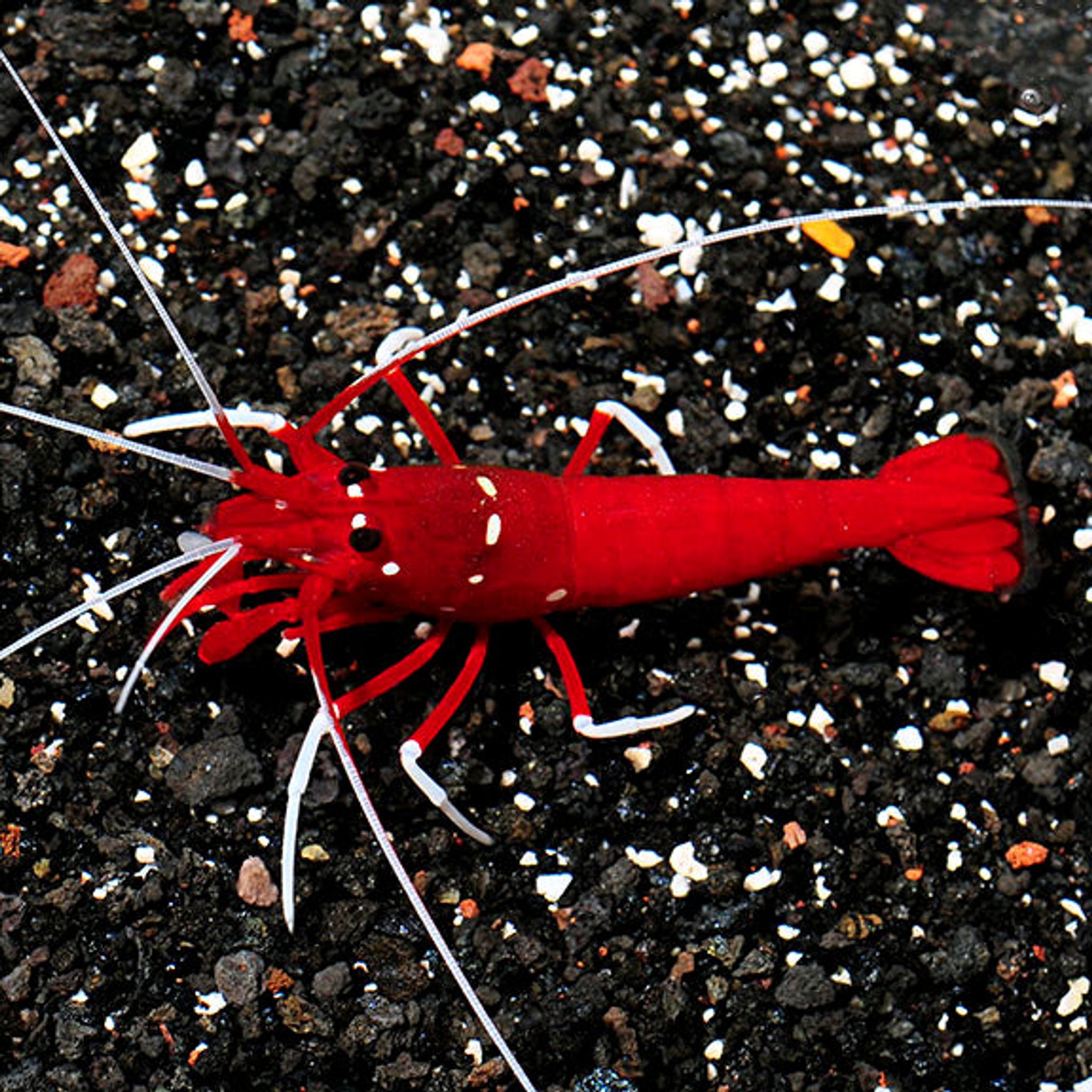

Is Fire Shrimp Reef Safe? Compatibility With Fish, Coral and Invertebrates
The fire shrimp (Lysmata debelius, also sold as the blood red fire shrimp) is conditionally reef safe: it will not intentionally hunt healthy coral, but a hungry one will pick at zoanthids and small-polyp stony (SPS) tissue. Whether yours behaves depends far more on feeding and tankmate choice than on the species label alone. This guide breaks down exactly which fish, corals, and invertebrates pair well, which ones put your shrimp at risk, and the tank conditions that keep the whole equation stable.
The Short Answer: Conditionally Reef Safe
Fire shrimp are not coral predators by nature. They are carnivorous scavengers built to clean up meaty leftovers and dead tissue, not to graze on live polyps. Problems show up specifically when the shrimp isn't getting enough food elsewhere in the tank and starts investigating coral as an alternative food source.
That distinction matters for stocking decisions:
- Well-fed fire shrimp: low risk to coral, generally trustworthy in a mixed reef.
- Under-fed fire shrimp: elevated risk of nipping zoanthids and SPS polyps, occasionally other soft tissue.
Treat "reef safe" here as a condition you maintain, not a fixed trait of the species.
Water Parameters and Core Requirements
Fire shrimp are sensitive invertebrates. Stable, well-cycled water matters more for them than for many reef fish.
| Parameter | Target range |
|---|---|
| Temperature | 72–78°F (22–26°C) |
| pH | 8.1–8.4 |
| Specific gravity | 1.023–1.025 |
| Alkalinity (dKH) | 8–12 |
| Nitrate | Under 20 ppm (lower is better) |
| Copper | Zero, always |
A few points deserve emphasis:
- Never medicate with copper while fire shrimp are in the tank. Copper-based treatments and other dissolved metals are highly toxic to them, usually fatally so. If a fish needs medicating, move it to a separate quarantine tank rather than treating the display.
- Only add fire shrimp to a fully cycled tank with zero measurable ammonia and nitrite. They should never be a tank's first inhabitant — ammonia and nitrite spikes during cycling can kill them outright.
- They tolerate somewhat higher nitrate than many corals and inverts, but "tolerate" isn't "thrive" — keep it low regardless.
Acclimation and Molting
Fire shrimp are sensitive to sudden shifts in salinity and other parameters, so rushing acclimation is one of the more common ways new owners lose one. Use a slow drip acclimation lasting an hour or more rather than a quick float-and-dump.
Molting is a normal, recurring part of fire shrimp life as they grow:
- The shrimp sheds its exoskeleton periodically and eats the molt afterward to recover calcium and nutrients — leave it in the tank.
- Supplemental iodine can support healthy, complete molts.
- Right after molting, the shrimp is soft-shelled and vulnerable. Expect it to hide more than usual during this window, and understand this is also the highest-risk period for it to be attacked by a predatory tankmate.
Tank Size and Stocking Density
- 10 gallons (38 L) is the hard floor for a single fire shrimp.
- 20+ gallons is a more comfortable practical minimum, giving room for rockwork, caves, and overhangs it needs to retreat into.
- 30+ gallons if you want to keep more than one, or if you're housing it with active swimming fish that need their own territory.
On numbers: fire shrimp are best kept singly or as a true mated pair. Unrelated individuals, even of the same species, will often fight — and that fighting is frequently fatal to the losing shrimp. If you do want multiples in a larger system, a rough guideline is about one fire shrimp per 30 gallons (114 L), with all individuals added to the tank at the same time to reduce territorial disputes. Browse the marine shrimp category if you're planning out a pair or a larger multi-specimen setup.
Diet: The Real Reef-Safety Lever
Fire shrimp are carnivorous scavengers, not grazers. Their preferred diet is:
- Meaty frozen foods — mysis shrimp, brine shrimp, marine pellets
- Occasional sinking gel food or meaty flake as a supplement (less preferred than frozen)
- Leftover food scraps and dead tissue they scavenge from the substrate and rockwork
They'll also act as a cleaner, picking parasites and dead tissue off fish that visit their "cleaning station" on the rockwork.
A practical feeding check: target meaty feedings a few times a week, timed so the shrimp is visibly active and scavenging at the rock and substrate rather than idle. If you notice it perched on a coral colony for extended periods, especially zoanthids or SPS, rather than roaming the tank looking for food, that's a sign it isn't getting enough elsewhere — increase feeding frequency or portion before you see actual nipping damage.
Fish Compatibility
Good tankmates
Peaceful reef fish generally coexist well with fire shrimp and may even use it as a cleaner:
- Clownfish
- Gobies
- Tangs
- Basslets
- Seahorses
- Dartfish
A pairing with clownfish is one of the more reliable combinations hobbyists report, since clownfish are peaceful toward shrimp and small enough not to pose a threat.
Fish to avoid
Some fish have the mouth size or hunting instinct to eat a fire shrimp outright, particularly right after it molts or shortly after it's introduced to a new tank:
- Hawkfish
- Marine bettas (Calloplesiops)
- Dottybacks
- Groupers
- Lionfish
- Triggerfish
- Larger aggressive wrasses
If you already keep any of these, add the fire shrimp with caution, or reconsider the pairing — it's a common and avoidable way keepers lose new shrimp within the first few weeks.
Coral and Invertebrate Compatibility
In a well-fed tank, fire shrimp coexist fine with most of a typical reef stocklist:
- LPS and soft corals: generally safe
- Anemones: generally safe
- Clams: generally safe
- Snails and hermit crabs: low conflict, safe as typical cleanup crew members
The exceptions to watch:
- Zoanthids: occasional, hunger-driven nipping is documented. Uncommon but not unheard of.
- SPS coral polyps: same pattern — a well-fed shrimp mostly leaves them alone, but nipping shows up when it's underfed.
Other cleaner shrimp
Compatibility with species like peppermint shrimp or skunk cleaner shrimp is tank-size dependent rather than a flat yes or no. In a large tank (30+ gallons) with multiple separate hiding zones and strong feeding, some keepers successfully mix fire shrimp with other cleaner species. In a nano tank, territorial fighting is common and the safer default is to skip mixing shrimp species altogether.
Nano Reef Tanks: Can a Fire Shrimp Work in a 20-Gallon Build?
A 20-gallon long tank is a workable "first reef" size, generally supporting one or two easy fish plus hardy coral like zoanthids. It typically needs around 20 lb of live or dry rock, solid flow and lighting, and RO/RODI water rather than tap water for mixing saltwater.
A fire shrimp can work in this size range, but a nano build changes the risk profile:
- Bioload is tight. Keep fish and coral selection modest — one or two peaceful fish, easy soft corals or zoanthids, and the shrimp itself.
- Stability matters more, not less. A common myth is that nano tanks are easier to run than larger systems. The opposite is true: smaller water volume means the same small mistake — a missed water change, evaporation left unchecked, slight overfeeding — produces a faster, bigger swing in ammonia, alkalinity, temperature, or salinity than it would in a larger volume.
- Fire shrimp are a poor "recovery test" for a nano swing. Their sensitivity to copper, dissolved metals, and sudden parameter shifts, combined with the vulnerability of a freshly molted shrimp, means a nano tank that swings hard can take out a fire shrimp faster than it would a hardier fish. If you're running a small tank, prioritize consistent water changes and parameter checks over convenience.
Reef-Safe Checklist
Use this as a quick pre-purchase and ongoing-care reference:
| Factor | What to confirm |
|---|---|
| Tank cycled | Zero ammonia and nitrite before adding the shrimp |
| Tank size | 10 gal minimum, 20+ gal preferred, 30+ gal for multiples |
| Copper | None present, ever, in any treatment used in that system |
| Feeding | Meaty frozen food several times a week, shrimp actively scavenging |
| Tankmates | No hawkfish, marine bettas, dottybacks, groupers, lionfish, triggerfish, or large aggressive wrasses |
| Coral watch list | Zoanthids and SPS checked periodically for nipping marks |
| Molt handling | Molted exoskeleton left in tank, extra hiding spots available post-molt |
| Acclimation | Slow drip, an hour or more |
Common Mistakes to Avoid
- Adding the shrimp to an uncycled or newly cycled tank. Wait for a full cycle plus some maturity before introducing it.
- Treating the display tank with copper-based medication while the shrimp is present — quarantine sick fish separately instead.
- Under-feeding and assuming the shrimp will "clean up enough" on its own — this is the most common cause of coral nipping.
- Keeping two unrelated fire shrimp in a small tank. Expect fighting, often fatal to the weaker individual.
- Introducing a predatory or large-mouthed fish after the shrimp is already established. The shrimp is at greatest risk right after a molt, when it's soft and slow.
- Removing the molted exoskeleton — this deprives the shrimp of a natural source of calcium and nutrients.
- Rushing acclimation by dumping the shrimp straight into new water — given their parameter sensitivity, this causes unnecessary stress or death.
Frequently Asked Questions
Is fire shrimp reef safe with SPS coral?
Generally yes if the shrimp is well fed, but occasional nipping at small-polyp stony coral tissue is documented. Keeping it on a consistent meaty-food schedule minimizes the risk.
Will a fire shrimp eat my zoanthids?
It's uncommon but has happened, usually driven by hunger rather than a taste preference. Regular meaty feedings largely prevent it.
Can I keep two fire shrimp together?
Only if they're a true mated pair, or the tank is 30+ gallons with strong feeding and multiple hiding spots. Unrelated individuals in a smaller tank often fight, and the weaker shrimp usually loses.
What fish will eat a fire shrimp?
Hawkfish, marine bettas, dottybacks, groupers, lionfish, triggerfish, and some aggressive wrasses are the main threats. Risk is highest right after the shrimp molts or shortly after it's introduced to the tank.
Can fire shrimp live with clownfish and other peaceful fish?
Yes — this is one of the more reliable compatible pairings. Clownfish, gobies, tangs, basslets, seahorses, and dartfish generally coexist well and may even use the shrimp as a cleaner.
Is fire shrimp okay with hermit crabs and snails?
Generally yes, with low conflict against typical cleanup crew members like snails and hermit crabs.
Why is my fire shrimp hiding all the time?
This is normal, reclusive behavior, and it's more pronounced right after molting when the shrimp is soft-shelled and vulnerable. Make sure the tank has enough caves, overhangs, and rockwork for it to retreat into.
Can fire shrimp go in a nano tank?
Yes, in a 10–20 gallon (38–76 L) tank, provided parameters stay extremely stable. A slightly larger tank reduces risk, since small water volumes swing faster and harder than large ones when something goes wrong.
If you're planning a reef stocklist around a fire shrimp, start with compatible fish and coral you can browse directly — check the marine fish selection for peaceful tankmates and the coral category for reef-safe additions that pair well with a well-fed cleaner shrimp.


