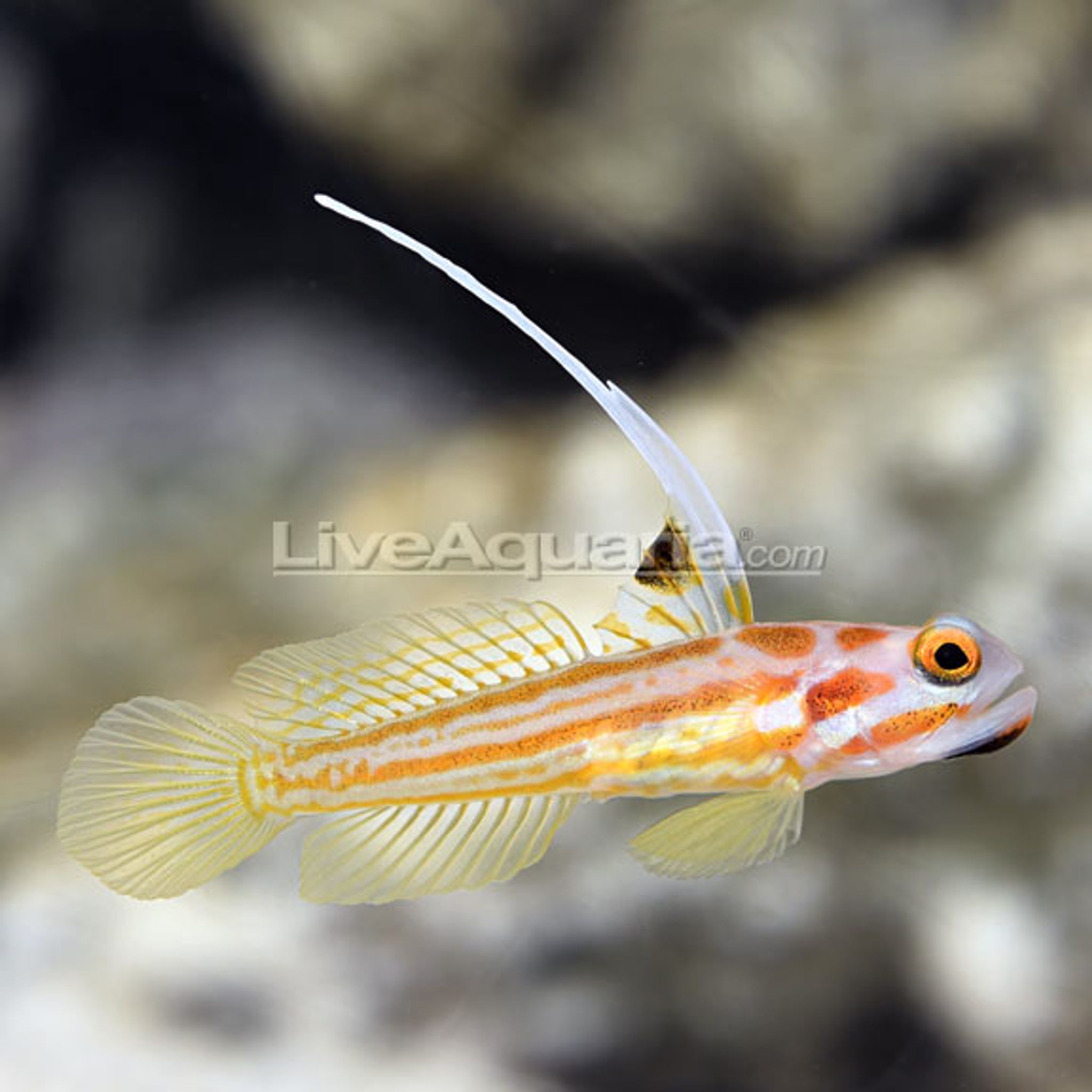

Is Diamond Goby Reef Safe? Coral and Invertebrate Compatibility Explained
Yes, the Diamond Goby (Valenciennea puellaris) is reef safe — it does not eat coral tissue, bother clams, or prey on snails, hermit crabs, or shrimp. The real compatibility issue isn't predation at all; it's mechanical, caused by the fish's constant sand-sifting behavior, and it's easy to manage once you understand where and why it happens.
What "Reef Safe" Actually Means for a Sand Sifter
Most compatibility guides answer "reef safe" as a single yes/no question, but for a sand-sifting fish like the Diamond Goby that framing misses the point. "Reef safe" here means safe from predation, not safe from substrate disturbance. The goby has no interest in coral polyps, clam mantles, or invertebrate flesh as food — its diet is built around tiny organisms buried in the sand. But its feeding method involves scooping mouthfuls of substrate all day, filtering out edible morsels, and expelling the leftover sand through its gills. That sand has to land somewhere, and if it lands repeatedly on a low, flat coral, the coral can suffer even though the goby never touched it.
Understanding this distinction changes how you plan a reef around the fish: you're not protecting corals from being eaten, you're protecting them from being buried.
Species ID: One Fish, Many Names
The Diamond Goby is sold under a long list of common names, which can make research confusing. All of the following refer to the same species, Valenciennea puellaris:
- Diamond Watchman Goby
- Diamond Sand Goby
- Orange-spotted (or Orange-dashed) Sleeper Goby
- Pretty Prawn Goby / Maiden Goby
If you see any of these names on a livestock listing, you're looking at the same fish with the same care requirements.
Coral Compatibility: Where the Real Risk Lies
The Diamond Goby will not nip or graze coral tissue of any kind. The risk to corals comes entirely from repeated sand deposition, which can irritate tissue, block light, or smother polyps over time if it happens often enough to the same coral.
Corals most at risk are those that grow low and flat or lack the means to shed sand quickly:
- Plate corals
- Zoanthids and palythoas
- Mushroom corals
- Low-mounted frags
- Open brain corals and acans
Corals with lower risk include hardier SPS and large-polyp corals mounted higher on the rockwork, since they're generally out of the direct sifting path and can shed light sand dustings more easily.
The Fix: Elevate and Relocate
The practical solution is straightforward aquascaping:
- Mount sensitive corals on rock elevated roughly 3-4 inches above the sand bed. Sources vary on the exact buffer — some say corals just need to sit "off the sand," others recommend a full 3-4 inches — but 3+ inches is a safe standard for LPS and zoanthids specifically. Hardier SPS placed higher up need less concern either way.
- Place low-growing frags away from the goby's preferred sifting zone. That zone is almost always open, flat sand areas rather than the tight spaces under and around rockwork, where the fish burrows for shelter instead of feeding. Aquascaping with this in mind — keeping prized frags on rockwork away from open sand flats — prevents most sand-related coral stress before it starts.
You can browse a range of options for elevated placement, along with the LPS hard corals most likely to need this treatment, when planning your aquascape.
Invertebrate Compatibility
The Diamond Goby is broadly safe with the invertebrates found in a typical reef tank. It ignores most crustaceans and gastropods entirely:
| Invertebrate type | Compatibility | Notes |
|---|---|---|
| Snails | Safe | No interaction |
| Hermit crabs | Safe | No interaction |
| Cleaner shrimp | Safe | Ignored by the goby |
| Most shrimp | Safe | No predation observed |
| Feather dusters (on sand) | Caution | Can be buried or disturbed |
| Small clams (on substrate) | Caution | Elevate onto rock |
| Tube anemones | Avoid | Needs undisturbed sand |
| Garden eels | Avoid | Needs undisturbed sand |
The caution-level entries share a common trait: they're sessile or slow-moving animals that sit directly on the sand rather than on rock or free-swimming crustaceans. Elevating feather dusters and small clams the same way you'd elevate a low coral solves the issue. Tube anemones and garden eels are a harder no — both species depend on calm, undisturbed sand to maintain their burrows, and a Diamond Goby's constant excavation will stress them chronically. Don't combine these species in the same tank.
Tank Setup Requirements
Tank Size
A single Diamond Goby needs a minimum of 30-40 gallons (114-151 L). Sources disagree somewhat on the exact floor — some list 30 gallons as acceptable, others recommend 40-55+ gallons once you account for a mated pair or the bioload of a deep, mature sand bed. A sensible target is 40 gallons minimum for one fish with a mature sand bed, sizing up for a bonded pair or a tank with other burrowing gobies.
Substrate
The sand bed matters as much as tank size:
- Use fine, sugar-sized aragonite sand in the 0.5-1.5mm range.
- Keep it 2-3 inches deep to allow burrowing.
- Avoid crushed coral entirely — the coarse texture is difficult to sift and can damage the fish's gills as it processes mouthfuls of substrate all day.
A mature, established sand bed with live sand is strongly recommended rather than optional. The Diamond Goby relies on natural infauna — copepods, worms, and other tiny organisms living in the sand — as a significant part of its food supply. An active refugium helps sustain that population over the long term.
Water Parameters
Standard reef parameters apply:
| Parameter | Target range |
|---|---|
| Temperature | 72-78°F (22-26°C) |
| pH | 8.1-8.4 |
| Specific gravity | 1.020-1.025 |
| dKH | 8-12 |
| Ammonia / Nitrite | 0 |
| Nitrate | Low |
Rockwork Security
Secure all rockwork to the glass or to itself with epoxy, rock-bonding putty, or similar methods before adding sand. Diamond Gobies burrow persistently under structures, and over months of digging, unsecured rock can shift and eventually collapse.
Diet and Feeding
The Diamond Goby is a carnivore that needs meaty, sinking foods delivered near the bottom, since it doesn't compete well for food at the surface. Good options include:
- Frozen mysis shrimp
- Enriched brine shrimp
- Chopped seafood
- Sinking marine carnivore pellets
Because the fish burns energy constantly while sifting, it needs multiple small feedings per day rather than one large meal. Target feeding — dropping food directly near where the goby forages — is especially important, since faster fish will often intercept food dropped at the surface before it ever reaches the bottom.
Why Starvation Is the Bigger Danger
Some care sheets treat feeding as a minor note, but hobbyist experience points to starvation as the leading cause of death for this species in captivity — particularly in smaller tanks or systems under 6-12 months old that haven't built up much sand fauna yet. Treat supplemental target feeding as mandatory, not optional, especially early on.
It's also worth knowing that newly introduced Diamond Gobies often refuse food for the first few days as they acclimate. This normal adjustment period is sometimes mistaken for the start of a starvation problem, when it's really just stress from transport and a new environment. Give the fish a few days before increasing feeding frequency out of concern.
There's a useful trade-off to keep in mind here too: a thriving pod population in your sand bed is genuinely good for reef health, since the goby helps aerate the substrate and control detritus while it feeds. But that same population needs to be replenished — through a refugium or regular feeding — or the goby will deplete it faster than it can recover.
Setting Up the Reef Tank Around a Sand Sifter
If you're building a system with a Diamond Goby in mind from the start, a few setup fundamentals make the difference between a fish that thrives and one that struggles:
- Choose a reef-ready, drilled tank with a sump and overflow — this is standard practice for reef systems and gives you room for a protein skimmer and other equipment out of the display.
- Use live rock and live sand as your biological filtration base; these also seed the microfauna the goby will eventually feed on.
- Gather core equipment before stocking: a protein skimmer, powerheads for flow, a reliable heater, and lighting suited to the coral you plan to keep.
- Cycle the tank fully, then let the sand and rock mature for several months before adding a sand-sifting fish. This gives the substrate time to build a real population of copepods and worms, which is the single biggest factor in whether the goby gets enough to eat.
Common Mistakes to Avoid
- Adding the goby to a brand-new tank. A system under a few months old rarely has enough sand fauna to sustain it; wait for a mature, cycled tank or supplement heavily with pods.
- Placing prized frags directly on open sand. Low corals in the goby's sifting zone get buried or sandblasted repeatedly.
- Skipping a tank lid. Diamond Gobies are known jumpers, especially when startled. Use a mesh or glass cover with minimal gaps.
- Assuming it will graze like other fish. It won't eat algae or leftover surface food — it needs meaty foods target-fed near the bottom.
- Housing two unpaired Diamond Gobies together. Expect aggression unless the pair was introduced and bonded together from the start.
- Using crushed coral substrate. It's harder to sift and can irritate the fish's gills over time.
- Not securing rockwork before adding sand. Burrowing can shift unanchored rock over months and cause a collapse.
Reef-Readiness Checklist
Before adding a Diamond Goby to an existing reef, run through this quick self-assessment:
- Tank has been fully cycled and sand/rock are mature (ideally 6+ months)
- Sand bed is fine-grained (0.5-1.5mm) and 2-3 inches deep
- A refugium or established pod population is present
- Low-growing corals and frags are mounted 3+ inches above the sand or moved off the main sifting zone
- Rockwork is secured to the glass or to itself
- Tank has a secure lid or mesh cover
- No tube anemones or garden eels present
- A feeding plan for multiple daily target feedings is in place
If most of these boxes are checked, your reef is ready for a Diamond Goby.
Frequently Asked Questions
Will a diamond goby eat my coral polyps?
No. It doesn't eat coral tissue of any kind. Any coral damage that occurs is from sand contact and irritation during sifting, not from predation.
Can I keep a diamond goby with cleaner shrimp or snails?
Yes, this is generally a safe combination. The goby ignores most crustaceans and gastropods, though very small or sedentary sand-dwellers like feather dusters may occasionally get buried.
Why does my diamond goby keep covering my corals in sand?
It's constantly sifting the substrate for food and expelling sand through its gills as it goes. The fix is elevating or relocating sensitive corals out of its main working zone, typically the open sand areas rather than near rockwork.
How big of a tank does a diamond goby need?
At least 30-40 gallons (114-151 L) with a deep, fine sand bed, with 40 gallons as a safer minimum for a single fish. Go larger for a bonded pair or a reef with a lot of low rockwork.
Why is my diamond goby losing weight or seemingly starving?
The most common cause is insufficient natural sand fauna combined with too little target feeding. Increase feeding frequency with meaty foods delivered near the bottom, and consider a refugium to replenish the pod population.
Can diamond gobies live with tube anemones or garden eels?
This combination isn't recommended. Both of those species need calm, undisturbed sand to maintain their burrows, and the goby's constant excavation will stress them.
Do diamond gobies jump out of tanks?
Yes, they're known jumpers, particularly when startled or stressed. A secure mesh or glass lid with minimal gaps is essential.
Can two diamond gobies live together?
Only if they're an established, bonded pair introduced together. Unrelated individuals are usually territorial toward one another and shouldn't be housed in the same tank.
Ready to add a Diamond Goby to your reef? You can browse available specimens and compatible tankmates in the gobies category on FishyHub, along with fine aragonite sand and gravel substrate sized right for sifting.


