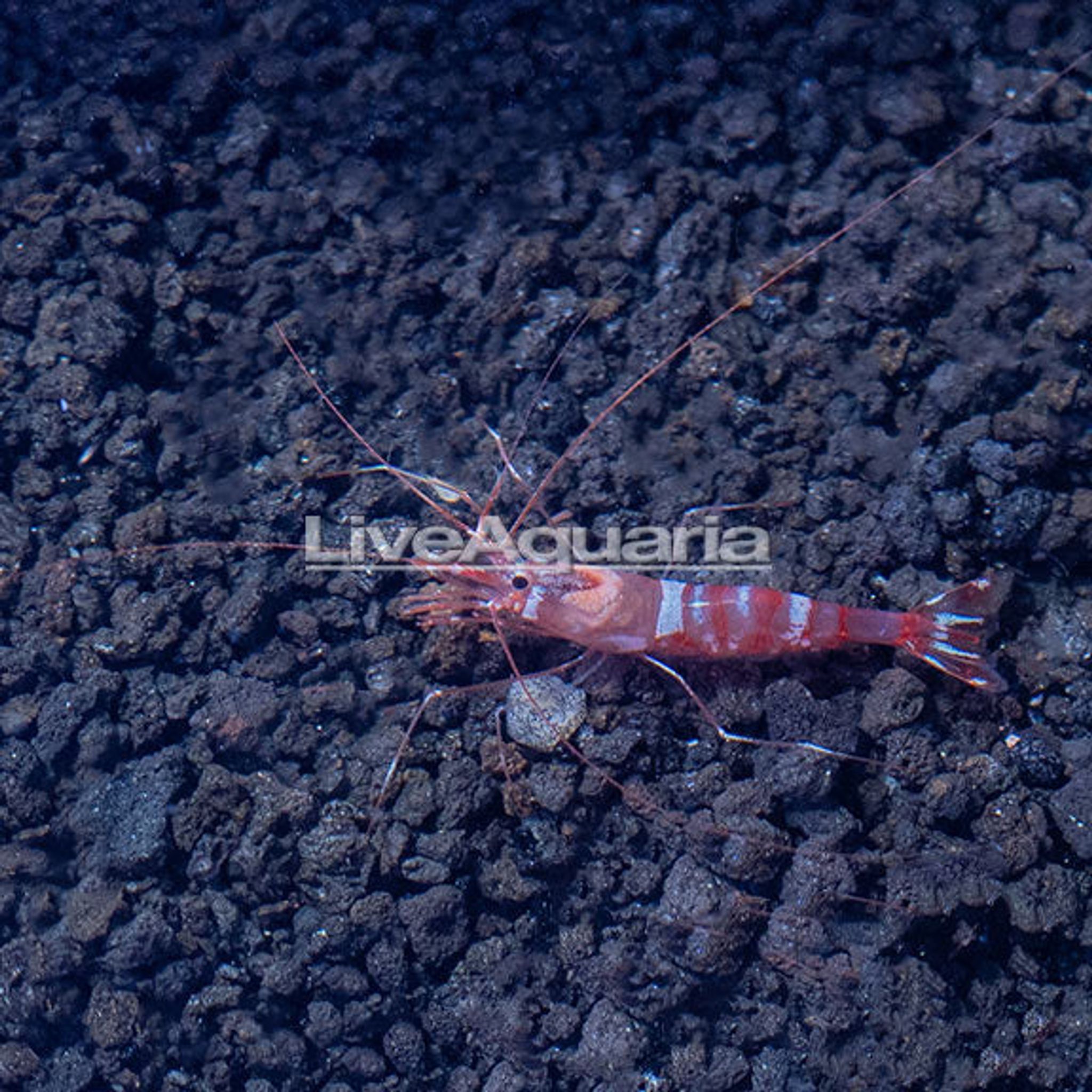

Is Cleaner Shrimp Reef Safe? Compatibility With Fish, Coral and Invertebrates
Yes — cleaner shrimp are reef safe. They don't eat live coral tissue and are considered safe with SPS, LPS, soft corals, zoanthids, and clams. The bigger question isn't whether they'll hurt your reef, it's whether your reef (specifically, your fish and other invertebrates) will hurt them.
Two different "safe" questions
Most compatibility confusion around cleaner shrimp comes from lumping two separate ideas into one vague label. Reef safe asks whether the animal will damage your coral — for cleaner shrimp, a confident yes, they're safe. Tankmate safe asks whether the animal will survive what's already in your tank — this is where the real risk lives, and it depends entirely on your fish and invert stocking, not the shrimp itself. A cleaner shrimp won't touch your torch coral out of aggression, but a triggerfish in the same tank absolutely will treat it as a snack. Splitting these two questions apart is the fastest way to get a useful answer instead of a generic "yes, they're fine."
Which cleaner shrimp are we talking about?
"Cleaner shrimp" covers a handful of species commonly sold in the US marine trade, mostly Lysmata plus one different genus:
| Common name | Species | Cleaning behavior | Notes |
|---|---|---|---|
| Skunk/Pacific cleaner shrimp | Lysmata amboinensis | Runs active cleaning stations | Most popular reef cleaner shrimp |
| Fire/blood red shrimp | Lysmata debelius | Cleans, more shy/nocturnal | Prefers more subdued lighting and cover |
| Peppermint shrimp | Lysmata wurdemanni | Minimal cleaning behavior | Kept mainly to eat pest anemones (Aiptasia) |
| Banded coral/boxer shrimp | Stenopus hispidus | Runs cleaning stations | Territorial — keep as a single pair only |
All four are considered reef safe with corals. Their differences show up in temperament and social behavior, not in how they treat your coral.
How cleaner shrimp actually help a reef tank
Cleaner shrimp set up "cleaning stations" on live rock and wave their antennae to signal fish. Fish — including species many times their size — line up and hold still while the shrimp picks off parasites, dead skin, and excess mucus, a genuine symbiotic relationship rather than scavenging. It isn't a substitute for fish health management, though — it reduces parasite load over time but can't cure an active infection or replace quarantine (more below).
Coral compatibility: the caveat behind the "100% safe" claim
Most sources call cleaner shrimp unconditionally coral-safe, and as a general rule that's accurate. A smaller number of reports mention shrimp picking at open LPS flesh — torch, hammer, or frogspawn — or nibbling clam mantles, and occasionally disturbing polyps at night.
These incidents are the exception, not the norm, and they're usually tied to one cause: hunger. A shrimp relying only on random parasites off fish isn't getting enough food. Give it target feedings of meaty foods a few times a week (mysis, brine shrimp, reef pellets) and this behavior essentially disappears. If you keep sensitive LPS corals, treat regular supplemental feeding as non-negotiable, not optional.
Fish compatibility: who's safe, who's a threat
The general rule is simple: any fish large or predatory enough to swallow a shrimp-sized invertebrate is a risk. You don't need to memorize an exhaustive list — just apply that filter.
| Risk level | Examples |
|---|---|
| Low risk (excellent compatibility) | Clownfish, gobies, blennies, tangs and surgeonfish, most dwarf/community angelfish, peaceful wrasses, firefish, dartfish |
| High risk (commonly cited offenders) | Triggerfish, lionfish, groupers, puffers, harlequin tuskfish, some larger wrasses and angelfish |
Sources disagree on exactly where to draw the line on tuskfish, larger dottybacks, and big angels — it really varies by individual fish and hunger level. Pairing cleaner shrimp with classic reef-safe community fish like clownfish, firefish, gobies, tangs, and dwarf angels is the safest stocking path. Browse marine fish with this filter in mind before adding shrimp to an established tank.
Introducing shrimp to a tank with a borderline fish
If you already have a semi-aggressive fish and want to try a cleaner shrimp anyway, a few moves reduce risk: feed the fish well right before introducing the shrimp so it isn't hunting hungry, add the shrimp during lights-off so it can find cover first, make sure there's an escape route (dense rockwork, an overflow box, a refugium connection), and watch closely for the first 24–48 hours. None of this guarantees safety with a genuinely predatory fish — it's a hedge for a borderline tankmate, not a workaround for a triggerfish or lionfish.
Molting: the vulnerable window even "safe" tankmates can exploit
Cleaner shrimp molt (shed their exoskeleton) every few weeks. During and immediately after a molt, they're soft, defenseless, and typically hide for 24–48 hours — this is when predation happens most often, even from tankmates normally considered safe. A fish that ignores a hard-shelled shrimp may not ignore a soft, motionless one. If your shrimp vanishes for a day or two and then reappears, it's almost certainly molting, not dead — just make sure the tank has enough rockwork for it to disappear into safely during that window.
Invertebrate compatibility
Cleaner shrimp generally coexist fine with snails, peaceful hermit crabs, and other peaceful shrimp. Risk comes from aggressive crustaceans: arrow crabs and larger hermit crabs can kill a shrimp post-molt, and mantis shrimp threaten any shrimp in the tank. Check temperament before adding anything from marine invertebrates alongside an existing cleaner shrimp.
Keeping more than one cleaner shrimp
Lysmata cleaner shrimp are protandric hermaphrodites (starting male, able to transition to female) and generally do well in pairs or small groups. Sources disagree on whether staggered additions work, but the safest practice is to add multiple cleaner shrimp at the same time, same species and similar size — adding to an already-established individual can trigger territorial fighting.
Banded coral shrimp are the exception: territorial, kept as a single mated pair only, since an unrelated shrimp added later is likely to be killed rather than tolerated. Skunk cleaner shrimp will also sometimes shelter in an anemone for protection, similar to clownfish hosting.
Water parameters: shrimp are less forgiving than fish
Invertebrates tolerate swings far worse than most fish. Stability matters more than hitting an exact number.
| Parameter | Target range |
|---|---|
| Temperature | 74–80°F (23–27°C) |
| Salinity | 1.023–1.026 SG |
| pH | 8.1–8.4 |
| Alkalinity | 8–12 dKH |
These are standard reef ranges, but for shrimp the key variable is rate of change: a fish might shrug off a fast half-point pH swing, while a shrimp is far more likely to stress out or die from the same shift.
Critical warning: copper medication and cleaner shrimp don't mix
Copper-based treatments for ich and other parasites are lethal to shrimp and all invertebrates, including corals and snails. Never dose copper into a display tank that houses a cleaner shrimp — if a fish needs copper treatment, it needs to happen in a separate quarantine tank, full stop.
Treating sick fish without harming the shrimp or coral
Cleaner shrimp help by grooming parasites off fish, but they aren't a treatment protocol or a substitute for quarantine. Invert-and-coral-friendly approaches for a sick display fish include garlic-boosted foods to support immunity and appetite, extra water changes, running a UV sterilizer to cut free-swimming parasite load, or simply removing the sick fish to a separate QT tank for diagnosis and, if needed, medicated treatment. Avoid dosing copper or most broad-spectrum fish medications directly into a display with shrimp, snails, crabs, or coral present — treat the fish out of the display, not in it. Treatment supplies for a proper QT setup are available in the treatment category.
Acclimation: don't skip this step
Shrimp are more sensitive to sudden salinity and pH shifts than most fish, and acclimation stress is one of the most common causes of early death after purchase. Drip acclimate over 60+ minutes minimum: float the sealed bag to match temperature (15–20 minutes), then open it into a clean container with the shrimp and shipping water. Run a slow drip line from your display or sump into the container — a steady trickle, not a stream — until the volume roughly doubles, discarding excess periodically so it doesn't overflow. Net the shrimp into the tank; don't pour in the shipping water. If you're unsure the drip is slow enough, it probably isn't.
Feeding
Don't rely on parasites alone to feed a cleaner shrimp — in a well-run reef tank there often aren't enough to sustain it. Supplement with meaty foods like mysis, brine shrimp, or reef pellets a few times a week. A well-fed shrimp is far less likely to pick at coral polyps or clam mantles.
Tank size and setup
Cleaner shrimp work in nano tanks and full-size reef systems alike. The one non-negotiable is structure — enough live rock to form cleaning-station perches and caves or overhangs to hide in during molting. A bare-bottom tank with minimal rockwork leaves the shrimp exposed exactly when it's most vulnerable.
A different animal entirely: the emperor shrimp
Worth a mention so it isn't confused with true cleaner shrimp: the emperor shrimp (Periclimenes imperator) is a different genus with a different lifestyle, typically living commensally on sea cucumbers or nudibranchs rather than running a fish cleaning station. It's rarely available in the US trade and isn't a typical reef-tank purchase — a useful contrast, since "cleaner shrimp" in the hobby usually means Lysmata specifically.
A quick pre-purchase checklist
Before buying, check: your fish list for known shrimp-eaters (triggerfish, lionfish, puffers, groupers, tuskfish); any copper medication you might need soon (plan a QT tank first); whether this is your first shrimp or an addition to an existing one (add together, not staggered); enough rockwork for a molt cycle; and a feeding plan beyond leftover parasites.
Common mistakes to avoid
- Adding a cleaner shrimp to a tank with a known predatory fish and being surprised when it disappears overnight.
- Skipping drip acclimation and losing the shrimp to salinity or pH shock within 24 hours.
- Dosing copper-based medication in the display, killing the shrimp along with other invertebrates.
- Underfeeding, which can lead to a hungry shrimp picking at coral polyps or clam mantles.
- Adding a second cleaner shrimp weeks after the first, then finding them fighting — they should have gone in together.
- Confusing peppermint shrimp with true cleaner shrimp — both are reef-safe, but they serve different roles.
- Skimping on rockwork, leaving the shrimp exposed during molting.
Frequently Asked Questions
Will cleaner shrimp eat my coral?
No — they don't eat live coral tissue and are considered reef safe. Rare exceptions involve a hungry shrimp picking at open LPS flesh, which is fixable with regular supplemental feeding.
Can cleaner shrimp live with clownfish and other reef fish?
Yes, generally excellent compatibility. Clownfish and cleaner shrimp often coexist without issue, and clownfish may even host the shrimp alongside an anemone.
What fish will eat a cleaner shrimp?
Larger predatory species pose the main risk — triggerfish, lionfish, groupers, puffers, and some tuskfish and wrasses. The general rule: any fish large or aggressive enough to eat a shrimp-sized invertebrate is a candidate.
Can I keep more than one cleaner shrimp together?
Yes, especially if they're added to the tank at the same time. Staggering additions — one now, another weeks later — can trigger territorial fighting.
Are cleaner shrimp safe with snails, crabs, and hermit crabs?
Generally yes. Aggressive crustaceans like arrow crabs or larger hermit crabs are the exception, since they can threaten a cleaner shrimp right after it molts and is still soft.
Can I use copper medication with cleaner shrimp in the tank?
No. Copper is toxic to shrimp and all invertebrates, so it should never be dosed into a display with shrimp or coral present. Treat sick fish with copper in a separate quarantine tank instead.
Why did my cleaner shrimp disappear or hide for two days?
It's most likely molting, a normal process that happens every few weeks. The shrimp is soft and vulnerable during this window, so make sure there's enough rockwork cover for it to hide safely.
What's the difference between a cleaner shrimp and a peppermint shrimp?
Both are reef-safe Lysmata species with different roles. Peppermint shrimp are mainly kept for eating pest Aiptasia anemones, while skunk and fire cleaner shrimp are valued for grooming parasites off fish.
Ready to stock your reef tank the low-risk way? Browse marine shrimp on FishyHub to compare species and find cleaner shrimp suited to your current fish and coral list.


