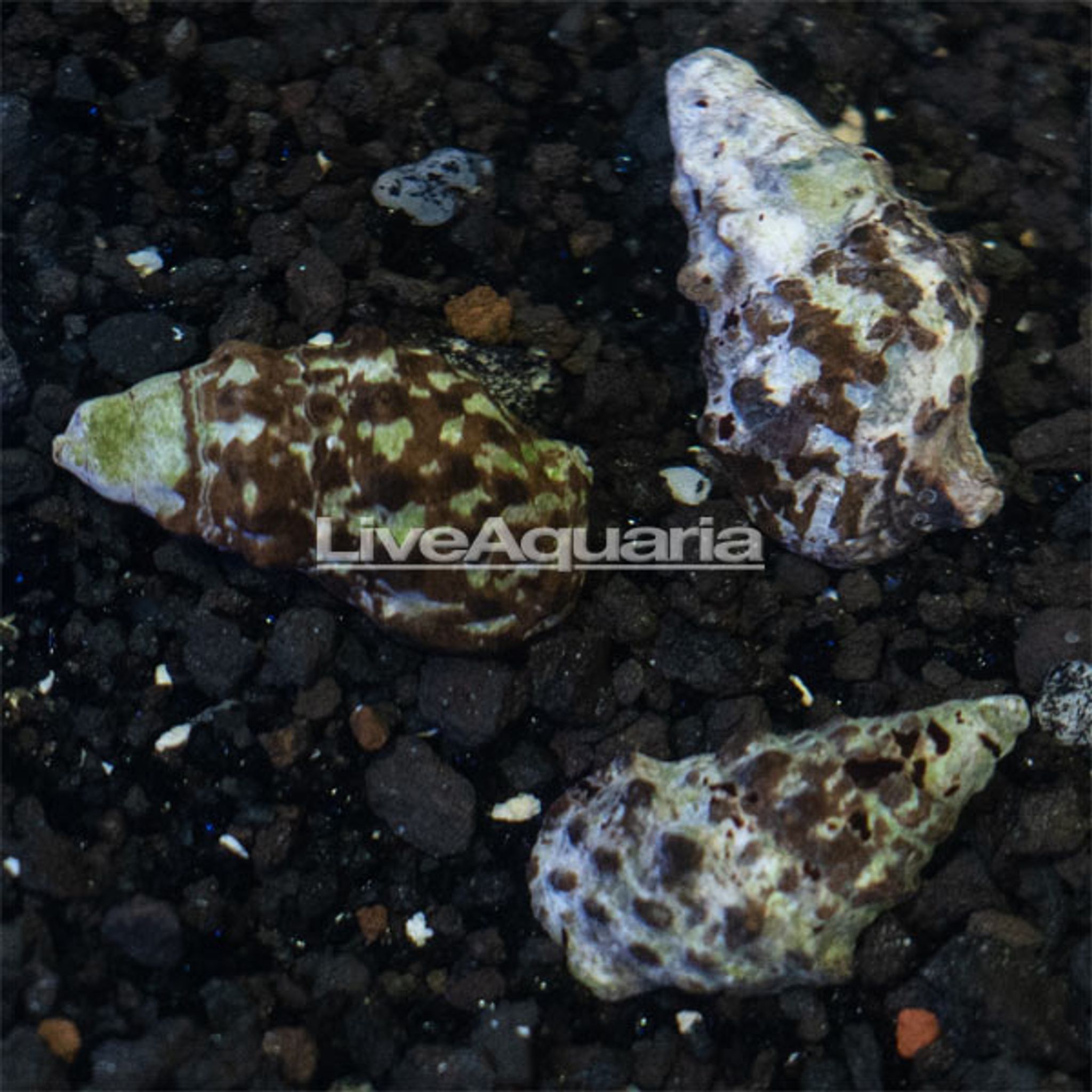

Is Cerith Snail Reef Safe? Compatibility With Fish, Coral and Invertebrates
Cerith snails are reef safe with no exceptions worth worrying about. They have no ability to sting, no interest in coral tissue or clam mantles, and spend their time grazing film algae and sifting detritus instead of bothering anything else living in the tank. This guide covers exactly what makes them safe, how to stock and feed them correctly, and which tankmates actually pose a risk to the snails rather than the other way around.
Why Cerith Snails Are Reef Safe
Cerith snails belong to the genus Cerithium, though several visually similar species are sold under the same common name and behave interchangeably for reef-keeping purposes. What makes them safe for every type of reef system comes down to their biology:
- Fully herbivorous and detritivorous — they scrape film algae, diatoms, and cyanobacteria off surfaces and consume decaying organic matter and leftover food.
- No stinging cells or predatory feeding structures — unlike some invertebrates, they have nothing capable of harming coral polyps or fish.
- No interest in coral tissue or clam mantles — their radula (feeding organ) is built for scraping films, not tearing at living flesh.
- Burrowing habit doubles as a benefit — as they plow through the sand bed, they aerate it and disturb the kind of stagnant, low-oxygen pockets where nuisance organisms tend to take hold.
Because of this feeding style, ceriths are compatible with SPS, LPS, soft corals, zoanthids, and clams without qualification. The only caution worth mentioning is a purely mechanical one: a snail crawling across a frag rack can occasionally topple a very lightweight, freshly placed frag or nudge open polyps as it passes. That's a physical inconvenience, not damage, and it's easily avoided by giving new frags a few days to settle or attach before ceriths have full run of the tank. You can browse healthy specimens for a reef tank in FishyHub's marine invertebrates and snails selection.
Why Ceriths Bury Themselves During the Day
New owners frequently panic when their cerith snails vanish into the sand bed during daylight hours, assuming the snail died or escaped. This is normal, expected behavior, not a problem.
Ceriths are nocturnal to crepuscular, meaning they're most active at night or under dim actinic and moonlight settings. Burrowing during the day serves two practical purposes:
- Avoiding predation — many reef fish that would otherwise pick at an exposed snail are far less active after lights-out, so foraging at night reduces the odds of getting nipped or eaten.
- Avoiding desiccation and UV stress — direct light and warmer surface temperatures during the day are harder on a soft-bodied animal than the cooler, more stable conditions a few inches into the substrate.
Before assuming a buried snail is dead, check on the tank after lights-out. A healthy cerith will usually be upright and moving across the glass or rockwork within an hour or two of darkness. Only remove a snail if it's been exposed, unresponsive, and foul-smelling for an extended period.
Stocking Rate: How Many Cerith Snails Per Gallon
Recommendations vary depending on the tank's condition, and this is one area where sources genuinely disagree. Some suggest as dense as 1 snail per gallon (3.8 L), while others recommend a lighter 1 per 3–5 gallons (11–19 L) for ongoing maintenance.
The practical approach is to match density to the actual food supply:
| Tank Situation | Suggested Stocking Rate |
|---|---|
| New tank cycling or active algae bloom | Up to 1 snail per gallon (temporary) |
| Established, moderately stocked reef | 1 snail per 3–5 gallons |
| Very clean tank or heavy competing grazer population | Lower end of that range, or supplement feeding |
Once an algae bloom settles down, let the population taper toward the 1-per-3–5-gallon range rather than continuing to add snails — the tank's natural food supply will limit how many it can support long term, and overstocking in a low-algae tank leads to slow starvation.
Signs of Starvation vs. Normal Aging
A starving cerith snail typically shows shell pitting or etching and a thinning, brittle shell lip, especially near the growing edge. This differs from normal aging, where the shell simply darkens or accumulates coralline growth without structural erosion. If you notice pitting across multiple snails, cut back on stocking density or add a supplemental food source such as a sinking algae wafer or spirulina-based food rather than assuming it's unavoidable.
Water Parameters Cerith Snails Need
Ceriths don't require anything beyond standard reef parameters, but they are unforgiving of instability:
| Parameter | Target Range |
|---|---|
| Temperature | 72–78°F (22–26°C) |
| Salinity (SG) | 1.023–1.025 |
| pH | 8.1–8.4 |
| Alkalinity | 8–12 dKH |
| Calcium | 380–450 ppm |
| Nitrate/Phosphate | Low |
Two points deserve emphasis. First, copper-based medications are lethal — snails and other invertebrates have zero tolerance for copper, so never treat a display tank containing ceriths with a copper-based product, and be careful about copper residue in quarantine water being transferred back into the main system. Second, always drip acclimate new arrivals. Cerith snails are sensitive to sudden salinity or pH swings, and osmotic shock from a rushed acclimation can cause a snail to die days later even though it seemed fine at first.
Compatibility With Fish
Cerith snails coexist peacefully with the vast majority of reef fish. The risk runs in one direction only — certain fish will eat snails, not the other way around:
- Arrow crabs — opportunistic predators of small snails.
- Some wrasses — six-line and harlequin wrasses in particular may nip at smaller snails.
- Triggerfish and puffers — both are known snail and shellfish predators.
- Larger predatory shrimp or crabs — size-dependent risk to smaller ceriths.
Bristleworms and many hermit crab species will scavenge a snail that's already dead or dying, which is a cleanup behavior, not an attack on a healthy animal. If you're stocking a tank with any of the fish above and want ceriths to survive long-term, favor larger specimens and keep an eye on population trends. You can review compatible fish options, including marine wrasses, before finalizing a stocking list.
Compatibility With Other Invertebrates
Ceriths are generally peaceful with shrimp, other snails, and most crustaceans. The main exception is large hermit crabs, which can evict a cerith from its shell or kill it outright once the snail has outgrown its housing and the hermit wants an upgrade. To reduce shell-jacking:
- Keep the ratio of large hermit crabs to snails low.
- Supply spare empty shells sized appropriately for your hermit crabs so they aren't tempted to take an occupied one.
This is where a habit many owners overlook actually pays off: when a cerith snail dies naturally, its clean, empty shell is worth leaving in the tank rather than throwing away. It gives hermit crabs a ready alternative home and meaningfully reduces attacks on your living snail population. If you're building out a cleanup crew, browsing FishyHub's marine invertebrate and crab options side by side with snails helps you plan ratios before you buy.
Reproduction: Do Cerith Snails Breed in Aquariums?
Yes, modestly. Ceriths are one of the few marine snails capable of reproducing inside a mature reef tank, laying small egg capsules on rock or glass surfaces. This sets them apart from many other cleanup-crew snails, which require a planktonic larval stage that has almost no chance of surviving inside a closed aquarium system. Don't expect a population explosion — food availability naturally caps growth — but a slow, self-sustaining trickle of new snails is a realistic long-term bonus.
Preventing Red Slime Algae (Cyanobacteria)
Cyanobacteria, commonly called red slime, is actually a bacteria, not a true algae, and it thrives under a specific combination of excess nutrients, low flow, and aging lighting. Sources disagree on how much credit ceriths deserve here: some call them a strong solution, others say they only nibble opportunistically. The realistic picture sits in between.
Ceriths do graze surface films and can suppress a light cyano layer, and their burrowing habit helps prevent mats from establishing underneath the substrate in the first place. But they are not a standalone fix for an established bloom. A full cyanobacteria removal plan should combine:
- Nutrient export — regular water changes, GFO or carbon media, and reduced feeding.
- Improved circulation — eliminating flow dead spots where cyano tends to colonize.
- Reduced photoperiod — shortening lighting hours temporarily.
- Manual removal — siphoning visible mats or, for severe cases, a short blackout period.
Treat ceriths as one layer of a broader nutrient-control strategy, not the whole solution.
Ceriths vs. Other Cleanup Crew Snails
Exact species identification matters less than understanding what each type of snail actually targets — many hobbyists overbuy one species while leaving other nuisance algae unaddressed. Cerith-labeled stock can also occasionally include lookalikes such as Nassarius or turrid snails, but for reef-safety purposes, behavior and size matter more than pinpointing the exact species.
| Snail Type | Primary Target | Activity Pattern |
|---|---|---|
| Cerith | Film algae, diatoms, cyanobacteria, detritus, sand aeration | Nocturnal, burrows during day |
| Nassarius | Leftover food, buried detritus, scavenging | Nocturnal, burrows aggressively |
| Astraea/Turbo | Hair algae, film algae (Turbo handles larger algae growth) | Diurnal, stays on glass/rock |
| Nerite | Film algae, diatoms on glass and hardscape | Diurnal to crepuscular |
Building a cleanup crew from two or three of these types, rather than overstocking a single species, targets a wider range of nuisance buildup — hair algae and bubble algae specifically need dedicated grazers like turbo or trochus snails, or emerald crabs and urchins, since ceriths won't touch filamentous or bubble algae.
Common Mistakes to Avoid
- Assuming a daytime-buried snail is dead without checking for nighttime activity first.
- Overstocking a low-algae tank, leading to slow starvation and visible shell pitting.
- Using copper-based medication or copper-contaminated quarantine water in a tank holding snails.
- Skipping drip acclimation, risking delayed osmotic shock.
- Leaving a dead snail in the tank too long, which causes an ammonia spike and cloudy, foul-smelling water.
- Keeping too many large hermit crabs, increasing shell-jacking pressure on ceriths.
- Expecting ceriths to clear hair or bubble algae — that job belongs to other grazers.
Frequently Asked Questions
Are cerith snails reef safe?
Yes. They are fully herbivorous and detritivorous, with no ability to eat coral tissue, clam mantles, or fish, making them safe for SPS, LPS, soft coral, and mixed reef systems.
How many cerith snails per gallon?
Roughly 1 snail per 3–5 gallons (11–19 L) for long-term maintenance. During a new-tank cycle or an active algae bloom, densities up to 1 per gallon (3.8 L) can help temporarily, then should be allowed to settle back down.
Do cerith snails eat cyanobacteria/red slime algae?
They graze it opportunistically and help suppress light films, but they won't eliminate an established bloom on their own. Pair them with nutrient export, better flow, and reduced lighting for real results.
Why is my cerith snail always buried in the sand?
This is normal nocturnal behavior. Ceriths bury during the day to avoid fish predation and daytime stress, then surface to forage after the lights go out.
Do cerith snails multiply/breed in aquariums?
Yes, modestly, in a mature reef tank. They're one of the few marine snails that can reproduce in captivity, since they don't require a planktonic larval stage like many other cleanup-crew species.
What eats cerith snails?
Certain wrasses (especially six-line and harlequin), arrow crabs, larger hermit crabs, puffers, triggerfish, and some predatory shrimp or crabs will target snails.
Can I keep cerith snails with hermit crabs?
Yes, but watch hermit crab size and numbers, since large hermits can shell-jack or kill ceriths. Providing extra empty shells reduces this risk significantly.
What water parameters do cerith snails need?
Standard reef parameters: 72–78°F (22–26°C), salinity 1.023–1.025, pH 8.1–8.4, alkalinity 8–12 dKH, and calcium 380–450 ppm, with zero tolerance for copper.
Cerith snails are a low-maintenance, genuinely reef-safe addition to almost any marine tank, and pairing them with a couple of complementary grazers builds a more complete cleanup crew than any single species can provide on its own. You can compare available specimens and build out your stocking list in FishyHub's marine invertebrates category.


