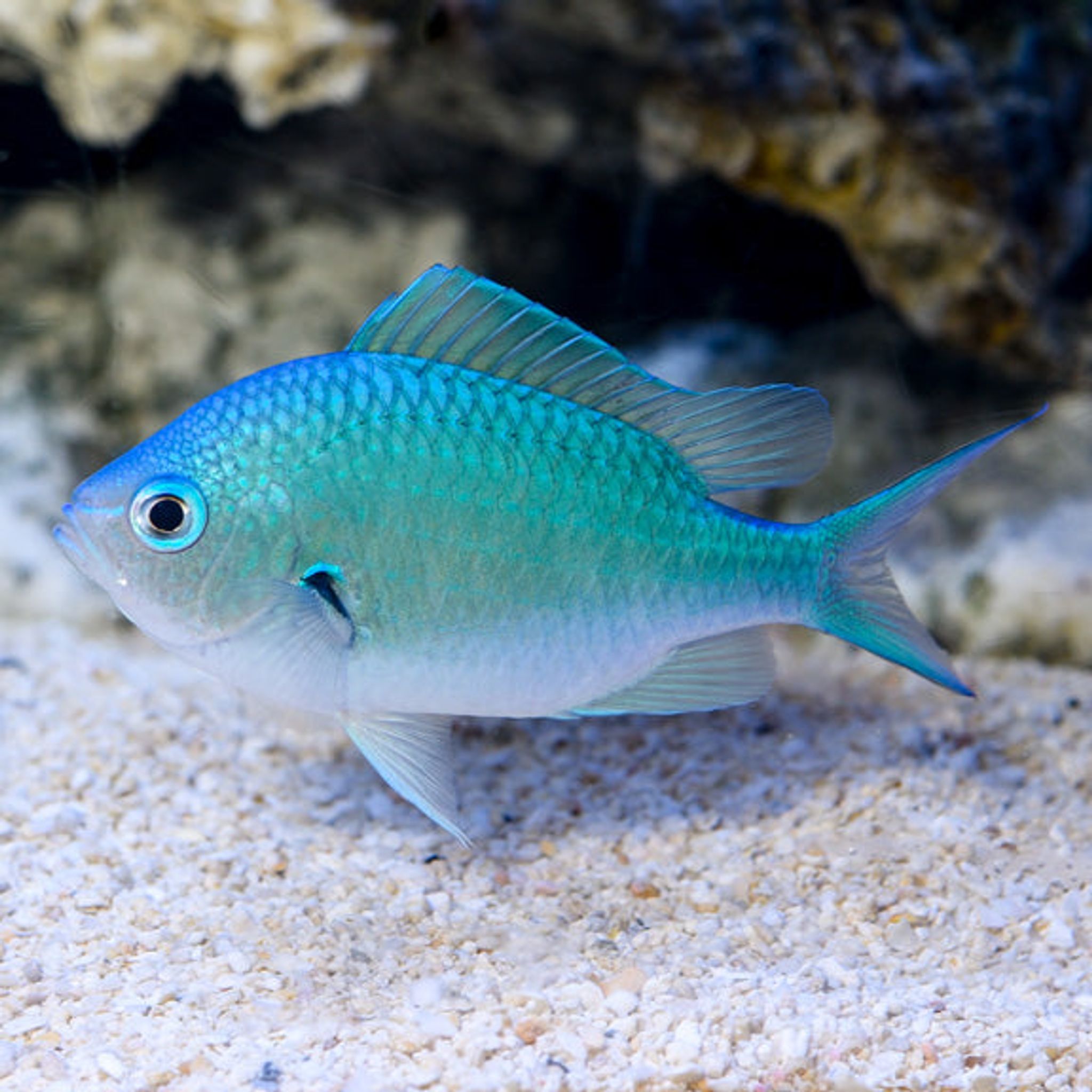
Is Blue-Green Chromis Reef Safe? Coral and Invertebrate Compatibility Explained
Yes, blue-green chromis (Chromis viridis) is reef safe. It ignores coral flesh, clam mantles, and typical clean-up crew invertebrates, and its only real risk to a reef tank is behavioral — nippiness that shows up when the fish is kept in too small a group or too small a tank. Here's exactly what that means for coral, invertebrates, and tankmates.
The Short Answer: Reef Safe, With One Behavioral Caveat
Blue-green chromis is a member of the damselfish family (Pomacentridae), but it behaves nothing like the territorial reef bullies that family is known for. Chromis are open-water planktivores — they hover in the water column picking at drifting food particles rather than grazing on coral polyps or guarding a patch of rock.
That biology is exactly why they're reef safe:
- They do not eat coral polyps.
- They do not host in or damage anemones.
- They generally ignore soft corals, LPS, SPS, zoanthids, mushrooms, and clam mantles.
- They are not bottom or crevice feeders, so they don't bother shrimp, crabs, or snails living in the rockwork.
The one caveat worth flagging up front: chromis are semi-aggressive toward other fish, not corals or invertebrates. That aggression is almost always a stocking or tank-size problem, not a species-wide trait — covered in detail below.
Coral Compatibility: Two Separate Questions
Most damselfish overviews blur "reef safe" into one vague label. It's more useful to split it into two separate questions, since chromis answer them differently.
Will Chromis Eat or Damage Coral?
No. Chromis have small, plankton-adapted mouths built for picking copepods and drifting food out of open water, not for rasping coral tissue. They're compatible with:
- SPS corals (Acropora, Montipora, Stylophora)
- LPS corals
- Soft corals and leathers
- Zoanthids and mushroom corals
- Clams (mantles are left alone)
What About the "Bumping" Behavior Near Branching Corals?
Chromis frequently dart in and out of branching coral colonies, especially Acropora, using the branches as a bolt-hole from real or perceived threats. This looks alarming — fish darting through coral tissue — but it's shelter-seeking, not predation. A large, spooked school repeatedly diving into the same colony can occasionally cause minor physical contact or localized stress to that coral, but this is an indirect, mechanical issue, not the fish feeding on it. If you see recession or bleaching near a colony chromis frequent, check flow, lighting, and water parameters before blaming the fish.
Invertebrate Compatibility
This is the point most damselfish content skips entirely, treating "reef safe" as if coral compatibility were the whole story. Invertebrate safety is a separate question, and chromis pass it cleanly.
| Invertebrate type | Compatible with chromis? | Notes |
|---|---|---|
| Cleaner shrimp | Yes | No documented predation; different feeding niches |
| Peppermint shrimp | Yes | Bottom-dwelling; chromis stay in open water |
| Snails (turbo, nassarius, etc.) | Yes | No interaction |
| Hermit crabs | Yes | No interaction |
| Small ornamental/dwarf shrimp | Low risk, watch juveniles | Theoretically possible prey item, not a common reported issue in reef tanks |
| Clams | Yes | Mantles are not targeted |
Chromis simply aren't built to hunt anything living in rock crevices or substrate — their entire foraging strategy is picking plankton out of the water column above the reef, not searching the rockwork for prey.
Sizing, Numbers, and Water Parameters
Size and Tank Requirements
Adult blue-green chromis reach about 2.5–3 inches (6–7.5 cm). A small group needs a 30-gallon (114 L) minimum, but because this is a schooling fish, footprint matters more than volume — a tank that's 4 feet (1.2 m) or longer gives a full school room to swim as a unit rather than colliding with glass and each other.
How Many Should You Keep?
Sources vary on the minimum school size, with recommendations ranging from 3 to 6+. A sensible middle ground:
- Absolute minimum: 3 (never fewer — a single fish or a pair is the single biggest cause of chromis aggression)
- Good for smaller reef tanks: 4–5
- Ideal, especially in a 4-foot+ tank: 6 or more
Larger schools distribute pecking-order squabbles across many fish instead of concentrating them on one or two individuals, which is the mechanism that makes chromis peaceful in the first place.
Water Parameters
Chromis need nothing beyond standard reef conditions:
- Temperature: 72–78°F (22–26°C)
- pH: 8.1–8.4
- Specific gravity: 1.020–1.025
- Alkalinity: 8–12 dKH
Diet and Care Level
Chromis are omnivores that eat mostly meaty foods and zooplankton in the wild, and they accept mysis, brine shrimp, flake, and pellet readily in captivity — an easy feeder for any experience level. Overall care is easy and beginner-friendly; the fish tolerates typical reef parameter swings once acclimated and can live 8–10+ years with consistent care. You can browse live chromis stock when you're ready to build a school.
Damselfish Family Context: Why Chromis Is the Exception
Pomacentridae is a large family, and lumping every genus together is where a lot of confusion starts. Roughly:
- Abudefduf, Dascyllus, Stegastes, Pomacentrus — genera that turn solitary and highly territorial as adults, staking out a patch of rock and attacking anything that enters it, corals included in some cases.
- Chromis — the schooling exception. Aggression gets spread across the group instead of concentrated on defending a territory, which is exactly why chromis stay reef-friendly where their cousins don't.
- Chrysiptera — mixed; some species (see below) are notably aggressive despite a superficially similar look to chromis.
All damsels, chromis included, share the same easy baseline parameters: 72–78°F, pH 8.1–8.4, SG 1.020–1.025, and a 30-gallon minimum. What differs is temperament, and that's a genus-level trait, not a family-wide one. If you're comparing options, the full damselfish lineup makes the genus differences easier to see side by side.
Don't Confuse Chromis With a Blue Devil Damsel
At a fish store, a juvenile blue devil damsel (Chrysiptera cyanea) and a blue-green chromis can look similarly colored and shaped to an untrained eye. Their behavior is not remotely similar:
| Trait | Blue-Green Chromis | Blue Devil Damsel |
|---|---|---|
| Social structure | Schooling | Solitary/territorial |
| Recommended number | 3–6+ | 1 (rarely 1 pair in a large tank) |
| Aggression as adult | Low, spread across group | High, concentrated |
| Reef safe with fish | Yes, with proper numbers | Risky — bullies smaller/slower tankmates |
There's also a look-alike issue within Chromis itself: Chromis atripectoralis is often sold alongside or mistaken for Chromis viridis. Both are reef safe and schooling, so a mix-up here is low-stakes compared to grabbing a blue devil by mistake, but it's worth asking a store to confirm species if a tight ID matters to your stocking plan.
Saltwater Filtration Basics That Support a Chromis School
A healthy chromis school and a healthy reef both depend on stable water quality, which comes down to three filtration stages:
- Mechanical — filter socks or pads capturing particulate waste
- Biological — live rock and/or a refugium hosting bacteria that process ammonia and nitrite into nitrate
- Chemical — activated carbon and GFO managing dissolved organics and phosphate
A protein skimmer sized at 1.5–2x your tank's water volume is standard for reef systems. Target nitrate around 2–5 ppm and phosphate around 0.03 ppm for coral health — levels well within what a properly filtered tank housing a chromis school can maintain without special accommodation.
Beyond Damsels: Other Beginner Reef-Safe Fish
If you're building a stocking list, chromis are one solid beginner option among several reef-safe, easy-care choices:
- Captive-bred clownfish
- Neon, watchman, and bar gobies
- Fang blennies (Meiacanthus)
- Banggai cardinalfish
- Royal gramma
Common Mistakes to Avoid
- Buying only 1–2 chromis. This is the single most common cause of "aggressive chromis" reports — a lone fish or pair fights for dominance or takes it out on other tankmates. Buy the full school at once.
- Adding chromis one at a time to an established tank. Existing fish treat each newcomer as an intruder. Add the whole group together, ideally early in the stocking order.
- Blaming coral damage on chromis nipping. Darting through coral branches is shelter-seeking, not feeding. Check water parameters and stocking density before assuming predation.
- Confusing chromis with a blue devil damsel at the store. Similar color, very different temperament.
- Undersized tanks for a full school. Chronic crowding stress increases disease susceptibility even in an otherwise hardy fish.
Stocking Order: Add the School Early, and All at Once
Because chromis establish their pecking order internally within the group, adding the entire school in one go — rather than trickling individuals in over weeks — lets them sort out rank among themselves instead of fighting a lone newcomer for territory. Where possible, add chromis relatively early in your reef build, before more established, territorial residents have staked claims. This single sequencing decision prevents most of the aggression complaints associated with the species.
Frequently Asked Questions
Will blue-green chromis eat or nip at my coral polyps?
No. Chromis are planktivores that feed in open water and don't target coral flesh. Occasional contact while darting near branching corals for shelter is normal schooling behavior, not predation.
How many chromis should I keep together?
At least 3, with 5–6 or more recommended for the best behavior and reduced aggression, especially in tanks 4 feet or longer. Add them together as a single group rather than individually.
Are chromis safe with cleaner shrimp and snails?
Yes. Chromis are open-water feeders and aren't known to bother typical reef clean-up crew like cleaner shrimp, hermit crabs, or snails.
What's the difference between blue-green chromis and blue damselfish?
Blue-green chromis school peacefully and spread aggression across the group. Blue (devil) damselfish, like Chrysiptera cyanea, are solitary and territorial and are best kept singly — don't confuse the two at the store.
Can I keep chromis with clownfish or other small reef fish?
Generally yes, provided the tank is large enough and the chromis are added as a complete school rather than trickled in over time. Occasional nipping can still occur in cramped setups.
What tank size do I need for a chromis school?
A 30-gallon (114 L) tank is the minimum for a small group, but a footprint of 4 feet (1.2 m) or longer is preferred to comfortably house a full school of 6.
Do chromis need special water parameters compared to other reef fish?
No. Standard reef parameters apply: 72–78°F, pH 8.1–8.4, specific gravity 1.020–1.025, and 8–12 dKH alkalinity.
Why is my chromis school suddenly aggressive?
The usual causes are too small a group, an undersized tank, or fish added individually over time instead of as a complete school. Review your numbers and tank footprint before assuming it's a permanent temperament issue.
Ready to start or round out a school? Browse live stock in Marine Fish and pair them with compatible corals and marine invertebrates to round out a peaceful, reef-safe stocking plan.

