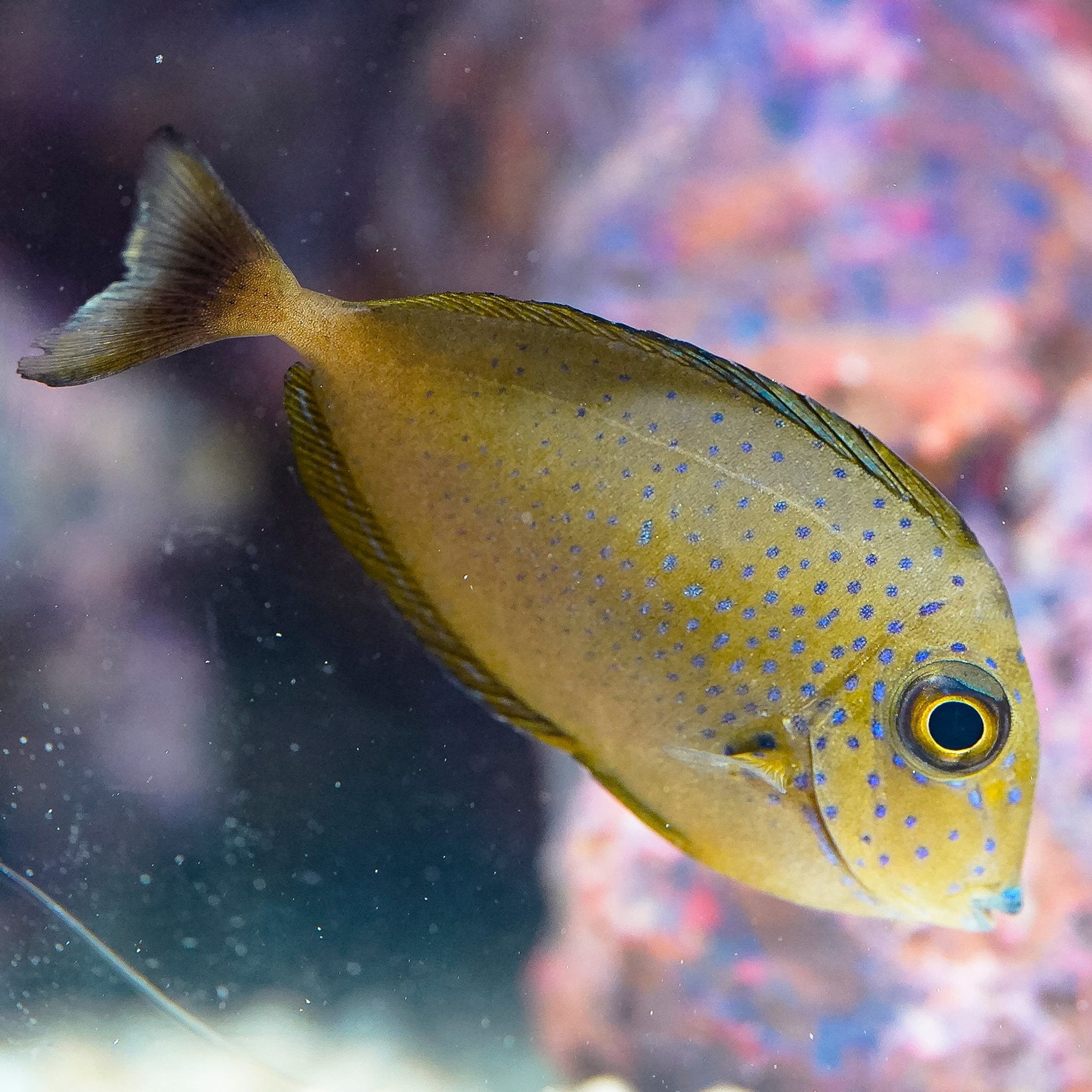
Is Achilles Tang Reef Safe? Coral and Invertebrate Compatibility Explained
The short answer is yes — the Achilles Tang (Acanthurus achilles) is reef safe and will not eat healthy corals, clams, shrimp, crabs, or snails. But "reef safe" only tells part of the story: the real challenges with this fish are keeping it alive long enough to matter, and reconciling its love of powerful current with corals that prefer calmer water.
Is the Achilles Tang Actually Reef Safe?
The Achilles Tang is a dedicated herbivore and grazer, not a coral predator. In the wild it spends most of its day picking algae films off rock and rubble in shallow, wave-battered reef zones. That grazing instinct carries over into captivity: a healthy Achilles Tang has no interest in stony coral polyps, soft coral tissue, clam mantles, or ornamental crustaceans.
Its diet is the mechanism behind this compatibility, not luck:
- Primary foods: nori, spirulina sheets, and marine macroalgae
- Supplemental foods: occasional mysis or brine shrimp for protein
- Feeding frequency: 3–5 times per day is recommended by many keepers
A tang that is grazing constantly on offered vegetable matter has little reason to sample coral flesh out of hunger or boredom. Underfeeding — or feeding a narrow, low-variety diet — is one of the few scenarios that can push a tang toward picking at SPS polyps or LPS flesh, so treat feeding frequency as a coral-safety measure, not just general husbandry.
The Real Compatibility Issue: Flow, Not Predation
Most reef-safety discussions stop at "will it eat my coral," but for the Achilles Tang the more practical compatibility question is about water movement. This species comes from high-energy Pacific surge zones and is happiest riding strong, turbulent current — a behavior often described as "surfing" the flow.
That preference creates tension with several popular reef inhabitants that want the opposite:
| Wants strong/turbulent flow | Prefers mild-to-moderate flow |
|---|---|
| Achilles Tang | LPS corals (especially large-polyp species) |
| Most SPS corals | Some soft corals |
| — | Feather duster worms |
| — | Some clam species |
Placing the tang's favorite high-flow rockwork directly beside flow-sensitive LPS or feather dusters can cause tissue recession, retracted polyps, or chronic stress in those animals — not because the tang is bothering them, but because the current itself is wrong for their needs.
Solving It With Flow Zoning
Rather than treating this as a reason to avoid the pairing, plan the aquascape around it:
- Create a strong, turbulent flow channel — often along open water or a high rockwork ridge — where the tang can swim and graze comfortably.
- Build calmer flow pockets behind rock formations or in lower sections of the tank for LPS, soft corals, and feather dusters.
- Use return pumps or powerheads aimed to create these zones deliberately, rather than relying on generic tank-wide flow.
- Stock SPS corals, which generally tolerate higher flow, in areas closer to the tang's preferred current.
This turns a real aquascaping conflict into a manageable design decision instead of a surprise months after the fish is already in the tank. If you're browsing coral options with this in mind, it helps to shop by flow tolerance — LPS hard corals as a group generally need gentler placement than SPS.
Tank Size and Water Parameters
Achilles Tangs grow to roughly 10 inches (25 cm) as adults and are near-constant swimmers, so tank size affects both their welfare and, indirectly, how stable your reef parameters stay.
- Minimum tank size: 125 gallons (473 L) as an absolute floor for a smaller or juvenile fish
- Recommended tank size: 180 gallons (681 L) or larger, with at least 6 feet of tank length
- Water temperature: 72–78°F (22–26°C)
- pH: 8.1–8.4
- Specific gravity: 1.020–1.025
- Ammonia/nitrite: 0 ppm
- Nitrate: ideally under 15–20 ppm
Sources differ on the minimum, and both figures are defensible depending on context. A 125-gallon tank can house a juvenile Achilles Tang adequately in the short term, but this species' swimming behavior, sensitivity to water quality swings, and disease susceptibility all argue for erring toward the larger end. If you're planning for the long term rather than the first year, 180 gallons with generous length should be treated as the practical standard, not an upgrade you'll get around to later.
Compatibility With Other Fish
Coral and invertebrate safety aside, the Achilles Tang has clear rules for fish tankmates:
- Semi-aggressive and strongly territorial toward other tangs and surgeonfish, especially those with a similar body shape or color pattern
- Generally peaceful toward non-tang species: clownfish, gobies, wrasses, anthias, chromis, and angelfish are typically left alone
- Keep to one Achilles Tang per tank unless the system is very large
- Add it last to the stocking order, and rearrange rockwork just before introduction to disrupt existing territory boundaries
If you're building a mixed tang display, browse the broader Tangs & Surgeons category to compare body shapes and territorial tendencies before combining species.
Why It's Still an "Expert Only" Fish
Given everything above, it's worth being direct: the Achilles Tang's difficulty rating has almost nothing to do with reef compatibility. It is rated expert-only because it is genuinely hard to keep alive, not because it threatens corals or invertebrates.
Disease Susceptibility
Achilles Tangs have a notably thin slime coat compared to mucus-heavy fish like clownfish and wrasses, which leaves them more exposed to two major saltwater diseases:
- Marine ich (Cryptocaryon irritans): white spots or a fine dusting on the skin and fins, flashing against rock or substrate, and rapid or labored breathing
- Marine velvet (Amyloodinium ocellatum): a fine gold or rust-colored dusting, rapid breathing, clamped fins, and fish swimming directly into flow as if trying to scrape themselves clean
Both diseases spread fast in a display tank and are considered among the most likely causes of a full tank wipeout for sensitive tangs. Stress from poor water quality, cramped quarters, or aggression suppresses immune function and is often the trigger for an outbreak in a fish that otherwise looked fine.
Quarantine Is Non-Negotiable
Because of this disease profile, quarantine is not optional for this species:
- Quarantine for 4–6 weeks minimum in a separate tank before adding to the display
- Some keepers run QT salinity slightly lowered, around 1.020–1.022, alongside proactive treatment
- Never dose copper-based medications in the display reef — copper is lethal to corals and most invertebrates, so any medicated treatment has to happen in a hospital tank away from live rock and coral
- If ich or velvet does reach the main display, a fishless period of roughly 60–76 days is commonly cited as necessary to fully clear the parasite before reintroducing fish
Stocking a hospital setup and the right medication ahead of time — rather than scrambling after symptoms appear — is one of the more important prep steps for this species. FishyHub's medication category is worth reviewing before you ever bring the fish home, not after.
A Lesser-Known Risk: Internal Parasites
Wild-caught Achilles Tangs can also arrive carrying thorny-headed worms (Acanthocephala) — internal gut parasites picked up from intermediate invertebrate hosts in the wild. These worms lack a mouth or gut of their own and absorb nutrients directly through their body wall while attached inside the host fish. They're not a common day-to-day threat to an established reef tank the way ich or velvet are, but their presence in wild-caught stock is another reason quarantine matters: a few weeks of observation, combined with a varied, high-quality diet to support immune resilience, gives a new fish the best chance of shedding parasite loads before it ever reaches your display.
Nutritional Deficiency Risk
Diet quality affects more than coral safety. Achilles Tangs fed insufficient vegetable matter or macroalgae over time are prone to hole-in-the-head disease, a form of lateral line erosion. This is a separate issue from coral predation, but it reinforces the same lesson: frequent, varied, plant-heavy feeding is central to keeping this fish healthy in every sense, not just coral-safe.
Common Mistakes to Avoid
- Skipping quarantine because the fish looks healthy at the store. Achilles Tangs are notorious for appearing fine and then crashing from ich or velvet within days of a stressful transport.
- Undersized or overcrowded tanks that spike territorial aggression or create chronic stress, weakening immune response.
- Underfeeding or offering a narrow diet, raising the risk of hole-in-the-head disease and, less directly, coral-picking behavior.
- Ignoring flow zoning, placing high-flow rockwork directly next to flow-sensitive LPS or soft corals and causing unrelated coral stress.
- Adding new corals or tankmates without a dip or quarantine protocol, risking cross-contamination even though the tang itself won't touch the coral.
- Treating disease with copper in the display reef tank, which can kill corals and inverts outright — always move the fish to a hospital tank first.
Should You Choose an Achilles Tang, or an Easier Alternative?
Before committing, it helps to be honest about your setup. An Achilles Tang makes sense when you have a tank of 180 gallons or more with strong, well-zoned flow and the discipline to quarantine every new fish for a month or more. If your tank is smaller, your flow is uniform and gentle throughout, or you're not set up to run a dedicated hospital tank, a more forgiving grazer such as a Kole Tang or Yellow Tang will give you similar reef compatibility with a much lower disease-management burden.
Frequently Asked Questions
Is the Achilles Tang reef safe with corals?
Yes. It's an algae grazer and does not eat healthy coral tissue. Feeding it frequently and with enough variety helps keep that behavior consistent over the long term.
Will an Achilles Tang eat my invertebrates (shrimp, crabs, snails)?
No. It is not a predator of ornamental invertebrates and focuses almost exclusively on algae and offered vegetable foods.
What tank size does an Achilles Tang need?
At least 125 gallons (473 L) as an absolute floor, with 180 gallons (681 L) or more and 6+ feet of length recommended for long-term health given its size and swimming activity.
Can I keep two Achilles Tangs together?
Not recommended except in very large systems. They are highly territorial toward their own species and toward other similarly shaped or colored tangs.
Why is the Achilles Tang considered an "expert only" fish if it's reef safe?
Reef safety isn't the challenge. Its thin slime coat, high susceptibility to ich and velvet, and strict water-quality and diet requirements are what make it hard to keep alive long-term.
Does the Achilles Tang need strong water flow, and will that hurt my corals?
It wants strong, surge-like flow, which can stress flow-sensitive corals if placed nearby. Zoning the tank — strong current for the tang, calmer pockets for LPS and soft corals — resolves the conflict.
How long should I quarantine an Achilles Tang before adding it to a reef tank?
A minimum of 4–6 weeks in a separate quarantine tank, observing closely for signs of ich or velvet before any display introduction.
What should I feed an Achilles Tang to keep it from bothering coral?
Frequent feedings — several times a day — of nori, spirulina, and marine macroalgae, supplemented occasionally with mysis or brine shrimp for protein.
Ready to plan your stocking list? Browse marine invertebrates and compatible tankmates on FishyHub to build out a reef that works alongside an Achilles Tang's flow and feeding needs.


