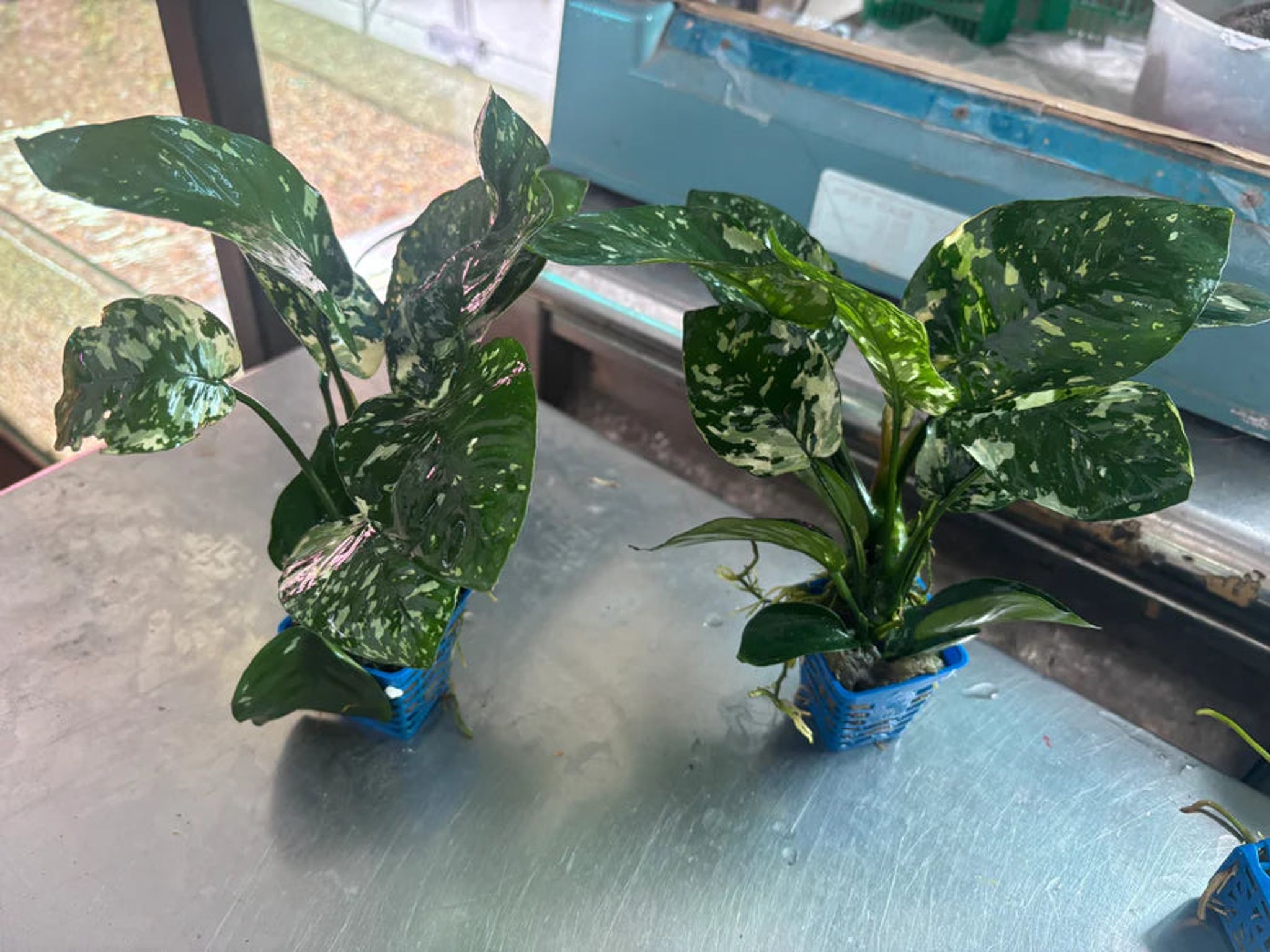
How to Plant and Propagate Anubias in a Freshwater Aquarium
The most important rule for planting anubias is to keep the rhizome, the thick horizontal stem, out of the substrate. You can tie or glue it to rock or driftwood, or set it on top of gravel with only the roots buried. Propagating it is just as simple: cut the rhizome into sections with a few leaves on each and replant them.
Know the Parts of the Plant First
Anubias is a slow-growing, hardy plant from West and Central Africa. In the wild it often grows on rocks and roots along stream banks, and it wants similar treatment in an aquarium.
- Rhizome: The green or brownish stem that runs sideways. It stores energy, and new leaves grow from it. It rots if it's buried in substrate, where water barely moves and oxygen runs low.
- Roots: Thin, wiry roots grow from the underside of the rhizome. They grab onto hard surfaces over time, and they can also go into the substrate.
- Leaves: Thick, leathery, and dark green. Each leaf grows from a node on the rhizome, and new ones come from the growing tip at one end.
Choosing a Planting Method
Anubias doesn't need a nutrient-rich substrate. It pulls most of its nutrients from the water column through its leaves and roots. That gives you several options.
| Method | Best For | How It Works | Watch Out For |
|---|---|---|---|
| Tying with thread or fishing line | Driftwood, lava rock, slate | Wrap cotton thread or clear line around the rhizome and the hardscape | Cotton thread breaks down in a few weeks. Fishing line has to be cut off later |
| Gluing | Tight gaps, small nano pieces | A small dab of cyanoacrylate gel (super glue) holds the rhizome to rock or wood | Use a gel formula with no additives, and only a small amount |
| Wedging | Rockwork with natural cracks | Push the rhizome into a crevice so it stays put | It can shift if fish dig or the current is strong |
| Substrate planting | Foreground and midground | Bury the roots only and leave the rhizome sitting on top | Covering the rhizome can lead to rot |
| Plant weights or cups | Beginners, tanks you rearrange often | Put the plant in a weighted clip or small pot | Can look artificial until the plant fills in |
Attaching Anubias to Driftwood or Rock
This is the classic method, and it shows off the plant's natural growth habit.
- Rinse the plant and pull off any rock wool or foam from the nursery pot. Tweezers work well for getting the fibers out from between the roots.
- Trim damaged roots, including any that are mushy or much longer than you need. Healthy roots are firm and white to brown.
- Find a spot where the rhizome can lie flat against the wood or stone. A small groove or a sheltered corner gives good contact.
- Secure it. Wrap thread around the rhizome between the leaves, not over the growing tip. For glue, dry the spot and the rhizome, add a small drop, press for 10 to 20 seconds, then put the piece back in the tank.
- Wait. It usually takes a few weeks to a couple of months for the roots to grip on their own. Then you can remove any line that's left.
Planting Anubias in Substrate
If you want anubias in the substrate, spread the roots and push them gently into the gravel or sand. Leave the rhizome sitting on the surface or just barely touching it. A fine-to-medium gravel or sand, like the options in Gravel & Sand, holds the roots well without packing around the rhizome. Nutrient soils also work, but they're not required for this plant.
If the plant keeps floating up before the roots take hold, set a small stone next to it or use a plant weight around the roots, not the rhizome.
Setting Up the Right Conditions
Anubias tolerates a wide range of conditions.
| Parameter | Widely Accepted Range |
|---|---|
| Temperature | 72–82°F (22–28°C) |
| pH | 6.0–7.8 |
| Hardness | Soft to moderately hard |
| Lighting | Low to moderate |
| CO₂ | Not required. Can speed growth slightly |
| Growth rate | Slow, often one new leaf every one to three weeks |
Light and Algae
Anubias leaves live a long time, so they give algae time to settle in, especially green spot algae and hair algae. Keepers disagree on how much light to give it. Some run moderate light with fertilizer and CO₂ for faster growth. Others keep it in shade to keep the leaves clean. For most tanks, putting anubias under taller plants, beside hardscape, or at the edges of the light beam is a practical middle ground. A dimmable LED light helps you adjust the balance.
Fertilizing
Fish waste provides much of what anubias needs. If new leaves come in pale or yellow between the veins, add a light, regular dose of a comprehensive liquid fertilizer. Root tabs only help plants rooted in inert gravel.
How to Propagate Anubias
Anubias propagates by rhizome division. There are no seeds or runners to manage in a typical aquarium. When a plant gets long or starts to branch, you can cut it into new plants.
When to Divide
- The rhizome has at least 6 to 8 leaves and is several inches long.
- It has branched, forming a fork with two growing tips.
- It's grown past its spot on the hardscape or is shading plants nearby.
Step-by-Step Division
- Take the plant out of the tank, or work in place if it's firmly attached and easy to reach.
- Pick your cut points. Each new section should have at least 3 to 4 leaves and some roots. The section with the growing tip will recover fastest.
- Cut cleanly with sharp aquascaping scissors or a clean razor blade. A crushing cut from dull blades can cause rot.
- Replant each piece using any method above. Keep the rhizome exposed.
- Be patient. The cut end of a section without a tip often grows a new bud in a few weeks, though it can take longer.
Troubleshooting Common Problems
| Symptom | Likely Cause | Fix |
|---|---|---|
| Mushy, smelly rhizome, leaves falling off | Rhizome buried or rot | Cut away soft tissue until you reach firm green tissue, then reattach the healthy part above the substrate |
| Green dots on leaves | Green spot algae from too much light | Move to shade, lower the light intensity or photoperiod, and wipe the leaves gently |
| Yellowing older leaves | Nutrient shortage, or the leaf is just old | Add a light dose of fertilizer. Trim old leaves at the base |
| Holes or torn leaves | Fish that eat plants or pick at them | Check your stock. Silver dollars and some large cichlids may damage leaves |
| Plant keeps floating loose | Roots not attached yet | Retie it, or wedge it more firmly until the roots grip |
Good Tankmates for Anubias
Tough leaves make anubias one of the few plants that works with fish known for damaging plants. It's a common choice for cichlid and goldfish tanks, though determined goldfish and large herbivores may still chew on it. In small community setups, the broad leaves give fish places to rest and hide. They also give surfaces for grazing, which freshwater shrimp pick biofilm from all day.
Frequently Asked Questions
Can I bury anubias roots in gravel?
Yes. The roots can go into the substrate, and many keepers plant anubias this way. Just keep the rhizome at or above the surface. Only a buried rhizome causes rot problems.
How long does it take anubias to attach to driftwood?
It usually takes a few weeks to a couple of months, depending on the variety, water conditions, and how firmly the rhizome touches the surface. Keep it tied or glued until the roots have clearly wrapped around the wood. Then remove any fishing line.
Is super glue safe for aquarium plants?
Cyanoacrylate gel glue is widely used in the hobby and considered safe once it cures, which happens quickly in water. Choose a plain formula without rubber additives or antifungal treatments. Use only a small amount where the rhizome touches the surface.
Why is my anubias melting after I planted it?
Anubias sold as emersed-grown plants may drop a leaf or two while they adjust to growing underwater. That usually stops once new submerged leaves grow. If the rhizome itself turns soft and brown, rot has set in. Cut away the damaged part and replant the firm section higher up.
How often can I divide anubias?
Divide whenever a section has enough leaves to spare, usually at least 3 to 4 per piece. Because it grows slowly, most tanks only need dividing once or twice a year. A healthy, well-lit plant may be ready sooner.
Final Thoughts
Anubias rewards a simple approach. Keep the rhizome exposed, give it modest light, and divide it when it gets crowded, and one plant can spread to fill a whole aquascape over time. Since light has the biggest effect on whether the leaves stay clean, a dimmable fixture is worth getting. Browse LED aquarium lighting on FishyHub to find a light that suits a low-light anubias tank.


