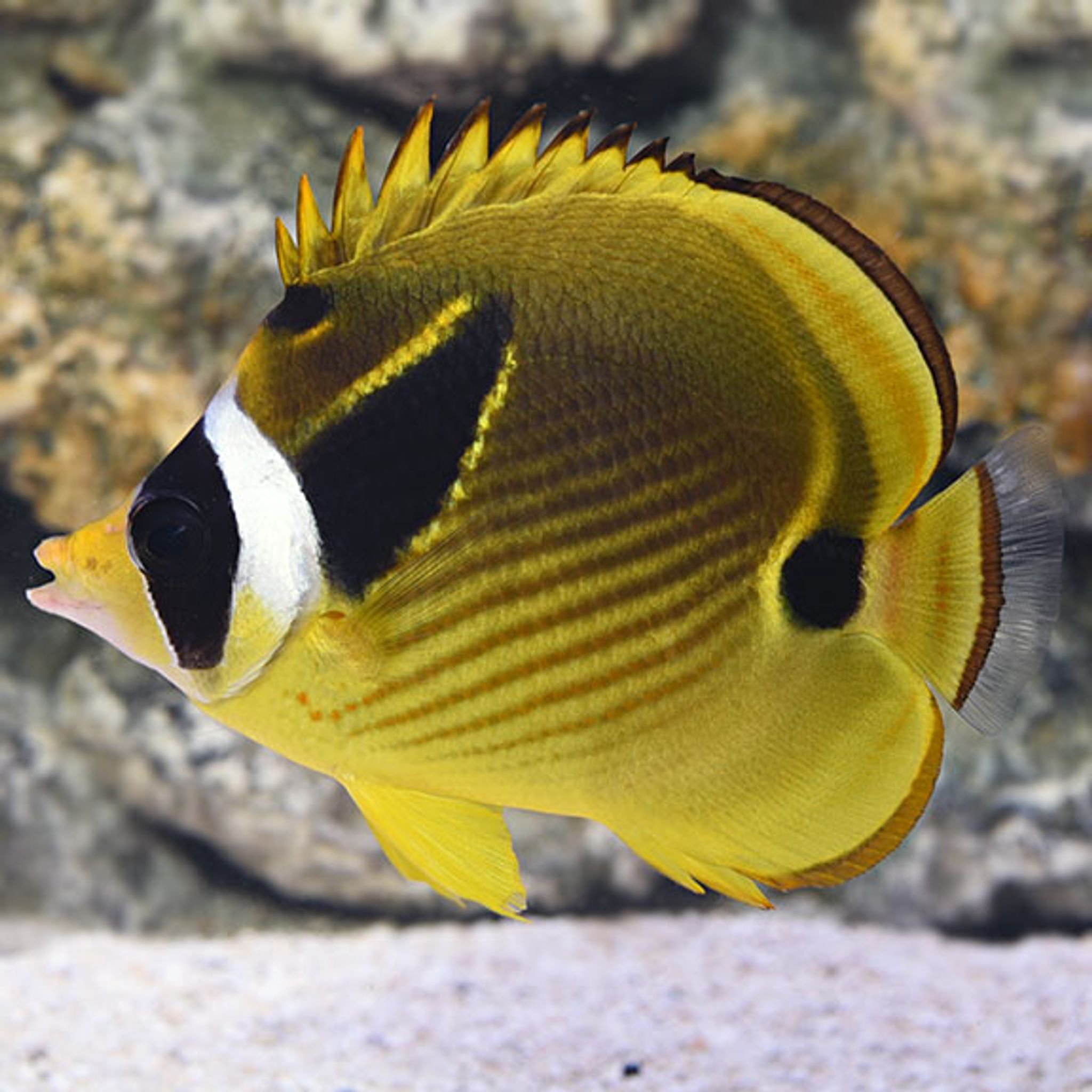

How to Feed Raccoon Butterflyfish: Foods, Frequency and Common Feeding Problems
Raccoon butterflyfish (Chaetodon lunula) are notorious for arriving at a new tank thin, stressed, and reluctant to eat. This guide covers exactly what to feed, how often, and the step-by-step fixes for a fish that won't start eating on schedule.
Natural Diet and What It Means for Feeding
In the wild, raccoon butterflyfish are predominantly invertebrate feeders. They graze polychaete and tube worms, small crustaceans, and coral polyps off the reef, picking at algae and zooplankton along the way. That feeding ecology matters for the aquarium diet: the base of the diet should be meaty foods, with algae and Spirulina-based items playing a supporting role rather than the main course.
Some care sheets describe this species as a near-50/50 omnivore. In practice, treating it as a predominantly carnivorous grazer that also needs some plant matter gives more consistent results than trying to balance the diet evenly.
What to Feed a Raccoon Butterflyfish
Offer a rotation of foods rather than a single staple. Variety keeps nutrition balanced and reduces the chance the fish gets bored of, or refuses, any one item.
Meaty foods (the diet's foundation):
- Frozen mysis shrimp
- Frozen brine shrimp, ideally enriched
- Chopped clam or cockle meat
- Chopped squid
- Krill
Algae and plant-based foods (supplemental):
- Dried seaweed sheets (nori), clipped to the aquarium glass
- Spirulina-based frozen or pellet foods
Prepared foods:
- Marine flake or pellet formulated for angelfish and butterflyfish, which tends to run higher in protein with some algae content mixed in
A mixed feeding day might rotate frozen mysis in the morning, a nori clip at midday, and enriched brine shrimp with chopped clam in the evening. Marine flake or pellet formulated for angelfish and butterflyfish, along with freeze-dried options, can be browsed in FishyHub's Food & Supplements section to round out that rotation.
How Often to Feed
Feeding small amounts several times a day matches this species' natural grazing pattern far better than one large daily meal, and it reduces the amount of uneaten food fouling the water.
| Feeding scenario | Recommended frequency | Notes |
|---|---|---|
| Newly acclimated or thin fish | 3x per day, small pinches | Prioritize getting any food accepted |
| Healthy, established fish | 2–3x per day | Drop to 2x once weight is stable |
| Reef tank with heavy nutrient sensitivity | 2x per day, smaller portions | Balance feeding frequency against nutrient load |
Whichever frequency you settle on, remove uneaten food within a few minutes of each feeding. Multiple daily feedings only work for water quality if leftovers don't sit and decompose.
Getting a New Fish to Start Eating
This is the single most common issue keepers run into with raccoon butterflyfish, and it's worth treating as its own process rather than a one-off trick.
Why New Raccoon Butterflyfish Often Refuse Food
This species is frequently wild-caught and shipped into the trade thin and stressed, which makes first-week feeding failure disproportionately common compared with tank-raised marine fish. A fish that hasn't eaten in days at the point of sale doesn't magically recover once it's in your tank — the stress and appetite suppression travel with it. Juveniles generally adapt to aquarium foods faster than wild-caught adults, so age and origin both affect how much patience the process needs.
A Day-by-Day Wean-On Approach
Rather than vaguely "trying live food," follow a structured sequence over roughly two weeks:
- Days 1–3: Offer live foods only — live brine shrimp or live blackworms — to trigger a feeding response with minimal effort from the fish.
- Days 4–7: Mix live food with frozen mysis or brine shrimp soaked in a garlic-based or vitamin/appetite-stimulant supplement, offered side by side.
- Days 8–10: Reduce live food gradually, leaning more on the soaked frozen foods as the primary offering.
- Days 11–14: Introduce marine flake or pellet in small amounts alongside the frozen foods, phasing toward a full rotation.
Garlic and vitamin soaks aren't just a hobbyist habit — the strong scent helps trigger a feeding response in a stressed fish, while the added vitamins support immune function during a period when appetite and health are both compromised.
How to Tell If It's Working
Don't rely on "does it eat" alone during the first two weeks — watch belly and flank fullness. A raccoon butterflyfish with a visibly pinched or concave belly is still in trouble even if it's picking at food occasionally. Track fullness every few days; a rounding-out profile is the clearest sign the feeding plan is working, well before behavior fully normalizes.
Water Quality and Acclimation Come First
A feeding problem is very often a water-quality or stress problem wearing a different name. Before a raccoon butterflyfish will eat reliably, the tank needs to be right:
- A fully cycled system with stable, established parameters
- Target tank size of 75 gallons (284 L) or larger
- Temperature 74–80°F (23–27°C)
- pH 8.1–8.4
- Salinity around 1.020–1.025 SG
Acclimate new arrivals with a slow drip method, dim the lights for the first day or two, and provide plenty of hiding spots (rockwork, overhangs) so the fish can retreat between feeding attempts. A stressed fish in harsh light with nowhere to hide is far less likely to start eating, no matter how good the food on offer is.
Treat the first few weeks as a process, not a single test: try multiple food types, keep water parameters rock-steady, and don't give up after one or two refused feedings. Patience over days to weeks is the norm for this species, not the exception.
Common Feeding Mistakes to Avoid
- Buying a thin, pinched-belly fish at the store. A fish that isn't eating in the display tank rarely turns around quickly at home — check belly fullness before you buy.
- Skipping quarantine. A disease-stressed fish won't eat regardless of food quality, and quarantine lets you test different foods without competition from tankmates.
- Offering only one food type. A fish that refuses flake or pellet may still take frozen mysis or live brine shrimp. Keep two or three backup foods on hand at all times.
- Overfeeding to coax a reluctant eater. Extra leftover food fouls water and can crash parameters, especially in reef tanks. Smaller, more frequent portions plus direct target-feeding work better than dumping in more food.
- Housing with fast, aggressive eaters. Tangs, larger angelfish, and damsels can out-compete a butterflyfish at every feeding. Feed in multiple spots around the tank, or target-feed the butterflyfish directly.
- Assuming refusal is just pickiness. Persistent refusal beyond one to two weeks combined with weight loss points toward a health issue — internal parasites, marine ich, or a bacterial infection — not a food preference problem.
Target-Feeding as a Troubleshooting Tool
When competition or pickiness is the issue rather than illness, target-feeding is a distinct technique worth using on its own, separate from simply switching foods. Use a turkey baster or feeding tongs to place food directly near the butterflyfish, and time feedings for when tank lights are dimmed to reduce activity and competition from other fish. This gives a slower or more cautious eater a real chance at the food before faster tankmates clear it out.
The Reef Tank Risk
Raccoon butterflyfish are reef-risky. As they mature, they will pick at LPS and soft coral polyps, clam mantles, tube worms and feather dusters, and ornamental shrimp or snails. This isn't a disease or feeding failure — it's normal foraging behavior for the species, and it tends to get worse, not better, over time.
Anyone planning a reef tank with delicate coral and invertebrates in FishyHub's Corals selection should treat this species as better suited to fish-only or FOWLR (fish-only-with-live-rock) systems. If losses continue in an existing reef tank, moving the fish to a fish-only system is the more reliable fix than trying to change its behavior. On the upside, some keepers use this instinct deliberately: a raccoon butterflyfish will pick at small aiptasia anemones, though it's a secondary tool at best compared with dedicated aiptasia-eaters.
Frequently Asked Questions
How long can a raccoon butterflyfish go without eating?
Healthy adults can typically tolerate roughly one to two weeks of reduced intake without lasting harm, but any prolonged refusal beyond that risks irreversible weight loss. Intervene with live food, a garlic or vitamin soak, or a health check rather than waiting it out.
What is the best beginner food to try first with a new raccoon butterflyfish?
Live or vitamin-soaked frozen mysis and brine shrimp tend to get the fastest response from a reluctant new fish. The movement and scent of live food, or the added appeal from a garlic soak, are usually more effective first steps than dry flake or pellet.
Will a raccoon butterflyfish eat aiptasia or nuisance anemones?
It's sometimes used for light aiptasia control since it will pick at small anemones, but it isn't as reliable as dedicated aiptasia-eaters like peppermint shrimp or certain nudibranchs. Treat it as a bonus behavior, not a primary control method.
Can raccoon butterflyfish be kept in a reef tank?
Only with real risk. As it grows, it will eventually sample coral polyps, clam mantles, and worms, which is why most keepers recommend a fish-only or FOWLR setup instead of a mixed reef.
Do raccoon butterflyfish need algae in their diet?
Yes, though in a smaller role than meaty foods. Some algae or Spirulina content, such as nori sheets or Spirulina-based frozen food, helps round out nutrition even though the diet is meaty-dominant overall.
Why is my raccoon butterflyfish hiding and not eating?
This is usually stress from acclimation, competition from aggressive tankmates, or unstable water parameters rather than a food preference issue. Check parameters first, then reduce competition at feeding time with target-feeding before assuming the fish is simply picky.
How big does a raccoon butterflyfish get, and does that change feeding needs?
It reaches roughly 8 inches (20 cm) at full size. Larger adults need proportionally more food volume, but the same feeding frequency of two to three times per day and the same variety of foods still apply.
If you're sourcing a raccoon butterflyfish or planning tankmates around one, browse current stock in FishyHub's Marine Fish category to compare options for your setup.


