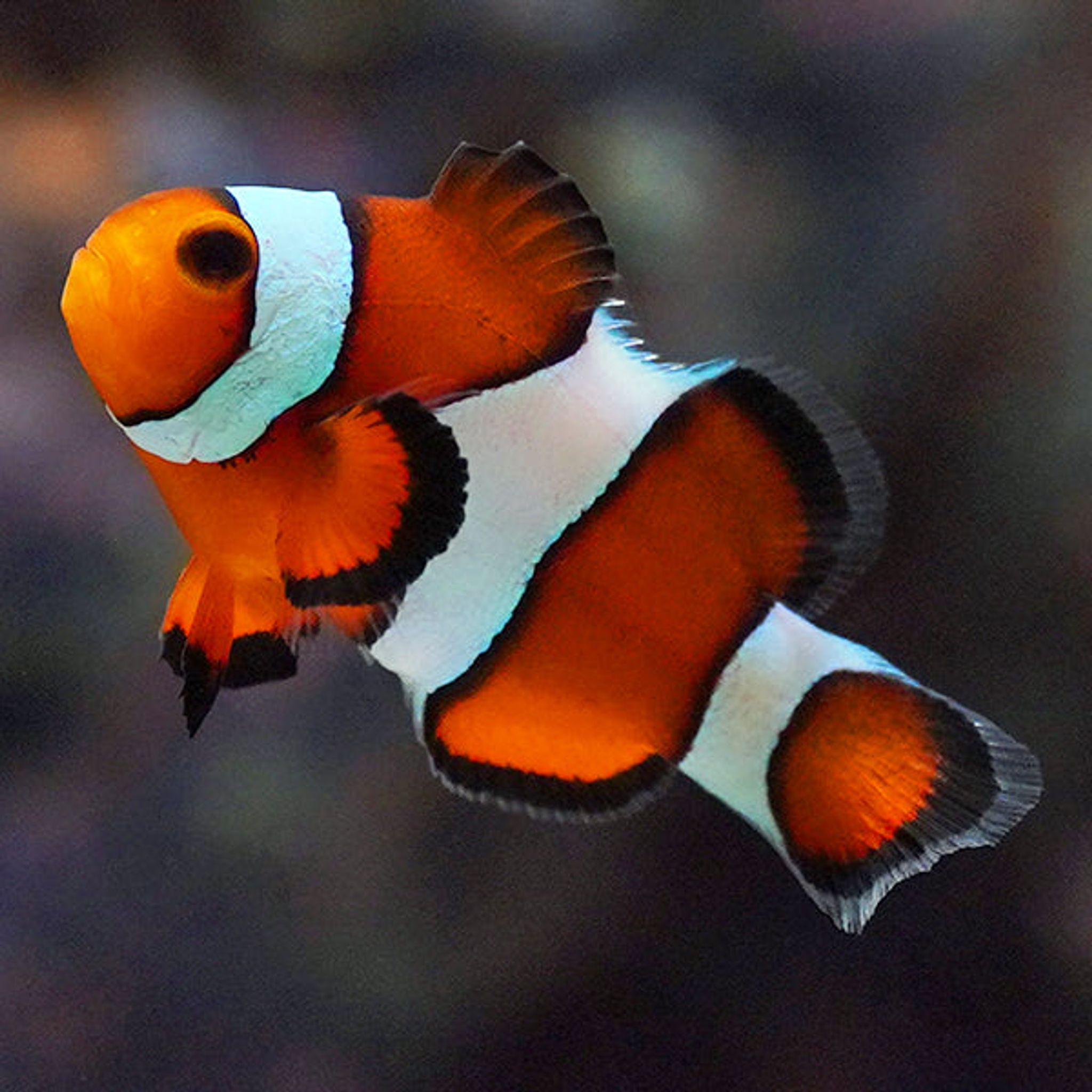
How to Feed Ocellaris Clownfish: Foods, Frequency and Common Feeding Problems
Ocellaris clownfish are omnivores that do best on a varied diet of quality marine pellets or flakes plus frozen meaty foods, offered in small portions one to three times a day. Most captive-bred ocellaris eat readily from day one, so feeding problems usually come down to portion size, food quality, stress, or tankmates. This guide covers what to feed, how much and how often, and how to fix the issues keepers run into most.
What Ocellaris Clownfish Eat in the Wild
In the wild, Amphiprion ocellaris stays close to its host anemone and picks food out of the water column. Its natural diet includes zooplankton (copepods, larval crustaceans, fish eggs), bits of algae, and scraps of prey left over from the anemone's meals. That tells you two useful things for the home aquarium:
- They are mid-water feeders that prefer food drifting past, not food lying on the sand.
- They need both animal protein and some plant matter, not a single ingredient.
A small mouth also matters. An adult ocellaris reaches roughly 3 to 3.5 inches (7.5–9 cm), so pieces should be small enough to swallow whole.
The Best Foods for Ocellaris Clownfish
Staple dry foods
A good marine pellet or flake should be the backbone of the diet. Look for:
- Seafood as the first ingredients (krill, shrimp, fish, squid) rather than generic "fish meal" or wheat flour.
- Small, slow-sinking pellets in the 0.5–1.5 mm range, which clownfish can catch before they hit the bottom.
- Added algae or spirulina for plant content and color.
Many keepers soak pellets in a little tank water for a minute before feeding. It softens them and reduces the chance of a fish gulping air or getting bloated from dry food, though opinions differ on how necessary this is.
Frozen foods
Frozen foods add moisture, variety, and a strong feeding response. Good options include:
- Mysis shrimp – arguably the single best frozen food for clowns; high in protein and eaten eagerly.
- Enriched brine shrimp – fine as part of a rotation, but plain adult brine is low in nutrition on its own.
- Marine or reef blends – mixes of fish roe, clam, krill, and algae in one cube.
- Copepods and rotifers – excellent for juveniles and for fish that are still settling in.
Always thaw frozen cubes in a small cup of tank water first, and consider pouring off the thaw water to limit phosphate and nitrate going into the tank.
Freeze-dried foods
Freeze-dried krill, mysis, and plankton are convenient, shelf-stable treats. They tend to float, so push them under or pre-soak them. Use them as part of a rotation rather than the only food. You can find options in FishyHub's freeze-dried food section.
Vegetable matter
Clownfish are not grazers like tangs, but a little plant material helps. Spirulina-containing pellets, algae-based frozen blends, or an occasional pinch of nori-based flake is usually enough.
Supplements
Some keepers soak foods in vitamin or omega-3 (HUFA) supplements once or twice a week, especially for new, recovering, or breeding fish. It isn't strictly required if the diet is already varied, but it can help fish that are thin or slow to color up.
Food Comparison at a Glance
| Food type | Role in diet | How often | Notes |
|---|---|---|---|
| Marine pellets | Daily staple | Every day | Choose small, slow-sinking, seafood-first |
| Marine flakes | Staple or alternate | Most days | Easy for juveniles; can foul water if overfed |
| Frozen mysis | Protein boost | 3–7 times per week | Thaw first; top choice for picky fish |
| Frozen reef blend | Variety | 2–4 times per week | Adds roe, clam, and algae |
| Enriched brine shrimp | Treat / enticement | 1–2 times per week | Low nutrition on its own |
| Freeze-dried krill | Treat | 1–2 times per week | Soak or push under the surface |
| Vitamin/HUFA soak | Supplement | 1–2 times per week | Useful for new or stressed fish |
How Often and How Much to Feed
Adults
For a healthy adult ocellaris, once or twice a day is standard. Offer an amount the fish can finish in about 30 to 60 seconds. For one adult, that's often just a few small pellets or a fraction of a frozen cube. Small, frequent meals are better than one large one.
Juveniles
Young clownfish, around 1 to 2 inches (2.5–5 cm), grow quickly and have higher energy needs. Feeding two to three small meals a day is common, using fine pellets, crushed flake, or small frozen foods such as copepods and baby brine shrimp.
A sample weekly schedule
| Day | Morning | Evening |
|---|---|---|
| Mon | Pellets | Frozen mysis |
| Tue | Pellets | Reef blend |
| Wed | Flakes | Frozen mysis (vitamin soak) |
| Thu | Pellets | Pellets |
| Fri | Pellets | Frozen mysis |
| Sat | Flakes | Freeze-dried krill (soaked) |
| Sun | Pellets | Light feeding or skip |
Many keepers skip or lightly feed one day a week. For healthy adults this is generally considered harmless and helps keep nutrient levels down, though it isn't required.
Common Feeding Problems and How to Fix Them
A new clownfish won't eat
It's normal for a newly added clownfish to ignore food for a day or two, and sometimes up to several days, while it adjusts. To help:
- Keep the lights dimmer for the first day and avoid hovering over the tank.
- Offer frozen mysis or live/frozen copepods, which trigger a stronger feeding response than dry food.
- Check your water. Stable conditions around 76–80°F (24–27°C), salinity of 1.023–1.026 specific gravity, zero ammonia and nitrite, and low nitrate go a long way.
If a fish still refuses food after about a week, or refuses food along with rapid breathing, white spots, cloudy eyes, or scratching, suspect disease or severe stress rather than pickiness.
The clownfish spits food out
Clownfish often take a pellet, spit it out, and try again. It usually means the piece is too big or too hard. Try a smaller pellet size or soak the food first. If spitting is new behavior in a fish that used to eat normally, watch closely for signs of illness.
Food gets stolen by tankmates
Ocellaris are fairly slow, deliberate eaters. Fast fish like wrasses, tangs, and some damselfish can grab most of the food before the clowns get any. Solutions include:
- Feed in two spots at once to spread out the competition.
- Use a feeding tube or turkey baster to target food near the clownfish's usual hangout.
- Turn off pumps and powerheads briefly so food drifts slowly.
Overfeeding
Overfeeding is the most common mistake. Signs include leftover food on the sand, rising nitrate and phosphate, algae outbreaks, cloudy water, and fat, sluggish fish. Cut back portions, remove uneaten food after a few minutes, and make sure your filtration and water change routine can keep up.
Pale color or slow growth
Faded orange usually points to a poor or monotonous diet, stress, or poor water quality. Rotating in mysis, roe-containing blends, and foods with natural color enhancers (such as astaxanthin from krill) often helps within a few weeks. Keep in mind that color also depends on genetics, and some captive-bred lines are naturally lighter.
Clownfish feeding the anemone or coral
Clownfish that host sometimes carry food to an anemone or coral. This is natural behavior and mostly harmless. If you keep a host anemone, just make sure the clownfish is still eating enough itself and that large chunks aren't rotting inside a coral.
Frequently Asked Questions
How long can an ocellaris clownfish go without food?
A healthy adult ocellaris can usually handle a few days without food, and many keepers leave adults unfed over a long weekend without problems. Juveniles have less reserve and shouldn't go more than a day or two. For longer absences, use an automatic feeder or ask someone to feed small, pre-portioned amounts.
Can ocellaris clownfish eat freshwater fish food?
It's best to avoid it as a staple. Freshwater foods often lack the marine proteins and fatty acids saltwater fish need. Stick to foods formulated for marine fish.
Do clownfish need live food?
No. Captive-bred ocellaris thrive on pellets and frozen foods and rarely need live food. Live copepods or brine shrimp can be useful for tempting a stubborn new fish or for raising fry, but they aren't required for everyday feeding.
Should I feed my clownfish at night?
Clownfish are active during the day and eat best when the lights are on. Feed at least 15–30 minutes after lights come on and finish well before lights out so they can see and catch their food.
Why is my clownfish always begging for food?
Clownfish quickly learn to associate people with food and will act hungry even when they're well fed. Go by body shape and leftovers rather than behavior. A slightly rounded belly and no waste on the substrate means the portion is about right.
Keep Your Clownfish Well Fed
Feeding ocellaris clownfish well comes down to variety, small portions, and watching how your fish respond. Build the diet around a quality marine pellet, rotate in frozen and freeze-dried foods, and adjust portions based on leftovers and water quality. If you're setting up a new tank or adding a pair, browse clownfish on FishyHub, and check the Food & Supplements category for pellets, frozen alternatives, and treats to round out their diet.


