How to Feed Mandarin Dragonet: Foods, Frequency and Common Feeding Problems
Mandarin dragonets don't fail because owners pick the "wrong" food — they fail because the tank isn't set up to keep feeding them all day long. This guide covers what mandarins actually eat, how to build and maintain a live food supply, and how to catch a starving fish before it's too late.
Meet the Mandarin: Not a Goby, and Not a Typical Grazer
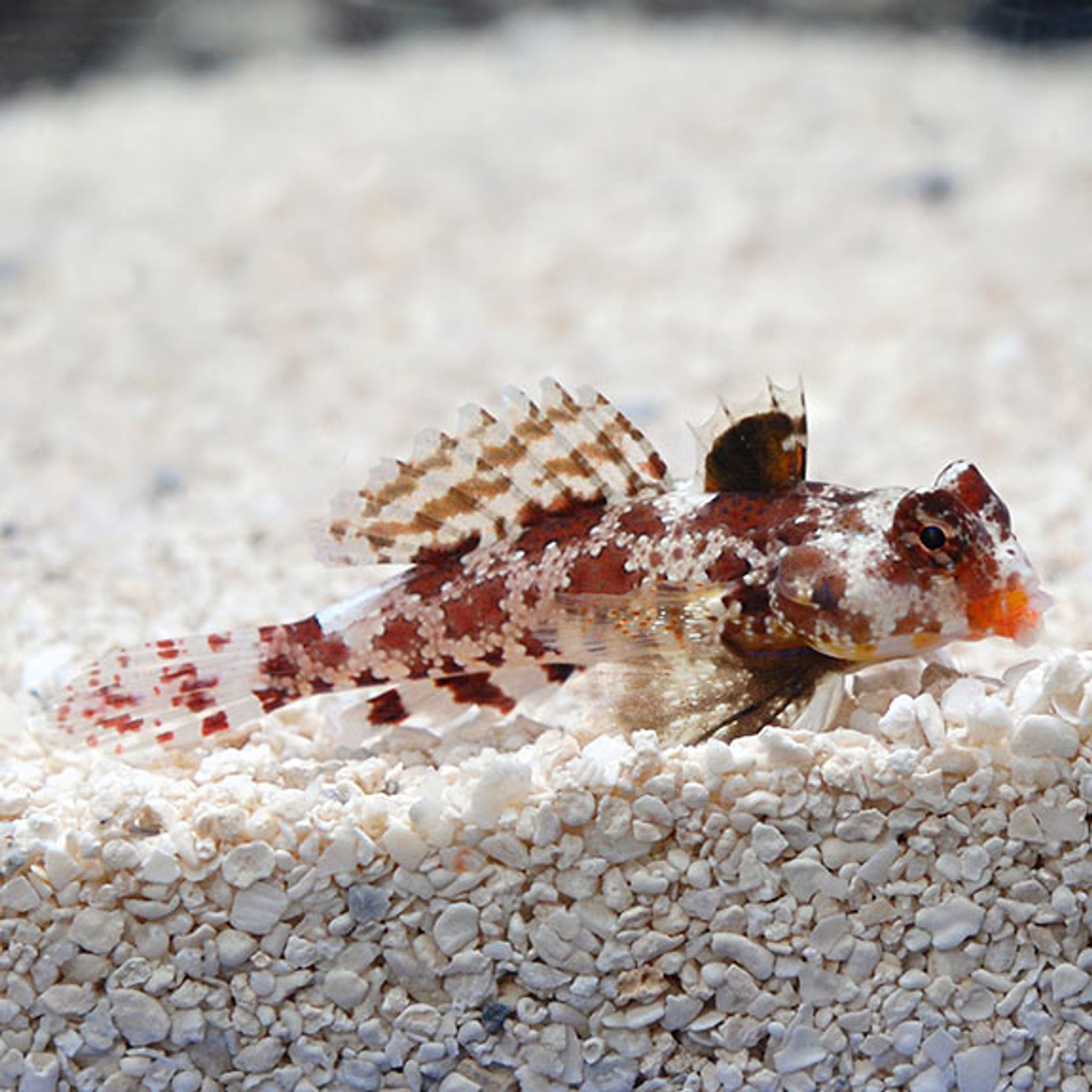
Mandarins belong to the genus Synchiropus and are true dragonets, not gobies, despite the similar body shape and bottom-hugging habits. The green mandarin, spotted (scooter) mandarin, and psychedelic mandarin are the three types most commonly sold, and all three are fed the exact same way.
What makes mandarins different from almost every other reef fish you'll keep is their feeding style. They are continuous grazers, picking at tiny prey items nearly non-stop throughout the day rather than eating a handful of discrete meals. Their digestive tract is short and simple, built for constant small intake rather than occasional large feedings — which is exactly why a once-a-day dump of food, even good food, doesn't match how this fish is built to eat.
In the wild, their diet is dominated by benthic (bottom-dwelling) harpacticoid copepods, along with amphipods, small marine worms, and tiny snails and other mollusks living on live rock and in sand. Recreating that food source — not finding a magic pellet — is the real job of a mandarin keeper.
Build the Food Supply Before You Buy the Fish
The single most important factor in mandarin success is having an established, self-sustaining pod population in the tank, sump, or refugium before the fish ever arrives. Adding a mandarin to a system that hasn't had time to grow its own microfauna is the number one cause of slow, avoidable starvation.
A few practical benchmarks:
- Tank size: roughly 30 gallons (114 L) per mandarin is a commonly cited floor, but raw volume matters less than the total surface area of live rock and sand available for pods to live on. A smaller tank packed with mature rock can outperform a larger, sparsely rocked one.
- Tank age: aim for a mature system, ideally 6 months or older, so pod colonies have had time to establish.
- Refugium: live rock, a deep sand bed, and macroalgae in a refugium — protected from fish predation and lit on a reverse schedule from the display — are the main long-term "pod factories" in a reef system.
A refugium isn't strictly required to keep a mandarin, but it's the most reliable way to keep pod production ahead of predation once the fish is in residence.
What to Feed: Live, Frozen, and the Roles They Play
Live Copepods and Amphipods
Copepods are the backbone of a mandarin's diet. Rather than relying on a single species, use a blend:
| Copepod type | Behavior | Where it helps |
|---|---|---|
| Tisbe-type (benthic) | Hides in rock crevices and sand | Feeds the mandarin while foraging over substrate |
| Apocyclops-type (free-swimming) | Swims in the water column | Easier for the mandarin to pick off in open water |
| Tigriopus-type | Larger, hardy, often surface-dwelling | Adds size variety and resilience to crashes |
A blend gives better coverage than any single species because it fills both the rock/sand microhabitat and the open water column. Amphipods are worth encouraging too — they graze detritus and biofilm alongside copepods, and leaving some uneaten food and macroalgae in the system supports their numbers as well.
Phytoplankton: Food for the Food
Phytoplankton isn't eaten by the mandarin directly — it's the fuel that keeps copepods and rotifers alive and reproducing, which then feed the mandarin. This is the core of the tank's mini food web: bacteria and phytoplankton feed pods and microfauna, which in turn feed the mandarin and other predators. "Feeding the fish" for a mandarin really means feeding the ecosystem.
Dose phytoplankton (strains like Isochrysis, Tetraselmis, Nannochloropsis, or Thalassiosira) regularly to support the loop. Brown or golden-algae strains are generally considered more nutritious specifically for pod culture than pure green strains — though green strains remain perfectly fine for general reef dosing. The distinction matters for pod nutrition, not for phytoplankton dosing as a whole.
Frozen and Prepared Foods
Once a mandarin accepts frozen food (far more likely in captive-bred individuals), useful options include frozen mysis, cyclops or copepod blends, and enriched baby brine shrimp. Live baby brine shrimp also works well as a bridge food and hunting-enrichment activity, though it's nutritionally thinner than copepods on their own — gut-loading or enriching it with a HUFA or vitamin product before feeding helps close that gap.
Sources disagree on how much weight frozen food should carry. Some treat it as a legitimate staple for trained, captive-bred fish; others insist it should stay a supplement only, given the mandarin's tiny stomach and constant-grazing physiology. A reasonable middle ground: frozen foods offered 2-3 times a day can meaningfully round out the diet, but they should never fully replace an ongoing live-pod supply.
You can browse copepod cultures, frozen foods, and other feeding supplies for marine systems in FishyHub's Food & Supplements category, including options in Freeze Dried Food for supplemental feeding once a fish is established.
Feeding Frequency and Technique
Match feeding to the mandarin's natural grazing pattern:
- Live pods: should be available essentially all day via an established refugium and display population.
- Frozen supplements: offer 2-3 small feedings a day rather than one large one — small and frequent beats one big dump, both for nutrition and for reducing water quality swings.
- Target feeding: in a community tank, use a small jar, bottle, or "diner" feeder with holes too small for faster fish, or a turkey baster, to deliver frozen food directly to a slow, non-aggressive mandarin that would otherwise get out-competed.
Culturing Copepods at Home
A simple home culture setup keeps restocking manageable:
- Use a clear container with saltwater mixed to typical reef salinity.
- Add gentle aeration — an air pump and airline tapped down to a low, steady bubble rate.
- Dose phytoplankton until the water is lightly tinted green or gold.
- Do a full water change weekly, collecting pods on a fine mesh screen (around 55 microns).
- Harvest once the culture is visibly dense with pods, and feed little and often rather than one large dose to the display or refugium.
Acclimating and Seeding Copepods
When adding a new batch of pods:
- Temperature-acclimate by floating the sealed bag or container in the tank first.
- Add pods to the refugium, not the display, whenever possible.
- Seed after lights-out, when fish are least active and least able to spot and hunt the pods as they disperse.
- Pause return pumps or flow briefly so pods aren't pulled straight into an intake before they have a chance to hide.
Because predation typically outpaces pod reproduction once a mandarin is present, plan to restock weekly to every few weeks, or run an ongoing home culture continuously.
Brine Shrimp Basics
Brine shrimp (Artemia) are cheap, widely available, and useful as a hunting-enrichment food and bridge food while training a fish onto frozen offerings. On their own, though, they're lower in nutritional density than copepods — gut-loading or enriching them before feeding is worth the extra step if brine shrimp make up a regular part of the rotation.
A Note for Seahorse Keepers
If you also keep seahorses, the overlap is worth knowing: seahorses share the same "constant small live prey" feeding style as mandarins, and much of the copepod, mysis, and brine shrimp culturing advice above applies directly to both. Running one shared live-food culture system for a tank that houses both types of animals is a practical way to simplify husbandry.
Feeding During Quarantine
A bare quarantine tank has no live rock or sand, which means no natural pod supply. Bridge the gap with:
- Bottled live copepods dosed on a regular schedule (daily or every other day).
- A small DIY mini-refugium or breeder net seeded with pods and a bit of macroalgae, run alongside the QT tank.
- Frequent, small offerings rather than relying on the fish to find food in a mostly bare tank.
Housing and Stocking Considerations
Avoid pairing mandarins with fast, aggressive eaters — tangs, damsels, and many wrasses will strip a tank of pods before a mandarin can compete for its share, and the same fast fish will often beat it to any frozen food offered. As a rule, keep one mandarin per tank unless the system is very large and mature enough to support more than one grazer; two males in particular will fight. When adding other pod-eating fish or cleanup-crew invertebrates, plan the order and timing so they don't strip the same food source the mandarin depends on. FishyHub's Marine Fish category is worth reviewing for tankmates known to be more compatible with slow grazers.
Common Mistakes to Avoid
- Adding a mandarin to a brand-new or under-stocked tank with no established pod population.
- Assuming any mandarin will eventually learn to eat flake or pellets — most never do, especially wild-caught fish.
- Housing with fast or aggressive tankmates that outcompete it for both live pods and frozen food.
- Buying wild-caught stock without checking body condition first — a thin, sunken-bellied fish is a red flag even at the point of sale. Captive-bred (aquacultured) mandarins adapt far more readily to frozen foods and are generally hardier than wild-caught fish, which frequently refuse anything but live prey and can starve within weeks.
- Feeding once a day in one large amount instead of small, frequent offerings.
- Relying on a single copepod species or product instead of a blend, risking a population crash once one microhabitat is stripped.
- Not monitoring body condition regularly — by the time a mandarin looks visibly emaciated, it may already be in serious trouble.
- Assuming an initial refugium seeding will sustain the fish indefinitely without ongoing restocking.
Warning Signs of Malnutrition
Check body condition weekly, not just when something seems off. Watch for:
- A sunken or concave belly.
- Visible indentations along the back or sides.
- Lethargy and reduced grazing activity.
- Hiding more than usual.
- Clamped fins.
Any of these mean it's time to act immediately — step up live pod restocking, start target feeding frozen foods, and consider a temporary quarantine setup with intensive feeding if the decline continues.
Frequently Asked Questions
How long can a mandarin dragonet survive on live rock and pods alone?
In a large, well-established tank, a mandarin can live entirely on natural pod grazing for years. In smaller or newer systems, the pod supply runs out much faster, which is why ongoing supplementation and regular body-condition checks matter.
Can I train a mandarin to eat frozen or pellet food?
Captive-bred individuals can often be trained with patience and consistent target feeding. Wild-caught fish rarely convert to prepared foods and shouldn't be relied on to make the switch.
How many mandarins can I keep together?
Generally one per tank, unless the system is very large and mature. Two males will fight, and most average setups only produce enough pods to reliably support a single grazer.
Do I need a refugium to keep a mandarin?
Not strictly, but a refugium dramatically increases sustainable pod production and is the most reliable way to keep the food supply ahead of predation once a mandarin is added.
How do I know if my mandarin is starving?
Watch for a sunken belly, visible dents along the back or sides, lethargy, and reduced grazing activity. These signs call for immediate live-food restocking and possibly a dedicated target-feeding routine.
What's the best copepod species to buy for a mandarin tank?
There isn't one universal "best" species. A blend covering both benthic types (that hide in rock and sand) and free-swimming types gives the widest food access across the whole tank.
Can baby brine shrimp replace copepods?
No. Brine shrimp are a useful supplement and hunting-enrichment food, but they don't match the nutritional profile of copepods as a sole diet.
How often should I add new copepods to the tank?
Commonly weekly to biweekly, or continuously through an ongoing home culture, once a mandarin is present — predation typically outpaces the pods' own reproduction rate in an established display.
Ready to plan a mandarin-friendly reef? Browse compatible tankmates and stock in FishyHub's Marine Fish category to build out a system that can keep a grazer like this well fed for the long term.


