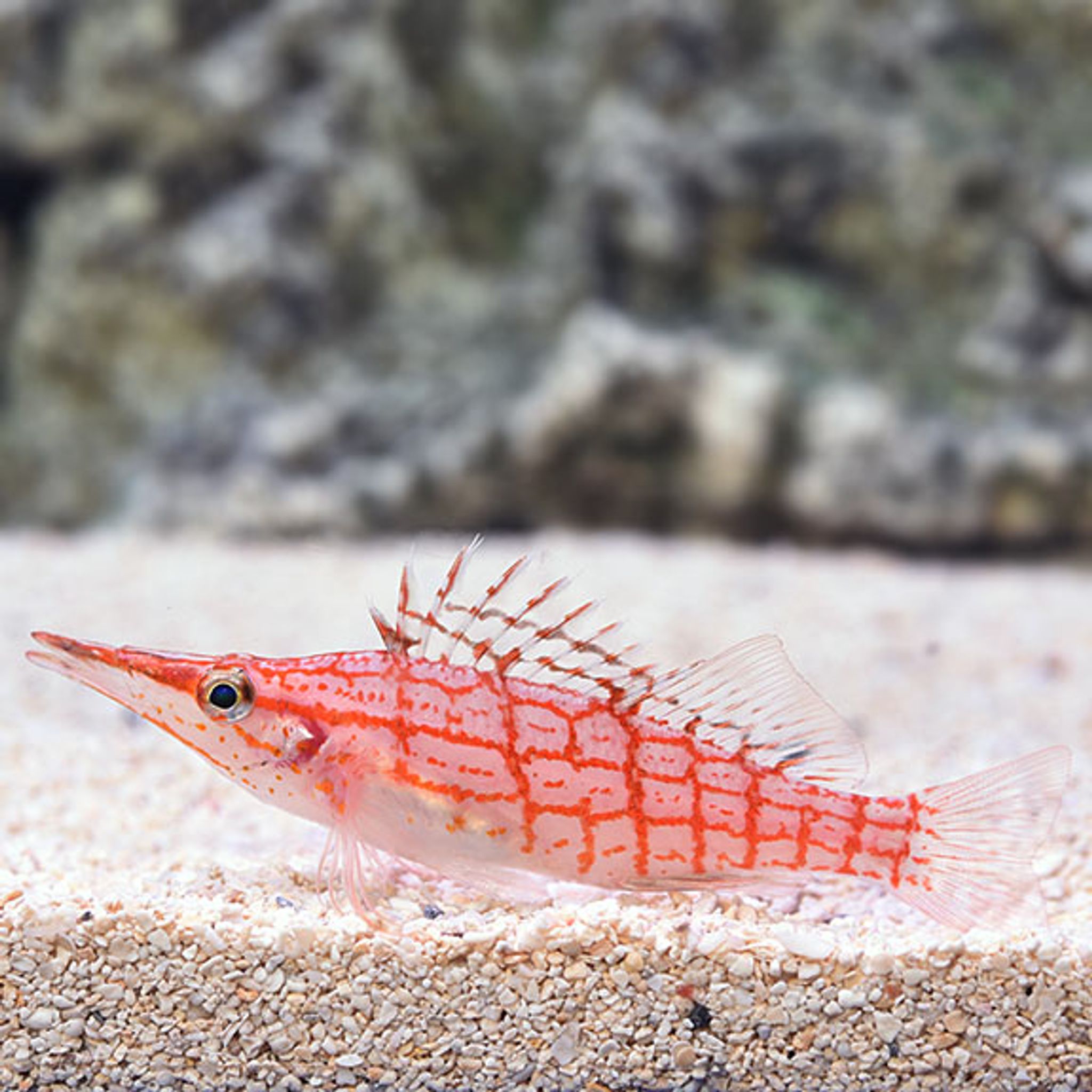
How to Feed Longnose Hawkfish: Foods, Frequency and Common Feeding Problems
Longnose hawkfish (Oxycirrhites typus) are perch-and-ambush predators, not open-water grazers, so their feeding routine looks different from most reef fish. This guide covers what to feed them, how often, how to deliver food to a fish that hunts from a fixed spot, and how to head off the most common feeding-related problems, including their tendency to pick off small tankmates.
Understand the Feeding Style Before You Feed
Longnose hawkfish have no swim bladder. In the wild they perch on branching coral or rocky outcrops and dart out to grab passing copepods, mysids, small shrimp, and zooplankton, then return to the same spot. Occasionally they take tiny fish. That hunting style matters for how you feed them in a tank:
- They won't chase food around the water column the way a wrasse or damsel will.
- They rely on food drifting or being placed close to their chosen perch.
- Fast swimmers in the same tank can out-compete them for food that's simply dropped in the middle of the water.
Feeding technique should work with this behavior rather than against it — more on that below.
Core Diet: What to Feed a Longnose Hawkfish
Build the diet around meaty, protein-rich foods that mimic their natural prey:
- Frozen mysis shrimp — the best staple; sized well for their mouth and easy to place near a perch.
- Enriched frozen brine shrimp — fine as a rotation item, but low in nutrition on its own, so don't use it as the sole food.
- Chopped fresh or frozen marine seafood — shrimp, silversides, squid, and clam cut small enough to swallow whole.
- Whole small shrimp or krill — good for larger adults.
- Quality marine carnivore pellets — some individuals will pick at these, or at color-enhancing pellets, as an occasional supplement.
- Flake food — rarely a preferred food; treat any acceptance as a bonus, not a plan.
A rotating mix of two or three meaty items, with pellets offered now and then, gives better long-term nutrition than any single food fed exclusively. You can browse live hawkfish and shop frozen and prepared foods on FishyHub to build out a rotation.
Do Longnose Hawkfish Need Live Food?
Not as a staple. Live feeder shrimp or ghost shrimp can help coax a stressed or newly acquired fish into eating, but regular live feeding sharpens their hunting instinct and increases the odds they'll stalk ornamental shrimp, small fish, or other invertebrates in the tank. Use live food briefly, then transition to frozen and prepared foods as the long-term staple.
How Often and How Much to Feed
Feed adults once or twice daily, and juveniles or growing fish closer to twice daily, in portions they can finish within a couple of minutes. Consistency in timing and location matters more than hitting an exact feeding count.
Portion size should scale with the fish's body size. Adult longnose hawkfish average about 4–5 in (10–13 cm), and a useful rule of thumb is:
| Fish size | Suggested portion per feeding | Feedings per day |
|---|---|---|
| Juvenile (under 2.5 in / 6 cm) | A few small mysis-sized pieces | 2 |
| Sub-adult (2.5–4 in / 6–10 cm) | A small pinch of mysis or chopped seafood | 1–2 |
| Adult (4–5 in / 10–13 cm) | A pinch to a few pieces, adjusted to appetite | 1–2 |
Because they strike and wait rather than graze continuously, uneaten food sinks and fouls the water quickly. Err toward smaller, more frequent portions rather than one large feeding.
Feeding Technique: Target-Feeding a Perch Hunter
In a mixed reef tank with fast eaters like wrasses or damsels, a longnose hawkfish can easily be out-competed if food is just broadcast into the water. Better approach:
- Identify the rock or coral perch the fish uses regularly.
- Use a turkey baster or feeding stick/tongs to place food directly in the water column near that perch, rather than across the tank.
- Time feeding for right after lights-out or during a lower-activity moment, when faster fish are less keyed up, if competition is a persistent problem.
- Feed other, more assertive fish elsewhere first if you notice the hawkfish being consistently beaten to the food.
Enrichment: Don't Feed Frozen Food Straight
Because captive longnose hawkfish eat mostly frozen protein rather than live prey, enrichment matters for long-term color and immune health. Soak frozen mysis, brine shrimp, or chopped seafood in a vitamin or HUFA (highly unsaturated fatty acid) supplement roughly 2–3 times per week before feeding. This is a simple step that's often skipped, and rotating protein sources alongside it goes a long way toward preventing the dull color and poor condition that come from a narrow, single-food diet (brine shrimp alone being the classic culprit).
Compatibility-Driven Feeding Decisions
Feeding behavior and compatibility are linked for this species, so it's worth thinking through stocking before you buy.
- Decide on tankmates first. A well-fed longnose hawkfish will still opportunistically pick off anything small enough to fit in its mouth over time — ornamental shrimp, pistol shrimp, small gobies, and other diminutive fish are all at risk. If you plan to keep delicate cleanup-crew shrimp or very small fish long-term, a longnose hawkfish may not be the right predator to add.
- Stocking order matters. A common approach is adding the hawkfish later in the stocking sequence, after peaceful, small tankmates are already established and settled, rather than introducing it early and then trying to add vulnerable species afterward.
- Lid the tank. Longnose hawkfish are strong jumpers, and a startle during feeding — a sudden light change, a hand near the water, a fast tankmate darting past — is a common trigger. A well-fitted lid or covered overflow is cheap insurance.
- One hawkfish per tank. Aggression and food competition between two hawkfish, or between a hawkfish and a similarly shaped fish like a dartfish, can suppress feeding in one or both individuals. Stick to a single specimen per display tank unless the tank is unusually large.
If you're stocking around a hawkfish, browsing marine shrimp options ahead of time helps you gauge which species are realistically too vulnerable to add.
Common Feeding Problems and Fixes
New Hawkfish Refusing to Eat
This is usually shipping stress or acclimation, not illness. Give the fish a few days, keep offering food at the same perch location, dim the lights during feeding, and try live or very fresh (not frozen) items briefly to trigger a feeding response. Most individuals start accepting frozen food within days to about one to two weeks, especially if the fish was already trained onto prepared food before you got it.
Overfeeding and Water Fouling
Because a longnose hawkfish waits and strikes instead of grazing, any excess sinks and rots rather than being eaten. Feed small amounts more often instead of one large portion, and remove obvious uneaten chunks with a turkey baster if they collect near the perch.
Attacking Cleanup Crew or Small Fish
This is often mistaken for a training or feeding issue, but it's normal predatory behavior, and it's made worse by underfeeding. Keep the fish on a consistent, adequate feeding schedule and avoid stocking small ornamental shrimp species alongside it if you want them to survive long-term.
Picky Eating or Only Accepting Live Food
Wean gradually by mixing small amounts of live food with frozen offerings, or by soaking frozen food in the liquid from thawed shrimp or mysis to add scent. Most fish transition within a couple of weeks with patience.
Bullying at Feeding Time
A longnose hawkfish can be surprisingly food-aggressive toward slower tankmates. Target-feed other fish first, or use separate feeding spots on opposite sides of the tank, to make sure everyone gets a fair share.
Malnutrition and Color Loss
A diet that's too narrow — brine shrimp fed exclusively is the most common cause — leads to poor color and condition over time. Rotate at least two or three protein sources and enrich with vitamins as described above.
Frequently Asked Questions
What is the best staple food for a longnose hawkfish?
Frozen mysis shrimp makes the best base, rotated with enriched brine shrimp, chopped seafood like shrimp or clam, and the occasional marine carnivore pellet as a supplement.
How often should I feed a longnose hawkfish?
One to two small feedings a day, sized so the fish finishes each one within a couple of minutes. Juveniles and growing fish generally do better with two feedings, while adults can often manage on one or two depending on the rest of the tank's schedule.
Will a longnose hawkfish eat my cleanup crew or small fish?
Yes. It's a natural predator of small crustaceans and can eat ornamental shrimp, snails, or tiny fish, especially if it's underfed or the tankmates are very small. Feeding consistency helps, but it doesn't eliminate the risk entirely.
Can longnose hawkfish eat pellets or flakes?
Occasionally, and only as a supplement. Most individuals strongly prefer meaty frozen foods and shouldn't be relied on to eat dry food as a staple.
Do longnose hawkfish need live food?
Not as a long-term staple. Live feeder shrimp are useful short-term to start a reluctant or newly acquired fish eating, then it's best to transition to frozen and prepared foods.
Why is my new longnose hawkfish not eating?
Stress from shipping and acclimation is the usual cause. Give it time, offer food near its chosen perch, try live or very fresh items, and dim the lights to help it feel secure.
Do longnose hawkfish eat pest algae, aiptasia, or bristleworms?
No. They're carnivores focused on small crustaceans and fish, not algae or cnidarian pests, though they may opportunistically eat a small pest shrimp or worm they happen to encounter. Don't rely on them for pest control.
How much should I feed per meal?
A small pinch or a few mysis-sized pieces per fish per feeding is typical for an adult — enough to be eaten within a couple of minutes, scaled down for juveniles.
Ready to add one to a reef tank built around its feeding habits? Browse marine fish and other marine livestock on FishyHub, along with the food and supplements to keep it well fed from day one.

