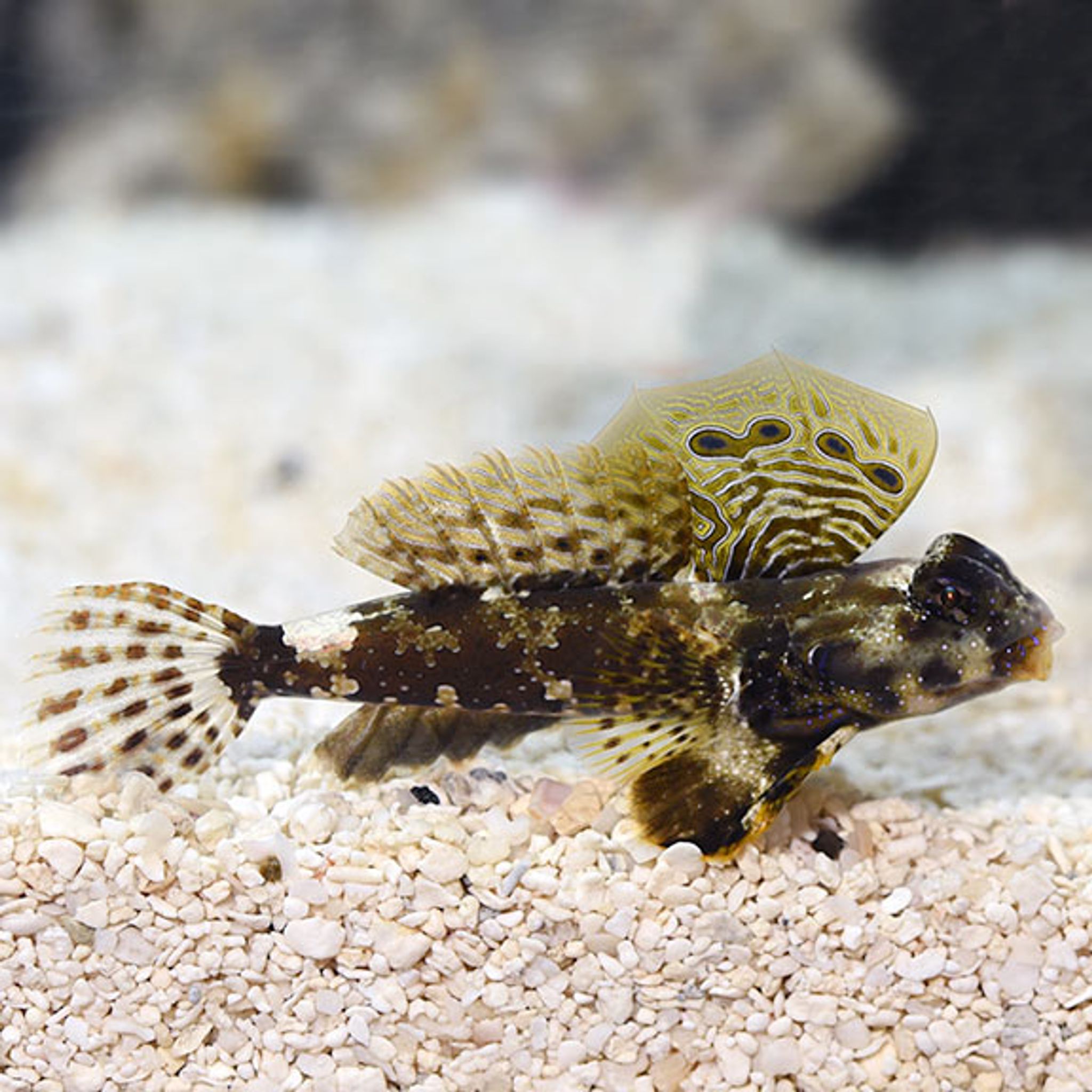

How to Feed Lawnmower Blenny: Foods, Frequency and Common Feeding Problems
The lawnmower blenny (Salarias fasciatus) is one of the most popular algae-control fish in the marine hobby, but it's also one of the most commonly starved. This guide covers exactly what to feed it, how often, and how to catch a feeding problem before it becomes a crisis.
Why Feeding Problems Are So Common With This Fish
In the wild, a lawnmower blenny grazes almost continuously, taking an estimated several thousand bites of algae and biofilm per day. It isn't built to eat one large meal — it's built to peck constantly at a surface covered in food.
That biology becomes a problem in a home aquarium. Most tanks start out with a healthy film of diatoms and algae on the live rock and glass, and the fish grazes happily. But as the blenny works through that supply — or as the tank matures and nutrients drop — the standing algae crop shrinks. If the fish hasn't learned to eat prepared foods by then, it can't replace the lost calories. Starvation, not disease, is the single most common cause of death in this species.
What Lawnmower Blennies Eat Naturally
The natural diet is centered on:
- Filamentous green and blue-green microalgae growing on rock and glass
- Diatoms and general biofilm
- Opportunistic picking at detritus, small invertebrates, and fish eggs
Despite the "herbivore" reputation, this fish is better described as primarily herbivorous but flexible. Once natural algae runs low, it behaves more like an omnivore, taking whatever edible film or prepared food is available. Treating it as a strict, lifelong herbivore is a mistake — plan its diet as omnivorous from the start.
Green Hair Algae vs. Staghorn Algae: Know the Difference
Not all nuisance algae is equally useful as fish food, and this distinction explains a lot of "my blenny isn't controlling my algae" complaints:
| Algae type | Appearance | Does the blenny eat it? |
|---|---|---|
| Green hair algae | Soft, long, hair-like strands that wave in flow | Yes, readily grazed |
| Diatom/biofilm | Thin brown or golden film on rock/glass | Yes, a preferred food source |
| Staghorn algae | Stiff, branching, antler-shaped, grey-green to almost black | Usually ignored — too tough and bristly |
| Bearded/turf algae | Coarse, matted, bristly growth | Usually ignored |
A tank full of staghorn or bearded algae will not necessarily get cleaned up just because a lawnmower blenny is present — the fish is picky about texture, not just species.
Best Foods to Offer
Once you're supplementing beyond display-tank algae, offer foods in roughly this order of typical acceptance:
- Nori (dried seaweed sheets) clipped to rock or a veggie clip — the most widely accepted supplemental food
- Algae wafers or pellets
- Spirulina flakes
- Frozen herbivore or algae-blend foods
- Marine algae-based flake or gel food
Secondary, lower-priority options some keepers try include finely chopped mysis and blanched vegetables such as zucchini, lettuce, or cucumber clipped into the tank. Results with vegetables are inconsistent — this is a marine algae and biofilm grazer, not a freshwater vegetable-eater, so treat veggies as a "try it and see" option rather than a primary food source.
Important: if using nori, buy plain, unseasoned sheets only. Seasoned or flavored nori sold for human consumption can contain oils, salt, or other additives that aren't appropriate for fish.
You can browse feeding options for algae grazers and other marine fish, including freeze-dried food, directly on FishyHub.
How Often to Feed a Lawnmower Blenny
There's genuine disagreement in the hobby here — recommendations range from a few times a week up to twice daily. The right answer depends on how much standing algae is actually in the tank:
| Tank condition | Suggested feeding frequency |
|---|---|
| Mature tank, abundant algae film | A few supplemental feedings per week |
| Moderate algae, some bare patches | Once daily |
| New tank or sparse algae | Once to twice daily |
The general principle holds regardless of frequency: feed small amounts often rather than one large meal. This matches how the fish is designed to eat, and it reduces the risk of uneaten food fouling the water.
Portion Sizing
Offer only what the fish can finish in a few minutes. Remove uneaten nori or pellets promptly — overfeeding and fouling the water with leftover food is one of the most common mistakes owners make, especially when they're anxious about the fish going hungry and overcompensate.
Tank Requirements for Successful Feeding
A lawnmower blenny's feeding success depends heavily on the tank itself, not just what you offer in a clip:
- The tank should be mature — several months to a year or more old — with live rock that has developed a real diatom and algae film
- The aquascape needs caves and flat grazing surfaces
- A brand-new, overly clean, or sterile tank is a poor fit for this species at introduction
New algae generally appears within roughly 2 to 4 weeks of a tank cycling. If you're planning ahead, that window is useful for timing when to add the fish rather than dropping it into a tank with nothing to graze on yet.
Growing and Maintaining an Algae Food Supply
If your display is too clean to support a grazer, you can build up a grazing crop before adding the fish:
- Ease off manual algae scrubbing for a few weeks
- Run display lighting slightly longer each day
- Avoid running an ultra-low-nutrient reef system — keep some nutrients available rather than stripping them to zero
- Let live rock visibly "green up" before introducing the blenny
This is also a good moment to note a broader beginner lesson: stable, mature water parameters and patience matter more than rushing a stocking plan. Research a fish's feeding needs before buying it, and plan to monitor and adjust rather than assuming any tank inhabitant is "set and forget." That mindset is exactly what prevents the algae-depletion problem this species is known for.
Refugiums as a Feeding Aid
A lit refugium growing macroalgae — chaetomorpha is the standard choice — can help in two ways:
- It hosts copepods and other microfauna that add variety to the diet
- By competing with the display tank for nutrients, it can help reduce (not eliminate) nuisance algae growth in the display
A refugium is a useful supplement, not a substitute for directly feeding the display tank grazer.
The Weaning Routine: Get Ahead of the Problem
The simplest way to avoid starvation later is to start training the fish onto prepared food from day one, even while display algae is still abundant. Clip a piece of plain nori near the fish's usual grazing spots as soon as it settles in, rather than waiting until natural algae runs out to introduce something unfamiliar. A fish that already recognizes a veggie clip as a food source adapts far more smoothly when algae supply drops.
This also matters during quarantine, when live rock and algae typically aren't available. A bare quarantine tank is exactly the environment where a fish that hasn't been weaned onto prepared foods struggles most — start offering nori or algae pellets in quarantine from the first day rather than waiting for the display tank.
Pre-Purchase Check: Confirm It's Already Eating
Before buying, ask to see the individual fish eating — either algae in the dealer's tank or prepared food. A fish that refuses food at the store is a high risk for starvation at home, since you'll be starting the weaning process from zero under less controlled conditions.
Weekly Body-Condition Checklist
Weight loss in this species is often gradual over weeks, and a fish can look outwardly fine right up until it crashes. A simple weekly check catches problems early:
- Belly/abdomen contour: should look slightly rounded, not sunken or concave
- Dorsal ridge (muscle line along the back): should be smooth, not pinched or bony
- Feeding response: actively grazing or approaching offered food, not hiding or ignoring meals
- Behavior toward tankmates: increased pecking at other fish's slime coats can be a sign of hunger, not random aggression
If two or more of these signs point to declining condition, increase feeding frequency and food variety immediately rather than waiting to see if it improves on its own.
Tank Mates and Competition
Lawnmower blennies can become aggressive toward other blennies, gobies, and algae-eating competitors such as tangs once algae supply is limited. A hungry blenny may also peck at the mucus or algae film on slow-moving or docile tankmates, which is easy to mistake for unprovoked aggression when it's actually a food-supply problem.
As a general rule, keep one lawnmower blenny per tank unless the aquarium is large with abundant algae distributed throughout. Two blennies — or a blenny paired with another dedicated algae-eater like a tang — competing for the same limited algae crop typically leads to fighting and malnutrition for one or both fish.
Common Feeding Mistakes to Avoid
- Buying a fish that hasn't been observed eating prepared food, assuming it will "figure it out" at home
- Introducing the blenny to a brand-new or scrubbed-clean tank with no established algae film
- Relying entirely on display-tank algae with no backup feeding plan for when it runs out
- Not checking body condition regularly — a sunken belly or pinched dorsal profile is a late warning sign, not an early one
- Overfeeding pellets or nori in large amounts instead of smaller, more frequent portions
- Housing two lawnmower blennies, or a blenny with another grazer, in a tank without enough algae to support both
- Mistaking hunger-driven picking at tankmates for random aggression instead of addressing the food supply
Frequently Asked Questions
How long can a lawnmower blenny go without algae?
Not long-term. It can survive short gaps by switching to prepared food, but a sustained algae shortage with no supplemental feeding is the main cause of starvation deaths in this species.
Will a lawnmower blenny eat pellets or flakes?
Most individuals can be trained onto algae-based pellets, spirulina flakes, and nori, though acceptance varies by individual fish. That's why it's worth confirming a fish is already eating prepared food before you buy it.
How often should I feed a lawnmower blenny?
Feed a few times a week if display algae is plentiful, and increase to once or twice daily if algae is sparse or the tank is relatively new. Small, frequent portions work better than one large feeding.
Why is my lawnmower blenny getting skinny?
This is usually caused by algae depletion combined with refusal of the foods being offered. Check the belly and dorsal contour weekly, and respond by increasing both feeding frequency and food variety.
Can I keep two lawnmower blennies together?
Generally not recommended in a typical home tank. They compete aggressively for the same limited algae supply, which usually leads to fighting and poor body condition in one or both fish.
Does a lawnmower blenny eat hair algae?
Yes — soft, filamentous green hair algae and diatom film are among its preferred foods. Tougher nuisance growths like staghorn or bearded algae are usually left untouched, so its presence doesn't guarantee full algae control.
Do I need a refugium to keep a lawnmower blenny fed?
No, a refugium isn't required, but a lit macroalgae refugium can help by producing copepods as a food source and by slowing nuisance-algae depletion in the display tank.
What's the best emergency food if algae runs out suddenly?
A plain, unseasoned nori sheet on a veggie clip is the most widely accepted stopgap, backed up with algae pellets or wafers if the fish is already trained to eat them.
A lawnmower blenny can be a genuinely useful and long-lived addition to a mature reef, but only when its feeding needs are planned for rather than assumed. If you're building out a marine tank around an algae grazer like this one, browse the full range of marine fish available on FishyHub to plan compatible tank mates alongside it.


