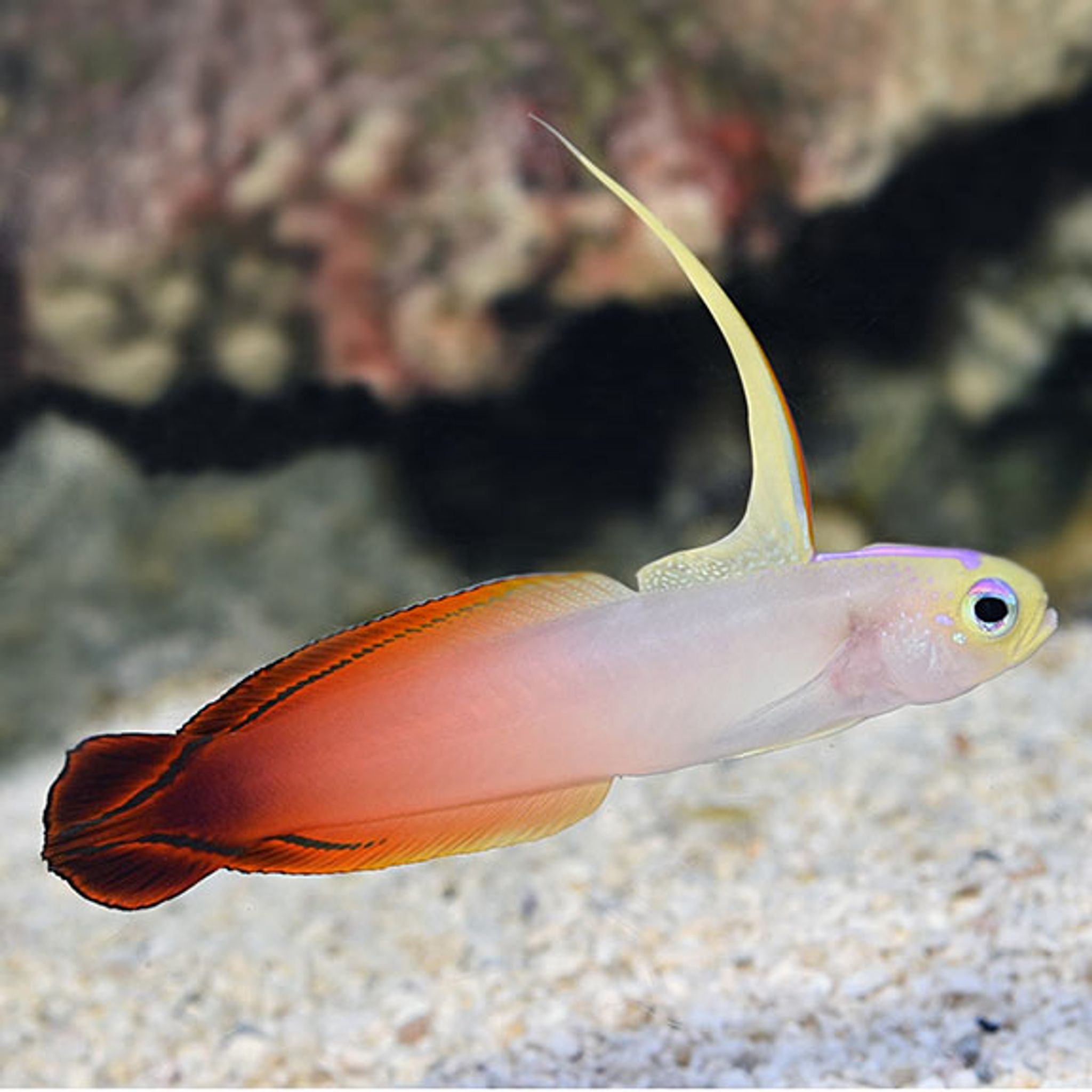

How to Feed Firefish Goby: Foods, Frequency and Common Feeding Problems
Firefish gobies are picky in appearance only — most feeding trouble comes down to portion size, timing, or a fish that feels unsafe rather than one that's sick. This guide covers exactly what to feed, how often, and how to work through the most common feeding complaints new saltwater keepers run into.
Understanding How a Firefish Actually Eats
Firefish (Nemateleotris magnifica and close relatives like the purple firefish, N. decora) are slender dartfish that hover in the water column just above a burrow or piece of rockwork. In the wild, they don't chase prey — they hang in place and pick zooplankton drifting past in the current. That hovering, pick-and-retreat behavior carries over into the aquarium, and it shapes almost every feeding decision below.
Nutritionally, treat firefish as planktivorous carnivores with an omnivorous lean: their base diet should be small meaty foods, supplemented with some algae or vitamin content for coloration and overall condition.
Stable water conditions also matter for appetite. Firefish generally do best at:
| Parameter | Target range |
|---|---|
| Temperature | 72–78°F (22–26°C) |
| Specific gravity | 1.020–1.025 |
| pH | 8.1–8.4 (stable) |
A fish stressed by swings in these parameters will often refuse food long before it shows any other visible symptom, so ruling out water quality is a useful first step whenever appetite drops.
Best Foods for a Firefish Goby
Build the diet around meaty frozen foods, then rotate in extras for variety:
- Frozen mysis shrimp — the everyday staple; right-sized and highly palatable.
- Enriched frozen brine shrimp — good variety food, less nutrient-dense than mysis on its own.
- Finely chopped krill — mince it small; whole krill is usually too large for a firefish's mouth.
- Cyclops and copepods — small, naturally-sized prey items that mimic wild zooplankton.
- A quality marine flake or small pellet with 40%+ protein — fine as part of a rotation, not as the sole food source.
Live foods — baby brine shrimp or live copepods — aren't required for a healthy, established firefish, but they're genuinely useful as a troubleshooting tool: shy fish and new arrivals that won't yet touch frozen or prepared food will often strike at live prey when nothing else works. Live foods carry more disease and bacteria risk than frozen, so they're best used as an occasional or short-term aid rather than a permanent staple.
Gut-Loading and Enrichment
Soaking thawed frozen food in a vitamin or HUFA (highly unsaturated fatty acid) supplement for a few minutes before feeding is an easy way to boost color and immune support — a step that's easy to skip but costs almost nothing to add to your routine.
How Much and How Often to Feed
Firefish have tiny stomachs, so several small feedings beat one large one. Aim for 2–3 small feedings per day. Once-daily feeding can keep a stable adult alive, but it's a bare minimum, not a target — it increases the odds of missed nutrition and doesn't suit a fish built to graze on drifting plankton all day.
Portion size: a pinch of thawed, rinsed frozen food — roughly a small cube's worth per fish per feeding — is plenty. Anything more just sinks uneaten and fouls the water.
Two practical rules on sizing and delivery:
- Mince or select food small enough for a tiny mouth. Oversized pieces get mouthed and spat out repeatedly, which looks like refusal but is really a sizing problem.
- Use target or spot feeding in any tank with other fish. A turkey baster or pipette aimed near the firefish's burrow or perch delivers food directly to it before faster tankmates can steal it — by far the most reliable method in a mixed or busy tank.
A Simple Weekly Rotation
Rotating 3–4 food types across the week rounds out nutrition and helps keep coloration vibrant. A simple example:
| Day | Morning | Midday | Evening |
|---|---|---|---|
| Mon | Mysis | — | Brine shrimp |
| Tue | Mysis | Cyclops | Flake |
| Wed | Brine shrimp | — | Mysis |
| Thu | Cyclops | Mysis | Flake |
| Fri | Mysis | — | Brine shrimp |
| Sat | Flake | Cyclops | Mysis |
| Sun | Mysis | — | Brine shrimp |
Adjust to two or three feedings depending on your schedule — the point is variety across the week, not a rigid script.
Culturing Cyclops or Copepods at Home
For keepers who want a cheap, steady live-food supply — especially useful for coaxing a shy firefish — culturing your own cyclops or copepods is a manageable DIY project:
- A container of roughly 1 gallon (3.8 L) or larger, filled with dechlorinated saltwater or freshwater matching the species you're culturing.
- Gentle aeration and a light source nearby (cyclops and copepods respond to light cycles).
- A starter culture to seed the container.
- Feed the culture green algae or powdered spirulina every 1–2 days — overfeeding fouls the water fast.
- A fine mesh net for harvesting.
A few realities to plan around: cyclops are semi-predatory and will eat each other under crowded conditions, they reproduce more slowly than daphnia or brine shrimp, and harvested cyclops don't store well — use them fresh rather than trying to hold them over.
Setting Up a Budget-Friendly Saltwater Tank for a Firefish
Firefish are a popular budget-to-mid-range marine fish, which makes them a common choice for keepers building their first reasonably priced saltwater setup. A 40-gallon (150 L) breeder tank is often the sweet spot — enough stable water volume to buffer swings, without needing deep-penetrating, expensive lighting.
Ways to keep costs down without cutting corners on fish health:
- Start with dry base rock instead of live rock and let it season in the tank over time.
- Look for used skimmers or LED fixtures in good condition rather than buying new.
- Choose mid-range LED or T5 lighting — a firefish tank doesn't need high-output reef lighting unless you're also keeping light-hungry corals.
- Buy salt mix in bulk rather than single boxes.
- Do manual weekly 10% water changes instead of investing in an auto-doser right away.
- Stock hardy, calm tankmates that won't stress a firefish or outcompete it at feeding time.
Patience during the initial nitrogen cycle is the cheapest insurance you can buy — rushing livestock into an uncycled tank is the single most common way beginners lose a firefish and end up spending more to replace it. You can browse saltwater fish suited to a beginner setup once your tank has finished cycling.
Common Feeding Mistakes and How to Fix Them
| Problem | Likely cause | Fix |
|---|---|---|
| Fish spits food out repeatedly | Food particles too large | Mince finer or switch to a smaller pellet/flake |
| Firefish hides constantly, never seen eating | No burrow or hiding spot | Add rockwork with crevices near mid-water |
| One fish is thin and hiding, other looks fine | Two unpaired firefish (or aggressive tankmates) | Keep one firefish per tank unless a true, established pair |
| New fish hasn't eaten in 2–3 days | Normal acclimation stress | Try target feeding, offer live food, dim the lights, be patient |
| Fish appears to eat but keeps losing weight | Possible internal parasites or infection | Distinguish this from "won't eat" — this needs a health/quarantine response, not just a diet change |
| Firefish never gets food in a community tank | Faster fish are outcompeting it | Switch to target/spot feeding directly at its burrow |
| One big feeding instead of several small ones | Feeding schedule too infrequent | Split into 2–3 smaller feedings across the day |
Picky New Arrival vs. Genuinely Sick
Not eating for a few days after arrival is common and usually not a sign of illness. Watch for these signs before assuming a health problem:
- Just stressed: hides most of the day, ignores food for a few days, but fins are full and posture is normal.
- Likely sick: sunken or pinched belly, clamped fins, visible color loss, and persistent weight loss even when the fish appears to be eating.
If you see the second set of signs, treat it as a health issue — quarantine and evaluate rather than simply changing the diet.
Firefish Are Jumpers
Firefish are skittish by nature and prone to jumping when startled — sudden movement near the tank or lights snapping on abruptly can trigger a jump, and this risk goes up during active feeding sessions when you're moving a baster near the water's surface. A secure, well-fitted lid is essential, especially if you target feed by hand.
Frequently Asked Questions
What is the best staple food for a firefish goby?
Frozen mysis shrimp or enriched brine shrimp, fed alongside a quality marine flake or pellet, makes a solid staple. Feed it in small amounts several times a day rather than one large portion.
How many times a day should I feed a firefish goby?
Two to three small feedings a day is ideal, since firefish have tiny stomachs and are natural grazers. Once a day can sustain a stable adult but isn't the goal.
Why is my firefish goby not eating?
The most common causes are new-tank acclimation stress, intimidation from tankmates or another firefish, and food particles that are too large. Persistent refusal combined with visible weight loss can point to illness and deserves closer attention.
Can firefish gobies eat flake food?
Yes, a high-protein marine flake works well as part of a rotation, but it shouldn't be the only food offered. Pair it with frozen meaty foods like mysis or brine shrimp for balanced nutrition.
Do firefish need live food?
Not as a strict requirement — frozen mysis and brine shrimp make a perfectly adequate everyday diet. Live foods like baby brine shrimp or live copepods are mainly useful for coaxing reluctant or newly introduced fish to start eating.
How long can a firefish goby go without eating?
A healthy adult can typically handle several days, up to about a week, of reduced intake during acclimation without lasting harm. If refusal continues well beyond that, it's time to intervene with target feeding, live food, or a health check.
Can I keep two firefish gobies together?
Only if they're an established, proven pair — ideally purchased together as a mated pair. Unrelated firefish usually fight, and the loser ends up hiding constantly and refusing food.
What causes a firefish to jump out of a tank while feeding?
Firefish are naturally skittish, and sudden movement or abrupt lighting changes near the tank can startle them into jumping. Keep the tank securely covered and avoid quick, jarring motions during feeding.
Firefish reward a little routine — small, varied meals delivered right where they feel safe. If you're ready to add one to your setup, you can browse gobies and dartfish available on FishyHub.


