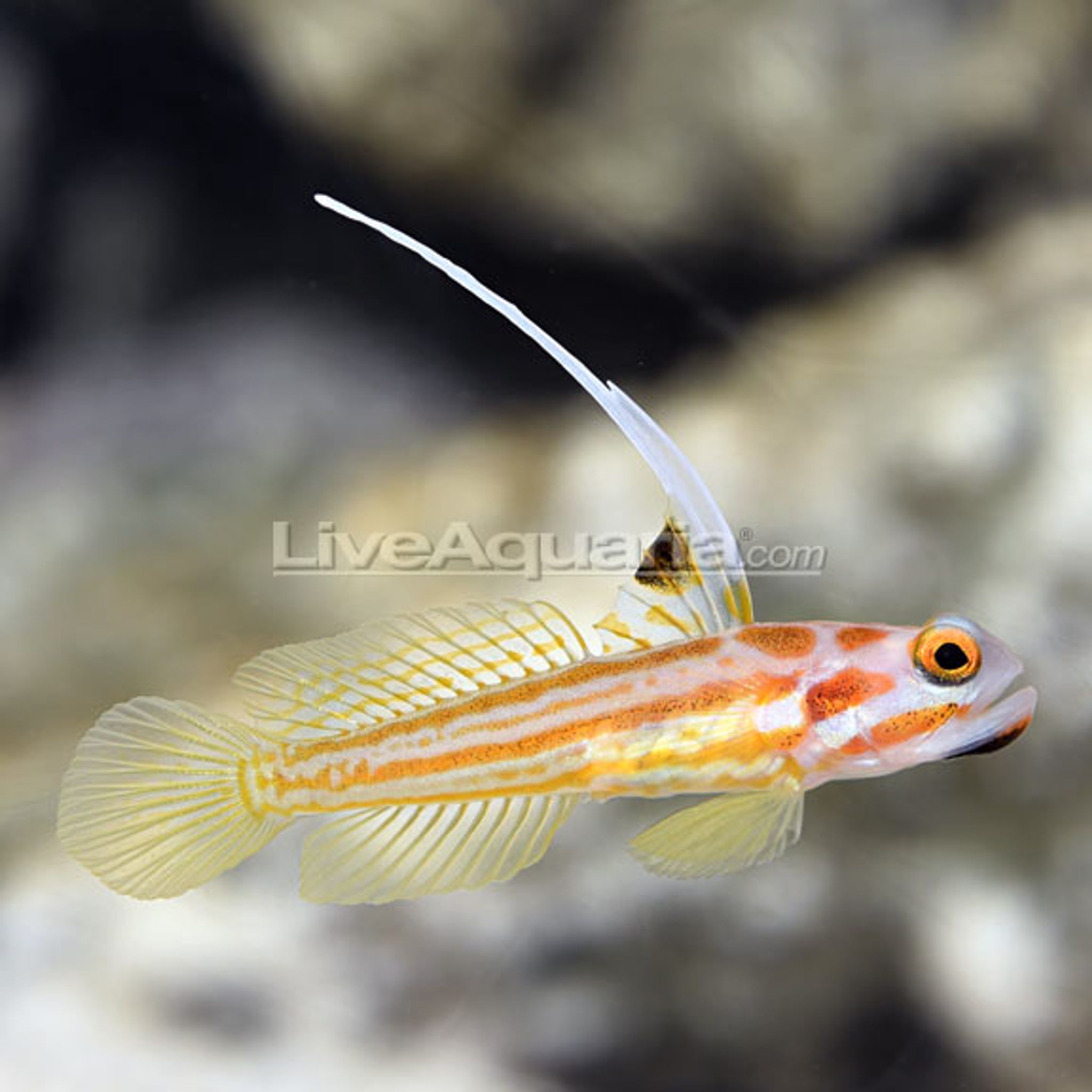

How to Feed Diamond Goby: Foods, Frequency and Common Feeding Problems
The diamond goby is one of the few reef fish that can die of hunger in a tank that looks perfectly healthy. Success has almost nothing to do with water chemistry and everything to do with getting food onto the sand, close to the fish, several times a day. This guide covers exactly what to feed, how often, and how to catch trouble before it becomes fatal.
Why Diamond Gobies Are Different From Other Sifting Fish
The diamond goby (Valenciennea puellaris) also goes by diamond watchman goby, diamond sand goby, or orange-spotted sleeper goby. It is an obligate sand sifter: it takes mouthfuls of substrate almost continuously, filters out anything edible, and expels the cleaned sand through its gills.
In the wild, that mouthful contains a steady supply of copepods, amphipods, marine worms, and organic detritus living inside the sand bed. The fish isn't grazing on algae or picking food off the water's surface — its entire feeding strategy assumes an endless, self-renewing pantry buried in the substrate.
That assumption breaks down in a home aquarium. Even a well-established sand bed cannot produce enough microfauna to support a diamond goby indefinitely. Supplemental feeding isn't a temporary bridge while the tank matures — it's a permanent requirement for the life of the fish. Owners who treat feeding as optional, or assume the sand bed alone will handle it, are the single biggest reason this species declines slowly and often unnoticed.
Best Foods for a Diamond Goby
Aim for meaty, sinking foods that mimic what the fish would filter from natural sediment. A flake-only or surface-only diet is not appropriate for this species.
| Food type | Role in the diet | Notes |
|---|---|---|
| Frozen mysis shrimp | Staple | Thaw before feeding; forms the backbone of most feedings |
| Frozen brine shrimp | Staple/supplement | Best when enriched or gut-loaded with a vitamin soak before feeding |
| Chopped clam or meaty marine mixes | Supplement | Finely mince so pieces are small enough to sift |
| Live or frozen copepods | Supplement | Closest match to natural prey |
| Sinking pellets or carnivore flakes | Secondary option | Must actually reach the sand, not float |
| Reef-safe frozen blends | Occasional variety | Rotate in a few times per week |
A short soak in a vitamin or HUFA (highly unsaturated fatty acid) supplement before feeding frozen mysis or brine shrimp is a simple way to boost nutritional value — worth doing given how food-limited these fish already are in captivity. Browse frozen and prepared options in FishyHub's food and supplements category when stocking up.
How Often to Feed
Most diamond gobies do best with 2–3 small feedings per day, rather than the single daily feeding that works for many other reef fish. Little-and-often more closely matches how the fish forages continuously in the wild than one large meal does. This isn't a settling-in routine to taper off — it needs to continue for as long as you keep the fish.
The Feeding Method That Actually Works
Broadcast feeding — scattering food at the surface and letting it drift down — largely fails with diamond gobies. Faster mid-water tankmates intercept the food, or it gets pulled into the filter or overflow before it ever reaches the sand.
Target feeding is the reliable method:
- Thaw frozen food in a small cup of tank water.
- Feed faster, more competitive tankmates elsewhere in the tank first, so they're occupied.
- Use a turkey baster or pipette to squirt the thawed food directly onto the sand near the goby's burrow entrance.
- Watch for the goby to emerge and sift the area; repeat at each of the 2–3 daily feedings.
An alternative technique is burying pellets or injecting food a few inches into the sand so the goby discovers it while sifting naturally — useful as a supplement to direct target feeding, particularly for fish still adjusting to a new tank.
Sand Bed and Tank Setup
Feeding success is inseparable from substrate setup. A diamond goby sifting coarse or shallow substrate simply can't extract enough food, no matter how well you target-feed.
- Sand type: Fine, sugar-fine sand — not crushed coral, which the goby cannot sift efficiently.
- Sand depth: A range of 3–6 inches (about 7.5–15 cm) works well; deeper beds support more microfauna renewal over time, though very deep beds should be stirred or monitored occasionally to prevent anaerobic pockets.
- Footprint: A larger sand-bed surface area means more foraging ground and better long-term odds, independent of depth.
Check FishyHub's sand and gravel substrate selection for fine-grained options suited to sifting species.
Tank Size
Recommendations vary by source, ranging from a bare 30-gallon minimum up to 55–75+ gallons. A practical middle ground: treat 40 gallons (about 150 liters) as the realistic floor for a single diamond goby, and aim for 55+ gallons if possible — especially if you plan to keep more than one sand-sifting species, since diamond gobies can be territorial toward other sifters competing for the same sand.
Letting the Tank Mature First
Ideally, seed the tank with live sand and live rock and let it run for roughly 2–3 months before adding a diamond goby. This gives copepods, amphipods, and worms time to establish a real population in the substrate. Adding the fish to a brand-new, essentially sterile sand bed removes its natural food source entirely and accelerates starvation.
Copepods and Live Sand as an Ongoing Food Source
Copepods are tiny crustaceans that colonize live rock and sand and can reproduce into populations well over 100,000 in a healthy tank. Seeing them moving on the glass or sand at night is a good sign of a mature system — and a genuine supplemental food source for sifters like the diamond goby.
Don't treat the sand bed as a one-time "seed and wait" resource, though. Pod populations get grazed down over time, particularly with an active sifter in the tank. Running a refugium, or periodically dosing live copepods to boost the population, helps keep that natural food supply renewed rather than depleted.
Is a Diamond Goby a Beginner Fish?
Common criteria for a beginner-friendly saltwater fish include captive-bred availability, reef safety, tolerance of parameter swings, and a fish that readily accepts frozen or prepared food without coaxing. Diamond gobies check most of these boxes — they're reef safe and visually striking — but fail the "easy feeder" test. They need active target feeding and a genuinely mature sand bed to thrive, which puts them closer to intermediate difficulty.
By comparison, a true easy sifting goby, such as the yellow watchman goby, adapts to prepared foods more readily and is more forgiving of a less-established sand bed. If you're comparing sifting species, browse the full goby selection to see which fits your tank's maturity and your feeding routine.
A Simple Symbiotic Option: Pairing With a Pistol Shrimp
Unlike two competing sand-sifting gobies, a diamond goby paired with a pistol shrimp is a genuinely cooperative relationship rather than a territorial conflict. The shrimp digs and maintains a shared burrow while the goby stands guard, and the shrimp's digging activity can help turn over substrate near the burrow. This pairing doesn't replace target feeding — the shrimp is a filter feeder and scavenger with its own dietary needs — but it doesn't complicate the goby's feeding routine either, and many keepers find it adds useful substrate activity near the burrow entrance where you're already delivering food.
Common Feeding Mistakes
- Relying only on the sand bed without ever target feeding — the most common cause of slow decline.
- Broadcast-feeding flakes or pellets at the surface and assuming the goby gets a share; faster fish eat first.
- Adding the goby too early, before the sand bed has had time to develop microfauna.
- Using crushed coral or overly coarse sand the goby can't sift, or a bed too shallow to sustain organisms.
- Missing early starvation signs — a sunken or concave belly, a visible spine, a pinched area behind the head, reduced sifting activity, more hiding, and faded color are all warning signs that call for immediate intervention, not a wait-and-see approach.
- Overcrowding sifting species in too small a tank, triggering territorial conflict that disrupts feeding for everyone involved.
- Skipping an acclimation feeding check. A wild-caught specimen that hasn't yet learned to eat prepared foods can refuse food for a dangerously long stretch. Where possible, source a specimen already conditioned to frozen foods to shorten that risk window.
Transitioning a Non-Eating Specimen Onto Prepared Foods
If a newly acquired diamond goby refuses frozen food, start with live baby brine shrimp or live copepods, which are closer to what it recognizes as food. Once it's feeding reliably on live foods, begin mixing in small amounts of thawed frozen mysis or brine shrimp at the same feeding, gradually shifting the ratio toward frozen over one to two weeks as it continues eating.
A Simple Weekly Check Routine
Because starvation develops gradually, a short weekly check catches problems long before they become visible from across the room:
- Note whether the belly still looks full and rounded, not concave.
- Confirm the fish is sifting sand actively, not just resting in its burrow.
- Check color and activity level against the previous week.
- Confirm every feeding is reaching the sand near the burrow, not being intercepted mid-water.
Frequently Asked Questions
How often should I feed a diamond goby?
Feed 2–3 small target feedings per day, indefinitely — not just during the first few weeks after adding the fish. Consistent, frequent feeding is what keeps this species alive long-term.
What is the best food for diamond gobies?
Frozen mysis and brine shrimp form the staple diet, ideally supplemented with finely chopped clam or meaty marine blends and live or frozen copepods. Sinking pellets can serve as a secondary option as long as they reach the substrate.
Why is my diamond goby not eating?
Common causes include a newly acclimated fish that hasn't learned to accept prepared foods yet, food never reaching the sand because it's broadcast at the surface, stress from tankmates keeping it in hiding, or a fish that's eating some microfauna but not enough to maintain its weight.
Do diamond gobies need live sand or copepods to survive?
They benefit enormously from an established sand bed with natural fauna, but in a closed aquarium system that alone is usually not enough over the long term. Ongoing supplemental feeding is still required even in a mature, pod-rich tank.
What size tank does a diamond goby need?
Plan for 40 gallons (about 150 liters) as a realistic minimum, with 55+ gallons preferred, paired with a deep, fine sand bed that gives the fish enough foraging room.
How do I know if my diamond goby is starving?
Watch for a concave or sunken belly, a visible spine, a pinched area behind the head, lethargy, and reduced sifting activity. Any combination of these signs calls for immediate target feeding adjustments, not a wait-and-see approach.
Can diamond gobies eat flake food?
Flake food isn't ideal as a primary diet since it floats and rarely reaches the sand. Diamond gobies respond far better to sinking, meaty foods delivered directly near the substrate.
Will other fish steal my goby's food?
Yes — faster mid-water fish will often out-compete a diamond goby for food before it ever settles. Feed other tankmates first, then target-feed the goby last, near its burrow entrance where it feels secure.
Getting a diamond goby's diet right is really a matter of routine: the right foods, delivered to the sand, several times a day, in a tank with room to forage. Once that habit is in place, browse FishyHub's marine fish selection to plan tankmates that won't compete with your goby at feeding time.


