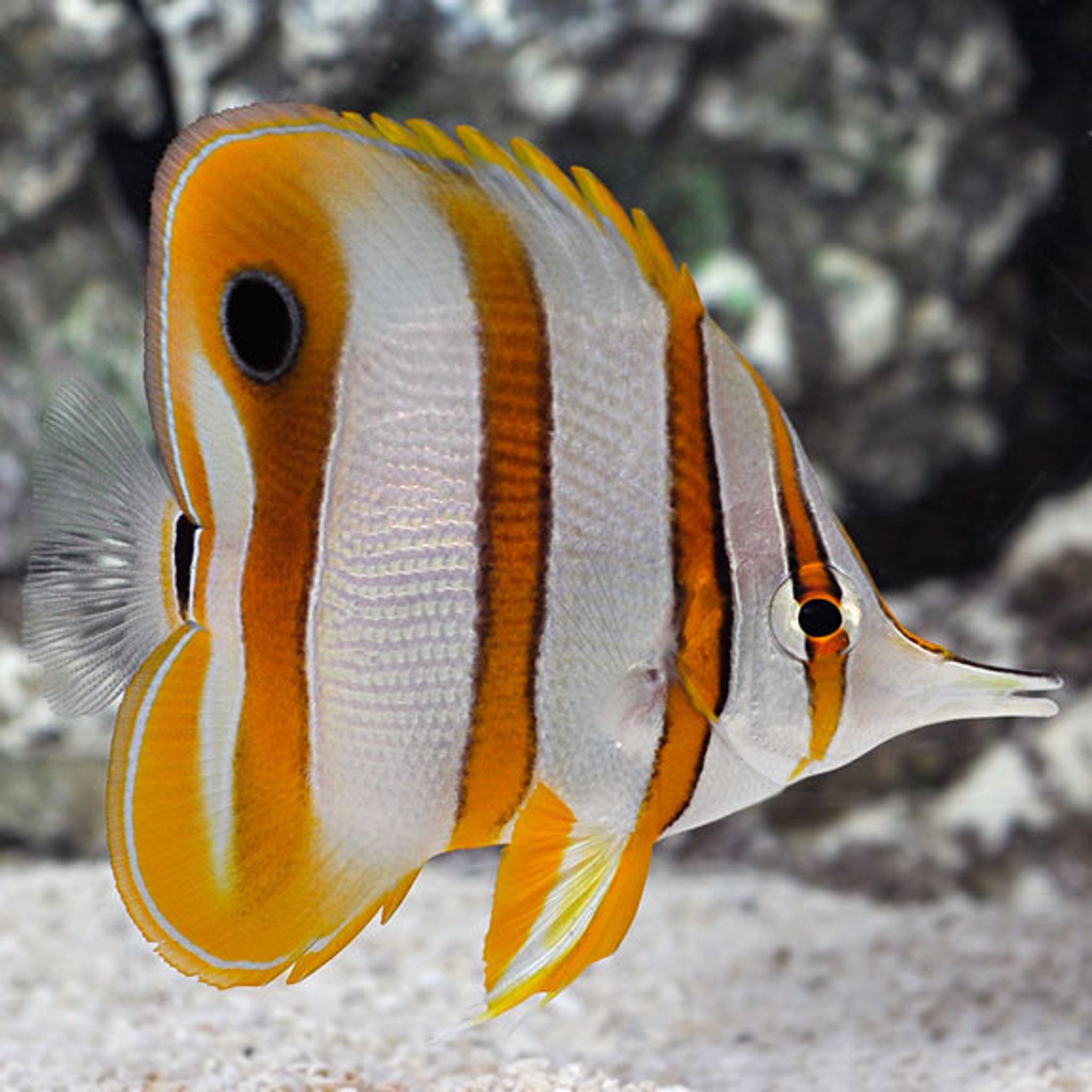

How to Feed Copperband Butterflyfish: Foods, Frequency and Common Feeding Problems
Copperband butterflyfish (Chelmon rostratus) are picky, specialized eaters that starve more often than any other health problem takes them. This guide covers exactly what to offer, how often to offer it, and how to catch a feeding problem before it becomes an emergency.
Why Copperbands Are Considered a "Difficult" Fish
The copperband's long, tubular snout and narrow mouth evolved for one job: picking soft-bodied invertebrates out of crevices, coral rubble, and live rock. That mouth shape is a liability in captivity. It cannot efficiently grab flakes or pellets floating in open water, and it was never built to chase fast-moving food across a tank.
This is why the species has a reputation as one of the classic "hard to feed" marine fish:
- A specialized micro-predator mouth limits which foods it can physically eat.
- Wild copperbands graze constantly in small amounts, so a standard twice-a-day schedule often isn't enough.
- A copperband can literally starve in a tank full of visible food if none of it is a food shape or texture it recognizes.
- Success depends more on buying a specimen that's already eating than on any single feeding trick.
- A calm, spacious, mature tank matters almost as much as the food itself.
What Copperband Butterflyfish Eat in the Wild
In reef habitats, copperbands pick at small worms, amphipods, copepods, tiny crustaceans, and fish eggs tucked into rockwork. They'll also opportunistically nip at Aiptasia anemone tissue when it's available. Nothing in that diet resembles a flake or a pellet, which is the core reason captive feeding takes deliberate effort.
Best Foods for Copperband Butterflyfish
Offer a rotation rather than one single food. Ranked roughly by nutritional value and how closely they match the natural diet:
| Food | Why it works | Notes |
|---|---|---|
| Live or frozen blackworms/white worms | Closest match to natural prey; excellent staple once accepted | Best long-term foundation food |
| Fresh or frozen clam/mussel meat | Rich, high-value conditioning and "finishing" food | Many keepers freeze whole clams and shave paper-thin slices |
| Frozen mysis shrimp | Widely accepted, easy to source | Good bridge food, but shouldn't be the only frozen item offered |
| Enriched frozen brine shrimp / calanus-copepod blends | Easy first bite for a stressed new arrival | Nutritionally thin as a sole diet — use to get a strike reflex going, not as the long-term base |
| Dry flakes or pellets | Almost never accepted | Don't plan a feeding strategy around these |
Soak every frozen food in a vitamin or HUFA supplement before feeding, especially during the first weeks after purchase. This offsets nutritional gaps common in frozen-only diets and supports recovery from shipping stress.
You can browse live copepod and worm cultures, frozen foods, and vitamin soaks under Food & Supplements when building out a rotation.
How Often to Feed a Copperband Butterflyfish
Because of the tiny mouth and constant-grazing wild behavior, feed small amounts 2–3+ times a day rather than one or two large meals. A newly acquired or quarantined fish often needs even more frequent, very small offerings just to trigger a feeding response in the first place.
A simple starter schedule to adapt:
| Time | Food | Purpose |
|---|---|---|
| Morning | A small pinch of enriched brine shrimp or mysis | Easy first bite, gets appetite going |
| Midday | Minced clam or mussel pressed into an empty shell or rock crevice | Mimics natural foraging |
| Evening | Live or frozen blackworms | High-value staple, closes out the day's intake |
Adjust portions so food disappears within a minute or two — the goal is frequent small hits, not volume.
If you work full days and can't be home for three feedings, a timed automatic feeder loaded with a freeze-dried or pelletized supplement, or a feeding ring that holds a small mysis/clam portion, can help bridge the midday gap. It won't fully replace hands-on target feeding, but it beats a single big evening meal.
Conditioning a New or Reluctant Copperband
- Start with the most stimulating foods first — live brine shrimp or live blackworms — to trigger an instinctive strike.
- Once the fish is reliably striking, introduce frozen mysis alongside the live food.
- Gradually work in clam or mussel meat, which many copperbands treat as a high-value target once confident.
- Slowly shift the fish onto the display tank's normal feeding schedule and food mix.
Feeding tricks that help along the way:
- Press soft foods (a gel food, paste, or minced clam) into empty shells, live rock crevices, or dispense them through a feeding tube or turkey baster to mimic natural foraging.
- Target-feed directly near the fish with a baster rather than broadcasting food across the tank.
- Feed away from bright lighting or apart from boisterous tankmates to cut down on competition stress.
- Keep a quiet, well-established tank with abundant live rock so pods are available for grazing between scheduled meals.
Buying a Copperband That's Already Eating
The single biggest factor in long-term feeding success happens before the fish ever reaches your tank. Only buy a specimen you've watched eat. Ask to see it fed in the dealer's tank before you commit — a refusal to demonstrate feeding, for any stated reason, is a red flag worth walking away from.
Sourcing quality changes the difficulty calculus significantly. A retailer-conditioned fish that's already been trained onto prepared frozen foods is far easier to keep feeding than a wild-caught, unconditioned import that has never seen anything but live prey.
Tank Environment That Supports Feeding
A copperband that feels exposed or crowded will suppress its appetite regardless of what's on offer. Aim for:
- 75+ gallons (285+ L) as a typical minimum for long-term success.
- Stable, excellent water quality — copperbands are sensitive to swings.
- Plenty of open swimming space combined with rockwork hiding spots, so the fish feels secure enough to forage.
- Calm tankmates. Copperbands are slow, non-competitive feeders that lose out badly to fast, boisterous fish at meal time. If mixed stocking is unavoidable, target-feed the copperband separately.
Reef keepers should also note a caveat: copperbands can occasionally nip at large-polyp stony coral flesh or clam mantles when hungry, so watch new introductions around sensitive LPS hard corals and clams.
Aiptasia: A Bonus, Not a Guarantee
Copperbands are among the most commonly recommended biological controls for Aiptasia anemones, but the response is inconsistent — some individuals eat Aiptasia readily, others ignore it completely. Treat this as a possible bonus, never the reason you buy one. Also plan ahead: once available Aiptasia runs out, the fish needs to already be trained onto other foods, or removing its easy food source can push it toward starvation.
Common Feeding Mistakes and Troubleshooting
- Buying on looks alone. An unproven, not-yet-eating specimen is a gamble. Verify feeding before purchase every time.
- Relying on flakes, pellets, or brine shrimp alone. These are either unaccepted or nutritionally thin as a sole diet.
- Skipping quarantine. Rushing a stressed, not-yet-feeding fish into a busy display tank compounds the problem.
- Assuming "looks fine" means "eating fine." Check for a pinched or concave belly, a sunken forehead, and darkening or dull coloration — these are starvation warning signs that require immediate action: more frequent, more varied feeding attempts.
- Constant hiding with no foraging. This is usually tankmate aggression or insufficient rockwork, not a diet issue. Fix the environment before assuming it's a food problem.
- Confusing "not eating in front of you" with "not eating at all." Pod-rich live rock lets a copperband graze unseen. Still offer scheduled meals to confirm real intake rather than assuming rock grazing is enough.
- Giving up after one or two tries. A new arrival ignoring everything for the first few days is a normal stress response — keep offering small live or frozen foods several times daily.
- Dark blotching or patches on the body. This is often shipping-related internal injury rather than a feeding problem, and it's frequently fatal regardless of diet.
- Medicating during conditioning. Quarantine treatments and dewormers can suppress appetite. Where possible, get a fish confidently feeding before starting non-urgent medications, and expect a temporary appetite dip during treatment.
A Quick Weight and Behavior Checklist
Use this to tell "grazing well off live rock" apart from "truly starving":
- Belly profile: Rounded or flat = healthy; pinched or concave = warning sign.
- Head profile: Smooth forehead = healthy; sunken forehead = advanced starvation.
- Color: Bright copper-and-white bands = healthy; dull, darkening bands = stress or starvation.
- Activity: Actively picking at rock and crevices throughout the day = likely grazing well; hiding motionless for hours = investigate further.
Longevity When Feeding Goes Right
With successful feeding and good husbandry, copperband butterflyfish commonly live roughly 5–10 years or more in a home aquarium. Most losses trace back to the first few weeks after purchase, when feeding either gets established or doesn't.
If you're evaluating whether a copperband fits your setup, you can compare it against other marine butterflyfish available on FishyHub to see size, compatibility, and stocking notes side by side.
Frequently Asked Questions
What is the best beginner food to get a new copperband eating?
Live blackworms or live brine shrimp tend to trigger the fastest first feeding response because their movement stimulates the fish's natural strike reflex. Once the fish is striking reliably, work frozen mysis and clam into the rotation.
How often should I feed a copperband butterflyfish?
Feed multiple small meals daily — 2–3 or more — rather than one or two large feedings. This matches their natural constant-grazing behavior and their tiny mouth's limited capacity per bite.
Will a copperband butterflyfish really eat Aiptasia?
Often yes, but it's not guaranteed. Some individuals readily pick apart Aiptasia anemones while others ignore them completely, so it should never be your primary reason for buying one.
Can copperbands eat flake or pellet food?
Essentially no. Plan your feeding strategy entirely around live and frozen meaty foods like worms, clam, mysis, and enriched brine shrimp.
How long can a copperband go without eating before it's an emergency?
Given their small size and fast metabolism, more than a few days of refusing all food is a serious warning sign. Increase feeding attempts with varied live foods, target-feed directly, and consult an aquatic vet or experienced source if refusal continues.
What tank size and setup gives the best feeding success?
Larger, mature tanks of roughly 75 gallons (285 L) or more, with abundant live rock, hiding spots, and calm tankmates, support natural foraging and reduce stress-driven appetite loss.
Is it okay to keep a copperband with aggressive or fast eaters?
Not ideal. Copperbands are slow, non-competitive feeders that consistently lose out to boisterous tankmates at meal time. If mixed stocking is unavoidable, target-feed the copperband separately to make sure it's actually getting food.
How long do copperband butterflyfish live in a home aquarium?
Commonly cited at roughly 5–10 years or more when feeding is successfully established early and maintained consistently over time.


