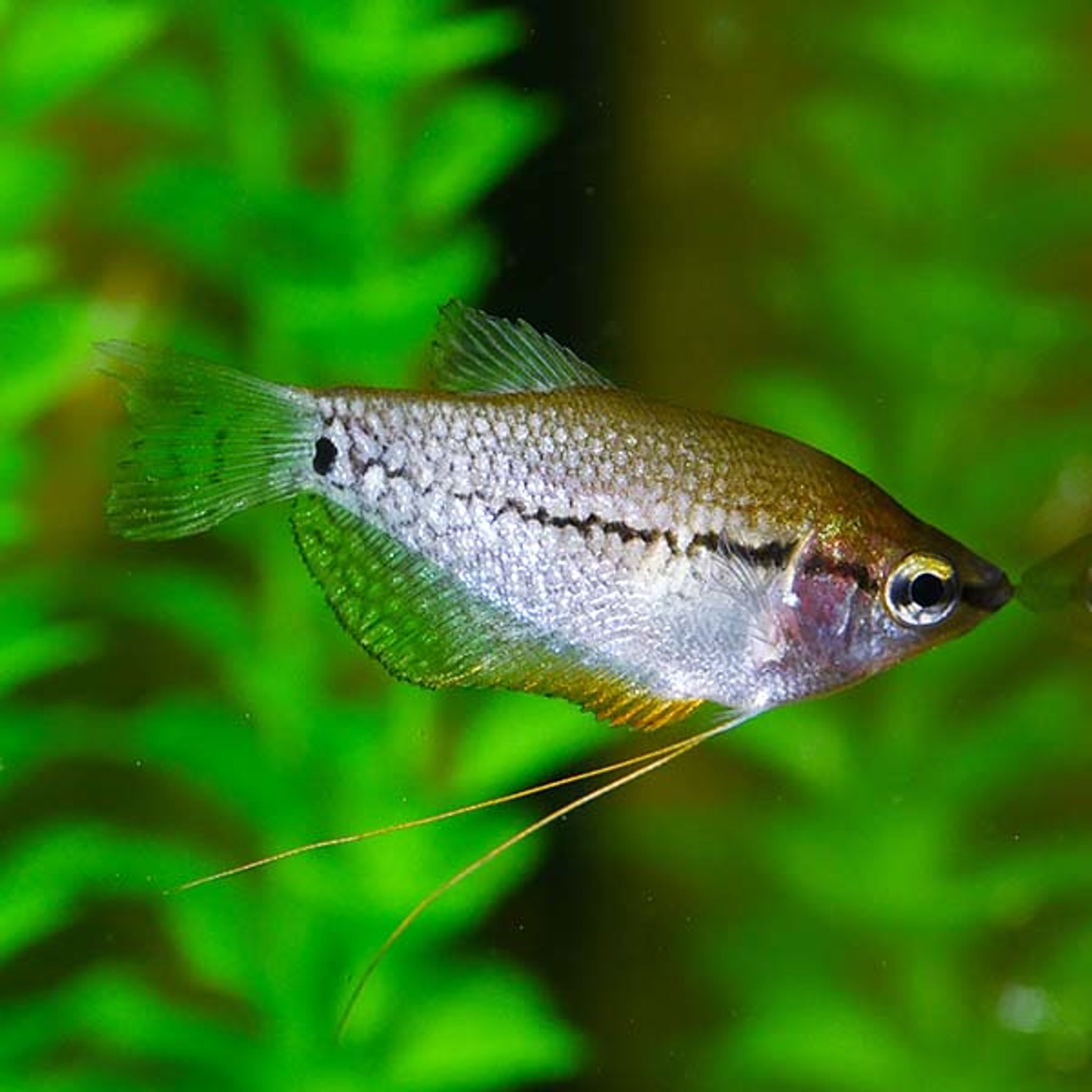

How Big Do Pearl Gourami Get? Growth Rate, Adult Size and Tank Planning
A pearl gourami (Trichopodus leerii) reaches 4–5 inches (10–12.7 cm) in body length as an adult, usually within 8–12 months. That number should drive your tank-size decision from day one, not the small 1–2 inch juvenile you brought home. Below is the growth timeline, the tank math, and the water and lid setup that determines whether a young gourami actually reaches that full size.
Adult Size: What "4–5 Inches" Actually Means
The 4–5 inch figure refers to body length only, measured from the snout to the base of the tail. It does not include the long, thread-like filaments trailing from the ventral (pelvic) fins, which can add another 1–2 inches of visual length. A gourami that looks 6 inches long in the tank may still have a 4.5-inch body.
Sexual dimorphism becomes visible as fish mature:
- Males tend to run slightly larger and more elongated, often reaching the top of the range (4.5–5 in), with a pointed extension on the dorsal and anal fins and a reddish-orange throat and chest when mature.
- Females are typically stockier, rounder-bodied (especially when gravid), and slightly smaller, sometimes topping out closer to 4 inches.
Some references simply give a blanket 4–5 inch range for the species without splitting by sex. Either framing is reasonable — treat 4–5 inches as the species range and expect males to lean toward the higher end.
Growth Timeline: Month by Month
Growth is slow at first, then accelerates. Under good conditions, expect roughly this curve:
| Age | Approximate Body Length | Notes |
|---|---|---|
| Month 1 | Under 1 in (2.5 cm) | Fry stage; easy to mistake for "not growing" |
| Month 2 | ~2 in (5 cm) | Growth visibly picks up |
| Month 6 | ~3.5 in (9 cm) | Sexual traits start to show |
| Month 8–12 | 4–5 in (10–12.7 cm) | Full adult size reached |
A common mistake is judging growth as "stalled" too early. The first month is genuinely the slowest part of the curve — don't panic before month two or three. Full maturity generally takes 8–12 months, occasionally longer depending on the factors below.
What Determines Final Adult Size
Genetics set the ceiling, but several husbandry factors decide whether a fish actually reaches it:
- Genetics/lineage — sets the maximum potential size.
- Water quality and stability — inconsistent parameters or ammonia/nitrite spikes divert energy from growth to stress recovery.
- Tank size — cramped or overcrowded tanks measurably stunt growth; this is one of the most preventable causes of an undersized adult.
- Diet quality and variety — a narrow, all-flake diet tends to produce smaller, less colorful adults; a mixed diet supports full growth (see below).
- Overall health — internal parasites or chronic disease can cause stunting or wasting even when other conditions look fine.
Diet's Role in Reaching Full Size
"Feed a quality diet" is common advice, but the specifics matter. Pearl gouramis do best on a rotation of a quality flake or pellet as a base, supplemented several times a week with live or frozen foods (such as brine shrimp or bloodworms) for extra protein. Protein-rich, varied feeding supports both growth rate and adult coloration; an all-flake diet with no protein variety is a common reason gouramis plateau below their genetic potential. You can browse live and frozen food options, along with the fish themselves, in FishyHub's gourami category.
Tank Size: The Real Minimum vs. the Practical Minimum
Sources genuinely split here, and both numbers are defensible for different situations:
- 20 gallons (76 L) is commonly cited as the absolute floor for a single specimen.
- 30 gallons (114 L) is recommended as the real long-term minimum once you factor in fin length, territory, and the near-certainty of adding tank mates.
Practical recommendation: treat 20 gallons as a bare-minimum floor for one gourami and nothing else, but plan for a 30-gallon long tank as your actual starting point if you want a community setup. If keeping a small group, add roughly 6 gallons per additional gourami beyond the first.
Sample Stocking Math for a Trio
| Setup | Estimated Tank Size |
|---|---|
| 1 pearl gourami, solo | 20 gal minimum, 30 gal recommended |
| 1 male + 2 females (recommended group ratio) | 30–36 gal |
| Trio + a small school of tetras or corydoras | 40 gal |
Footprint matters more than height. Pearl gouramis are surface-oriented labyrinth breathers, so a longer, wider tank with generous surface area supports them better than a tall, narrow tank holding the same total volume. When comparing two tanks of equal gallons, choose the one with more floor and surface area.
Buying a tank sized to a juvenile's current 1–2 inch size — rather than its 4–5 inch adult size — is the single most common planning mistake, and it usually ends in rehoming or a stunted adult.
Water Parameters and Heating
- Temperature: 77–82°F (25–28°C); the warmer end tends to trigger spawning behavior.
- pH: 6.0–8.0. Wild pearl gouramis come from soft, acidic blackwater habitats and breed best closer to pH 6, but captive-bred stock adapts well across the full range.
- General hardness: roughly 5–15 dGH.
Do Pearl Gouramis Need a Heater?
Yes, in virtually all home setups. Pearl gouramis are tropical fish and need a heater sized to the tank to hold a stable 77–82°F, since ambient room temperature rarely stays consistent enough on its own — especially overnight or through seasonal swings. Stability matters more than hitting an exact number: consistent temperature beats chasing perfection. Water below the low 70s°F causes lethargy, color loss, and raises disease risk. Pair any heater with a separate thermometer, since a malfunctioning heater with no way to verify temperature is a common cause of unexplained growth stalls or illness.
The same logic explains why small, unheated, unfiltered bowls are unsuitable for gourami fry or juveniles: a bowl can't hold a stable temperature, never establishes a nitrogen cycle, and reliably stunts growth and shortens lifespan. This is exactly the reasoning that rules bowls out for other labyrinth fish like bettas, and it applies just as directly here.
The Labyrinth Organ: Why It Shapes Tank Setup
Pearl gouramis are anabantoids, or labyrinth fish — a family that also includes bettas. Both evolved this trait in oxygen-poor, slow-moving waters across Southeast Asia. The labyrinth organ lets the fish gulp air directly from the surface for supplemental oxygen, which is why gouramis tolerate lower-oxygen water than many fish but still need regular trips to the surface.
This directly affects three tank-setup decisions:
- Lid gap: leave a small air gap under the lid rather than sealing it flush. The fish needs access to warm, humid air just above the waterline for the labyrinth organ to function comfortably.
- Surface agitation: keep it gentle to moderate. Some water movement is fine and even beneficial for oxygenation, but avoid strong flow or a hood pressed too tightly against the water, which can make surface access difficult.
- Water level: don't fill the tank to the absolute brim if the lid is tight-fitting — the fish needs room to reach the surface without stress.
Tank Mates and Temperament
Pearl gouramis are peaceful and somewhat shy. Like a betta needing a properly sized sorority to diffuse aggression, a single male paired with two or more females spreads out his attention and reduces harassment of any one female. Keeping a lone male-to-female pair, or one male with only one female, tends to increase harassment — either keep a gourami solo or maintain a proper ratio.
Good tank mates:
- Small peaceful tetras and rasboras
- Danios
- Corydoras and other calm bottom dwellers
- Dwarf loaches
- Mystery snails
Avoid:
- Fin-nippers such as barbs
- Boisterous or large aggressive species
Pearl gouramis carry long, delicate fins and trailing ventral filaments that make easy targets for nippy tank mates, so plenty of plant cover and visual breaks in the tank reduce fin damage and territorial disputes. You can shop calm community fish that pair well with gouramis in FishyHub's small community fishes category, and gourami-safe tanks in the glass tanks category.
Can Pearl Gouramis Live With Bettas?
Generally yes, given enough space and calm tank mates. Direct interaction between the two is usually low-risk since neither species is typically aggressive toward the other, but both carry long fins that other nippy species could target — so generous tank size and hiding spots still matter. If you're weighing this combination, FishyHub's betta category is worth browsing alongside gourami stock to compare fin types and temperament before mixing them.
Maintenance That Supports Full Growth
Stable water quality is what lets a gourami reach its genetic size ceiling. A simple weekly routine covers it:
- 25–30% partial water change weekly
- Gravel vacuuming during the water change to remove waste buildup
- Rinse filter media in old tank water, never tap water, to preserve the beneficial bacteria colony
Skipping water changes or overdue maintenance is a frequent, overlooked cause of a gourami that "isn't growing" — check this before assuming illness.
Related Gourami Species by Size
If you're comparing pearl gourami against other gourami species for a given tank size, adult length varies noticeably across the group:
| Species | Typical Adult Length |
|---|---|
| Dwarf gourami | 2–3.5 in (5–9 cm) |
| Pearl gourami | 4–5 in (10–12.7 cm) |
| Opaline/three-spot gourami | 4–6 in (10–15 cm) |
| Gold gourami | 4–6 in (10–15 cm) |
| Blue gourami | 4–6 in (10–15 cm) |
Related wild Trichopodus and Trichogaster species also vary in size and habitat by locality, similar to how size varies across wild betta populations — worth keeping in mind if you're choosing between gourami species rather than assuming they're interchangeable at any tank size.
Frequently Asked Questions
How big does a pearl gourami get?
A pearl gourami reaches 4–5 inches (10–12.7 cm) in body length at full maturity, typically within 8–12 months under good care.
How can I tell male from female pearl gourami?
Males are usually slightly larger with a longer, pointed dorsal fin tip and develop orange-red throat and chest coloring at maturity. Females are rounder-bodied and slightly smaller, especially when gravid.
What size tank does one pearl gourami need?
Twenty gallons is the bare minimum for a single fish, but 30 gallons or more is recommended, especially if you plan to add tank mates or keep more than one gourami.
Do pearl gouramis grow faster in a bigger tank?
Not exactly faster, but a bigger, well-maintained tank removes the space and stress limits that stunt growth, so fish are more likely to reach their full genetic size rather than plateauing early.
Can pearl gouramis live with bettas?
Generally yes, if both have enough space and calm tank mates, since neither species is typically aggressive toward the other. Still provide generous tank size and hiding spots, since both have long fins that other species could nip.
Do pearl gouramis need a heater?
Yes, virtually always. They need a stable 77–82°F, which most home rooms cannot maintain consistently without one.
Why is my pearl gourami not growing?
Check tank size, water temperature stability, water quality (overdue water changes), and diet variety, and rule out illness or bullying from tank mates as underlying causes.
What is the labyrinth organ and does it affect my tank setup?
It lets the fish breathe air directly at the surface, which is why gouramis tolerate lower-oxygen water but still need regular surface access. Keep a small air gap under the lid and avoid strong water movement that would make reaching the surface difficult.
Ready to plan a gourami tank around its full adult size rather than its juvenile size today? Browse available pearl gourami and other gourami species in FishyHub's gourami category to find stock that fits your setup.


