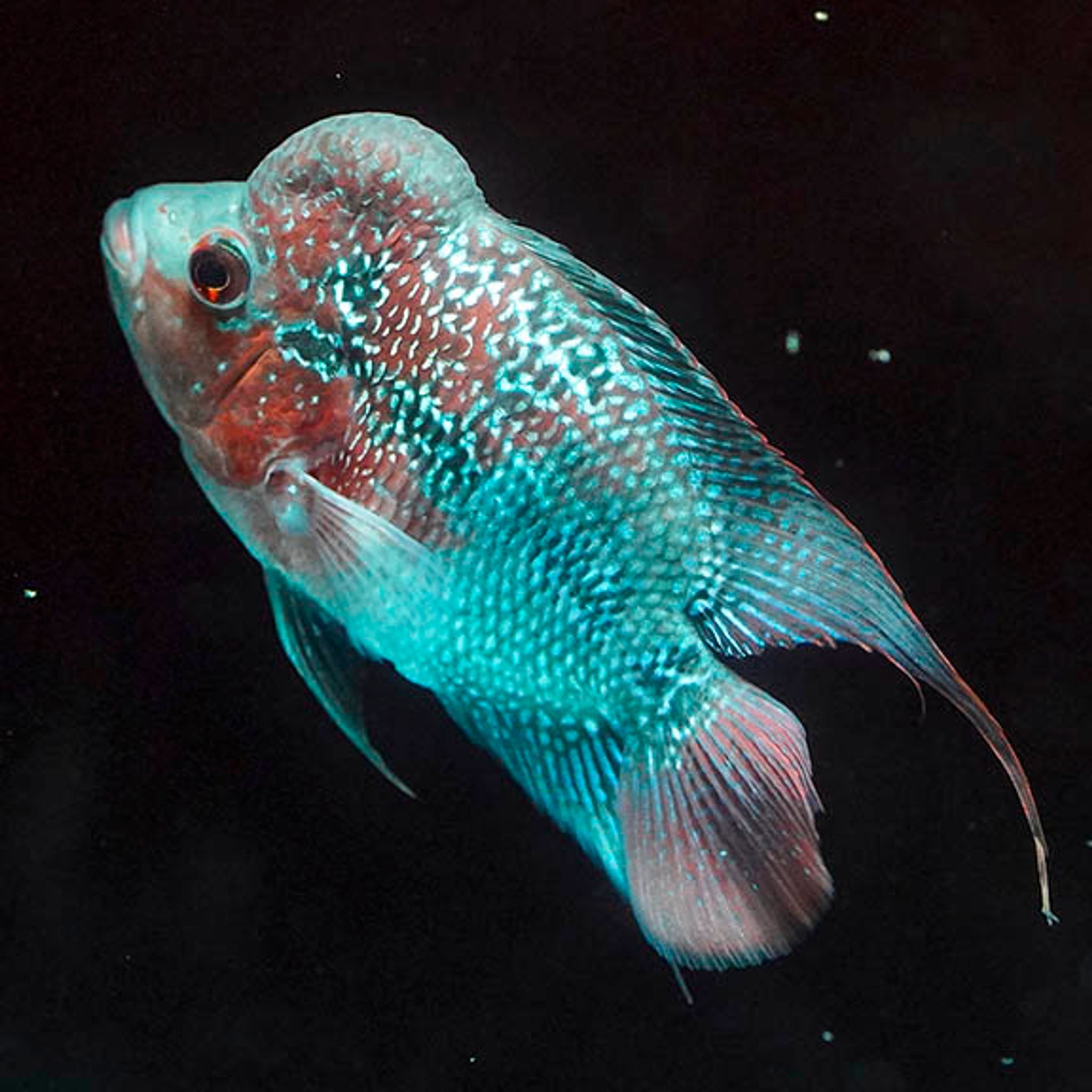
How Big Do Mbuna Cichlid Get? Growth Rate, Adult Size and Tank Planning
Most mbuna cichlids reach 3 to 6 inches (7.5-15 cm) as adults, with the majority of popular pet-trade species settling around 3-4 inches. The catch is that stores sell them as 1-2 inch juveniles, which makes it easy to size a tank for the fish you're buying today instead of the fish you'll actually own in a year. This guide breaks down adult size by species, the growth timeline, and how to translate those numbers into a real stocking plan.
What "Mbuna" Actually Means
Mbuna isn't a single species — it's a common name for the rock-dwelling, algae-grazing cichlids native to Lake Malawi's rocky shorelines. The group spans several genera, including Pseudotropheus/Maylandia, Melanochromis, Labidochromis, and Metriaclima. All of them share a similar body plan and lifestyle: they graze algae ("aufwuchs") off rocks, they're highly territorial, and they max out in a fairly narrow size band compared to many other freshwater cichlids.
That shared biology is exactly why a size-by-species reference is useful — once you know the range, you can plan a tank around the whole group rather than guessing species by species.
African Cichlid Size Chart
Here's a consolidated reference for eight popular mbuna species, in US units first. Treat these as ranges, not fixed numbers — individual variation, genetics, and diet all shift the final length by half an inch or more in either direction.
| Species | Adult Size (Male) | Adult Size (Female) | Notes |
|---|---|---|---|
| Yellow lab (Labidochromis caeruleus) | 3-4 in (up to 5 in reported) | 3-4 in | One of the calmest mbuna |
| Demasoni | ~3 in | ~3 in | Smallest true mbuna; needs larger groups to spread aggression |
| Zebra mbuna (Maylandia zebra) | 3.5-4.5 in | 3-3.5 in | Males noticeably larger |
| Bumblebee cichlid | up to 6 in | ~4 in | Largest male/female size gap in the group |
| Maingano | 3-4 in | 3-4 in | Minimal size difference between sexes |
| Red zebra | 4-5 in | 4-4.5 in | Slightly larger-bodied than standard zebra |
| Chipokae | 5-6 in | 4.5-5.5 in | One of the larger, more aggressive mbuna |
| Kenyi | 4-4.5 in | 3.5-4 in | Males color up bright yellow with age |
Why do sources disagree on exact inches? Genetics, diet, and rearing conditions all play a role — a yellow lab raised on a poor diet in a crowded tank may top out at 3 inches, while a well-fed, low-stress specimen can push toward 5. When you see a range instead of one "true" number, that's the honest answer, not a lack of research.
If you're shopping for mbuna, FishyHub's African Cichlids category is a good place to compare what's currently available.
Sexual Dimorphism: Do Males and Females Grow Differently?
Yes, in several mbuna species males finish noticeably larger than females, and they usually color up more intensely too. The bumblebee cichlid is the clearest example — males can reach 6 inches while females often stop around 4 inches, a gap of nearly 50%. Zebra mbuna and red zebra show a smaller but still visible version of the same pattern. Species like maingano show almost no size difference between sexes, so dimorphism isn't universal across the group — it's species-specific.
Growth Rate: How Fast Do Mbuna Grow?
Mbuna grow fast early and then taper off. Fry can go from under an inch to 2-3 inches within the first 4-6 months, which is quick compared to many other freshwater cichlids. After that initial sprint, growth slows considerably. Most mbuna reach close to their adult length by 12-18 months, though full body fill-out and peak coloration can take up to 2 years.
That first-year growth spurt is the part buyers underestimate most. A fish that looked perfectly proportioned for a 20-gallon tank at the store can be too large for it within six to twelve months — faster than the growth curve of many comparable cichlids.
What Affects Growth Speed
Four factors drive how fast — and how large — a mbuna ultimately grows:
- Water temperature: the upper 70s to low 80s°F (around 25-28°C) is the optimal growth range; cooler water slows metabolism and growth.
- Water quality: frequent water changes support steady growth; stagnant or high-nitrate water suppresses it.
- Feeding frequency and protein content: mbuna need a diet matched to their grazing biology (more on this below) — the wrong diet stunts growth even when water quality is fine.
- Stocking density: crowded or chronically stressed fish grow slower and stay smaller than the same species kept in appropriately sized, well-filtered groups.
Diet's Role in Growth and Health
Mbuna are primarily algae grazers in the wild, and their digestive tracts are adapted to a plant-heavy, lower-protein diet. Feeding a high-protein, meat-based diet meant for predatory cichlids doesn't just risk obesity — it's linked to Malawi bloat, a serious digestive illness common in this group. A vegetable-based or spirulina-forward diet, fed in modest frequent portions, supports steady growth without triggering bloat. Diet is one of the more overlooked pieces of the growth puzzle: it affects both how large a mbuna gets and whether it stays healthy while getting there.
African Cichlid Tank Size: Minimum vs. Ideal
Tank size claims for mbuna vary widely across sources — anywhere from 30 to 55 gallons gets cited as "the minimum." Here's how to read that range honestly:
- 30 gallons: an absolute floor, and only workable for a small starter group of the smallest species (demasoni, yellow lab). Not a real long-term colony setup.
- 55 gallons: the realistic recommended minimum for an actual mixed-mbuna colony with enough fish to spread out aggression.
- 75-125+ gallons: needed for larger or more aggressive species (chipokae, bumblebee) or for bigger groups with multiple species.
The Stocking Formula: Gallons Per Fish
Forget the generic "1 inch of fish per gallon" rule — it under-stocks mbuna and actually makes aggression worse, because a sparse population concentrates territorial disputes on fewer targets. Instead, once you're past the tank-size floor, plan on roughly 3-4 gallons per adult mbuna. Deliberately overstocking beyond that minimum is a legitimate aggression-management tactic in this group: more fish dilutes any one individual's aggression across a larger group, as long as filtration and water-change frequency scale up to match the higher bioload.
Footprint matters more than height. Mbuna establish territories across the floor and lower rockwork of a tank, not the water column, so a wide, long tank supports more fish comfortably than a tall, narrow one of the same gallon count.
Male-to-Female Ratios
Keep at least one male to 3-4 females per species. A single pair concentrates all breeding-related aggression onto one female, which leads to chasing, fin damage, and chronic stress. Wider ratios spread that pressure out and make for calmer overall tank behavior.
African Cichlid Filter System
Mbuna are messy, high-bioload fish that need serious filtration. Turnover recommendations range from 4x to 10x tank volume per hour depending on the source — a safe practical target is 6-8x turnover, and with mbuna's bioload, more filtration rarely hurts.
| Filter Type | Best Use for Mbuna | Notes |
|---|---|---|
| Canister filter | Primary choice | Highest turnover and media capacity, best for large bioloads |
| Hang-on-back (HOB) | Secondary/supplemental | Good add-on for extra flow and polish, less capacity alone |
| Sponge filter | Supplemental | Gentle, good for fry tanks or backup biological filtration |
Beyond water clarity, oversized filtration helps buffer aggression indirectly — stable, high-quality water keeps fish less stressed, and stressed fish are more aggressive and grow more slowly. You can browse canister and HOB options in FishyHub's Filters category when planning equipment for a mbuna setup.
Rockwork and Substrate for a Growing Colony
Malawi Cichlid Cave and Rockwork Design
Rocks should go in before substrate, stacked into a dense, tall structure that mimics a natural rocky Lake Malawi shoreline — not scattered loosely around the glass. Safe rock types include limestone, dolomite, and lava rock, all of which are inert or hardness-friendly. Build caves and crevices that break sightlines between territories; this matters more, not less, as fish reach adult size, since larger mbuna are more territorial and need more visual barriers to avoid constant chasing. Size the rockwork to the fish's eventual adult bulk, not the 1-2 inch juveniles you bring home.
Homemade Rocks for Mbuna Tanks
A budget alternative to store-bought rock is a DIY mix of Portland cement and play sand, formed into caves and structures. This approach works well, but the cured pieces must go through a mandatory curing and soaking period before use — freshly mixed cement leaches alkalinity that can spike pH dangerously if added to a tank too soon.
African Cichlid Sand/Gravel Substrate
Use fine sand or smooth gravel, roughly 1-2 inches deep, and avoid anything sharp — mbuna dig and rearrange substrate constantly, and sharp material can injure their mouths and fins over time. Substrate choice also interacts with the water chemistry mbuna need: crushed coral or aragonite-based substrates help buffer pH and hardness upward, which lines up with what this group requires anyway.
Seashells and Coral in the Tank
Cleaned, cured seashells and crushed coral are one of the few freshwater setups where adding calcium-carbonate material makes sense, because mbuna specifically need hard, alkaline water. These materials slowly buffer pH and hardness upward. They must be cleaned and cured before use, and this approach is inappropriate for most other freshwater fish that prefer neutral to soft, acidic water.
Water Parameters for Growth
For context, mbuna do best in hard, alkaline water: pH roughly 7.8-8.6 and temperature 75-82°F (24-28°C). Undersized or stressed-looking mbuna often trace back to soft, acidic water rather than genetics — parameters are worth checking before assuming a fish is just naturally small.
Breeding Mbuna and How It Ties to Size
Mbuna are mouthbrooders — females hold fertilized eggs and fry in their mouths for several weeks. The same male:female ratios that manage general aggression (1 male to 3-4 females) apply directly to breeding setups, spreading spawning attention across multiple females instead of one. Cross-species hybridization is a real risk in mixed-species tanks, since many mbuna will spawn with closely related species if a same-species mate isn't available — keeping species-accurate ratios reduces this. Breeding-age males are typically the largest, most colorful individuals in a group, which links directly back to the growth-rate section above: a male that hasn't reached size and color maturity yet generally isn't ready to breed.
Common Mistakes to Avoid
- Sizing the tank to the juvenile, not the adult. A 1-2 inch fish from the store will outgrow a small tank within 6-12 months — often faster than other cichlid groups.
- Keeping a single male with one or two females, which concentrates aggression and stresses or stunts the female.
- Under-filtering. Undersized filtration causes poor water quality, which stunts growth and increases aggression.
- Sparse rockwork that doesn't scale with adult size, leaving no broken sightlines and driving chronic chasing and fin damage.
- Wrong substrate. Sharp gravel or soft, acidic substrate fights the pH and hardness mbuna need, affecting growth and long-term health.
- Assuming a small fish is just a "small variety." Chronic poor water quality or crowding is usually the real cause, and it's reversible only while the fish is still young — not once it's fully grown.
Mbuna typically live 6-10 years in a well-maintained tank, so planning around the adult size and stocking plan from day one avoids a cycle of repeated upgrades as the fish grow into (and out of) each new setup.
Frequently Asked Questions
How big do mbuna cichlids get in a home aquarium?
Most mbuna land between 3 and 6 inches depending on species, with the majority of common pet-trade species settling around 3-4 inches. Check the size chart above for species-specific ranges before choosing a stocking list.
How fast do mbuna cichlids grow?
Growth is fast in the first 4-6 months, with fry moving from under an inch to 2-3 inches in that window. Growth then slows, and most mbuna reach close to full size by 12-18 months, with complete fill-out sometimes taking up to 2 years.
What is the minimum tank size for mbuna?
Fifty-five gallons is the realistic starting point for a genuine mbuna colony. Thirty gallons works only as a bare-minimum floor for the smallest species or as a temporary setup, not a long-term home for a full group.
Do male and female mbuna grow to different sizes?
Yes, in several species males finish noticeably larger and more colorful than females. Bumblebee cichlids show the biggest gap, with males reaching up to 6 inches against roughly 4 inches for females; other species like maingano show little difference.
How many mbuna can I keep per gallon?
The generic "1 inch per gallon" rule doesn't work well for mbuna because it under-stocks the tank and worsens aggression by concentrating it on fewer fish. A better approach is roughly 3-4 gallons per adult mbuna once you're past the tank-size floor, with deliberate overstocking used as an aggression-diluting strategy as long as filtration and water changes scale up accordingly.
Can stunted mbuna cichlids catch up in size later?
Usually not once they're fully mature — stunting from poor water quality or crowding tends to be permanent past that point. Early intervention with better water quality, less crowding, and more frequent feeding can still help young fish reach a more normal size.
What causes mbuna to stay small or stop growing?
The main causes are poor water quality, a low-protein or otherwise mismatched diet, overcrowding and stress, and incorrect pH or hardness. Since mbuna need hard, alkaline water, soft or acidic conditions are a common hidden cause of undersized fish.
Do mbuna need special substrate or rocks as they grow?
Yes — adult mbuna are larger and more territorial, so rockwork needs to scale up to provide enough caves and broken sightlines to prevent chasing. Substrate should stay fine and non-sharp since mbuna dig constantly, and it should support the hard, alkaline water this group needs regardless of fish size.
Once you know your target species and adult sizes, you can match tank, filtration, and rockwork to the group before bringing any fish home — browse current stock in FishyHub's African Cichlids category to compare species and plan your colony.


