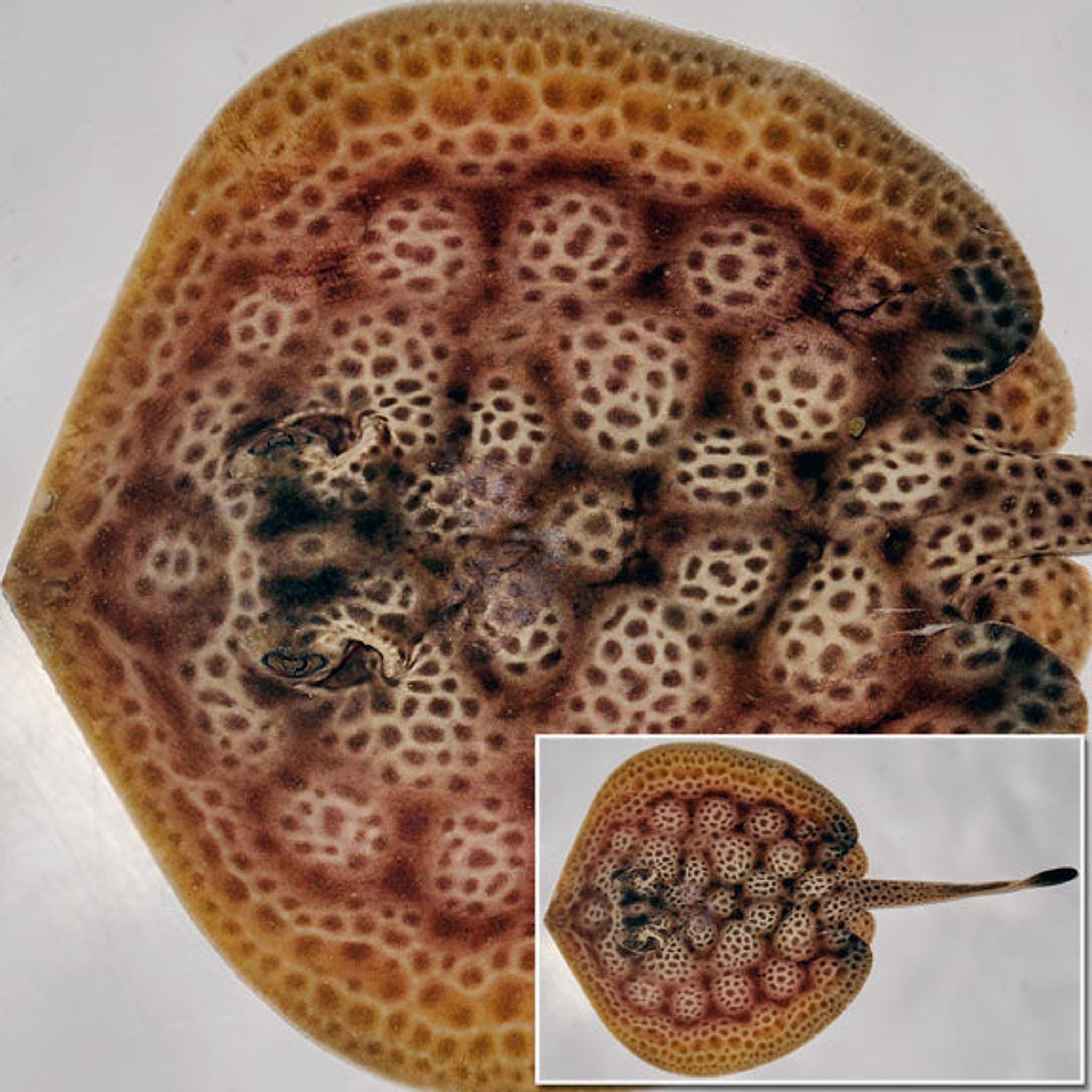

How Big Do Freshwater Stingray Get? Growth Rate, Adult Size and Tank Planning
Most freshwater stingrays sold in the US trade reach an adult disc diameter somewhere between 12 and 24-plus inches (30–61+ cm), depending on species, sex and genetics. Getting there takes roughly 2–4 years of fast, steady growth, which is why tank planning has to start well before the ray outgrows its first home. This guide breaks down realistic adult sizes, a stage-by-stage growth timeline, and the exact gallons and footprint each size class needs.
How Big Do Freshwater Stingrays Actually Get?
Stingray size is measured across the disc — the round, flattened body — not nose-to-tail. Total length including the whip-like tail can add several more inches, but the disc diameter is what determines how much swimming space the animal needs.
Freshwater stingrays belong to the genus Potamotrygon (family Potamotrygonidae), all cartilaginous fish native to South American river systems. Because these are wild-type animals with real genetic variation, "adult size" is always a range rather than a fixed number, and individual rays — especially females — can exceed the high end.
Size by Commonly Kept Species
| Species/type | Typical adult disc diameter | Notes |
|---|---|---|
| Motoro | 14–20 in (36–51 cm) | Most commonly available; wide size range across sources |
| Reticulated/Leopard | 14–18 in (36–46 cm) | Similar footprint needs to Motoro |
| Hybrid rays | 14–20 in (36–51 cm) | Size varies with parent species; unpredictable ultimate size |
| Black Diamond | 20–24+ in (51–61+ cm) | Among the largest commonly kept freshwater rays |
Because reported adult sizes for the same species can vary by 4–6 inches across different keepers' experience, treat these as planning ranges, not guarantees — genetics, diet and water quality all shift where an individual ray lands within (or beyond) them.
The "Teacup" Myth
Some sellers market "teacup" or dwarf stingrays as staying permanently small. This is a marketing term, not a distinct dwarf species or genetic line. A small ray sold as "teacup" carries the same genetic potential for full adult size as any other individual of its species — it is simply young or undersized for its age. Buyers should plan tank space for full adult size regardless of how a ray is marketed at purchase.
Growth Rate: From Pup to Adult
Freshwater stingrays are born live (ovoviviparous), and pups start life surprisingly capable.
- At birth: pups typically measure 3–5 in (8–13 cm) disc diameter and can feed and swim independently almost immediately.
- First month: rapid early growth stabilizes the pup at a slightly larger, hardier size.
- Year one: growth continues quickly through the first 12 months, often the fastest growth phase of the ray's life.
- Years 2–3: the ray reaches a large fraction of its eventual adult size, though the rate of growth per month slows.
- Years 3–4+: growth continues at a slower, incremental pace toward full sexual maturity and near-maximum size.
There's no single fixed timeline here — sources disagree on exact ages, and diet, temperature and water quality all accelerate or slow the process. A general planning range of 2–4 years to reach near-adult size is more realistic than any single number. Well-fed rays kept in warm, stable, high-quality water consistently grow faster and larger than stressed or underfed animals, so growth rate is very much within a keeper's control.
One useful early signal: growth in the first 6 months, combined with the size of the parent rays (if known), gives a rough early indicator of how large a given individual is likely to end up — useful for planning tank upgrades proactively instead of reacting after the ray has already outgrown its space.
Sex matters too. Females of most species grow to a noticeably larger adult disc size than males of the same age and species, so a breeding-age female needs more long-term space than a male tankmate might suggest.
Tank Size by Life Stage
Footprint (length x width) matters far more than depth for stingrays. They are benthic — bottom-dwelling — animals that glide continuously along the substrate rather than swimming through open water, so a tall tank wastes volume the ray can never use. A height of 18–24 in is generally sufficient; anything taller mostly adds unused water column and makes maintenance harder.
A widely used rule of thumb: footprint length should be at least 3x the adult disc diameter, and width at least 2x, once the ray is grown.
| Life stage | Disc diameter | Minimum tank size | Suggested footprint |
|---|---|---|---|
| Pup/juvenile | Under 8 in (20 cm) | 100–125 gal (380–475 L) | At least 5–6 ft long |
| Sub-adult | ~8–12 in (20–30 cm) | 180–240 gal (680–910 L) | ~6 ft long x 2–3 ft wide |
| Adult | 12–24+ in (30–61+ cm) | 300+ gal (1,135+ L) | 8 ft x 3–4 ft or larger |
Sources vary on the juvenile minimum, with figures ranging from 75 gallons up to 125-plus. Because juveniles grow fast and repeated upgrades stress the animal, planning for the higher end (100–125 gallons) from the start avoids a rushed re-home just months in. A pair or trio of adult rays needs proportionally more space than these single-animal minimums, not just a modest increase.
You can browse tank options sized for large, long-bodied stock in Tanks & Stands when planning the upgrade path.
Tank Setup Essentials
- Substrate: fine, soft sand only — never gravel or anything rough. A ray's ventral (underside) surface is delicate, and abrasive substrate causes scrapes that can become infected.
- Decor: smooth-edged and minimal. Keep most of the floor open for gliding and resting.
- Lighting: subdued rather than bright, matching the dim conditions of turbid South American rivers.
- Heaters: always covered or guarded. Rays rest directly on the substrate and can suffer serious burns from contact with an exposed heating element.
- Filtration: rays are heavy waste producers and highly sensitive to ammonia and nitrite, so oversized filtration — often a sump on larger systems — is standard practice rather than a luxury.
Suitable sand substrates can be found under Substrate, and stronger filtration options are listed in Filters.
Water Parameters
| Parameter | Target range |
|---|---|
| Temperature | 75–82°F (24–28°C) |
| pH | 6.5–7.6 (species-dependent; slightly acidic to neutral preferred) |
| GH (general hardness) | ~2–10 dGH (soft to moderately soft) |
| Ammonia / nitrite | 0 ppm, always |
| Nitrate | Under 10–20 ppm as a safe target |
Nitrate tolerance is one area where sources disagree — some cite up to 40 ppm as acceptable, others say under 10 ppm. Because rays are notably more nitrate-sensitive than typical community fish, treating 10–20 ppm as the real ceiling is the safer approach, especially on systems where testing isn't frequent.
Weekly water changes of 25–50% are typical, and some large-system keepers do smaller daily changes instead to keep nitrate and organic waste consistently low. On big tanks, this labor and cost is easy to underestimate — neglected water changes on a 300-gallon system lead to nitrate creep and stunted or sick rays far more often than outright disease does.
Diet and Growth
Growth rate tracks feeding quality closely. A varied protein diet supports faster, healthier growth than a limited one:
- Earthworms
- Blackworms
- Mysis shrimp
- Raw shrimp (unseasoned)
- Whitefish
- Mussel or clam meat
Well-fed rays in warm, stable water reach adult size faster and larger than stressed or underfed animals — but overfeeding fast-growing juveniles is a common mistake that can lead to obesity and related health problems. Moderate, varied feeding beats maximum feeding.
Tankmate Compatibility
Because a ray's disc and tail-whip area are easily injured, tankmates need to be too large to be eaten and too peaceful and non-spiny to cause injury. Reasonable options at appropriate life stages include larger peaceful cichlids, silver dollars, and arowana-type fish that share the ray's warm, soft-water preferences.
Avoid:
- Plecos and other spined catfish — their fin spines can puncture the disc
- Nippy or aggressive barbs and cichlids
- Any fish small enough to be seen as food
Large, compatible tankmates can be sourced from Monster Fishes, while the ray itself and other stock can be browsed under Freshwater Livestock.
Legal Considerations in the US
Several US states and some cities restrict or outright ban ownership of freshwater stingrays, typically under invasive-species or venomous-animal regulations. Requirements and restrictions vary significantly by state and even by municipality, and rules change over time. Always verify current state and local law before purchasing — a confiscated animal is a real risk for buyers who skip this step.
A Safety Note on Stings
Freshwater stingrays carry a venomous barb on the tail, used purely in self-defense when the animal feels threatened or is stepped on or grabbed. Never handle a ray by the tail, and use a container or net rather than bare hands when moving one. A sting causes significant pain and should be treated as a medical issue — soak the affected area in water as hot as can be tolerated (this helps break down the venom's proteins) and seek medical attention, since stings can become infected or provoke an allergic reaction.
Cost of Ownership at Scale
The "how big" question is really a total-investment question. A full adult setup typically involves:
- A 300+ gallon tank and a stand rated for that weight
- A sump or high-capacity filtration system
- A heater (covered) and, in warmer climates, sometimes a chiller
- Ongoing sand substrate and equipment maintenance
- A steady supply of varied protein food
None of this is a one-time cost — feeding a large, fast-growing ray and running a sump-fed system are recurring expenses for the life of the animal, not a single purchase. Budgeting for the adult stage from day one, rather than the juvenile setup in front of you, avoids the most common source of buyer's remorse with this species.
Common Mistakes to Avoid
- Buying a 4–6 in juvenile into a tank under 75 gallons without planning the 100+ gallon jump that follows within months
- Using gravel or rough substrate that scrapes the ray's underside
- Letting ammonia or nitrite rise above zero, even briefly — rays tolerate this far worse than typical fish
- Housing rays with spiny or nippy tankmates that can puncture the disc
- Underestimating the labor and cost of water changes on a large system, leading to nitrate buildup
- Skipping legal research before purchase
- Using an uncovered heater the ray can rest against and burn itself on
Planning Ahead vs. Rehoming Later
The single biggest driver of stressed, oversized, or rehomed rays is a tank purchased for the juvenile in the store rather than the adult it will become in 2–4 years. If budget or space genuinely can't accommodate a 300-gallon adult setup down the line, it's far better to decide that before buying a pup than to be searching for a new home for a stressed, outgrown ray later. Planning the full growth curve — size, tank stages, and total cost — before purchase is what separates a successful long-term keeper from a rehoming statistic.
Frequently Asked Questions
How big does a freshwater stingray get in inches?
Most commonly kept species reach an adult disc diameter of roughly 12–24-plus inches, with Black Diamond rays and large females at the top of that range. The tail adds noticeably more to overall length beyond the disc measurement itself.
How fast do freshwater stingrays grow?
Growth is fastest in the first year, then continues at a slower pace over roughly 2–4 years to reach near-adult size. Feeding quality and water conditions are the biggest factors influencing how quickly a ray reaches its full potential size.
What size tank does a freshwater stingray need?
Plan for 100–125 gallons at the juvenile stage, 180–240 gallons as a sub-adult, and 300-plus gallons with a wide, long footprint once the ray reaches adult size. A pair needs proportionally more space than these single-animal minimums.
Can a stingray live in a 75-gallon tank?
Only briefly, as a very small juvenile. A 75-gallon tank is not viable long-term for any adult freshwater stingray and will need to be upgraded within months of purchase regardless of species.
Do freshwater stingrays need a really long or a deep tank?
Long and wide, not deep. Rays are benthic and glide along the substrate rather than swimming vertically, so a tank height of 18–24 inches is plenty, while length and width should scale with the ray's expected adult disc size.
How big of tankmates can live with a stingray?
Tankmates need to be too large to be eaten and calm and non-spiny enough not to injure the ray's disc — larger peaceful cichlids, silver dollars, and arowana-type fish are common choices. Avoid plecos, spined catfish, and nippy or aggressive species.
Are freshwater stingrays legal to own?
Legality varies significantly by US state and sometimes by city, often under invasive-species or venomous-animal regulations. Always check current state and local rules before purchasing, since some jurisdictions require permits and others ban ownership outright.
How long do freshwater stingrays live?
With good care, freshwater stingrays commonly live 8–15-plus years, making this a decade-plus commitment that should factor heavily into tank and budget planning from the start.
Freshwater stingrays are an advanced, long-term species best suited to keepers ready for a 300-gallon-plus adult setup and years of careful water management. Explore compatible large tankmates and stock in Freshwater Livestock on FishyHub to plan a setup built for the full growth curve, not just the juvenile in front of you.


