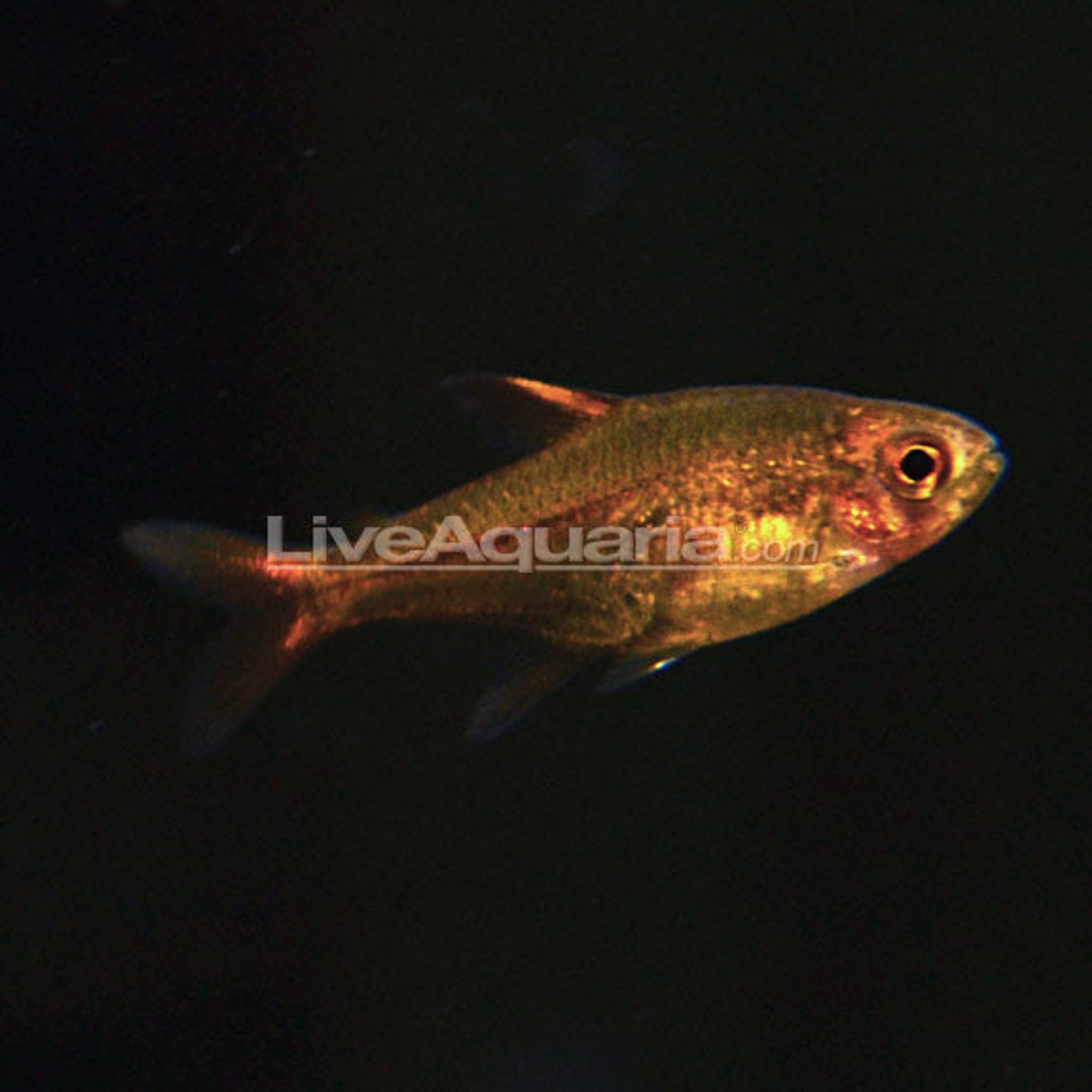
How Big Do Ember Tetra Get? Growth Rate, Adult Size and Tank Planning
A full-grown ember tetra reaches only about 0.6 to 1 inch (1.5–2.5 cm), with most individuals settling around 0.75–0.8 inch — that's roughly the length of a US dime laid on its side, or a small fingernail. This guide covers the realistic growth timeline, what actually changes final size, and the gallon-by-gallon math for stocking a shoal so you don't over- or under-buy a tank.
Adult Size: What to Actually Expect
Ember tetras (Hyphessobrycon amandae) are among the smallest tetras regularly sold for home aquariums. Reported adult sizes across sources range from about 0.6 inch up to slightly over 1 inch, but treat anything "over an inch" as an outlier rather than typical. A realistic expectation for a healthy, mature ember tetra is:
- Typical range: 0.6–1 inch (1.5–2.5 cm) total length
- Realistic average: about 0.75–0.8 inch
- Rare outliers: slightly over 1 inch, usually older fish in ideal conditions
How They Compare to Other Small Tetras
| Species | Typical adult length |
|---|---|
| Ember tetra | 0.6–1 in (1.5–2.5 cm) |
| Neon tetra | ~1.5 in (3.8 cm) |
| Cardinal tetra | ~1.6 in (4 cm) |
| Glofish tetra | ~2 in (5 cm) |
Embers are noticeably smaller than all of these, which is exactly why they work in nano setups where the others would feel cramped. You can browse live tetra stock to compare species side by side before deciding on tank mates.
Do Males and Females Grow to Different Sizes?
No — there's no meaningful size difference between male and female ember tetras. Instead, tell the sexes apart by body shape and color:
- Males: slimmer, more streamlined body; more saturated, deeper orange-red coloring
- Females: rounder-bodied overall, especially noticeable when gravid (carrying eggs)
If you're trying to sex a group for breeding purposes, look at body shape and color intensity side by side rather than length — a smaller, slim fish isn't necessarily a female, and a rounder one isn't necessarily larger.
Growth Timeline: What to Expect Week by Week
Ember tetra growth follows a predictable curve, though the exact pace depends heavily on diet and water conditions.
| Age | Approximate size | Notes |
|---|---|---|
| 0–2 to 4 weeks | Nearly microscopic | Fry are extremely hard to see; easily lost in filter flow or eaten |
| 4–6 weeks | ~0.25 in (6 mm) | First clearly visible growth spurt |
| ~3 months | ~0.4 in (1 cm) | Adult coloration starts developing |
| 2–4 months onward | Growth slows | Fish begin filling out rather than lengthening quickly |
| 6–12 months | Full adult size (0.6–1 in) | Timeline varies by diet, water quality, and genetics |
Sources differ on exactly when embers hit full size — some report 6–8 months, others 9–12 months. The honest answer is typically 6–12 months depending on conditions, rather than a fixed number. Growth is fastest in the first four to six weeks, then tapers off noticeably from around the two- to four-month mark, even though the fish is still filling out and coloring up.
A multi-month size plateau is normal, not a red flag. As long as appetite and activity stay normal, a fish that "stopped growing" months ago is simply an adult ember tetra, not a stunted or sick one.
What Actually Affects Final Size and Growth Rate
Several factors influence how quickly — and occasionally how large — an ember tetra grows:
- Genetics and individual variation: some fish are simply built slightly larger or smaller than their shoal-mates.
- Diet quality and frequency: live or frozen foods (baby brine shrimp, micro worms, daphnia) speed growth compared with flake alone.
- Stable warm temperature: consistent mid-70s to low-80s°F supports steady metabolism and growth.
- Water quality: frequent, moderate water changes reduce the stress that slows growth.
- Low stress: calm tankmates and adequate plant cover let fish spend energy growing instead of hiding.
- Tank size and territory: enough space to establish a small territory reduces competition-driven stress.
A Note on Selective Lines
Some hobbyist-bred lines have been selected specifically for deeper red coloration. These lines aren't well documented for size or growth-rate differences, but it's plausible that selective breeding for color intensity could subtly affect growth pace or final size in some lines — an angle most care guides skip entirely. Treat any such difference as anecdotal rather than established.
Minimum Tank Size and Shoal Numbers
Because embers are shoaling fish, tank size decisions should follow shoal size, not the other way around.
- Recommended baseline: 10 gallons for a proper shoal — this is the safe, widely cited minimum for stability.
- Absolute minimum: a 5-gallon nano tank can work for a very small group, but only with excellent, consistent water quality control and little margin for error.
- Shoal size: keep a minimum of 6 fish; 8–12 or more is ideal. Larger, more secure groups show less hiding, better color, and calmer behavior.
Tank Planning Table: Size to Shoal
| Tank size | Comfortable ember tetra shoal | Notes |
|---|---|---|
| 5 gal (19 L) | 6 (bare minimum group) | Absolute minimum; needs excellent filtration and water changes |
| 10 gal (38 L) | 10–15 | Recommended baseline for a thriving shoal |
| 20-long (76 L) | 20–30+ | Comfortable with appropriate tank mates |
| 29 gal (110 L) | 25–35+ | Room for a larger shoal plus a small mixed community |
Because ember tetras are so tiny, standard "1 inch of fish per gallon" stocking calculators tend to undercount how many you can keep. Their bioload per fish is very low, so a loose guideline of roughly 1 fish per gallon works reasonably well in a well-filtered, planted nano tank — but shoal size and filtration capacity matter more than rigid gallon math. It also helps to distinguish a minimum survivable tank (the 5-gallon scenario, tight and unforgiving) from a recommended tank for thriving or breeding (10 gallons and up, with real margin for error).
Water Parameters for Healthy Growth
- Temperature: 73–84°F, with 75–82°F as the commonly cited core range
- pH: 5.0–7.0 broad tolerance; 6.5–7.0 is the sweet spot for best color and breeding success
- Hardness: soft, roughly 1–10 dGH; some sources cite up to 17°N as an outer bound, but treat that as an extreme rather than a target
Sudden temperature or pH swings during water changes are one of the more common mistakes with this species — embers are a soft-water fish and are sensitive to abrupt shifts. Match new water to tank temperature and change water gradually rather than in large, fast swaps.
Best 10-Gallon Kit Considerations for Embers
Since 10 gallons is the go-to minimum for a proper shoal, the equipment matters as much as the tank size:
- Gentle, adjustable filtration: embers are weak swimmers, so avoid strong output. A sponge filter, or a flow reducer/pre-filter sponge added to a hang-on-back intake, prevents them from being pinned against the glass.
- Reliable heater: look for one rated to comfortably hold mid-70s to low-80s°F, ideally with an adjustable dial rather than a fixed preset.
- Low-to-moderate lighting: suited to a planted nano setup — embers show their best color against dense, moderately lit planting rather than bright, bare tanks.
Many all-in-one 10-gallon kits (filter, light, and heater bundled) suit ember tetras well, but the stock filter often runs stronger than ideal and benefits from a flow reducer or pre-filter sponge out of the box.
Tank Mates: Sizing Principle
Choose tank mates that are similarly tiny and peaceful — never anything that could fit an ember tetra in its mouth, since many "peaceful" community fish are still too large for a fish this size. Good options include:
- Small corydoras species (such as pygmy cory)
- Small rasboras
- Shrimp
- Otocinclus
Avoid fin-nippers and larger, boisterous fish — barbs, larger gouramis, and in some cases bettas — which can outcompete embers for food or bully and even eat them as fry. If you're planning a mixed nano community, small corydoras and shrimp are two of the safest pairings for an ember tetra shoal.
Beyond the Nitrogen Cycle: Start-Up Factors That Matter
Cycling the tank (getting ammonia and nitrite to read zero with nitrate present) is step one, but it's not the whole picture for a delicate nano fish like this. A tank can be fully cycled on paper and still stress out embers if these follow-up factors are ignored:
- Stable temperature — avoid fluctuations even after the cycle is established.
- Adequate hiding spots and plants — dense planting gives shy fish somewhere to retreat, which also reduces stress-related color loss.
- Gradual acclimation — drip or slow-drip new fish into the tank rather than a quick dump-and-go.
- Quarantine of new arrivals — protects an established, hard-won cycled tank from introduced disease.
- Restrained feeding in the first weeks — new tanks are especially vulnerable to ammonia spikes from overfeeding.
Lifespan and Breeding Notes
With good care, ember tetras typically live 2–4 years. Heavily planted, stable tanks correlate with longer lifespans, likely because they reduce chronic stress.
Size and growth also tie directly into breeding success: larger, well-fed adults in stable soft water tend to spawn more readily, and dense planting protects fry from being eaten by adults or tankmates. If breeding is a goal, prioritize a well-established shoal in a mature, densely planted tank over a bare, newly set-up one.
Common Mistakes to Avoid
- Keeping too few fish (under 6) — causes visible stress, hiding, washed-out color, and skittish behavior.
- Housing with fin-nippers or larger, boisterous fish — embers get outcompeted for food and can be bullied or eaten as fry.
- Running filter flow too strong — exhausts these weak swimmers; use a sponge filter or a flow reducer/pre-filter sponge on hang-on-back intakes.
- Mistaking slow growth for illness — a multi-month size plateau is normal, not a health problem, as long as appetite and activity are normal.
- Overfeeding to "speed up growth" — leads to water quality crashes; smaller, more frequent, varied feedings work better than large quantities.
- Sudden temperature or pH swings during water changes — match temperature and change water gradually.
- Applying rigid inch-per-gallon stocking rules — embers are so small and low-bioload that strict inch calculators undercount how many you can keep; base stocking on shoal size and filtration capacity instead.
Frequently Asked Questions
How big is a full-grown ember tetra?
About 0.6–1 inch, with most individuals averaging roughly 0.75–0.8 inch. That makes it one of the smallest commonly kept aquarium tetras.
How long does it take for an ember tetra to reach full size?
Roughly 6–12 months, depending on food quality, water conditions, and genetics. Growth is fastest in the first 4–6 weeks and then slows considerably.
How many ember tetras can I put in a 10-gallon tank?
A shoal of roughly 10–15 is comfortable in a well-planted, well-filtered 10-gallon tank. Always keep at least 6 to avoid stress-related hiding and color loss.
Do male and female ember tetras get different sizes?
No, there's no meaningful size difference between the sexes. Tell them apart by body shape (males slimmer) and color saturation (males more vividly colored) instead.
What is the minimum tank size for ember tetras?
10 gallons is the recommended baseline for a healthy shoal. A 5-gallon nano tank is possible for a very small group, but it leaves little margin for error in water quality.
Why is my ember tetra not growing?
In most cases this is normal slow growth rather than illness. Check diet variety, water temperature, water quality, and whether the fish is being outcompeted for food by tankmates.
Can ember tetras live with bettas or other small community fish?
Only with calm, non-aggressive species of similarly tiny size. Avoid fin-nippers and anything large enough to eat an ember tetra, including some bettas.
What do ember tetras eat to grow well?
A varied diet of high-quality micro pellets or crushed flake plus live or frozen foods — baby brine shrimp, micro worms, daphnia — supports faster, healthier growth than flake alone.
If you're ready to plan a shoal, browse the current small community fishes selection on FishyHub to see ember tetras and compatible nano tank mates in stock.


