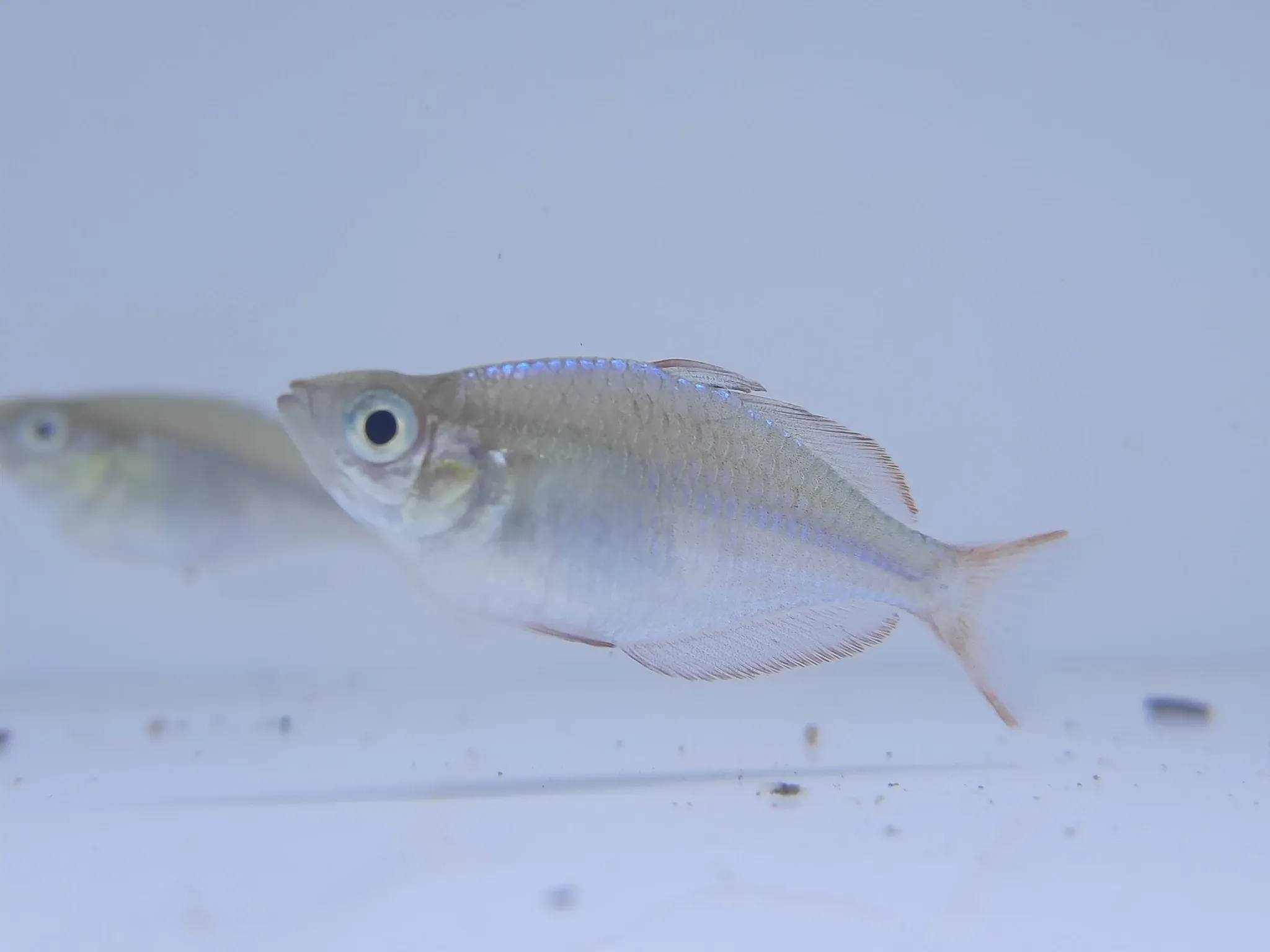

How Big Do Dwarf Neon Rainbowfish Get? Growth Rate, Adult Size and Tank Planning
Dwarf Neon Rainbowfish (Melanotaenia praecox) top out around 3 inches, making them one of the smallest members of the rainbowfish family. This guide breaks down the exact size by sex, the growth timeline from fry to full color, and how to translate that "dwarf" size into real gallon and school-size numbers for a US tank.
Species Snapshot
The Dwarf Neon Rainbowfish, also sold as the Neon Dwarf Rainbowfish, is native to small streams and tributaries in New Guinea. It belongs to the Melanotaenia genus, most of which grow to 4–6+ inches, which is exactly why this species earns the "dwarf" label — it's genuinely small relative to its own family, not just small in general.
That combination of compact size and a fast, shimmering schooling display is the main reason it shows up so often in nano and medium community tanks.
How Big Do Dwarf Neon Rainbowfish Actually Get?
Most guides quote a single number, but sex makes a real difference here:
| Adult length | Notes | |
|---|---|---|
| Males | Up to ~3 in (7.5–8 cm) | Slightly larger, more elongated body |
| Females | ~2–2.5 in (5–6 cm) | Noticeably smaller, rounder body |
For scale, a full-grown male is roughly the length of a standard neon tetra plus another quarter to a third of its body — small enough for a nano setup, but large enough to need real swimming room once you're keeping a proper school rather than one or two fish.
Size and Color Go Together
Size isn't the only way to sex this species — color develops alongside it. Males show a shiny blue body, red-orange fins, and a bright stripe across the head when displaying to females or rivals. Females stay silvery with yellow fins and a noticeably less vivid overall look. Because both traits (size and color) mature on the same timeline, you can usually confirm sex by looking at both at once rather than relying on length alone.
Growth Rate: From Egg to Full-Grown Adult
Growth in this species is steady rather than explosive, and it happens in fairly predictable stages:
- Days 0–10: Eggs hatch in about 7–10 days after spawning.
- Weeks 1–2: Fry are extremely small and need infusoria, vinegar eels, or microworms — they can't yet handle baby brine shrimp.
- Weeks 2 onward: Fry graduate to newly hatched baby brine shrimp as their mouths grow.
- 3–4 months: Color and sex differences become visible for the first time — this is when you can finally tell males from females with confidence.
- 6–12 months: Fish reach full adult size and full adult coloration, with the exact timing depending on feeding frequency and water quality.
What Speeds Up or Slows Down Growth
Growth accelerators:
- Frequent small feedings for fry (3–5 times a day)
- Stable, warm temperatures within the target range
- Consistently good water quality and regular water changes
Growth blockers:
- Cold or fluctuating water temperatures
- Underfeeding, especially during the fry stage
- Poor or inconsistent water quality over time
Stunting is a real and common outcome in underfed or poorly maintained tanks — a dwarf species that's further stunted by neglect will stay noticeably undersized and often dull in color for life.
Tank Planning: Turning "3 Inches" Into Real Gallons
This is where a lot of care sheets get vague. Here's the concrete version.
Minimum and Recommended Tank Sizes
- 20-gallon long: an absolute floor for a small school of 6.
- 29 gallons: the comfortable standard for a full, confident-looking school, especially once tankmates are added.
- 40-gallon breeder or larger: room for a full school plus a real peaceful community.
Length matters more than height or depth. Dwarf Neon Rainbowfish are fast, active mid-water swimmers that cruise the length of a tank rather than hovering in one spot. A tank with a 3-foot-plus footprint lets them swim naturally, which supports both steady growth and the fish showing off their best color — a tall, narrow tank cramps this behavior even if the gallon count looks fine on paper.
Why Inch-Per-Gallon Doesn't Work Here
The classic "one inch of fish per gallon" rule breaks down for an active schooling species like this one. A school of 8–10 fish moving constantly through the water column produces more bioload and needs more oxygen turnover than a static inch-count would suggest. Plan by tank footprint and filtration capacity, not by adding up body lengths:
| Tank size | Realistic stocking |
|---|---|
| 20-gallon long | One school of 6–8, few or no additional fish |
| 29-gallon | Full school of 8–10 plus a small peaceful community |
| 40-gallon breeder+ | Full school plus multiple compatible tankmate species |
Group Size and Sex Ratio
These are obligate schooling fish — keeping fewer than 6 causes stress, skittishness, fin-nipping among themselves, and washed-out color. Aim for 8–10 or more where tank size allows. A male-to-female ratio of roughly 1:2 reduces the constant chasing that can stress out females in a male-heavy group.
Water Parameters and Diet
Keep temperature at 74–80°F (23–27°C). On pH, sources genuinely disagree: some care sheets give a tight 6.8–7.5 window, while others note the species actually tolerates — and in some cases prefers — harder, more alkaline water than typical soft-water setups. A practical middle ground: keep pH somewhere in the 6.5–8.0 range, lean toward moderately hard/alkaline water over a very soft, acidic setup, and prioritize stability over hitting an exact number.
Diet is straightforward — this is an omnivore that accepts flakes, pellets, and frozen foods like brine shrimp, bloodworms, and cyclops. A varied diet supports both steady growth and vibrant adult color.
Breeding Notes
Dwarf Neon Rainbowfish are egg scatterers with no parental care — adults (and other tankmates) will eat eggs and fry on sight if given the chance. Fine-leaved plants or a spawning mop give eggs somewhere to hide, and a dedicated breeding or grow-out tank is the only reliable way to raise a batch to adulthood.
Tankmates
This species pairs well with peaceful to semi-aggressive community fish: tetras, corydoras, gouramis, angelfish, and small peaceful cichlids all work. One caveat: they will eat very small shrimp like cherry shrimp, though larger shrimp species are generally left alone.
Common Mistakes to Avoid
- Undersized or oddly shaped tanks. A cramped or narrow tank stresses this active swimmer and can suppress both growth and color.
- Too small a school. Fewer than 6 fish leads to stress, skittish behavior, and dull color.
- Cold or unstable water. Temperature swings slow growth and dull coloration even though the species is often described as hardy.
- Underfeeding fry. Missing the frequent-feeding window in the first weeks produces slow growth and unevenly sized batches.
- Assuming "dwarf" means low bioload. A school of 8–10 active swimmers still needs filtration and water-change habits sized for a real community tank.
- Judging health by color too early. Dull juveniles under 3–4 months old are normal — don't assume they're sick or weak before the color-in window.
Frequently Asked Questions
How big does a Dwarf Neon Rainbowfish actually get?
About 3 inches (7.5–8 cm) maximum for males, with females typically smaller at 2–2.5 inches (5–6 cm). It's one of the smallest species in the Melanotaenia genus.
How fast do they grow to full size?
Fry stay tiny for the first couple of weeks on infusoria-type foods, color and sex differences start showing around 3–4 months, and fish reach full adult size and coloration by roughly 6–12 months with good feeding and water quality.
What's the minimum tank size for a school?
A 20-gallon long tank is a bare minimum for a school of 6. A 29-gallon or larger tank is the more comfortable standard, especially once tankmates are added, and tank length matters more than height.
How many should I keep together?
At least 6, ideally 8–10, kept with roughly twice as many females as males to spread out breeding-related chasing.
Can I tell males from females before they're full grown?
Sexing gets easy once color develops around 3–4 months. Before that, size and fin-shape differences are subtle and unreliable.
Will they outgrow a community tank with tetras and corydoras?
No. At 3 inches maximum, they stay fully compatible with typical small-to-medium peaceful community fish for their entire life.
Why isn't my rainbowfish coloring up?
Usually it's age (still under 3–4 months), stress, an unvaried diet, or subpar water quality — not a size or growth defect. Give it time and check the basics before assuming something is wrong.
Do fish scales grow back if my rainbowfish gets injured?
Yes, scales can regenerate after injury or disease, typically over weeks to months depending on severity, age, and species — though fish don't shed and replace scales on a normal cycle the way some animals do. A few missing scales usually heals fine, but extensive scale loss raises real infection risk since scales and the slime coat are the primary barrier against bacteria and parasites. Keep water quality pristine while an injured fish recovers.
A Note on Fish Biology: Slime Coats and Sleep
Two related basics come up constantly with a skittish, fast-swimming species like this one:
Slime coat: Fish skin continuously produces a mucus layer made of mucins, glycoproteins, lipids, and electrolytes. It protects against pathogens, reduces swimming friction, and helps wounds heal. Stress, rough handling, and poor water quality all strip or thin this layer, raising disease risk — which matters here specifically because Dwarf Neon Rainbowfish startle and dart easily during netting or rehoming. Net gently, minimize handling, and keep water quality high to protect it.
Do fish sleep with their eyes open? Yes. Fish lack true eyelids, so their version of sleep looks like a still, low-activity resting state with eyes open and reduced heart rate and metabolism, rather than closed-eye sleep. Most fish, including this diurnal species, are active by day and rest at night — aim for roughly 10–12 hours of darkness daily so the tank can enter that rest state, which supports normal growth and color development over time.
If you're ready to start or expand a school, you can browse available rainbowfish on FishyHub alongside compatible tankmates and a properly sized glass tank to give them the length they need to thrive.


