


How Big Do Black Skirt Tetra Get? Growth Rate, Adult Size and Tank Planning
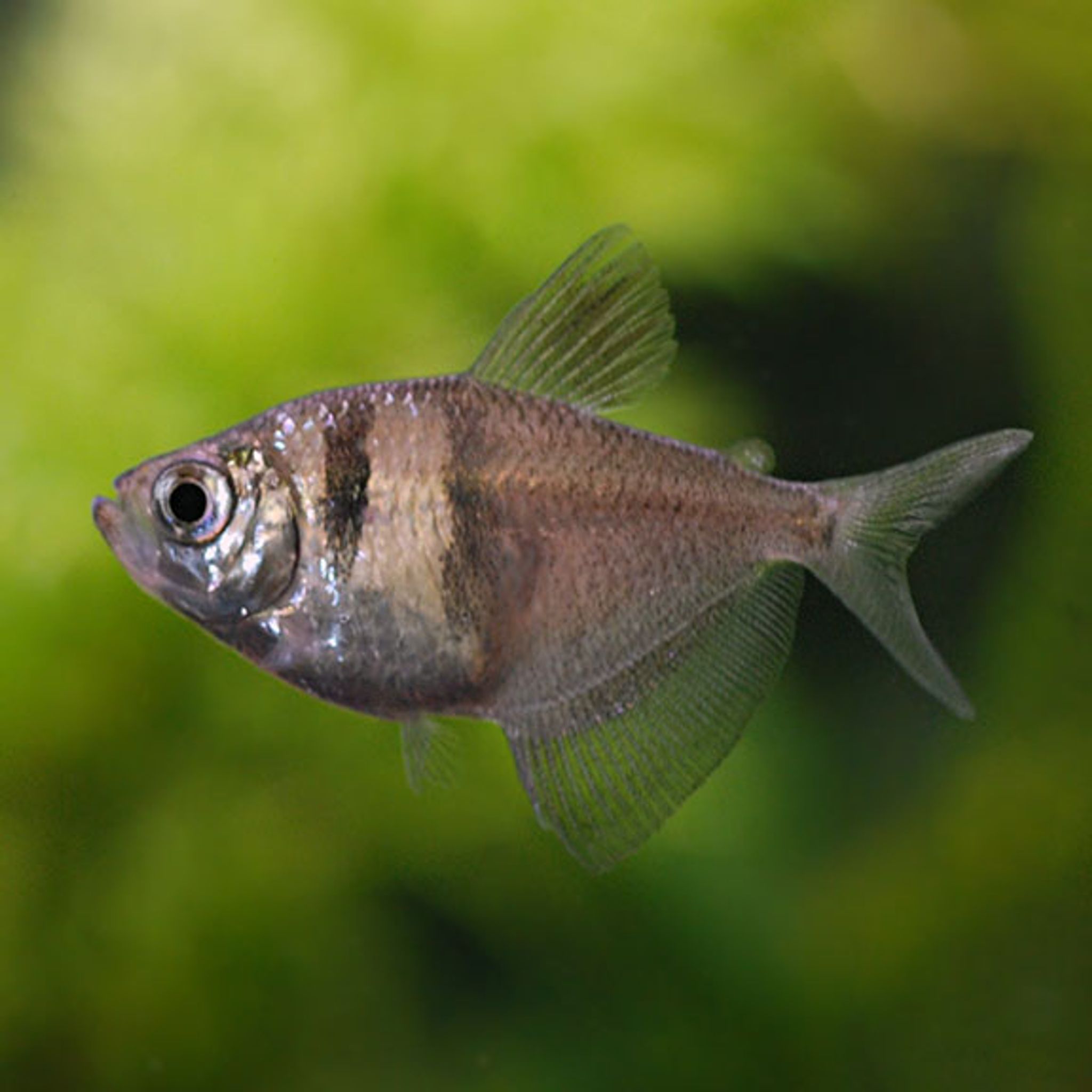
A full-grown black skirt tetra typically measures about 2–3 inches (5–7.5 cm) in body length, not counting its flowing fins. Most reach close to that size within 8–12 months under decent care, though water quality, feeding, and tank size all push individual fish toward the higher or lower end of that range. This guide breaks down the growth timeline month by month and turns those numbers into a real tank-and-school plan.
Adult Size: What "Full-Grown" Actually Means
Reported adult lengths for black skirt tetras vary a bit by source — some cite 2–2.5 inches, others closer to 3 inches. The honest answer is a consensus range of roughly 2–3 inches, with the fish's living conditions being the biggest factor in where an individual lands.
A few details worth knowing:
- Females run slightly larger and rounder-bodied than males, especially once they're carrying eggs. If you're trying to sex a school, body depth and roundness are a better clue than length alone.
- The species keeps a tall, laterally compressed, triangular "skirt" profile for life, with long dorsal and anal fin extensions that trail behind the body.
- Because those fins are so prominent, a tetra can look bigger than its actual body length suggests — the finnage exaggerates apparent size, which is worth remembering when comparing your fish to photos online.
- Long-fin and dyed "glo" variants are selectively bred for finnage or color, not for a different adult body length. Don't mistake a longer-finned fish for a larger one — the underlying body size stays in the same 2–3 inch range as the standard black skirt.
Growth Rate: A Month-by-Month Look
Most sources skip the actual growth curve and jump straight from "juvenile" to "adult." Here's a practical breakdown for a healthy fish kept in stable conditions:
| Age | Approximate body length | Notes |
|---|---|---|
| At purchase (fish stores) | Under 1 in (2.5 cm) | Sold young; fins still short |
| 1 month | ~0.75–1 in (2–2.5 cm) | Slow, steady early growth |
| 3 months | ~1.25–1.5 in (3–4 cm) | Growth rate picks up noticeably |
| 6 months | ~1.75–2.25 in (4.5–5.5 cm) | Body shape becoming distinctly triangular |
| 8–12 months | ~2–3 in (5–7.5 cm) | Near full adult size; fin extensions maturing |
| 12+ months | 2–3 in (5–7.5 cm), stable | Full maturity, including finnage |
These figures are approximate — a rough guide, not a guarantee, since diet and water conditions shift the pace.
What Speeds Up or Slows Down Growth
- Water quality and consistency — stable, clean water supports steady growth; fluctuating parameters slow it down.
- Feeding frequency and quality — a varied diet fed multiple times a day fuels faster, healthier growth than sparse or low-quality feeding.
- Tank size and stocking density — cramped or overcrowded tanks restrict growth even when other conditions look fine.
- Genetics — some individuals are simply predisposed to run smaller or larger within the normal range.
- Early-life stress or poor care — this is the one that catches people off guard. Prolonged stress or poor water quality in the first months can permanently stunt growth, meaning the fish stays undersized and often lives a shorter life, not just "stays small harmlessly."
Lifespan and Water Parameters
Black skirt tetras typically live 3–5 years in captivity, and can reach 5–7+ years with excellent, consistent care. Longevity tracks closely with stable water parameters and a good diet — the same factors that drive healthy growth.
Recommended parameters:
- Temperature: a stable 72–79°F (22–26°C) sweet spot is ideal. The species tolerates a wider 70–85°F range, but pushing toward the upper end long-term isn't recommended.
- pH: 6.0–7.5
- Hardness: soft to moderate, roughly 4–8 dKH (up to about 18 dGH)
Tank Size: Matching the Tank to the Adult Fish
This is where a lot of new owners get caught out — a fish that's under an inch at purchase can look fine in almost any container, but that same fish is heading toward 2–3 inches within a year, and it needs company.
- Practical minimum: a 20-gallon tank (a 20-long is a great shape for these active swimmers) for a starting school of 5–6.
- Absolute floor: 15 gallons is sometimes cited, but that's only workable for a very small group with excellent filtration — not a comfortable long-term setup.
- Bigger schools or community mixes need more volume. Once you add corydoras, other tetras, or bottom-dwellers, plan well beyond the bare minimum.
A Simple Stocking-Math Example
A loose rule of thumb for beginners is about 1 inch of adult fish per gallon of water. It's not a precise formula, but it's a useful sanity check:
- A school of 6 black skirt tetras at an average adult size of 2.5 inches = 15 inches of fish.
- That alone fits inside the 1-inch-per-gallon guideline for a 20-gallon tank, but it leaves very little buffer for waste management, swimming room, or any tankmates.
- Add 6 small corydoras (roughly 2 in each = 12 more inches) and you're already near 27 inches of fish — a strong argument for starting at 20 gallons only if that's truly your final stocking list, or sizing up to 29–30 gallons if you're adding a bottom-dwelling cleanup crew.
Browse a ready school of tetra options to plan out numbers before you buy, and check available glass tank sizes so the footprint matches your stocking plan rather than the other way around.
Schooling Requirements
Black skirt tetras are a true schooling species — keep at least 5–6, and more is better. A lone tetra or an under-schooled group (1–3 fish) shows more stress, hides more, and is more prone to fin-nipping tankmates out of nervous energy. A properly sized school spreads that behavior out and produces the relaxed, cohesive swimming display the species is known for.
Diet and Growth
Black skirt tetras are omnivorous. A staple of quality flake or small pellet food, supplemented with occasional live or frozen foods like bloodworms, brine shrimp, or daphnia, supports full growth and good coloration. Fish fed a thin or infrequent diet tend to grow more slowly and may not reach the top of the 2–3 inch range.
Compatible Tank Mates
Choose peaceful to semi-aggressive community fish of a similar size:
Avoid slow-moving, long-finned fish — bettas, fancy guppies, and angelfish fry are common victims of fin-nipping from an under-schooled or bored group of skirt tetras. Also skip very small fish or shrimp that could be mistaken for food. If you're stocking a bottom-dwelling cleanup crew alongside your school, corydoras are a reliable, similarly hardy pairing.
Choosing Fish for Your Aquarium: The Bigger Picture
Black skirt tetras are a useful worked example of a broader rule: match the fish to your tank size, temperament needs, and water parameters before buying, not after. For this species specifically, that means confirming you have room for a 20-gallon-plus tank, a school of 5–6 minimum, and tankmates that won't get their fins nipped or do the nipping themselves.
They're also a strong pick if you're assembling a best beginner freshwater community: hardy, tolerant of a range of parameters, inexpensive, and visually striking in a group thanks to that triangular skirt shape and active schooling behavior. As one of the more affordable, widely available tetras, they're often used as a low-cost way to round out a school in a community tank without straining a budget.
Common Mistakes to Avoid
- Buying too few — 1–3 tetras is not a school; it raises stress, fin-nipping, and hiding.
- Undersized starter tanks — a tank sized for juveniles rather than adult fish leads to stunted growth and poor water quality as the school matures.
- Mixing with long-finned or slow tankmates — invites fin-nipping in both directions.
- Overfeeding or infrequent water changes — poor water quality can stunt growth or shorten lifespan.
- Assuming juvenile size is final — the under-1-inch fish you bought will need real swimming room within a year.
- Rough acclimation — sudden temperature or pH swings stress new arrivals, which often shows up as hiding behavior in the first days.
If a New Tetra Seems to Have Disappeared
Skirt tetras are fast, active, and surprisingly good at hiding when stressed or newly introduced. Before assuming a loss, check under décor and around the filter intake, dim the tank lighting to reduce perceived threat, and give the fish a full day to settle. Sudden acclimation stress is a common cause of this shy, hidden behavior, and most fish reappear once they've calmed down.
Aquarium Setup Checklist Before Your Tetras Arrive
A condensed setup order for this species specifically:
- Cycle the tank fully before adding any fish.
- Match tank size to adult fish size and school count — 20 gallons or more for 5-6 skirt tetras.
- Install a filter rated for your tank's actual volume.
- Add a heater to hold a stable 72–79°F.
- Test water parameters before stocking, and again after acclimating new fish.
- Stock substrate and décor that offer some cover, since new arrivals often hide initially.
A basic shopping list before your school arrives: a 20-gallon-plus tank, a properly sized filter, a heater, a thermometer, water conditioner, a liquid test kit, substrate, some décor for hiding spots, and a quality flake or pellet food.
Preparing the Space for the Tank
Before the tank itself arrives, plan for a stable, level surface away from direct sunlight and drafts, with easy access to an electrical outlet. Size the footprint for the mature stocking level — the full school plus any planned tankmates — not just the handful of small juveniles you'll start with.
Frequently Asked Questions
How big does a black skirt tetra get in a fish tank vs. the wild?
Captive-raised black skirt tetras reach roughly the same 2–3 inch range as wild populations. Tank conditions mainly determine whether an individual fish lands at the top or bottom of that range, rather than changing the range itself.
How fast do black skirt tetras grow?
Growth is fastest in the first few months after purchase, and most fish approach their full adult size by around 8–12 months with consistent water quality and feeding.
What size tank do I need for a school of black skirt tetras?
Plan for a 20-gallon tank as a practical minimum for a school of 6. Larger schools or community setups with other species need more volume.
Do black skirt tetras stay small if the tank is too small?
Yes, but not harmlessly. Cramped, poor-quality conditions can permanently stunt growth and shorten lifespan, rather than simply keeping the fish at a convenient smaller size.
Can black skirt tetras live with bettas or angelfish?
It's not recommended. The nipping risk runs both ways — skirt tetras may nip long, slow-moving fins, and larger fish like adult angelfish can bully or harass a school of tetras.
How many black skirt tetras should be kept together?
At least 5–6, with more being better for natural schooling behavior and reduced stress or fin-nipping.
What do black skirt tetras eat, and does diet affect size?
They're omnivorous, eating flakes or pellets as a staple plus occasional live or frozen protein like bloodworms or brine shrimp. A varied, adequate diet directly supports reaching full adult size and good coloration.
How long do black skirt tetras live?
Typically 3–5 years, with well-cared-for fish in stable, clean water reaching 5–7 years or more.
Ready to plan your school? Browse available black skirt tetras and other tetra species on FishyHub and size your tank around their full adult growth, not just their starting size.