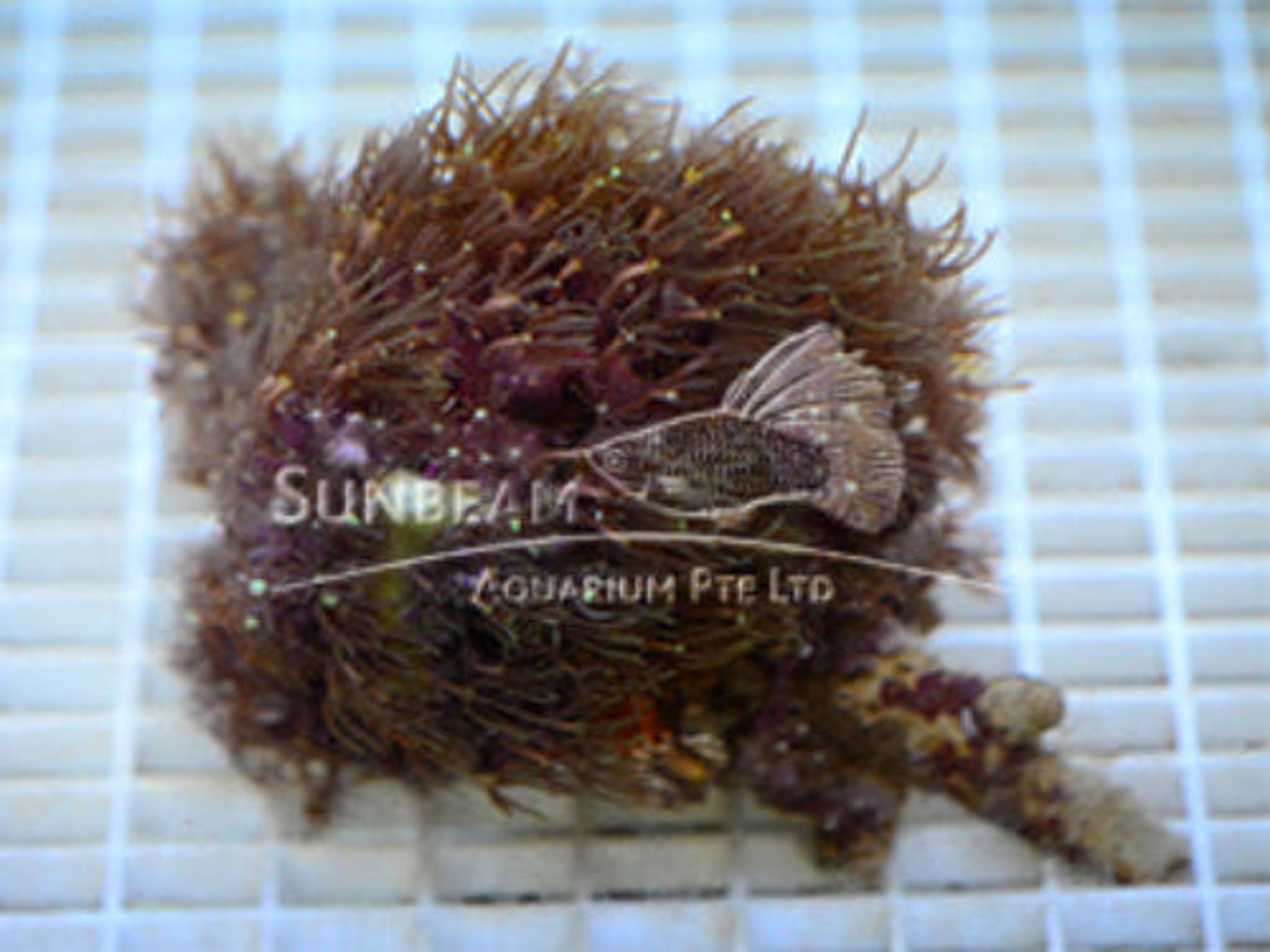
Green Star Polyps Care Guide: Lighting, Flow, Feeding and Placement
Green Star Polyps (GSP) earns its reputation as one of the easiest corals a reef keeper can buy, but "easy" is not the same as "no strategy needed." The real skill with GSP has almost nothing to do with water chemistry and everything to do with lighting, flow, and — most importantly — where you place it before it spreads.
What Green Star Polyps Actually Is
GSP is the common name for Pachyclavularia (sometimes labeled Clavularia), a soft coral that grows as a mat-like colony of small, star-shaped polyps sitting on a thin, encrusting purple-to-brown base called a stolon mat. It is not a stony coral and has no hard skeleton of its own — only the connective mat that creeps across rock, glass, and equipment.
GSP belongs to the same broad family of encrusting polyp corals as clove polyps and pipe organ coral. All three are frequently called "cousins" because they share a similar stoloniferous growth style, but they behave quite differently once established, which is worth understanding before you buy any of them.
Lighting: Moderate and Forgiving
GSP tolerates a wide light range, which is part of why it's considered beginner-friendly.
- Target range: roughly 75–150 PAR, with many keepers treating 100–120 PAR as a comfortable sweet spot.
- Minimum: it survives down to about 35–50 PAR, but growth and coloration slow noticeably.
- Upper limit: unshaded, intense light sources (strong metal halide setups, for example) can push polyps to stay closed or even bleach if the coral isn't acclimated gradually.
- Fixture type: any modern LED or T5 fixture on a standard 8–10 hour photoperiod is enough. Color temperature doesn't meaningfully change growth rate, though more actinic/blue light intensifies the fluorescent-green glow the coral is known for.
Because PAR ceilings cited for GSP vary by source (some say 100, others push to 150), the safest approach is to increase light gradually and watch polyp behavior rather than chase an exact number. Closed or retracted polyps are the coral telling you to back off, whatever a chart says.
Flow: Moderate to High Is the Consensus
Unlike lighting, flow requirements for GSP are consistent across the board: this coral wants moderate to high water movement, reflecting its natural habitat on higher-flow reef flats.
Strong, randomized flow does three jobs at once:
- Keeps polyps fully extended and swaying instead of staying closed.
- Sheds the mucus and slime the mat naturally produces, along with detritus that would otherwise settle on it.
- Discourages algae and pest anemones like Aiptasia from colonizing bare stolon mat.
Exception: a freshly cut or placed frag needs gentler flow until it has attached to its plug or rock. Blasting a loose frag with full flow can dislodge it before the tissue fuses.
Use polyp behavior as your feedback loop:
| Polyp behavior | Likely meaning |
|---|---|
| Fully open, swaying gently | Flow and light are appropriate |
| Closed or retracted, flow very low | Increase circulation |
| Closed or retracted, flow very high | Reduce flow, especially on new frags |
| Closed with no other stressor found | Check for nutrient buildup or a nearby coral's chemical aggression |
Feeding: Mostly Optional
GSP is largely self-sufficient. It hosts photosynthetic zooxanthellae that supply most of its energy, and it supplements this by absorbing dissolved organics and capturing fine particulates — phytoplankton and micro-zooplankton — passively from the water column, including nutrients from ambient fish waste.
- Do not target-feed with larger meaty foods like mysis or brine shrimp; the polyps aren't built to capture them, and the food simply pollutes the water.
- Optional: light dosing of a phytoplankton product or an amino acid/coral-food supplement can give a modest boost to color and growth, but it is not required for a healthy colony.
- Most sources agree feeding is "optional icing," not a maintenance requirement — a genuine point of consensus, unlike the exact PAR ceiling.
Water Parameters
GSP is not fussy, but stable reef-standard parameters still support the best coloration and growth:
| Parameter | Target range |
|---|---|
| Temperature | 72–83°F (22–28°C) |
| Salinity (SG) | 1.023–1.025 |
| pH | 8.0–8.4 |
| Alkalinity | 8–11 dKH |
| Calcium | 400–450 ppm |
| Magnesium | 1200–1350 ppm |
| Nitrate | ~1–10 ppm |
| Phosphate | Near 0–0.1 ppm |
Weekly water changes of about 5–10% help keep these parameters stable long term. GSP has some tolerance for nutrient swings, but sudden spikes in nitrate or phosphate are still worth avoiding.
Placement: The Point That Actually Matters
If there is one section of this guide to read twice, it's this one. GSP is an aggressive, fast lateral spreader — up to roughly 1 inch (2.5 cm) per month under good conditions — that creeps across rock, glass, and equipment via its stolon mat. Left unchecked, it will overgrow slower corals and even sessile invertebrates like feather dusters and clams.
Containment tactics that actually work
- Isolate on a rock island. Mount GSP on its own rock surrounded by open sand or bare glass rather than on shared display rockwork.
- Use a sand moat as a firebreak. GSP does not attach to loose sand, so a gap of roughly 4 inches (10 cm) or more of open substrate between the colony and anything you want to protect is usually enough to stop lateral creep.
- Standoff frag racks or dishes. Keeping the colony physically suspended above the rockwork, rather than touching it, removes the pathway for the mat to spread outward.
- Background placement. Many keepers deliberately grow GSP along a tank's back wall or a dedicated section of rockwork rather than mixing it into a display built around prized SPS or LPS pieces.
Routine trimming is normal, not a failure
Because GSP spreads readily, plan on periodically trimming or scraping the growing edge once it's established. This is expected maintenance, not a sign that something is wrong. A related but less-discussed issue: older, thick mats can trap detritus and hair algae underneath them. Periodically lifting or thinning an established colony prevents that buildup from fouling the substrate beneath it.
Protecting new frags
Hermit crabs and urchins can physically dislodge a newly placed frag before its stolon mat has attached. During the first one to two weeks after placement, keep new frags away from active crab or urchin traffic and out of unusually strong flow until they've encrusted their base.
A Note on GSP Look-Alikes
Most GSP sold in the trade is true Pachyclavularia, recognizable by tight, uniform, star-shaped polyps on a thin encrusting mat. Occasionally a coral labeled "green star polyps" is actually a branching Briareum-type species. These look-alikes are typically less invasive and grow in a different form — more upright or clumping rather than sheet-spreading. It's worth a close look at the growth form before you buy, since the containment strategy above is built around the true encrusting form.
Comparing GSP's Cousins: Clove Polyps and Pipe Organ Coral
Because GSP, clove polyps, and pipe organ coral are frequently grouped together as "the easy polyp corals," it helps to know where they diverge.
Clove Polyps
Clove polyps share the feathery, flower-like polyp look and come in green, purple, orange, yellow, cream, and brown color forms.
- Light: roughly 50–100 PAR.
- Flow: moderate to high; many keepers mount colonies near-vertically so detritus doesn't collect around the base.
- Feeding: minimal is fine; optional liquid plankton or mysis can be offered.
- Growth: much slower than GSP — propagation by stolon separation requires patience.
- Water quality: excess nitrate or phosphate can cause permanent retraction or tissue loss, so stability matters more here than with GSP.
- Tankmates: good with wrasses, gobies, seahorses, and dartfish; avoid angelfish, triggerfish, and puffers that may pick at polyps.
Pipe Organ Coral
Despite the soft, flowery polyps on top, pipe organ coral is built around a red calcium-carbonate tube skeleton — which means its water chemistry needs lean closer to a stony coral's than to GSP's.
- Water chemistry: stable calcium (~425 ppm), alkalinity (8–11 dKH), and magnesium (~1350 ppm) matter more here than for GSP.
- Flow: needs to be high specifically to flush detritus out of the tube structure; buildup inside the tubes can suffocate polyps.
- Light: medium, roughly 75–100 PAR.
- Growth: notably slow.
- Fragging: cut tube ends need to be sealed with glue to keep out pests and debris — a different process than simply gluing a GSP mat section to a plug.
- Footprint: low-aggression and low-footprint, making it a reasonable fit for smaller tanks where GSP's spread would be a liability.
Quick Comparison
| Trait | Green Star Polyps | Clove Polyps | Pipe Organ Coral |
|---|---|---|---|
| Skeleton | None (encrusting mat) | None (encrusting mat) | Hard calcium-carbonate tubes |
| Light (PAR) | 75–150 | 50–100 | 75–100 |
| Flow | Moderate–high | Moderate–high | High (flushes tubes) |
| Growth speed | Fast, invasive | Slow | Slow |
| Key water focus | Not fussy | Stable nitrate/phosphate | Stable calcium/alkalinity/magnesium |
| Fragging difficulty | Very easy | Slow, patience-dependent | Requires sealing cut tube ends |
Why GSP Is Often a Reef Keeper's First Coral
GSP, clove polyps, pipe organ coral, zoanthids, and mushroom corals are commonly grouped as an "easy soft coral" starter tier for a reason: they tolerate a wide parameter range, don't demand elite lighting or dosing equipment, and grow quickly enough to reward a new keeper with visible progress. GSP in particular is often the very first coral people buy because it's genuinely difficult to kill with normal care — the challenge is containment, not survival. That's also exactly why a beginner should decide on a placement strategy before adding it, not after it has already crept onto a favorite piece of rockwork. You can browse current stock in FishyHub's soft corals category when you're ready to add one.
Propagation
GSP is one of the easiest corals to frag, requiring no specialized tools:
- Cut a section of the mat or stolon with a scalpel or clean razor blade.
- Glue the cut piece to a frag plug or small rock.
- Alternatively, place a loose tile, rock, or shell at the edge of an established colony and let it naturally encrust the object, then remove and mount it once colonized.
Some keepers briefly dip cut fragments in iodine to reduce infection risk, though this step is optional. Always propagate onto a separate plug or rock rather than letting a cut piece touch display rockwork directly — placing a frag rock-to-rock with the display, instead of behind a sand barrier, is a common way GSP fuses back in and re-invades a tank you already trimmed it out of.
Compatibility
GSP isn't chemically or physically aggressive toward tankmates in the way a stinging coral can be; its real risk is indirect, through overgrowth. Some related soft corals also release chemical (terpenoid) compounds that can suppress the growth of neighboring corals in a crowded tank, which is one more reason to keep it physically separated. GSP is generally fine with typical reef-safe fish, shrimp, crabs, and snails. Avoid coral-eating fish such as butterflyfish and some angelfish, which may nip at open polyps. Shoppers stocking a mixed reef can check compatible fish options like wrasse or gobies that generally leave polyp corals alone.
Tank Size
GSP adapts well from nano tanks (10 gallons and up) to large display systems. The species itself isn't the limiting factor — your available space for a proper isolation strategy is. In a small tank, that might mean dedicating one rock island; in a larger system, it might mean an entire background wall.
Common Mistakes to Avoid
- Placing GSP directly on shared rockwork instead of an isolated island, letting it touch and eventually overgrow neighboring corals.
- Target-feeding it like an LPS coral or fish, wasting meaty foods that just add to the tank's nutrient load.
- Assuming closed polyps mean disease when the usual culprits are insufficient or excessive flow/light, detritus buildup, a nutrient spike, or chemical aggression from a nearby coral.
- Skipping regular trimming, which lets a small colony overrun a tank's rockwork within months.
- Ignoring flow direction on mounted clove polyps or pipe organ coral, allowing debris to collect at the base and cause local tissue die-back.
- Adding more light or food to "fix" slow clove polyp or pipe organ growth, when the actual fix is usually patience plus stable calcium and alkalinity.
Frequently Asked Questions
Is GSP coral easy for beginners?
Yes. It tolerates a wide range of parameters and lighting, needs no required feeding, and is genuinely hard to kill with normal reef-tank care. The real challenge is containment and placement, not keeping it alive.
Does GSP need to be fed?
No, not usually. It gets most of its nutrition from photosynthesis and passive absorption of dissolved organics and fine particulates. Supplemental feeding with phytoplankton or a liquid coral food is optional and mainly boosts color and growth rather than being required for survival.
How do I stop GSP from spreading everywhere?
Isolate it physically with an open sand moat, a dedicated rock island, or a standoff frag mount, and trim the growing edge on a regular schedule. Once it's established, treat trimming as routine maintenance rather than an occasional emergency task.
What lighting do I need for GSP?
Standard reef LED or T5 output in the moderate range, roughly 75–150 PAR, is plenty. Very intense, unshaded high-light setups can cause polyps to stay closed or bleach, so increase light gradually if you're moving a colony to a brighter spot.
Can GSP go in a nano tank?
Yes. GSP adapts well to small tanks of 10 gallons and up, as long as you plan for its light, flow, and — especially — spread-control needs from the start.
What's the difference between GSP, clove polyps, and pipe organ coral?
All three are related encrusting or stoloniferous polyp corals with generally easy-care profiles, but GSP grows the fastest and most invasively. Clove polyps and pipe organ coral grow much more slowly, and pipe organ coral additionally has a hard calcium-carbonate tube skeleton that needs stony-coral-like water chemistry.
Why are my GSP polyps staying closed?
The most common causes are insufficient or excessive flow or light, nutrient buildup and detritus, or aggression from a neighboring coral's chemical defenses. Check tank conditions and neighbors before assuming disease.
How do I propagate or frag GSP?
Cut a section of the encrusting mat with a sharp blade and glue it to a plug or rock, or place a loose object like a tile or shell at the colony's edge and let it naturally grow over it before removing and mounting it. No specialized fragging tools are needed.
Ready to add GSP or one of its polyp cousins to your reef? Browse current availability in FishyHub's corals category, including dedicated listings under polyps, and pair your new coral with a fixture from the LED lighting selection to keep it in its comfortable PAR range.

