Frontosa Care Guide: Tank Size, Diet, Water Parameters and Temperament
Frontosa (Cyphotilapia frontosa) are slow-growing, long-lived Lake Tanganyika cichlids that outgrow starter setups fast, so the tank you buy for a 2-inch juvenile isn't the tank it needs at 5 years old. This guide covers the tank size progression, water chemistry, feeding schedule, temperament, and tankmate choices you need to plan correctly from the first purchase.
Species Snapshot
Frontosa, often called the humphead cichlid, come from the deep rocky slopes of Lake Tanganyika in East Africa, typically found at depths of 60–160 feet. Nearly all frontosa sold in the US today are captive-bred rather than wild-caught.
Identifying features:
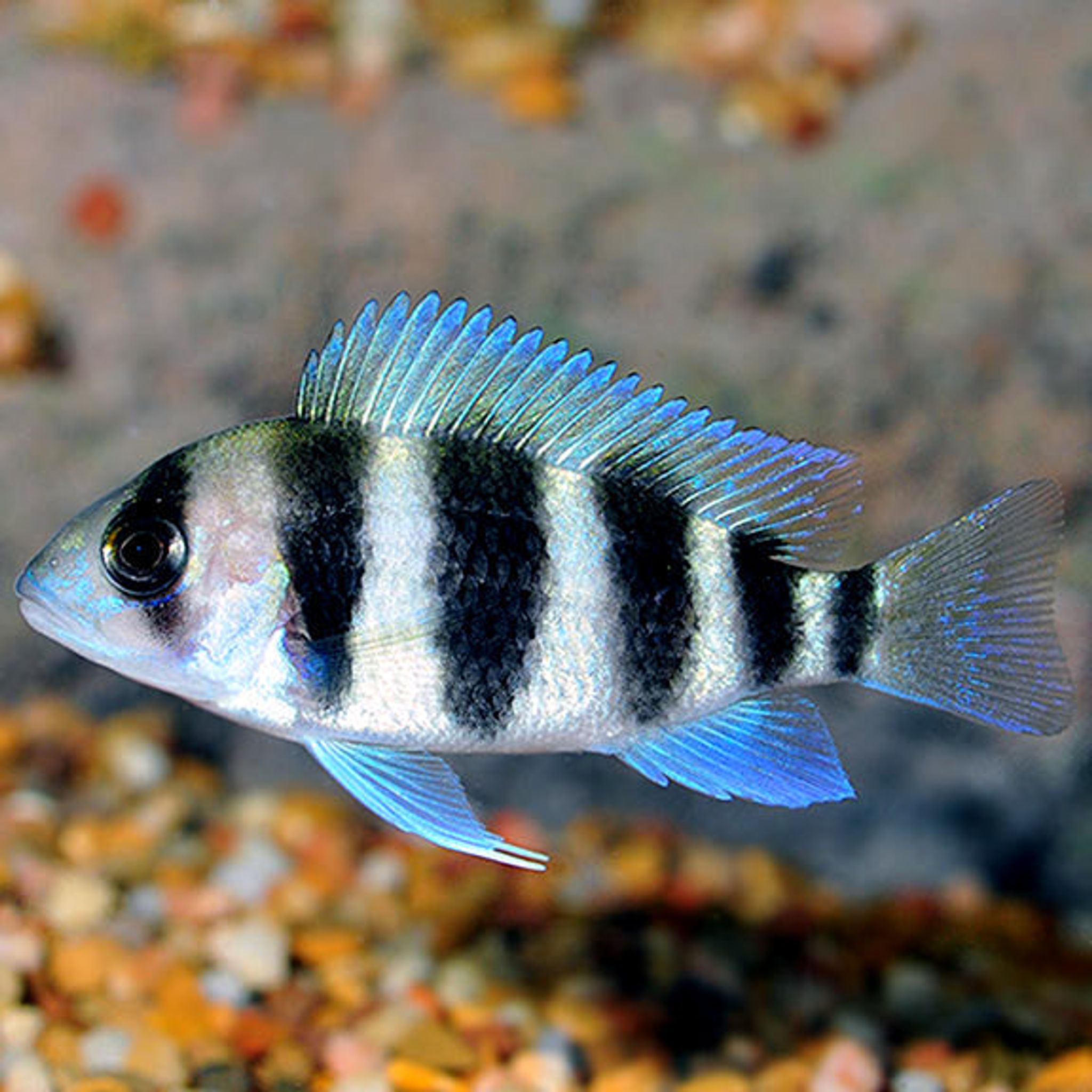
- Body pattern: 5–7 black vertical bars over a white-to-pale-blue body.
- Nuchal hump: a fatty forehead bump that starts developing around 4 inches and grows largest on dominant males.
- Size: males reach 12–14 inches in captivity, females stay smaller at roughly 10–11 inches. Some references cite 8–10 inches, but well-fed captive males regularly exceed that.
- Growth timeline: full size and adult coloration take 3–5 years to develop, with the fastest growth happening while the fish are young and slowing considerably afterward.
- Lifespan: 15 years or more is typical, and well-kept individuals have lived past 25.
- Difficulty: moderate. Frontosa aren't delicate, but they are demanding—large adult size, patience with slow maturation, and strict water stability make them a poor choice for a first cichlid.
Tank Size: Plan the End Goal First
This is the single most important decision in frontosa keeping, because undersizing early is the most common mistake owners make.
| Life stage | Minimum tank | Notes |
|---|---|---|
| Juvenile grow-out (under ~4 in.) | 40–55 gal (150–210 L) | Temporary only—never a permanent home |
| One adult | 75 gal (280 L) | A 55-gallon is too narrow front-to-back for an adult's body depth and turning radius |
| Small group (1 male, 3–6 females, or a juvenile colony) | 125 gal (475 L) floor | Treat this as the minimum, not the target |
| Established group, long term | 150–180+ gal (570–680+ L) | 6 ft x 24 in. (180 x 60 cm) footprint gives adults room to turn and establish territories |
A practical staged plan looks like this: start juveniles in a 40–55 gallon grow-out tank, move to a 125-gallon around the 3-4 inch mark as the hump and bars develop, then upgrade to a 150–180+ gallon as the group matures over the following couple of years. Budget for the move well before the fish outgrow the current tank—stunted growth and aggression from crowding in an undersized tank are hard to reverse.
One detail people skip: a filled 180-gallon tank weighs roughly 2,000 lbs including the stand, substrate, and rock. Confirm your stand is rated for that weight and that your floor (especially in an upper-story room) can support it before you commit to the footprint.
Water Parameters
Frontosa come from one of the most chemically stable large lakes on Earth, so consistency matters more than hitting an exact number.
| Parameter | Range | Target |
|---|---|---|
| Temperature | 72–82°F (22–28°C) tolerated | 74–80°F (23–27°C) |
| pH | 7.7–9.0 across sources | 8.0–8.5 |
| General hardness (GH) | 10–20 dGH | Mid-range |
| Carbonate hardness (KH) | 10–20 dKH | Mid-range |
| Ammonia / Nitrite | — | 0 ppm |
| Nitrate | — | Under 20 ppm |
Sources disagree on the exact pH ceiling (some cap it at 8.2, others push to 9.0) and on the low end (7.7 vs. 8.0), but holding steady in the 8.0–8.5 band satisfies both camps and matches natural lake conditions well enough for captive-bred stock.
Buffering the water: use aragonite or crushed coral as substrate, along with limestone or "holey rock," and a Rift Lake mineral supplement to hold pH and hardness up. Skip driftwood and peat entirely—both leach tannins that pull pH down and work against everything you're buffering for.
US tap water considerations: test your GH and KH before you buy anything, since municipal water varies widely across the country. Avoid running water through a household water softener for the tank—those units swap calcium and magnesium for sodium, which does nothing for the hardness a frontosa needs and adds unwanted sodium. Use a conditioner rated to neutralize chloramine, not just chlorine, since most US utilities have switched to chloramine treatment.
Filtration and Water Changes
Frontosa are large, meat-eating fish that produce heavy bioload. Run a canister filter or sump sized for at least 2x the tank's turnover rate per hour, with gentle to moderate flow—they don't come from fast-moving water. Change 25–30% of the volume weekly, matching temperature and pH closely to avoid shocking the fish with each change.
For a 150+ gallon tank, plan the logistics ahead of time: a hose-to-faucet drain-and-fill system saves considerable effort over bucket changes, and the heater needs to be sized for the full volume, sometimes split across two units for even heating.
Tank Setup
Frontosa are active around dusk and dawn and prefer dim lighting over bright reef-style fixtures—strong light tends to make them pale and skittish. Structure the tank around:
- Substrate: sand, since frontosa dig and sift.
- Rock: large caves and overhangs built at the tank bottom, secured to the glass or to each other with aquarium-safe epoxy or pins—unsecured rock gets toppled by digging.
- Open water: leave a clear swimming lane in the mid-to-upper water column; frontosa need room to cruise, not just hide.
- Plants: skip them or limit to hardy epiphytes tied directly to rock. Frontosa uproot anything planted in the substrate.
Diet and Feeding
Frontosa are carnivores and opportunistic piscivores in the wild, so their diet should be protein-forward.
- Staple: a quality sinking cichlid pellet formulated for carnivores.
- Supplements: frozen krill, mysis shrimp, whole shrimp, mussel, and earthworm.
- Feeding frequency: juveniles do best on 2–3 small meals a day; adults need only one meal daily or every other day, with one fasting day per week to prevent bloat.
- Feeding behavior: frontosa are slow, deliberate feeders. In a mixed tank, watch for faster tankmates outcompeting them and adjust feeding location or spread food out more.
On bloodworms: some feeding guides list bloodworms as a staple, but they're better skipped or fed rarely—they're linked to bloat and digestive issues in large Tanganyikan cichlids. The same goes for feeder goldfish, which carry parasite risk and offer poor nutrition for the trouble.
Temperament and Social Structure
Frontosa are calm for their size and establish a mild pecking order rather than constant sparring—this is where the "peaceful" reputation comes from. But calm doesn't mean harmless: any fish under roughly 3–4 inches is fair game as food, not a tankmate. Owners who add small fish to a frontosa tank often find them gone within a day.
Frontosa are frequently described as hand-tame, learning to recognize their keeper and approach at feeding time.
Group structure: keep either one male with 3–6 females, or raise a group of 8–12 juveniles together and cull extra males as they mature and territories sort themselves out. A single male alone with too few females tends to focus aggression on whichever female is nearest, so more females and broken sightlines (extra rockwork) both help diffuse that pressure.
Tankmates: Lake Tanganyika Overview
Lake Tanganyika is extremely hard, alkaline, and famously stable, and most of its cichlid species evolved to punish sudden chemistry swings—even captive-bred fish still do best above pH 7.8. That shared chemistry requirement is why Tanganyikan species make the most reliable frontosa tankmates.
Good Matches
| Species | Adult size | Notes |
|---|---|---|
| More frontosa | 10–14 in. | Best tankmate is its own kind |
| Calvus | 4–6 in. | Flat-bodied, slow ambush predator; adults only |
| Lemon cichlid | ~4 in. | Yellow cave dweller; give it its own rock pile |
| Fairy cichlid (N. brichardi) | 3–4 in. | Cooperative colony breeder; only in large tanks—fry will be eaten |
| Julidochromis | 3–6 in. | Slender cave pair-spawners; larger species or adults only |
| Cyprichromis leptosoma | ~4 in. | Open-water plankton schooler; needs a big school and a very large tank |
| Synodontis catfish | Varies | Peaceful bottom/mid-water dwellers |
| Bichirs | Large | Calm, armored, similar water needs |
| Large rainbowfish | Medium-large | Fast enough to hold their own |
| Calm large Malawi haps/peacocks | Large | Only the non-aggressive species, kept large |
Poor Matches
- Mbuna: too aggressive and too fast-breeding; they harass frontosa and destroy the calm social order.
- Shell dwellers (multifasciatus, zebra, many-banded, caudopunctatus): 1–2.5 inches, colony breeders best suited to a 20+ gallon species tank on their own—never with frontosa, which will eat them.
- Tropheus and duboisi: herbivores that need a vegetable-heavy diet; the protein in a frontosa's diet causes bloat in these species, and they're also too aggressive to mix well regardless.
- Buffalo head (Steatocranus): a Congo River hump-headed look-alike, but its habitat and care needs don't overlap with a Tanganyikan setup.
- Burtoni: an aggressive, shallow-water hap that doesn't pair well temperamentally.
- Small community fish, clown loaches, plecos, or Jack Dempseys: frequently suggested online but poor matches—too small (eaten), or chemistry and behavior mismatches that create ongoing stress. Large New World cichlids in general clash with the water chemistry frontosa need.
Frontosa and their compatible Tanganyikan neighbors can be browsed in FishyHub's African cichlid selection when you're ready to stock a tank.
Breeding
Frontosa are harem-based maternal mouthbrooders. Females typically mature between 2 and 4 years old—one more reason this is a patience-driven species. After spawning, the female holds 10–50 large eggs in her mouth for roughly 4–6 weeks (longer in cooler water, shorter in warmer), during which she eats little to nothing.
Breeding itself is usually easy once a mature harem forms—the hard part is the years of growth it takes to get there. A water change is a common spawning trigger. Some breeders strip and artificially tumble the eggs to improve survival rates and let the female recover and feed sooner, though this takes practice. Fry emerge around ½ inch and grow slowly, starting on baby brine shrimp and crushed pellet.
Sexing Frontosa
Frontosa can't be reliably sexed as juveniles. Once fish reach roughly 4–6 inches, differences in size, fin length, and nuchal hump size become useful clues, but venting (examining the genital papilla) is the only reliable method at any age past early juvenile.
Common Mistakes and Troubleshooting
- Never upgrading from the grow-out tank: a juvenile left in a 29–55 gallon tank long-term leads to stunted growth and rising aggression as space runs out.
- Small tankmates disappearing overnight: this is predation, not disease—remove anything under 3–4 inches before it happens again.
- pH drift and overcorrection: skipping buffering, using driftwood, or missing water changes lets pH slide, and then a large corrective dose swings it too far the other way. Stability beats chasing a perfect number.
- Overfeeding, bloodworms, or feeder fish: these combine to cause bloat and parasite issues in adults.
- Bright light with no caves: produces pale, skittish fish that hide constantly. Add caves and dim the lighting.
Fixes for Specific Problems
- Won't eat: dim the lights and reduce competition from faster tankmates at feeding time.
- Swelling or white, stringy feces: early signs of bloat—treat promptly (a veterinarian or aquatic health product with metronidazole is a common approach) rather than waiting.
- Pitting around the head: this is head and lateral line erosion (HLLE). Check nitrate levels, activated carbon use, and diet variety as likely contributors.
- One female being harassed: add more females to the group and rearrange rockwork to break direct sightlines between the male and his target.
A basic quarantine period for any new frontosa or tankmate—separate from the display tank, watching for parasites and stress signs—prevents most of these issues from reaching the main tank at all. For medicated support during quarantine or treatment, FishyHub's treatment and medication category and filtration equipment are both worth reviewing before you bring fish home.
Frequently Asked Questions
How fast do frontosa grow?
Growth is fastest while fish are small and slows considerably after the first year or two. Reaching full adult size and coloration takes 3–5 years overall, so plan tank upgrades around a multi-year timeline rather than expecting quick results.
Can I keep just one frontosa?
Yes, a single frontosa can live well in a 75-gallon or larger tank. That said, a small group—one male with several females, or a raised juvenile colony—shows more natural behavior and is generally considered the better long-term option.
Can frontosa live with Malawi cichlids?
Only with calm, large Malawi haps or peacocks kept at similar size. Mbuna are too aggressive and fast-moving for frontosa's slower, more deliberate temperament and should be avoided.
Why is my frontosa hiding or turning pale?
Usually one of a few causes: lighting that's too bright, general stress, bullying from a tankmate or dominant fish, or simply adjusting to a new tank. Dimming the lights and adding more caves resolves most cases.
Does a frontosa tank need aquarium salt?
Mineral buffering (aragonite, crushed coral, a Rift Lake mineral mix) is necessary to hold pH and hardness up. Plain table-type aquarium salt is not required and does nothing for the hardness and pH a frontosa actually needs.
How do I tell male from female?
Reliable sexing generally isn't possible until fish reach about 4–6 inches, when size, fin length, and hump development start to diverge. Venting is the most dependable method at any size past early juvenile.
What variants exist, and how much do they cost?
Common variants include Burundi six-bar, Zaire/Kapampa blue, Kigoma, Mpimbwe, and black widow forms, distinguished by bar count, coloration, and hump development. Juveniles of common variants are inexpensive; rarer or larger adult color forms command a significant premium. Note also that a taxonomic split in 2003 separated some populations into a related species, which occasionally causes inconsistent labeling at retail—confirm variant and species with the seller when it matters to you.
Is frontosa breeding difficult?
Not technically difficult once a mature harem has formed, since maternal mouthbrooding largely takes care of the process. The real challenge is time: females don't mature until 2–4 years old, so getting to a breeding-ready group requires patience more than skill.
Ready to start planning your setup? Browse tanks and stands sized for a long-term frontosa group, and check FishyHub's food and supplements selection for sinking carnivore pellets and frozen protein sources.


