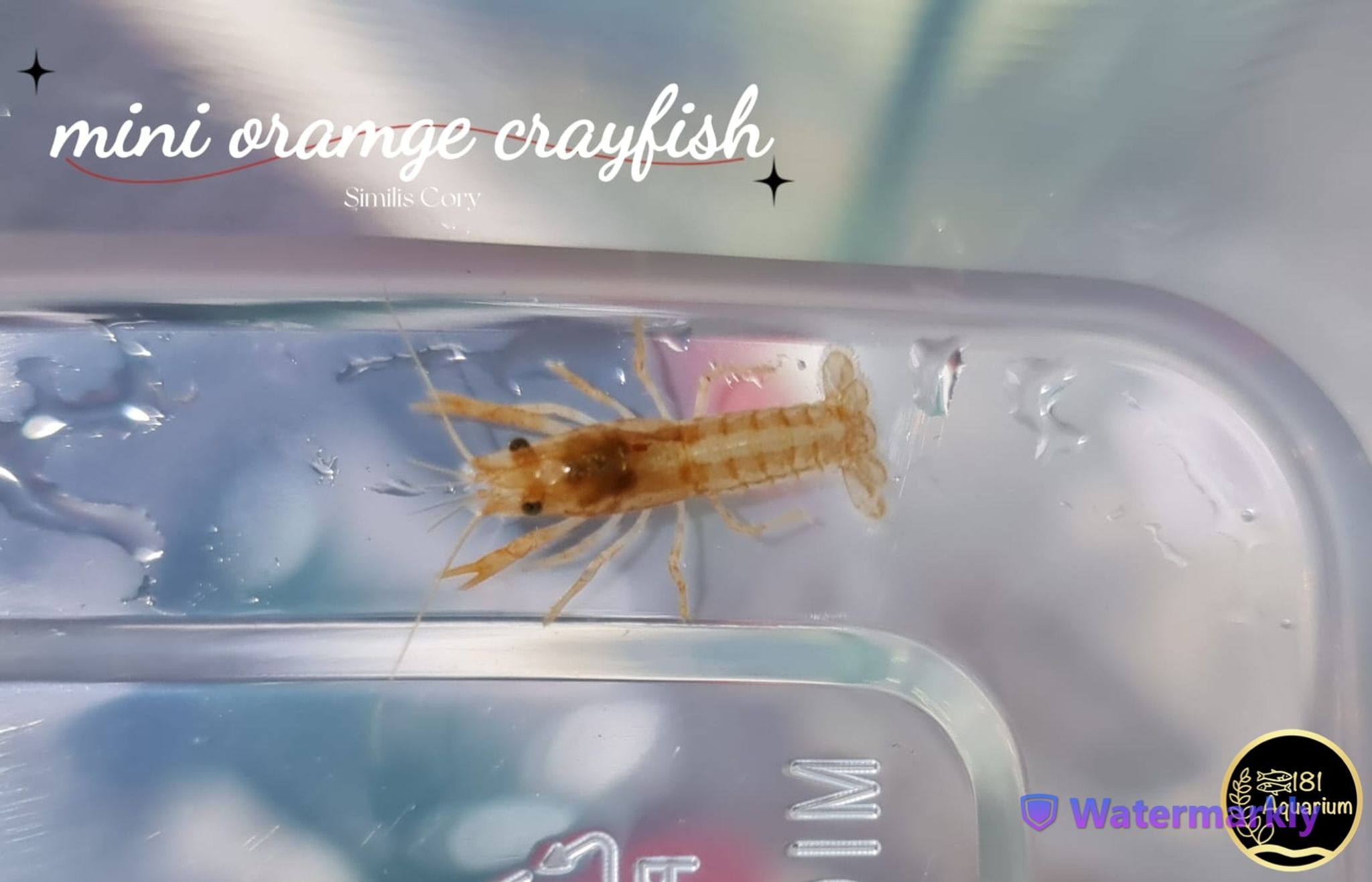

Dwarf Crayfish Care Guide: Setup, Feeding, Water Parameters and Breeding
Dwarf crayfish (genus Cambarellus) are pint-sized, colorful crustaceans that fit in nano tanks where full-size crayfish never could. This guide covers exactly what they need to thrive: tank size, water chemistry, feeding, molting behavior, tank mates, and how breeding naturally unfolds in a well-kept setup.
Dwarf Crayfish vs. Full-Size Crayfish
The single biggest source of confusion in this hobby is buying "a crayfish" without knowing which kind. Not all crayfish stay small, and mixing them up means an animal that outgrows its tank in months.
- Dwarf crayfish (Cambarellus genus): adults reach roughly 1–2.5 inches (2.5–6.5 cm). This includes C. patzcuarensis (CPO, Mexican dwarf, orange dwarf), C. puer (swamp dwarf), C. shufeldtii (Cajun dwarf), and C. diminutus (least crayfish, the smallest known crayfish species at about 1 inch/2.5 cm).
- "True" or full-size crayfish (Procambarus, Cherax): species marketed as blue lobster, electric blue, or rusty crayfish routinely reach 4–6 inches and need 20+ gallons, much heavier filtration, and solitary housing.
- Thunderbolt crayfish: sometimes displayed alongside dwarf species because of its striking pattern, but it is a larger, more solitary crayfish — not a true dwarf. Don't buy it expecting Cambarellus-level space needs.
- Color morphs: orange, blue, and other Mexican dwarf ("Brazos dwarf") variants are cosmetic color forms within the same or closely related Cambarellus lineage, not separate species with different care requirements.
If a listing doesn't name the species or genus, ask before buying — that single question prevents most "my crayfish got huge" surprises.
Tank Setup
Tank Size and Stocking
A single pair can survive in a 5-gallon (19 L) tank short term, but 10 gallons (38 L) is the realistic minimum for a stable colony of 4–6 animals, since territorial space and bioload matter more than the animals' small footprint. As a stocking rule of thumb, plan for roughly one dwarf crayfish per 2–3 gallons of water once you factor in hides, plants, and equipment displacement.
Filtration
Use gentle flow — a sponge filter or a hang-on-back unit with the intake covered or sponge-guarded. Crayfish climb into uncovered intakes or get injured trying to squeeze past intake bars, which is one of the most common preventable losses in this hobby. Shoppers can browse sponge and hang-on-back options in FishyHub's filters category.
Substrate and Décor
Fine sand or small, smooth gravel is best — sharp or jagged substrate abrades the delicate underside and walking legs. A gravel and sand selection suitable for nano invertebrate tanks is worth checking before buying blindly.
Décor is not optional. Provide multiple hides per animal — driftwood, rockwork, caves, coconut huts, PVC sections, and live or silk plants. Extra hiding spots reduce territorial aggression and injury, especially around molting.
Copper is lethal to crayfish and other invertebrates. Check medications, plant fertilizers, and even tap water conditioners for copper content before dosing anything in a crayfish tank.
Water Parameters
Fully cycle the tank before adding any crayfish — despite their hardy reputation, they are sensitive to ammonia and nitrite spikes during an uncycled start.
| Parameter | Target Range |
|---|---|
| Temperature | 65–78°F (18–25.5°C); tolerates cooler unheated rooms, breeds best in the mid-70s°F |
| pH | 6.5–8.0 (neutral to slightly alkaline) |
| GH | Moderate to hard, supports strong molts |
| KH | ~6–12 dKH |
| Ammonia / Nitrite | 0 ppm |
| Nitrate | Kept low with routine water changes |
Temperature note: sources disagree on exact bounds. A workable band is 65–78°F — dwarf crayfish tolerate room-temperature swings better than tropical fish, but consistent mid-70s°F conditions produce the most reliable breeding.
Water Changes
For a 5–10 gallon crayfish-only nano tank, a weekly 25% water change keeps nitrate in check without disturbing the colony too often. Smaller volumes concentrate waste faster than larger community tanks, so consistency matters more than intensity.
What Do Dwarf Crayfish Eat?
Dwarf crayfish are omnivorous scavengers, not designed to "clean up" heavy waste loads the way their reputation sometimes suggests. A varied diet includes:
- Sinking pellets or wafers (algae-based and protein/crab/shrimp-based)
- Blanched vegetables: zucchini, peas, cucumber, spinach
- Occasional protein: bloodworms, brine shrimp, blackworms
- Indian almond (catappa) leaf litter
- Natural tank detritus and biofilm
Feed small amounts every 1–2 days, scattering food across multiple spots so juveniles and slower animals get a share. Remove uneaten food within a few hours — overfeeding, especially protein, fouls water quickly in a small tank and drives ammonia and nitrite spikes.
Molting and Regeneration
Molting is how crayfish grow, and misreading it is one of the most common beginner panics.
- Frequency: juveniles molt roughly weekly; adults molt only a few times per year.
- Vulnerability: for several hours to 1–2 days after molting, the animal is soft-bodied and defenseless. It needs an undisturbed hiding spot — do not handle it or let it be crowded during this window.
- Leave the shed shell: the discarded exoskeleton should stay in the tank. The crayfish eats it to recover calcium for the new shell.
- Don't mistake a shed for a dead animal: a shed exoskeleton keeps the crayfish's shape but is hollow at the rear and lacks eye stalks with living tissue behind them. If you find one lying on its side, look for the live animal hiding nearby before assuming the worst.
- Regeneration: crayfish can regrow lost claws and legs over successive molts, so an injury from a molt-time skirmish is often recoverable.
Anatomy Basics
A quick anatomy primer makes the sexing and molting sections easier to apply:
- Exoskeleton: the hard outer shell shed periodically for growth.
- Compound eyes and eyestalks: mounted on movable stalks for wide-angle vision.
- Antennae: long sensory feelers used to detect food and obstacles.
- Chelae (claws): the front pincers used for feeding, defense, and territory disputes.
- Swimmerets (pleopods): small paired appendages under the tail, used for swimming and — in females — carrying eggs.
- Gills: located under the carapace for respiration.
- Hepatopancreas: an internal organ handling digestion and nutrient storage.
Sexing Dwarf Crayfish
Sexing relies on the first pair of swimmerets, located just behind the last walking legs:
- Males: the first swimmerets are hard, rigid, and hook-like.
- Females: the same swimmerets are soft and feathery, and the tail (abdomen) is visibly broader to accommodate carrying eggs.
Checking a resting animal from below or as it walks across the glass is the easiest way to compare swimmeret shape without handling it.
Breeding
Breeding usually requires no intervention beyond keeping a healthy, well-fed male-female pair with plenty of cover.
- After mating, the female carries fertilized eggs on her swimmerets ("berried") for roughly 2–4 weeks.
- A single clutch can range from 20 to 60+ eggs.
- Eggs hatch into miniature crayfish that cling to the mother for a period of days to a few weeks before dispersing on their own.
- Newly independent juveniles are vulnerable to cannibalism from adults and larger siblings — extra cover, leaf litter, and frequent small feedings reduce losses.
Raising the Fry
For better survival, either move the berried female (or the free-swimming young) into a separate, heavily planted grow-out container, or leave them in a densely decorated main tank with enough hides that juveniles can avoid adults entirely. A simple sponge-filtered grow-out tub with leaf litter and fine plant growth works well and avoids disturbing the main colony.
Crayfish Tank Mates
Dwarf crayfish are opportunistic, somewhat territorial, nocturnal ambush feeders. They are more community-compatible than full-size crayfish, but "compatible" comes with real limits.
Good tank mates — fast, small fish that stay in the mid-to-upper water column, out of claw range:
- Small tetras (browse tetras)
- Rasboras and danios
- Guppies
- White Cloud Mountain minnows
Avoid:
- Dwarf shrimp and snails — crayfish hunt them, especially shrimp right after a molt
- Other bottom dwellers or slow, long-finned fish
- Large or aggressive fish, including cichlids
- Other crayfish species or sizes — cross-species mixing risks predation in either direction
A species-only tank, or a crayfish-plus-fast-fish setup, is the safer default. Whatever combination you choose, make sure the tank is escape-proof and well-decorated as insurance against territorial disputes.
Species Comparison
| Species | Common Name | Notable Traits |
|---|---|---|
| C. patzcuarensis | CPO / Mexican dwarf / orange dwarf | Most widely available; orange and blue color forms |
| C. puer | Swamp dwarf | Non-burrowing, planted-tank friendly |
| C. shufeldtii | Cajun dwarf | Very easy, low-maintenance, prolific breeder |
| C. diminutus | Least crayfish | Smallest known crayfish species (~1 in/2.5 cm), very peaceful |
Crayfish vs. Crab, Lobster and Dwarf Shrimp
For readers weighing invertebrate options: crayfish are clawed, freshwater, and more solitary/aggressive than shrimp. True lobsters are marine and unrelated in husbandry terms despite the similar body plan. Crabs have a reduced, tucked-under tail and are often semi-aquatic. Dwarf shrimp are peaceful, non-clawed grazers — which is exactly why they make poor tank mates for a crayfish rather than a safe pairing.
Buying Tips: What to Ask Before You Buy
Before adding dwarf crayfish to your cart, confirm:
- Wild-caught or captive-bred origin
- Whether the seller has used copper-based medications in their systems
- Quarantine practices before sale
- Sex ratio, if buying a group (to avoid one male overwhelming multiple females or excess aggression)
- Confirmed species ID — avoid mystery or mixed-species crayfish lots
Common Mistakes to Avoid
- Using copper-containing medications, fertilizers, or unchecked tap water conditioners
- Leaving a filter intake uncovered
- Discarding a shed exoskeleton, mistaking it for a dead crayfish
- Handling or disturbing a crayfish during or right after a molt
- Housing multiple crayfish without enough hides, leading to fighting and lost limbs
- Mixing dwarf crayfish with dwarf shrimp or snails and expecting peaceful coexistence
- Overfeeding, especially protein-heavy foods
- Buying wild-caught or unidentified "feeder" crayfish that turn out to be invasive or a much larger species
- Skipping the nitrogen cycle before adding crayfish
A Note on Legality
Some US states restrict certain crayfish species — Procambarus clarkii bans are the most common example — due to invasive-species concerns. Rules vary by state and can apply even to species sold as "dwarf," so check your state's regulations before purchasing or transporting crayfish.
Frequently Asked Questions
Can dwarf crayfish live with fish?
Yes, as long as the fish are small, fast, and stay in the upper or mid water column. Slow or bottom-dwelling fish are at much higher risk of being targeted.
Can dwarf crayfish live with shrimp or snails?
Not reliably. Dwarf crayfish are opportunistic hunters and will eat vulnerable invertebrates, especially shrimp that have just molted and are soft-bodied.
How big do dwarf crayfish get?
About 1–2.5 inches (2.5–6.5 cm) depending on species, far smaller than full-size crayfish like Procambarus or Cherax, which need 20+ gallons.
How long do dwarf crayfish live?
Roughly 1.5–3 years with good care, depending on species and water quality.
Do dwarf crayfish need a heater?
Not strictly. They tolerate a wide, roughly 65–78°F room-temperature range, though breeding is more consistent when temperatures sit in the mid-70s°F.
Why does my crayfish look dead, lying on its side with an empty shell nearby?
This is very likely a normal molt, not a death. Check for the live crayfish hiding nearby — the empty shell keeps the animal's shape but is hollow at the rear and lacks living eye tissue.
Can you keep more than one dwarf crayfish together?
Yes, in a large-enough tank (10+ gallons) with abundant hiding spots to reduce aggression. Even then, expect occasional squabbles and some losses among juveniles or freshly molted animals.
Do crayfish feel pain?
Evidence suggests crustaceans respond to and try to avoid harmful stimuli and show physiological stress markers, though scientific debate continues. The practical approach is to handle and, if ever necessary, euthanize them as if they can experience discomfort.
Ready to start a colony? Explore freshwater invertebrates and shrimp on FishyHub to compare tank mates and species options before you build your setup.


