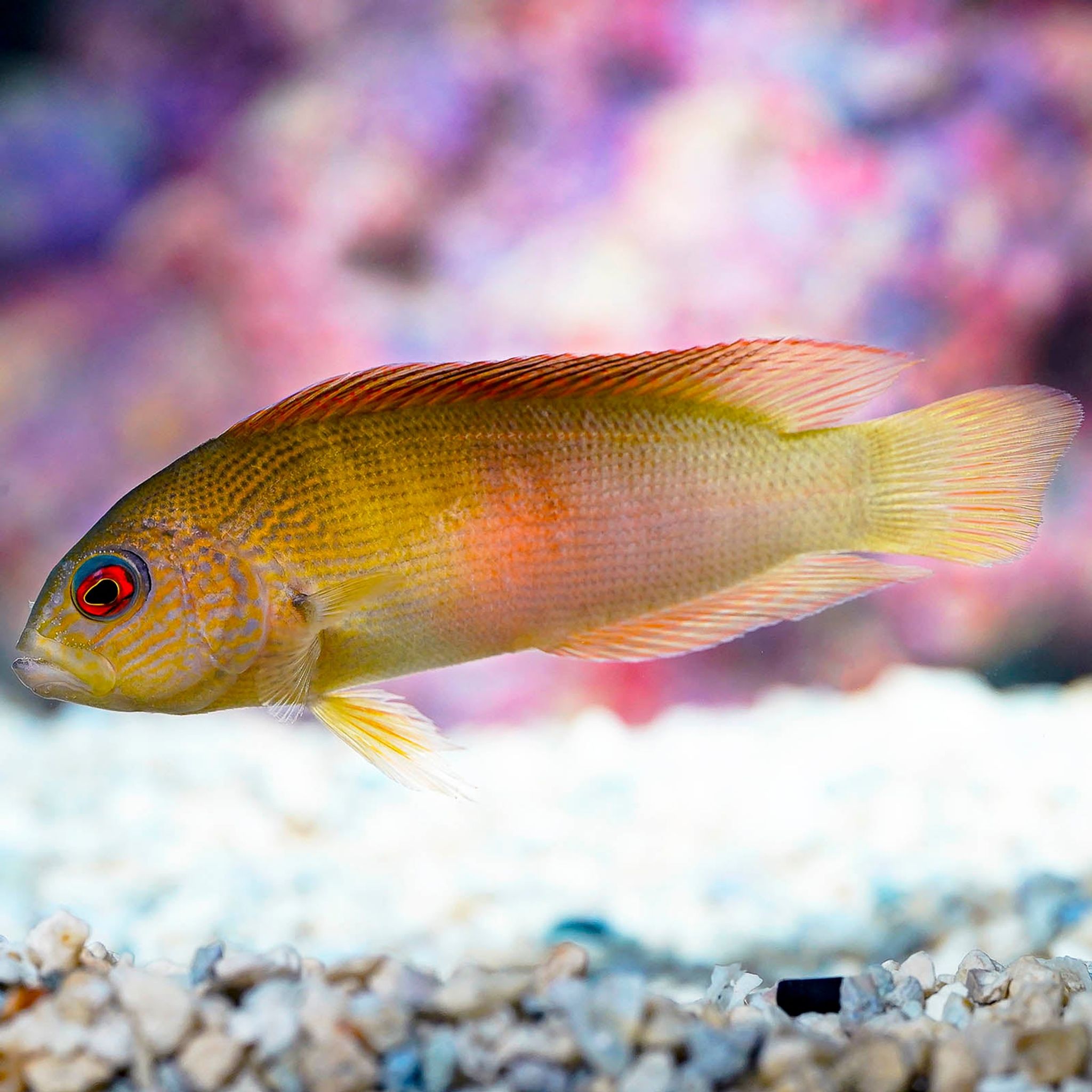

Dottyback Care Guide: Tank Size, Diet, Compatibility and Reef Safety
Dottybacks are small, brightly colored reef fish with an outsized reputation for attitude, and that reputation is mostly earned. This guide covers the real minimum tank size, what to feed them, whether they're actually reef safe, and — the question that determines whether your tank stays peaceful — how to stock around their territorial streak.
What Is a Dottyback?
Dottybacks belong to the family Pseudochromidae, a group of small, hardy saltwater fish popular with beginner and intermediate reefkeepers alike. Most aquarium species run 2 to 4 inches (5–10 cm) as adults, though a few oddballs in the group — the wolf-type dottybacks — grow much larger, up to about 18 inches.
What makes them a go-to recommendation for new saltwater keepers:
- Hardy and disease-resistant compared to many reef fish
- Tolerant of minor parameter swings once established
- Bold eaters that rarely refuse food
- Vivid coloration — purple, magenta, yellow, bicolor patterns — that holds up well under reef lighting
That hardiness is real, but it isn't immunity. Dottybacks can still carry marine ich or velvet like any wild-caught or farmed marine fish, so the disease resistance is a buffer, not a guarantee — quarantine still matters (more on that below).
Minimum Tank Size
This is the most-asked question, and sources genuinely disagree on the number. Here's the sensible middle ground:
| Setup | Recommended tank size |
|---|---|
| One dottyback, standard reef tank | 20 gallons (76 L) absolute minimum |
| One dottyback, calmer temperament and stocking flexibility | 30 gallons (114 L) or more, recommended |
| A confirmed bonded pair of the same species | 75+ gallons (284+ L), with widely separated rockwork |
| Multiple similarly shaped small reef fish | 75+ gallons (284+ L) |
Smaller tanks intensify aggression. A dottyback in a cramped space can't establish enough territory margin, so it treats the entire tank — including every tankmate — as contested ground. More water volume, more rockwork, and more visual breaks give the fish room to claim a corner and relax.
Water Parameters
Dottybacks are more forgiving of parameter drift than most reef fish, but "forgiving" doesn't mean you should test that tolerance. Stability still beats hitting an exact number.
| Parameter | Target range |
|---|---|
| Temperature | 76–80°F (24–27°C); tolerates 74–82°F (23–28°C) short-term |
| pH | 8.0–8.4 |
| Specific gravity / salinity | 1.020–1.025 |
| Ammonia / Nitrite | 0 ppm |
Keep the tank fully cycled and mature before adding a dottyback, and treat pH and alkalinity stability as part of routine reef maintenance — consistent water changes and a regular testing cadence protect a dottyback the same way they protect corals, even though the fish itself is more tolerant of a bad week than your coral is.
Diet and Feeding
Dottybacks are strict carnivores. In the wild they pick off small crustaceans and invertebrates, and their aggressive metabolism means they need meaty protein regularly, not an occasional treat.
Feed a mix of:
- High-quality marine flake or pellet with strong protein content
- Frozen mysis shrimp
- Frozen brine shrimp (enriched)
- Chopped clam or shrimp
Feed 2–3 small meals a day. Dry food alone will dull their color and can stunt growth over time — the frozen meaty component isn't optional, it's what keeps a dottyback's color saturated and its temperament (for better or worse) at full strength.
Because they're messy, protein-heavy eaters for their size, dottybacks generate more bioload per inch than their small footprint suggests. Stronger mechanical filtration and a properly sized protein skimmer help keep water quality ahead of the extra frozen food you're dosing in. Browse dottybacks and pair them with a quality frozen or pellet diet from FishyHub's food and supplements selection.
Is a Dottyback Reef Safe?
Yes, with one important caveat. Dottybacks do not eat coral polyps or clam mantles, so they're broadly considered reef safe for a coral-and-clam display.
Where it gets more nuanced:
- They will eat small ornamental crustaceans and pods — a rich amphipod population will get thinned out
- They can pick at small shrimp and occasionally nip at snails' eyestalks
- They will eat tiny fish — fry, small gobies, small blennies — if given the chance
So the honest label is "reef safe with caution regarding invertebrates and small fish." If you're planning a delicate cleanup crew of small ornamental shrimp, or a tank full of tiny gobies, a dottyback is a real risk to that livestock even though your corals are perfectly safe.
Aggression and Compatibility
This is where most dottyback problems start, and nearly all of them are preventable with planning.
Why Dottybacks Pick Fights
Dottybacks are territorial and punch well above their weight. They're most aggressive toward:
- Fish of similar size, shape, or color — mistaken for rivals
- Peaceful, slow-moving, or bottom-dwelling fish, especially ones added after the dottyback is settled
This ties into a broader reef-tank phenomenon sometimes called "color wars": fish read similarly colored or similarly patterned tankmates as competitors for the same visual niche, and small, boldly colored reef fish are some of the worst offenders. Avoid stocking multiple purple or similarly shaped small fish together, and watch any newly added fish closely for the first 1–2 weeks — that's when territorial disputes flare up.
Good Tankmates
Pair a dottyback with equally assertive or larger fish that were established in the tank first:
- Tangs
- Larger angelfish
- Clownfish, especially with an anemone present
- Larger wrasses
- Larger gobies, added before the dottyback
You can browse compatible wrasse, clownfish, and gobies on FishyHub as anchor fish for a tank that will later include a dottyback.
Stocking Order Matters
Add the dottyback last, or at minimum give other tankmates time to establish their own territory first. A dottyback introduced early will claim the whole tank as its own and harass everything added afterward. If you must add a new fish to an established dottyback tank, a temporary acrylic divider or a floating acclimation box for a few days lets the newcomer settle and lets the dottyback get used to its presence without direct access — a simple, practical way to blunt the initial aggression.
Can You Keep Two Dottybacks Together?
For most hobbyists, no. Two dottybacks of the same species usually fight unless the tank is 75+ gallons with multiple, widely separated caves and rockwork. Mixing different dottyback species is riskier still, especially when body shape or color is similar. The one exception worth attempting is a confirmed bonded pair — two fish purchased together as an established pair, not two random individuals from separate tanks — and even then, only in a large tank with abundant separated hiding spots. There's still some risk either way.
Keeping two similarly patterned dottybacks, or a dottyback alongside a royal gramma, expecting them to coexist peacefully is one of the most common mistakes in this hobby — a near-identical look reliably triggers fighting.
Species Snapshot
| Species | Size | Temperament | Notes |
|---|---|---|---|
| Orchid dottyback | ~3 in (7.5 cm) | Calmer for the genus | Purple; reef safe; good beginner pick |
| Sunrise / bicolor dottyback | 2–3 in (5–7.5 cm) | More aggressive | Purple-to-yellow; often confused with the royal gramma but far less peaceful |
| Springer's dottyback | 2–3 in (5–7.5 cm) | Moderate | Blue with yellow tail |
| Neon dottyback | 2–3 in (5–7.5 cm) | Moderate to assertive | Bright purple/pink |
| Magenta dottyback | 2–3 in (5–7.5 cm) | Assertive | Solid magenta-pink |
| Diadem dottyback | 3–4 in (7.5–10 cm) | Assertive | Multicolored body |
| Striped / sailfin dottyback | Up to 4 in (10 cm) | Assertive | Elongated dorsal fin |
| Wolf-type dottybacks | Up to 18 in (46 cm) | Highly predatory | Not a typical reef community fish; different care category entirely |
Orchid Dottyback vs. Royal Gramma
These two get confused constantly because both show purple-to-yellow coloring, but they aren't even in the same family — the royal gramma is a basslet, not a dottyback. The royal gramma is genuinely peaceful and a common reef community fish. The orchid dottyback is calmer than most of its own genus but still carries dottyback territoriality. The sunrise/bicolor dottyback, which looks similar to both at a glance, is notably more aggressive than either — it's the one most likely to cause problems if bought expecting royal-gramma-level peacefulness. You can compare the real royal gramma in FishyHub's basslets category before deciding which purple-and-yellow fish actually suits your tank.
Housing, Rockwork, and Jumping
Dottybacks are secretive fish that need a reliable bolt-hole. Provide plenty of live rock with caves and crevices — they'll use it constantly and will rearrange small rubble to suit themselves. A dottyback without enough cover becomes either more aggressive (defending the one hiding spot it has) or overly stressed and reluctant to eat.
One safety detail that's easy to miss: dottybacks are known jumpers when startled. A tight-fitting lid or screen top isn't optional with this fish — it's a basic requirement, the same way it is for most small, skittish reef fish.
A brief aside on filtration: if you're running a sump, a simple DIY filter sock holder helps keep a sump quiet and polishes water during the higher-bioload period right after adding a new, meaty-diet fish like a dottyback.
Quarantine and Acclimation
Drip acclimate any new dottyback rather than a fast dump-and-go. Then quarantine for 2–4 weeks before adding it to the display tank. Dottybacks tolerate stress well once settled, but that doesn't stop them from carrying marine ich or velvet on arrival — hardiness is not immunity, and skipping quarantine because the fish "looks tough" is one of the most common and preventable mistakes in this hobby.
Before you buy, whether from a local store or online:
- Ask to see the specific individual fish eating before purchase
- Favor a seller who discloses real quarantine practices, not vague "fresh off the boat" language
- Look for a live-arrival guarantee with a clear claim window if ordering online
- Expect specific size, origin, and compatibility information per listing, plus actual photos of the fish rather than stock images
- Treat unrealistically low prices and vague listings as red flags
During quarantine, watch for ich spots, cloudy eyes, clamped fins, labored breathing, or refusal to eat — any of those is a reason to hold off, not push through.
Common Mistakes to Avoid
- Adding the dottyback first and wondering why every later fish gets bullied — reorder your stocking plan
- Assuming "reef safe" means safe with everything — small ornamental shrimp, pods, and tiny fish are still at risk
- Pairing look-alike fish expecting peace — near-identical color or shape triggers fights
- Feeding dry food only — dulls color and slows growth
- Skipping quarantine because the fish seems hardy
- Too little rockwork — leads to either more aggression or a stressed, hiding fish that stops eating
- Sudden salinity or temperature swings during water changes — even a tolerant fish is stressed more by rapid change than slow drift
Lifespan and Breeding
With stable care, a dottyback typically lives 5 to 7 years. They're also one of the more breedable marine fish for home hobbyists: pairs form real bonds, the male guards the eggs in a cave, and eggs hatch in roughly 4–5 days. It's not a beginner breeding project, but it's far more achievable at home than most marine fish, and it's worth attempting once you have a confirmed, well-settled pair in an appropriately large tank.
If you're ready to add a dottyback to your reef, browse FishyHub's full dottybacks selection and plan your stocking order — and your rockwork — before the fish arrives.
Frequently Asked Questions
Are dottybacks reef safe?
Yes for corals and clams — they don't eat polyps or clam mantles. Use caution with small ornamental shrimp, pods, and tiny fish, which a dottyback may pick off given the chance.
Can I keep two dottybacks together?
Generally no. Same-species or similarly colored pairs usually fight unless you have a confirmed bonded pair in a 75+ gallon tank with widely separated caves and rockwork.
What is the minimum tank size for a dottyback?
20 gallons (76 L) is the absolute minimum for one dottyback. 30 gallons (114 L) or larger is recommended for a calmer fish and more stocking flexibility.
What do dottybacks eat?
A meaty carnivore diet: frozen mysis and brine shrimp, chopped clam or shrimp, and a quality marine pellet or flake with strong protein content, fed 2–3 times a day.
Are dottybacks aggressive toward other fish?
Yes. They're territorial and can bully similarly sized, shaped, or colored tankmates, as well as passive or slow-moving fish added after them. Manage this with tank size, rockwork, and stocking order.
What's the difference between an orchid dottyback and a royal gramma?
Both show similar purple-and-yellow coloring, but they're different families. The orchid dottyback is calmer than most dottybacks but still territorial; the royal gramma (a basslet) is genuinely peaceful; the sunrise/bicolor dottyback, often confused with both, is notably more aggressive.
How long do dottybacks live?
Around 5 to 7 years with stable water parameters and consistent care.
Can dottybacks be bred at home?
Yes — they're one of the easier marine fish to breed in captivity. Pairs bond, the male guards the eggs in a cave, and the eggs hatch in about 4–5 days.


