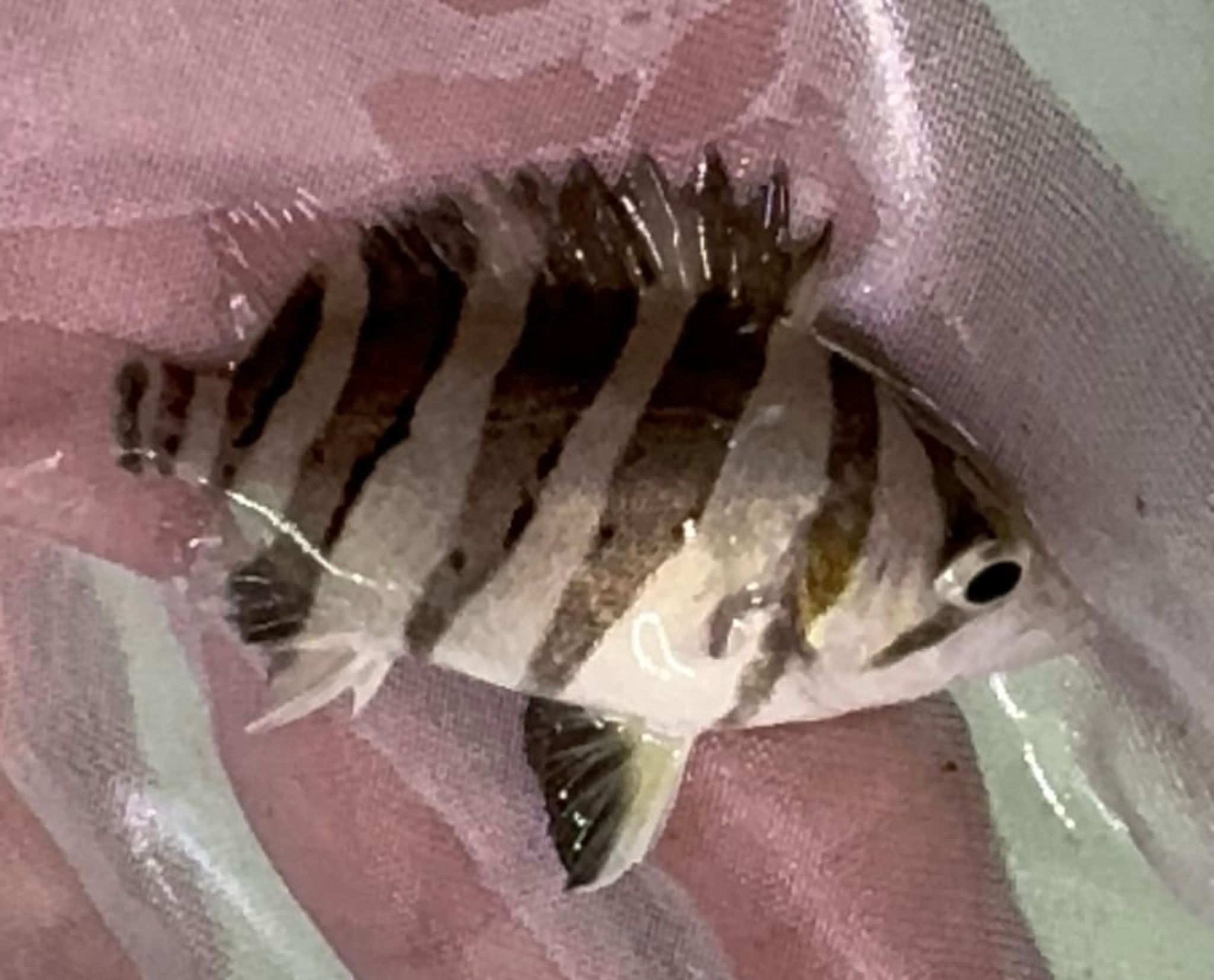

Datnoid Care Guide: Tank Size, Diet, Water Parameters and Temperament
Datnoids, better known as tigerfish, are strikingly patterned freshwater predators that outgrow the average starter tank within a year or two. This guide breaks down realistic tank sizing by life stage, exact water chemistry targets, feeding strategy, and temperament so you know exactly what you're committing to before — or after — bringing one home.
What Is a Datnoid?
"Datnoid" refers to fish in the genus Datnioides, sold under a few regional names and color forms:
- Siamese datnoid (Datnioides pulcher) — bold black vertical bars on a golden body; generally the smallest-growing type and the most commonly available.
- Indonesian datnoid (Datnioides microlepis) — similar barred pattern, larger adult size than the Siamese form.
- New Guinea datnoid (Datnioides campbelli) — irregular, broken banding rather than clean stripes; among the largest-growing types.
- Silver datnoid (Datnioides undecimlineatus) — thinner, more numerous stripes on a silvery body; also grows to a large adult size.
Treating "datnoid" as one generic fish is a common mistake in casual care advice. Species and price vary meaningfully, and so does the adult tank size you'll eventually need — Indonesian, New Guinea, and Silver types generally demand more room than Siamese datnoids.
Adult Size and Growth Rate
Adult length runs roughly 12 to 20+ inches (30–51+ cm) depending on species, with Indonesian, New Guinea, and Silver types tending toward the upper end. Growth is fastest in the first one to two years, which is exactly when most keepers underestimate how quickly a 3–4 inch juvenile stops fitting its tank. Datnoids are also long-lived, commonly reaching well over a decade in captivity with consistent care — a fact that should factor into your tank-size decision as much as the current length of the fish in front of you.
Tank Size by Life Stage
Footprint matters more than height for a datnoid. It's a laterally-swimming ambush predator, not a climber, so a long, wide tank supports natural movement far better than a tall one with the same volume.
A practical upgrade schedule looks like this:
| Fish Length | Minimum Tank Size | Notes |
|---|---|---|
| 3–5 in (8–13 cm) juvenile | 55–75 gal (208–284 L) | Plan the next upgrade before you need it |
| 6–10 in (15–25 cm) | 90–125 gal | Upgrade every 6–12 months as growth accelerates |
| 12+ in (30+ cm) subadult/adult | 125 gal absolute floor | Realistic only for smaller Siamese-type adults |
| Full adult, long-term | 150–180+ gal, 6 ft+ (180+ cm) footprint | Recommended target for any datnoid kept for life; size up further for Indonesian, New Guinea, or Silver types |
Sources disagree on the "minimum" adult figure, with some citing 100–125 gallons and others insisting on 150–180+ gallons. The sensible middle ground: treat 125 gallons as an absolute floor for the smaller Siamese type, and plan for 150–180+ gallons as the real long-term target for any datnoid, with more room again for the larger-growing species. Buying a cute juvenile without an upgrade plan is one of the most common reasons datnoids get rehomed stressed and undersized a year later.
At the 6–8 foot length needed for adult datnoids, off-the-shelf glass tanks become expensive and hard to source. Many serious keepers move to custom-built glass or acrylic tanks with matching stands and canopies, sized and braced specifically for sump or canister filtration. Cost scales with length, material, and any plumbing built in for external filtration — worth budgeting for early rather than discovering it after the fish has outgrown a standard tank.
Water Parameters
Datnoids tolerate a range of water chemistry, but they reward stability far more than precision. Chasing an exact number and swinging the tank in the process causes more stress than sitting slightly off-target but steady.
| Parameter | Target Range |
|---|---|
| Temperature | 76–82°F (24–28°C); tolerate 75–84°F but avoid extremes |
| pH | 6.5–7.5, held consistent |
| General hardness | Soft to moderate, up to about 15 dGH |
| Ammonia / Nitrite | 0 ppm |
| Nitrate | Under 20 ppm |
Datnoids are notably nitrate-sensitive, which makes weekly water changes non-negotiable rather than optional maintenance. Because they're messy predator eaters on a protein-rich diet, overfiltering the tank matters as much as the water change schedule — canister or sump-style filtration is recommended for anything at adult tank size, and it's worth sizing filtration for well above the tank's rated flow. FishyHub's canister and other filter options are worth browsing before you commit to a filtration plan for a 150+ gallon setup.
Diet
Datnoids are obligate carnivores, but diet composition should shift as they grow:
- Juveniles: live or frozen bloodworms, brine shrimp, feeder shrimp, and earthworms.
- Transitioning fish: gradually introduce fish and shrimp/prawn meat, clams, krill, and a carnivore-formulated pellet or gel food as staples once the fish is established.
- Adults: a varied rotation of frozen and prepared meaty foods, with live foods used sparingly for enrichment or to tempt a picky eater rather than as a daily staple.
Sources disagree on how much to lean on live feeder fish. The safer approach is to build the diet around frozen and prepared meaty foods and reserve live feeders for occasional use — a permanent live-feeder-only diet carries real disease and parasite risk along with nutritional gaps that prepared foods avoid. Many datnoids can be trained onto pellets and even hand-fed once acclimated, though the transition can take weeks to months, and some individuals stay preferential to meaty foods indefinitely.
Feed juveniles twice a day and adults once a day, offering only what's eaten within a few minutes. Overfeeding a fish that's already a heavy waste producer compounds the nitrate problem described above.
Temperament and Tankmates
Despite the predatory build, datnoids are typically calm, shy, and even skittish. They're not aggressive toward tankmates of similar or larger size — their aggression is almost entirely limited to anything small enough to fit in their mouth. A newly introduced datnoid that hides for days or weeks and refuses food is behaving normally, not necessarily getting sick, as long as water quality stays good.
Good tankmates share size and temperament:
- Large, robust cichlids such as Oscars and green terrors
- Arowana
- Silver dollars and tinfoil barbs
- Giant gourami
- Plecos and other armored catfish
- Bichirs
- Peacock bass
Avoid small fish like tetras, danios, livebearers, and small barbs — they will eventually be eaten regardless of how peaceful the datnoid otherwise seems. Also avoid highly aggressive Central American cichlids, which will stress a naturally shy fish. Datnoids are often kept in small groups of five or more of their own species to reduce shyness and intraspecies aggression, though single specimens also do fine.
A Related Predator Worth Knowing: The Marble Goby
If you like the ambush-predator niche but want a bottom-dwelling companion rather than a competitor for open water, the marble goby is worth a look. It's a similarly large (10–12+ inch) predatory species needing roughly 100–150 gallons, a carnivorous diet, and water parameters of 72–82°F with pH 7.0–8.0. It's generally peaceful but territorial along the substrate, occupying a different part of the water column than a laterally-swimming datnoid, which makes it a reasonable tankmate rather than a direct rival for the same space.
Decor and Setup
Provide driftwood, smooth rocks, and defined hiding spots, especially for juveniles that need cover to feel secure. Balance that against open swimming lanes — a fish this size needs room to move in a straight line. A secure, well-fitted lid is recommended, as some tigerfish are capable jumpers, particularly during acclimation or when startled.
Disease Prevention and Early Detection
Datnoids are prone to ich, fungal infections, bacterial infections including fin rot, and general stress-related illness, with the acclimation period and any lapse in water quality being the highest-risk windows.
Early Warning Signs
Watch for these within the first day or two of any change — new fish, tank moves, or a water quality slip:
- Clamped or frayed fins
- Loss of appetite beyond the normal shy-newcomer period
- Unusual hiding or lethargy
- Rapid gill movement
- Color fading or dark patches
- Visible spots or a filmy coating
- Erratic swimming
Catching these signs early makes treatment substantially more effective than waiting until symptoms are advanced.
A Basic Disease Troubleshooting Framework
- Identify the symptom cluster rather than reacting to a single sign in isolation.
- Isolate and quarantine the affected fish where practical.
- Correct water quality first — test and fix ammonia, nitrite, nitrate, and temperature before assuming medication is needed.
- Apply a targeted treatment — anti-parasitic, antifungal, or antibiotic based on the actual symptom cluster, not multiple medications at once "just in case."
Quarantine every new fish for 2–4 weeks before adding it to a display tank; skipping this step is one of the most common ways ich or velvet ends up in an established aquarium.
Velvet (Oodinium)
Velvet shows up as a gold or rust-colored dusty film on the skin, along with clamped fins, scratching against decor, and lethargy. It's caused by a parasitic dinoflagellate that thrives in low light and poor water quality. Treatment typically combines dimmed lighting, a gradual temperature increase, a copper-based or other targeted anti-parasitic medication, and salt for scale-bearing fish like datnoids.
Using Aquarium Salt Safely
Aquarium salt works through osmotic dehydration of external parasites and pathogens and is dosed in tiers depending on severity:
- Mild: about 1 tablespoon per 3 gallons
- Strong: about 1 tablespoon per 1 gallon
Since datnoids are scaled rather than scaleless, they generally tolerate salt at moderate doses better than scaleless species do — but confirm tolerance for the specific issue before dosing. Salt is not meant for continuous use, isn't safe for live plants or snails, and should be tapered out gradually through water changes once the fish recovers. Overdosing or leaving salt in the tank permanently is a common and avoidable mistake. FishyHub carries medications and treatment products for parasitic, fungal, and bacterial issues if you need to stock a quarantine kit ahead of time.
Cost and Commitment Reality Check
Before buying a juvenile, weigh the full picture: a 150–180 gallon setup (often custom-built at adult size), canister or sump filtration rated well above tank volume, a secure lid, and years of protein-rich food for an obligate carnivore. Captive breeding of datnoids is uncommon in the hobby, so most available stock is wild-caught or regionally farmed — another reason to choose a healthy juvenile carefully, checking for a rounded (not pinched) body, clear eyes, and a visible feeding response before purchase, rather than replacing a poorly acclimated one later.
Frequently Asked Questions
How big does a datnoid actually get?
Adult size is species-dependent, typically 12 to 20+ inches, with Indonesian, New Guinea, and Silver types reaching the largest sizes. Siamese datnoids tend to stay toward the smaller end of that range.
What size tank does a datnoid need?
Start juveniles at 55–75 gallons with planned upgrades every 6–12 months. Treat 125 gallons as an absolute minimum for adults, with 150–180+ gallons the realistic long-term target, more for larger-growing species.
Can datnoids live with other fish?
Yes, as long as tankmates are similarly sized and non-aggressive, such as large cichlids, arowana, or giant gourami. Anything small enough to fit in a datnoid's mouth will eventually be eaten, regardless of how calm the tank otherwise is.
Why won't my datnoid eat?
This is common in newly introduced or juvenile fish adjusting to a new environment. Check water quality first, offer live or frozen foods to start, and be patient — refusal to eat for days to weeks is typical and not automatically a sign of illness.
Can datnoids be trained to eat pellets?
Many can, with patience. The transition from live and frozen foods to pellets or a gel food can take weeks to months, and some individuals remain preferential to meaty foods long-term.
Are datnoids aggressive?
Generally no — they're shy and even skittish for a predator. Their "aggression" is almost entirely limited to eating fish small enough to swallow, not fighting with similarly sized tankmates.
What's the ideal water temperature and pH for datnoids?
Aim for 76–82°F and a pH of 6.5–7.5, prioritizing stability over hitting an exact number. Sudden swings are more stressful to a datnoid than a steady reading slightly outside the ideal range.
How do I treat ich or velvet on a datnoid?
Raise the temperature gradually, apply an appropriate anti-parasitic medication, and use salt if tolerated for the specific case. Improve water quality alongside treatment, and quarantine the fish separately when possible rather than treating the whole display tank.
Datnoids are a long-term commitment best suited to keepers ready for a 150-gallon-plus setup, not an impulse buy for a standard community tank. You can browse available Siamese, Indonesian, and other large predatory species in FishyHub's monster fish livestock category to compare species and plan your setup before bringing one home.


