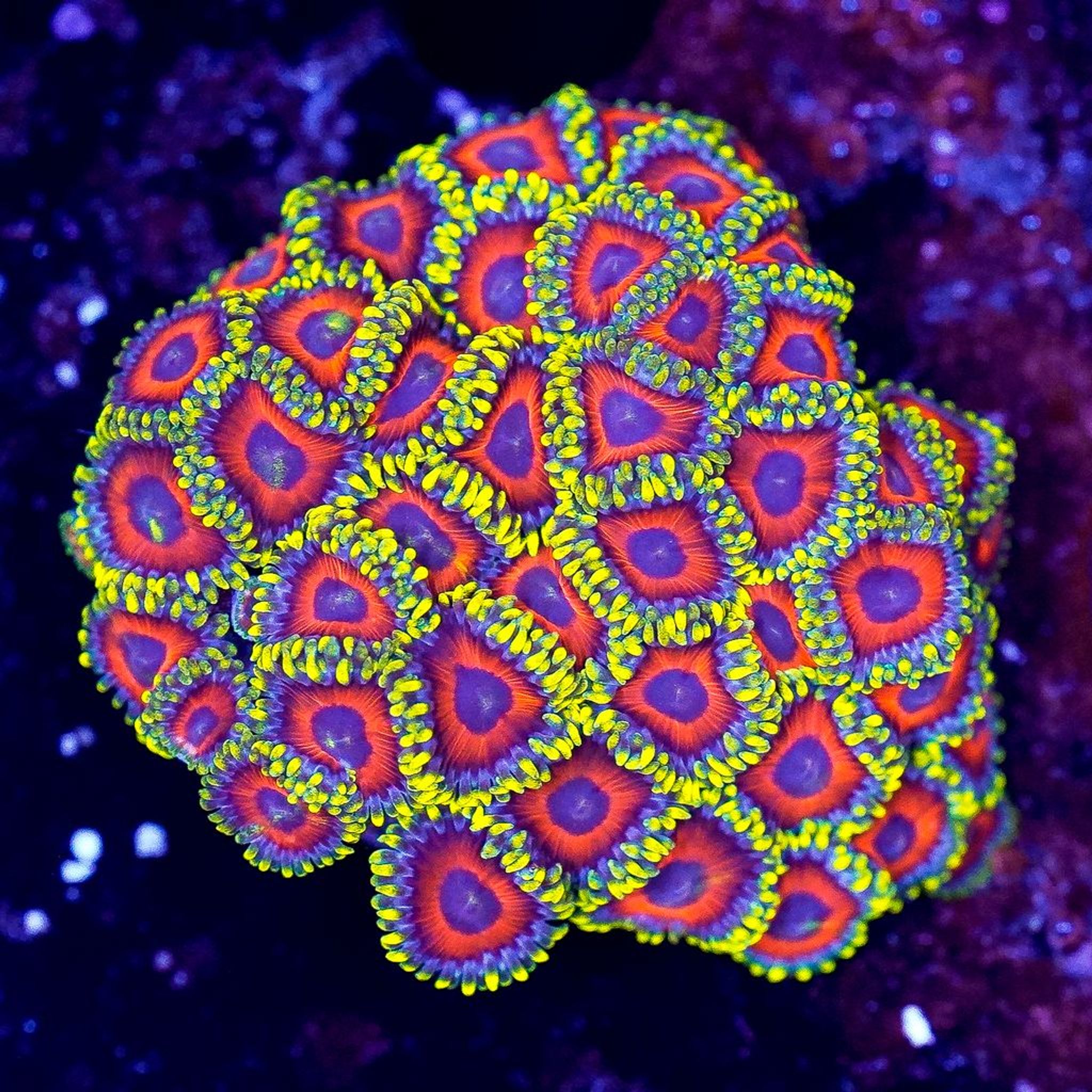
Common Zoanthids Problems: Tissue Loss, Fading, Pests and Recovery
Most zoanthids problems come down to four causes: unstable water chemistry, a mismatch in lighting, pests, or infection following stress. Polyps that stay closed, lose color, or melt away are telling you something specific, and matching the symptom to its cause is the fastest route to recovery. This guide walks through each common problem, how to confirm it, and what to do next.
Read the Symptoms First
Zoanthids (zoas) and their close relatives, palythoas, are hardy colonial polyps, which is exactly why a struggling colony deserves attention. When a normally forgiving coral declines, something in the system has usually shifted. Before changing anything, look closely with a flashlight and a magnifying glass after lights-out, then again mid-photoperiod.
| Symptom | Most likely causes | First check |
|---|---|---|
| Polyps closed for days | Pests, sudden parameter swing, new lighting, nuisance algae or film | Inspect for spiders/nudibranchs; test alkalinity and salinity |
| Stalks stretched long and thin | Too little light | Compare placement to where the colony was before |
| Color washing out to beige or white | Too much light, very low nutrients, high temperature | Recent light upgrade? Nitrate and phosphate near zero? |
| Brown overall, dull | Excess nutrients or insufficient light | Nitrate, phosphate, light intensity |
| Tissue melting, polyps detaching | Bacterial infection, predation, severe water quality event | Look for pests; smell and check for jelly-like tissue |
| White or pale bumps on polyps | "Zoa pox" (poorly understood, often linked to temperature swings) | Temperature log, recent new additions |
| Polyps disappearing one by one | Predation (nudibranchs, sea spiders, fish) | Night inspection, watch tankmates |
Water Quality: The Usual Suspect
Zoas tolerate a broad range, but they react poorly to sudden change. A steady tank a little outside the "ideal" will usually do better than one that bounces around a perfect number.
| Parameter | Widely accepted range for zoanthids |
|---|---|
| Temperature | 76–80°F (24.5–26.5°C) |
| Salinity | 1.024–1.026 SG (about 33–35 ppt) |
| pH | 7.9–8.4 |
| Alkalinity | 7–11 dKH |
| Calcium | 380–450 ppm |
| Magnesium | 1,250–1,400 ppm |
| Nitrate | roughly 2–15 ppm |
| Phosphate | roughly 0.03–0.1 ppm |
Keepers disagree on nutrients. Some grow zoas in fairly "dirty" water with nitrate above 20 ppm, while others run leaner systems for brighter colors. The point most agree on: near-zero nitrate and phosphate is a common trigger for fading, closing and slow tissue loss, especially in newer tanks with heavy filtration or aggressive carbon dosing.
Common chemistry mistakes
- Alkalinity swings of more than about 1 dKH per day from inconsistent dosing or a large water change with mismatched salt.
- Salinity drift from a failed auto top-off, either rising from evaporation or dropping from a stuck valve.
- Temperature spikes above 82°F (28°C) in summer, which many hobbyists associate with zoa pox and bleaching.
- Overcorrecting: chasing a number with large doses of buffer or phosphate remover can do more harm than the original problem.
Test the core parameters before blaming anything else. If you need to bring alkalinity, calcium or magnesium back into line gradually, you can browse water condition and additive products and correct over several days rather than all at once.
Fading and Color Loss
Too much light
Zoas come from shallow reef flats, but many aquarium colonies were grown under moderate lighting. Moving one straight under a new LED or into the top third of the rockwork can cause bleaching, where the polyps expel their symbiotic zooxanthellae and turn pale, white or see-through. Polyps may also stay half-closed and shriveled.
Fix: Move the colony lower or into partial shade, or reduce intensity by 20–30% and then raise it gradually over two to four weeks. Most zoas do well in roughly 100–250 PAR, though some brightly colored strains handle more once acclimated.
Too little light
Low light causes stretching: stalks grow long and floppy as polyps reach upward, and colors often shift toward brown. Move the colony higher in small steps, waiting a week or two between moves.
Nutrient-related fading
A tank with undetectable nitrate and phosphate often produces zoas that look washed out and shrink over time. Reduce phosphate-binding media or carbon dosing, feed the tank a little more, and aim to get readings back into the low detectable range. Color usually returns over several weeks once nutrients stabilize.
Tissue Loss and Melting
Melting is the most alarming zoanthid problem and it needs quick action. Signs include polyps that turn mushy or jelly-like, peel off the rock, or leave bare patches where the colony mat has dissolved.
Likely causes
- Bacterial infection, often after shipping stress, a chemistry swing or physical damage.
- Predation that has opened wounds for infection to set in.
- A toxic event such as a dying animal, a crashed cleanup crew, or an overdose of a medication or additive.
- Irritation from nearby aggressive corals such as mushrooms, leathers or hammer corals.
What to do
- Remove the affected piece so decaying tissue does not foul the tank or spread.
- Cut away dead tissue and, if the colony sits on a plug or rubble, snip off healthy polyps onto a fresh frag.
- Dip the colony in a reef-safe coral dip following the label, gently basting polyps with a turkey baster to dislodge debris and pests. Some keepers use a diluted povidone-iodine dip for infected tissue; follow product directions closely, as dosing varies by brand.
- Return it to a low-flow, moderate-light spot, ideally in a quarantine or frag tank with stable, clean water.
- Check the whole system for the underlying trigger, whether that is a parameter swing, dead livestock or chemical warfare.
Recovery is often possible if a few healthy polyps remain. Zoas can regrow a colony from a handful of heads once conditions stabilize.
Zoanthid Pests
Pests are a major reason a colony closes up and refuses to open. Most arrive on new frags, which is why dipping and quarantining every coral matters.
Zoa-eating nudibranchs
Small, usually tan or orange nudibranchs that blend in almost perfectly with the colony. They feed on polyps and lay spiral egg masses at the base of the colony. Look after lights-out, when they are easier to spot.
Treatment: Dip the coral, then manually remove eggs with tweezers or scrape them off. Repeat the dip every 5–7 days for several weeks so hatching eggs are caught before they mature.
Sea spiders (pycnogonids)
Spindly, leggy pests that feed on polyp tissue. Individual polyps close while the rest of the colony looks fine. A strong dip usually drops them off the coral; repeat dips handle any eggs.
Fish and invertebrate tankmates
Some angelfish, butterflyfish, filefish and certain crabs will pick at zoas. Emerald crabs and some hermits can harass colonies too. If polyps vanish without any visible pest, watch the tank for a few minutes after lights-on and after feeding.
Zoa Pox
Zoa pox shows as small white, cream or yellowish pustules on the polyps' columns or oral discs. Its exact cause is debated; hobbyists commonly connect it with high or fluctuating temperatures and bacterial involvement. Many colonies recover once temperature is stabilized in the upper 70s°F (about 25–26°C). Some keepers treat affected colonies with an iodine-based dip or with antibiotics in a separate container; the latter should only be used away from the display tank. Browse coral-safe treatment and medication products, and always read labels carefully, as some medications harm invertebrates or biological filtration.
A Recovery Plan That Works
| Step | Timing | Goal |
|---|---|---|
| Test and correct parameters | Day 1 | Remove the primary stressor slowly |
| Inspect and dip | Day 1 | Eliminate pests and loose debris |
| Relocate to low light, gentle flow | Day 1 | Reduce energy demand on the colony |
| Repeat dip | Days 5–7, then weekly for 3–4 weeks | Catch hatching pest eggs |
| Light target feeding (optional) | After polyps reopen | Support recovery with small, fine foods |
| Move back toward normal placement | Week 3 onward | Gradual reacclimation |
Avoid handling the colony every day. Once polyps begin opening, give them time; repeated moves and dips stress an already weakened coral.
Frequently Asked Questions
Why are my zoanthids closed but not dying?
Closed polyps usually indicate stress rather than death. Common reasons include pests, a recent parameter swing, new lighting, or a film of algae over the colony. Check for sea spiders and nudibranchs after dark, and test alkalinity and salinity first.
Can zoanthids recover after melting?
Yes, if some healthy polyps remain. Remove dead tissue, dip the colony, and place it in stable water with moderate light and gentle flow. Healthy heads can rebuild a colony over the following weeks to months.
How often should I dip zoanthids for pests?
A dip on arrival is standard practice. If you find nudibranchs, sea spiders or eggs, repeat the dip about every 5–7 days for three to four weeks to break the pest life cycle.
Do zoanthids need to be fed?
Zoas get most of their energy from light, so feeding is optional. Many keepers occasionally offer fine particulate or small frozen foods, which can help recovering colonies; overfeeding, however, can fuel algae that smothers polyps.
Keep Your Colony Thriving
Most zoanthids problems are reversible when you identify the cause early, correct it gradually, and give the colony a calm, stable environment. Quarantine and dip new frags, keep parameters steady, and match light to the colony's history. When you are ready to add new colors, browse zoanthids and other polyps on FishyHub.


