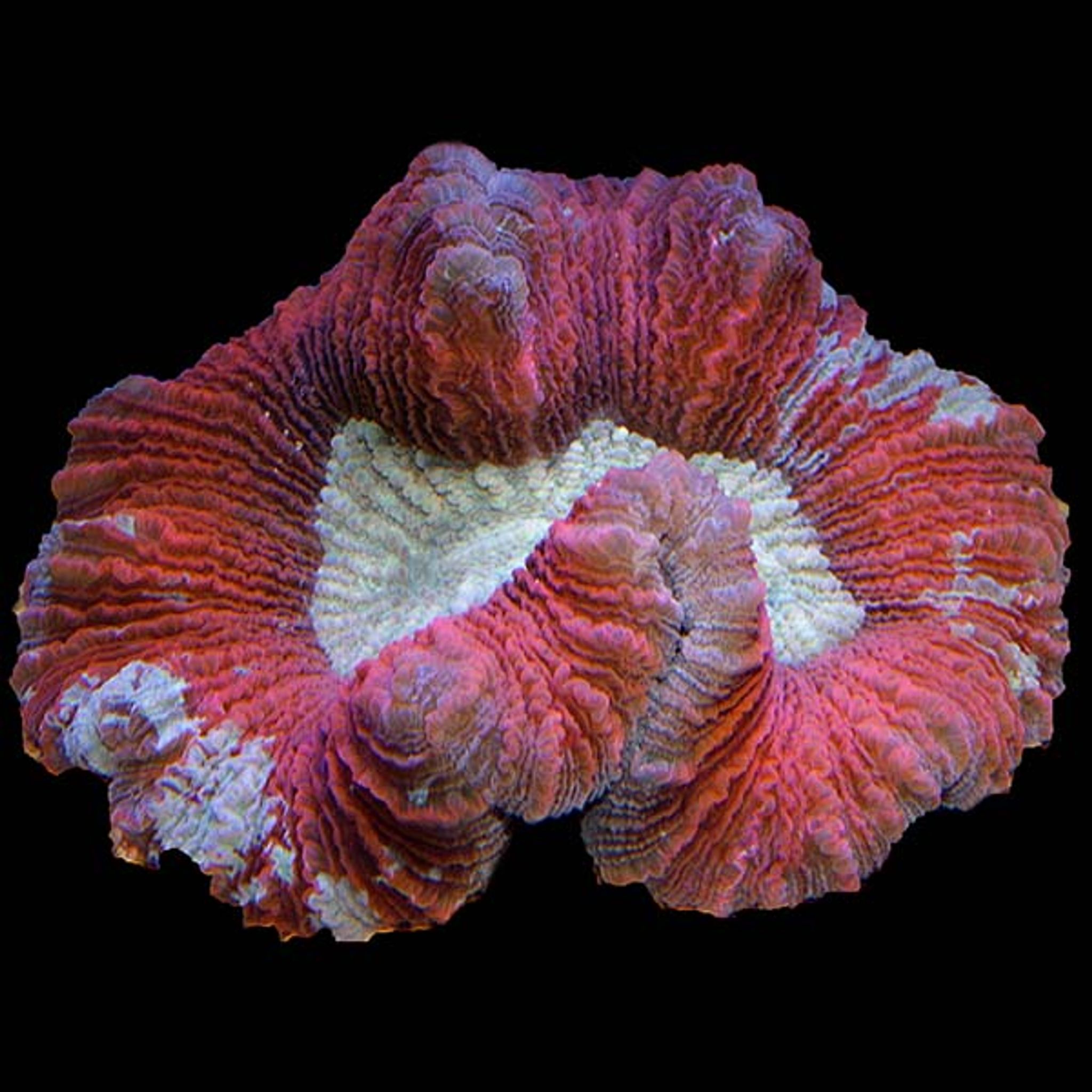

Common Trachyphyllia Problems: Tissue Loss, Fading, Pests and Recovery
If your open brain coral looks deflated, pale, torn, or slimy, the fix usually depends on exactly which symptom you're seeing and how fast it's changing. This guide sorts the most common Trachyphyllia issues by symptom, ranks likely causes, and lays out concrete steps for tonight and for the weeks ahead.
Why Trachyphyllia Behaves Differently Than Other LPS
Trachyphyllia (open brain coral) is a large, fleshy, free-living LPS coral — it isn't cemented to rock the way most large-polyp stony corals are. That trait explains most of its quirks: it can't grip the substrate, so it's more easily flipped by fish or flow than an encrusting coral; it has no way to actively clear sediment off its surface, so debris stays put until the coral spends energy sloughing it off; and its skeleton has sharp, comb-like ridges under the flesh, so abrasion against rock tends to cause real damage rather than a superficial scrape.
During the day, or under stress, the coral deflates and pulls its tissue down into a domed, folded skeleton. At night, or in favorable conditions, it inflates with water to display a much larger, rounder tissue mass. Confusing normal deflation with a health problem is one of the most common misreads in the hobby.
Baseline Parameters to Rule Things In or Out
Before chasing an exotic diagnosis, confirm the basics are in range. Sources vary slightly on exact numbers, so treat these as consensus bands, and prioritize stability within your current range over chasing a specific figure.
| Parameter | Target range | Notes |
|---|---|---|
| Temperature | 74–83°F (23–28°C), aim ~78°F (25.5°C) | Swings matter more than the exact number |
| Specific gravity | 1.024–1.026 | Match to your existing tank |
| pH | 8.1–8.3 | Daily swings stress LPS more than a slightly low average |
| Alkalinity | ~7–10 dKH (roughly 2.5–3.6 meq/L on some scales) | Stability beats hitting an exact figure |
| Calcium | 380–450 ppm | Keep calcium and alkalinity balanced |
| Magnesium | ~1,300–1,350 ppm | Low magnesium destabilizes calcium/alkalinity |
| Nitrate | ~5–10 ppm | A little nutrient is fine, unlike an SPS-only system |
| Phosphate | ~0.05–0.1 ppm | Ultra-low nutrients can dull color and slow feeding response |
Lighting: The Single Biggest Cause of Fading
Excess light is the most commonly cited cause of Trachyphyllia bleaching and daytime tissue retraction. Aim for roughly 50–100 PAR at the coral's placement point — low-to-medium intensity on most reef LED fixtures. Place it low in the tank, in partial shade from rockwork, or run the fixture at reduced intensity for this specimen.
Color comes from the density and pigment of the coral's zooxanthellae. Too much light bleaches the coral — tissue looks pale or white, and the skeleton may show through thinning flesh. Too little light lets zooxanthellae migrate or thin out, dulling or darkening color and slowing growth. Red and orange morphs generally need less light than green, brown, or tan morphs, so factor color morph into placement.
A full-spectrum LED lamp with dimming control makes it much easier to dial in this range without guesswork.
Flow: Gentler Than You Think
Trachyphyllia wants low-to-medium, indirect, and random flow — never a direct or laminar jet. Strong or direct flow folds and pins the inflated tissue so it can't spread to feed or photosynthesize, abrades flesh against the coral's own sharp skeletal ridges, and interferes with the sticky feeder tentacles it uses to capture food.
A common mistake is blasting extra flow at an LPS coral "for detritus control." In practice this does more damage than the detritus would have caused — address debris with better placement or manual siphoning instead.
Placement and Substrate
Because Trachyphyllia is free-living and can't self-clean, placement is one of the highest-leverage things you control. Set it on a fine sand bed or a flat dish/frag plug base, never directly on rock, and avoid spots where sand blows across it — settling sediment forces the coral to spend energy clearing itself, weakening it and opening the door to infection. Keep it low in the light gradient, away from rockwork and other corals' sweeper tentacles or soft corals capable of chemical warfare, and watch for territorial or nipping fish — some tangs, angelfish, and butterflyfish will pick at exposed LPS flesh.
During recovery, a shallow dish or eggcrate cradle can physically stabilize a weak coral so it isn't repeatedly re-injured by shifting sand or gentle currents while it lacks the strength to reposition itself. And never pull an inflated specimen straight out of the water for inspection — the tissue is heavy with water and tears easily under its own weight. Let it deflate on its own first, using gentle water motion or a brief moment of air exposure, before lifting it out.
Feeding
Meaty foods — mysis, brine shrimp, chopped seafood, or a prepared coral pellet or gel food — support growth, color, and recovery. Trachyphyllia captures food with sticky feeder tentacles, usually most active at night or with the lights off. Feed an established, healthy specimen 1–3 times per week; during recovery from stress or bleaching, feed smaller amounts more often to supply energy without relying on light. Don't overfeed a stressed coral in an attempt to "fix" it fast — excess food fouls water and compounds the original problem, sometimes causing abnormal tissue bloating.
Why It's Not Inflating: A Diagnostic Order
A Trachyphyllia that stays deflated during the day is usually not diseased — check these in order before assuming the worst: a recent lighting change, especially a new LED fixture that's more intense than what it replaced; direct or increased flow from a repositioned pump or new powerhead; pH or alkalinity swings, a common and overlooked trigger; and nighttime pest disturbance from flatworms, bristle worms, or small crabs. Only after ruling these out should you start suspecting disease — strong nighttime inflation with daytime retraction is often completely normal, not illness.
Tissue Loss and Recession: Ranked Causes
Recession has several overlapping causes, roughly in order of how often they're reported: light shock from a new or upgraded fixture; excess or direct flow abrading tissue against skeletal ridges; alkalinity or salinity swings, even brief ones; physical damage from shipping or handling, since the sharp ridges under the flesh make this coral easy to nick; sediment buildup the coral can't clear on its own; incompatible neighbors with stinging sweeper tentacles or chemical warfare; poor or unstable water quality generally; and secondary bacterial infection, which often follows one of the causes above once tissue is already compromised.
Pest Damage vs. Disease Onset
Pest damage looks like small, localized, bite-mark-style gaps near the edges, with the surrounding flesh otherwise firm and normal-colored. Disease onset looks like spreading, discolored, slimy tissue with a clear advancing edge and a foul appearance, not a clean gap.
Brown Jelly Disease
Brown jelly disease is a rapid, necrotic breakdown of tissue into a slimy brown mass, usually triggered by physical injury or another stressor. Bacteria multiply on the dead tissue and can spread to healthy tissue on the same coral and to other corals nearby via contact or water flow.
Treat it immediately: isolate the coral rather than leaving it in the display "to see if it resolves"; siphon off the jelly rather than letting it drift; cut away dead tissue with a margin beyond the visible necrosis; then dip in an iodine-based or other coral-safe antiseptic, repeating over the following days while monitoring for renewed spread.
RTN vs. STN
Rapid Tissue Necrosis (RTN) moves fast — hours to a couple of days — and is often fatal once it starts. Slow Tissue Necrosis (STN) progresses more gradually and patchily, and is more often recoverable if the cause is identified and corrected early.
Pests to Watch For
| Pest | Signs | Action |
|---|---|---|
| Flatworms | Small, hard to spot, irritate tissue | Coral-safe dip primary; brief hyposaline/RO rinse for stubborn cases |
| Gall crabs | Burrow into the skeleton | Inspect at purchase; remove manually if found |
| Bristle worms / small crabs | Bother the coral at night | Monitor; remove if persistent |
| Nuisance algae | Grows on skeleton after recession | Can block tissue regrowth — keep clean, reduce nutrients |
Quarantine and Dipping Before Adding to Display
Prevention starts before the coral touches your display tank. Inspect for algae on the skeleton, a gaping mouth (a bad sign), pinched or deflated flesh, and missing tissue on the underside. Quarantine every new specimen and dip it before introduction — the best window to catch flatworms, gall crabs, or early disease. A coral-safe dip is the primary tool; treat a plain freshwater or RO dip as a backup, not a substitute.
Sourcing a healthy specimen matters too — browsing LPS hard corals from a well-maintained system reduces the odds of starting with hidden pests or stress.
Recovery Timeline and Checklist
Recovery from bleaching or tissue loss is slow and rarely linear. A rough guide:
- Day 1: Correct the underlying cause first — usually lighting or flow. Move the coral to a calmer, shadier spot and stabilize it in a dish or cradle if it's too weak to hold position.
- Week 1: Keep parameters extremely stable with small, frequent water changes rather than one large change, and begin or increase target feeding in small, frequent amounts.
- Week 4: Look for early signs of tissue expansion or renewed color at the edges; don't rush back to brighter light or stronger flow just because it looks stable.
- Beyond: Full color return can take weeks to months and isn't guaranteed if bleaching was severe or prolonged. Patience and continued stability matter more than any single adjustment.
Support recovery with a meaty coral food offered directly at night, and keep a coral dip or treatment product on hand for any sign of pests or early infection.
Common Mistakes to Avoid
- Placing the coral directly on rock or in a sand-blasted spot, causing chronic abrasion.
- Increasing flow to fight detritus, which damages tissue more than the detritus would.
- Chasing an exact alkalinity or calcium number instead of prioritizing stability.
- Ignoring a small patch of brown jelly and hoping it resolves on its own.
- Overfeeding a stressed coral in an attempt to speed up recovery.
- Mistaking normal nighttime or lights-off deflation for illness.
Frequently Asked Questions
Why is my Trachyphyllia not inflating during the day?
This is usually too much light or flow at that spot rather than illness. Check PAR and flow speed first — strong inflation is often most visible in early morning or low-light periods, not midday.
How do I tell bleaching from normal color variation?
Bleaching shows progressive paling toward white, often with the skeleton visible through thinning tissue. A stable pale color morph, by contrast, stays consistent over time and doesn't keep getting lighter.
Can a bleached Trachyphyllia recover?
Yes, if the underlying light or flow issue is corrected quickly and feeding is increased. Full color return can take weeks to months, and isn't guaranteed if the bleaching was severe or prolonged.
Is brown jelly disease contagious to other corals?
Yes — it can spread through direct contact or via water flow carrying bacteria to nearby corals. Isolate the affected coral immediately and redirect flow away from tankmates.
What's the difference between RTN and STN?
RTN (rapid tissue necrosis) causes fast, often fatal tissue loss over hours to a couple of days. STN (slow tissue necrosis) is a slower, patchier recession that's more often recoverable if the trigger is identified and fixed early.
What pests commonly show up on this coral?
Flatworms and gall crabs are the two most frequently reported. Both are best caught during quarantine and dipping, before the coral ever goes into the display tank.
Browsing LPS hard corals on FishyHub is a good starting point if you're sourcing a new open brain coral or looking to replace one that didn't make it — pair any new specimen with a proper quarantine and dip routine from day one.


