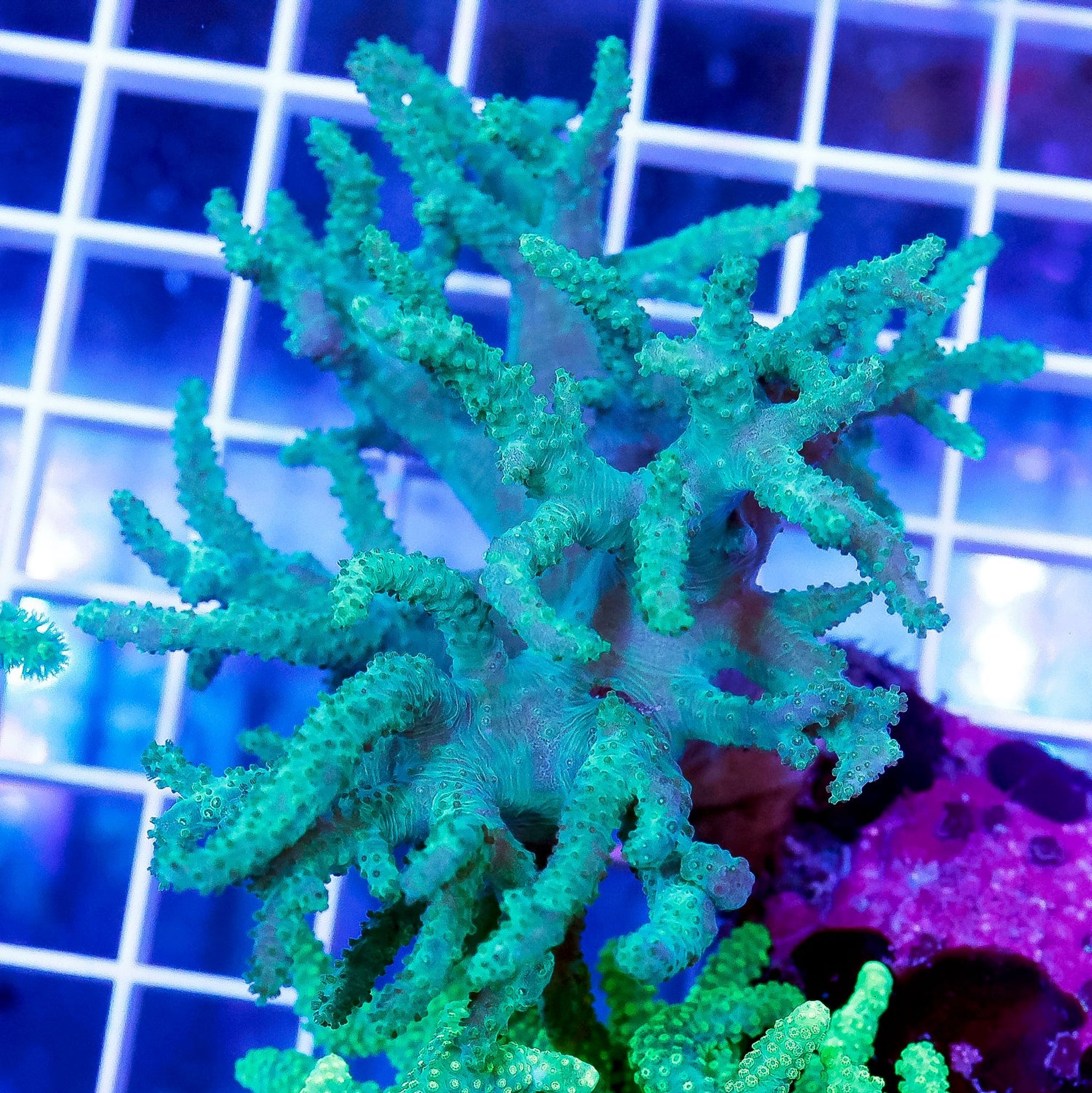

Common Leather Corals Problems: Tissue Loss, Fading, Pests and Recovery
A leather coral that suddenly closes up, turns pale, or grows a strange film can look alarming, but not every change is a crisis. This guide walks through how to separate normal shedding from real tissue loss, fading, or pest problems, and what to actually do about each one so you don't fragment or medicate a coral that just needs a few days to recover.
Leather Coral Biology Basics
Leather corals belong to the family Alcyoniidae and are true soft corals — they lack the rigid stony skeleton of LPS and SPS species, relying instead on a flexible, leathery tissue supported by tiny calcium structures called sclerites. The most common genera in the hobby are:
- Sarcophyton — toadstool or mushroom leather, with a distinct stalk and cap
- Sinularia — finger leather, growing in branching lobes
- Lobophytum — devil's hand leather, with broad flattened fingers
- Cladiella — colt or finger coral, with small, tree-like branches
Because they have no hard skeleton to keep clean, leathers evolved a built-in cleaning mechanism: they periodically shed a thin waxy film that carries away algae, detritus, and biofilm that would otherwise smother the tissue. This shedding behavior is normal and is one of the reasons leathers are considered hardy, beginner-friendly soft corals — but it's also the single biggest source of false alarm among new reefkeepers.
Is It Shedding or a Real Problem?
The single most useful skill for a leather coral owner is telling ordinary molting apart from actual decline. Both can look similar at first glance — a closed, deflated coral covered in something whitish — but the pattern over the following days tells the real story.
| Sign | Normal shedding | Real problem |
|---|---|---|
| Coverage | Even, whole-colony film | Patchy or localized |
| Duration | Resolves in 1–5 days | Persists a week or more |
| Smell | None | Foul or sour odor |
| Texture | Thin, waxy/mucus-like | Stringy, brown, "jelly"-like |
| Outcome | Polyps re-extend, often brighter | Tissue recedes, skeleton/base exposed |
| Frequency | Every few weeks to a couple of months | N/A — doesn't repeat on a healthy cycle |
If the coral is uniformly coated, stays closed for only a few days, and comes back looking cleaner and often more vibrant, that's a normal shed cycle. Resist the urge to intervene — poking at the film, increasing flow, or moving the coral during this window only prolongs the stress response.
Tissue Loss and Rapid Tissue Necrosis
Actual tissue loss, sometimes called "melting" or rapid tissue necrosis (RTN), shows up as receding, dissolving tissue that exposes the coral's base or internal structure, often in one localized area rather than evenly across the colony. Common triggers include:
- Shipping or handling stress, especially soon after arrival
- Physical damage from frag cuts or rough handling
- Sudden parameter swings in salinity, temperature, or pH/alkalinity
- Old or dirty tank water with accumulated organics
- Low or crashing alkalinity, or ammonia spikes in newer tanks
- Allelopathy — chemical warfare from nearby soft corals, particularly other Sarcophyton, Sinularia, or Nepthea placed too close together
- Unacclimated placement directly under intense light or strong flow
Target Water Parameters
Stability matters more than hitting an exact number, but these ranges give you a baseline to test against when a leather looks off:
| Parameter | Target range |
|---|---|
| Temperature | 75–80°F (24–27°C) |
| Salinity | 1.023–1.026 SG |
| pH | 8.0–8.4 |
| Alkalinity | 8–11 dKH |
| Calcium | 380–450 ppm |
| Magnesium | 1250–1350 ppm |
| Nitrate | Under roughly 10–20 ppm |
| Phosphate | Under roughly 0.1 ppm |
Leathers tolerate somewhat higher nutrient levels than SPS corals, so a small nitrate buffer isn't automatically a problem — but a sudden swing in any of these, especially alkalinity or salinity, is a common trigger for deflation or tissue recession.
Fading, Bleaching, and Browning Out
Color changes run in two opposite directions, and the fix depends on which one you're seeing.
Fading, paling, or bleaching happens when the coral loses zooxanthellae (its symbiotic algae). Causes include:
- Too much light introduced too quickly (photo-bleaching)
- Too little light or too little food, especially in very low-nutrient systems
- Chronically low nutrients starving the coral of both light-driven and particulate food sources
- General "old tank syndrome" from a long-neglected system
Fix by adjusting light gradually and allowing modest nutrient levels; in an ultra-low-nutrient system, target-feeding a gel food or coral-specific food a few times a week can help restore color.
Browning out is essentially the opposite problem: the coral turns uniformly dark brown because excess nutrients and lower light let zooxanthellae overgrow the tissue. Fix by increasing light gradually and controlling nutrient levels through water changes or nutrient export.
Placement, Flow, and Acclimation
Leathers do best in moderate, indirect or turbulent flow — enough to keep the colony swaying gently and prevent detritus from settling on it, but not a direct blast that keeps polyps permanently retracted. On lighting, most species do well under standard reef LED or T5 fixtures at low-to-moderate intensity, roughly 50–150 PAR.
When introducing a new leather or upgrading lighting:
- Start the coral lower in the tank, in lower flow and lower light than its expected final spot
- Move it up gradually over 2–4 weeks, watching for signs of stress after each adjustment
- Space leather corals well away from other soft corals, especially other Sarcophyton, Sinularia, or LPS, to reduce allelopathy risk
- Consider running activated carbon and doing regular water changes as ongoing allelopathy prevention, not just a reaction after damage appears
Why a Leather Coral Won't Open
If a leather stays closed or deflated well beyond the few days typical of a normal shed, work through this checklist in order:
- Flow — too little lets detritus settle and irritate the tissue; too much prevents polyps from extending at all
- Pests — inspect closely for flatworms or other organisms on the surface
- Alkalinity stability — test after any water change or dosing adjustment
- Neighboring corals — check spacing for possible allelopathy
- Recent placement — a newly added coral often needs one to two weeks just to settle in
Pests on Leather Corals
Several pests target leathers, and correctly identifying which one you're looking at prevents an overreaction to a harmless issue or under-reaction to a serious one.
- Waminoa flatworms — small, flat, tan-to-brown disc-shaped worms sitting directly on the coral's surface. Mostly a cosmetic and irritation issue rather than a killer, but heavy numbers can stress the coral. Treated with a coral-safe iodine dip, a brief freshwater dip, or biological control such as a six-line wrasse or certain nudibranch predators.
- Coral-eating nudibranchs — less common on leathers than on other coral types, but can strip tissue when present. Look for small, often camouflaged slugs matching the coral's color.
- Sponges or bryozoans — can overgrow the base of a leather coral over time, distinct from the coral's own tissue.
- Indirect water-quality effects — pyramid snails or flatworms on neighboring corals can degrade overall water quality enough to stress a leather even without directly infesting it.
Don't confuse a normal shed film — thin, waxy, and covering the entire colony evenly — with a pest infestation, which tends to look like discrete organisms sitting on top of otherwise normal tissue.
Brown Jelly Infection
Brown jelly disease is a secondary bacterial or protozoan infection that moves in after tissue is already damaged. It appears as a stringy, brown, jelly-like mass sitting over dead or dying tissue, usually with a foul odor, and it can spread across a colony within 24–72 hours if left untreated.
If you spot it:
- Isolate the coral immediately in a separate container — don't let jelly disperse into the display
- Siphon out the jelly directly rather than letting it drift or settle elsewhere
- Cut away the affected tissue with a clean blade or scissors, leaving a margin of clearly healthy tissue
- Dip the cut frag in an iodine or antibacterial solution as aftercare, then let it heal in a low-flow, low-light quarantine tank
- Improve water quality and flow in the main display to address whatever triggered the initial damage
Speed matters far more here than with slow tissue recession — a colony that might tolerate days of mild stress can be lost to brown jelly in under two days.
Fragmenting to Rescue a Partial Colony
When only part of a leather coral is affected, cutting away the necrotic section can save the rest. Use a clean, sharp blade or scissors, cut well into visibly healthy tissue rather than right at the damage line, and move the surviving piece to a stable environment with reduced flow and light while it heals. Reintroduce it to normal display conditions gradually once new tissue growth is visible.
Quarantine and Dip Protocol for New Arrivals
Most pest and allelopathy problems never need to reach your display if new corals go through a proper quarantine first:
- Hold new leather corals in a separate quarantine tank for 2–4 weeks, observing for shed cycles, pests, or unusual tissue behavior
- Use a coral-safe iodine dip (such as a Lugol's-based solution) following the product's instructions for new arrivals or when a pest is actually confirmed
- If using a freshwater dip, match the water's temperature and pH to the display tank, limit it to 30–60 seconds, and agitate the coral gently — leathers are more sensitive to this osmotic shock than many LPS or SPS species, so reserve it for confirmed pest issues rather than routine prevention
- Never dose iodine or other dip chemicals directly into the display tank; treat affected corals in a separate container only
Reef hobbyists can browse soft corals on FishyHub when sourcing new leather specimens, and pair a new arrival with appropriate water conditioning and additive products to help stabilize parameters during acclimation.
Recovery Timeline
- Normal shed: resolves in days, no intervention needed
- Mild stress-related recession: can stabilize and regrow tissue over 2–6 weeks once the underlying cause is corrected
- RTN or untreated brown jelly: can kill a colony within 24–72 hours, so speed of response matters more than for slow tissue loss
Common Mistakes to Avoid
- Panicking and fragging or removing a coral during what turns out to be a normal shed cycle
- Blasting a closed-up leather with extra flow or repeatedly moving it, which only extends the stress
- Dosing iodine or coral dip chemicals into the display tank instead of isolating the affected coral first
- Placing multiple leather corals — or leathers near LPS — too close together, triggering allelopathy and mutual tissue recession
- Skipping gradual acclimation after a lighting upgrade, causing bleaching that gets mistaken for disease
- Ignoring a foul smell or brown stringy tissue, letting brown jelly spread for days before acting
- Not testing alkalinity and salinity after a water change or accidental top-off mishap when a leather suddenly deflates
Frequently Asked Questions
Is it normal for my leather coral to shed its skin?
Yes. Periodic waxy-film shedding that clears away trapped algae and detritus is a healthy, natural process. Expect the coral to close up for a few days and then re-extend its polyps looking cleaner, and often brighter, afterward.
Why is my leather coral not opening for over a week?
Work through flow, light acclimation, alkalinity stability, and proximity to other corals for possible allelopathy. Also confirm whether it was recently added — new leathers often need one to two weeks just to settle into a tank.
Why is my leather coral turning brown or losing color?
Browning is usually caused by excess nutrients combined with lower light, letting zooxanthellae overgrow the tissue. Paling or bleaching is typically the opposite — sudden bright light or nutrient starvation. Adjust light gradually and manage nutrient levels to correct either direction.
What is brown jelly disease and how do I treat it?
It's a fast-spreading secondary infection that develops over already-damaged tissue, appearing as a stringy brown jelly mass with a foul odor. Isolate the coral in a separate container immediately, siphon out the jelly, cut away dead tissue with a clean blade, and stabilize water quality right away.
What are the small flatworms on my leather coral?
They're most likely Waminoa flatworms — small, flat, tan-to-brown discs sitting on the coral's surface. They're mostly a cosmetic and irritation issue, manageable with dips, manual removal, or natural predators like certain wrasses.
Can leather corals recover from tissue loss?
Yes, if the cause is identified and corrected early. Partial tissue recession can regrow over two to six weeks, but full-colony rapid tissue necrosis or untreated brown jelly can be fatal within days, so quick action matters.
Should I feed my leather coral?
Feeding isn't required in most mixed reef tanks, since leathers get much of their energy from light through their zooxanthellae. In very low-nutrient systems, occasional feeding with a coral food or phytoplankton can help maintain color and growth.
How do I dip a new leather coral safely?
Use a coral-safe iodine dip following the product's instructions, or a brief freshwater dip of 30–60 seconds only if pests are confirmed and the coral is otherwise healthy. Quarantine every new coral for two to four weeks before adding it to the display, regardless of whether a dip is used.
Browsing for a new specimen or troubleshooting an existing colony, you can explore the full range of marine corals available on FishyHub to find hardy options suited to your tank's flow and lighting setup.


