
Common Kenya Tree Coral Problems: Tissue Loss, Fading, Pests and Recovery
A Kenya tree coral that suddenly looks deflated, pale, or chewed on is alarming, but most of the time the colony is not actually dying. This guide walks through each symptom, separates the harmless from the serious, and gives a clear recovery sequence so you can act with confidence instead of guessing.
Quick Species Primer: Are You Sure It's a Kenya Tree?
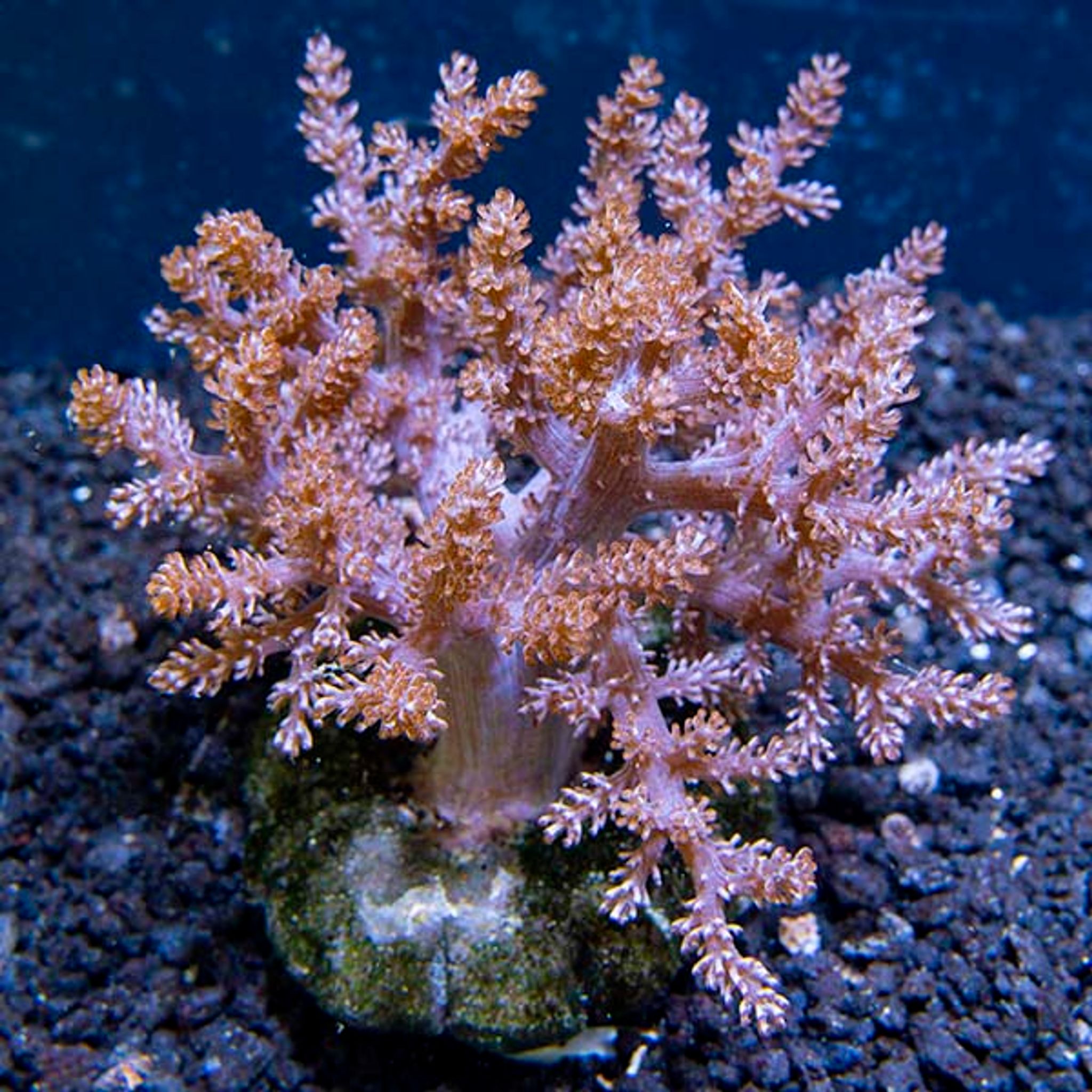
"Kenya tree coral" is a common-name catch-all for several soft corals in the family Nephtheidae, most often sold under the scientific names Capnella sp., Nephthea sp., or Litophyton sp. These genera are closely related and look nearly identical to a hobbyist: a fleshy, tree-like stalk with feathery branches tipped in small polyps that pulse and sway in the current.
Because the trade name is loose, care advice from one source can technically describe a slightly different genus. Before troubleshooting, confirm the basics:
- No hard skeleton — the "trunk" is soft and squeezable, unlike a gorgonian.
- Branching, tree-like growth form rather than a single stalk of polyps.
- Small, feathery polyps that retract into the branch tissue rather than into individual skeletal cups.
If your coral matches this description, the guidance below applies regardless of which of the three genus names is on the label.
Ideal Parameters at a Glance
Kenya tree corals are considered beginner-friendly, but "hardy" doesn't mean "indestructible." Most decline traces back to one of the ranges below drifting too far for too long.
| Parameter | Target Range |
|---|---|
| Temperature | 75–82°F (24–28°C) |
| Salinity | 1.023–1.025 SG |
| pH | 8.1–8.4 |
| Alkalinity | 8–12 dKH |
| Calcium | 380–450 ppm |
| Magnesium | 1250–1350 ppm |
| Ammonia / Nitrite | Near zero |
| Nitrate | Under ~20 ppm |
| Phosphate | Under ~0.1 ppm |
Lighting should sit in the low-to-moderate range, and flow should be indirect and turbulent rather than a direct blast — both are common sources of trouble, covered below.
Is It Normal Shedding or Real Tissue Loss?
This is the single most useful distinction in Kenya tree troubleshooting, and it's the question nearly every panicked search is really asking. Nephtheid soft corals periodically shed a thin mucus/skin layer as part of their normal biology. During a shed, the colony can look deflated, slimy, or "melted" for a day or two before it fully rebounds.
Use this comparison to tell the two apart:
| Sign | Normal Shed Cycle | True Tissue Loss |
|---|---|---|
| Duration | 1–2 days, then recovers | Progressive, doesn't rebound |
| Base/stalk | Firm, still attached, normal color | Browning, mushy, or disintegrating |
| Pattern | Whole colony deflates evenly | Patchy recession, often starting at one point |
| Polyp extension after | Returns to normal within days | Stays retracted or the branch dies back |
| Smell/mucus | Clear or slightly cloudy slime | Can accompany a sour odor if bacterial |
If the base stays firm and the coral looks normal again within a few days, no intervention is needed. If tissue keeps receding and the base is discoloring, move to the causes and recovery steps below.
What Causes True Tissue Loss
Real, progressive tissue loss usually traces back to one or more of these:
- Unstable or "old tank" parameters — long-term drift in alkalinity, calcium, or nutrients rather than one bad reading.
- Sudden swings in salinity or temperature, often from a rushed water change or a failing heater/chiller.
- Allelopathy — chemical warfare from nearby aggressive corals such as certain zoanthids, Sinularia, or Xenia growing too close.
- Physical damage from handling, shipping, or pest activity that opens the tissue to infection.
- Poor flow allowing detritus to settle and rot on the branches.
- Copper exposure — soft corals, and Kenya tree in particular, are highly copper-sensitive (see the dedicated section below).
- Secondary bacterial or fungal infection following any of the injuries above.
Copper Sensitivity: An Easy, Avoidable Mistake
This deserves its own callout because it is one of the most common ways a Kenya tree colony gets wiped out with no warning. If you ever treat fish for ich or another parasite with a copper-based medication in a system that also houses the coral, you risk killing it outright — soft corals lack the tolerance that fish have to copper compounds.
The fix is simple: treat sick fish in a separate quarantine or hospital tank, never in the display where corals live. Reef-safe treatment options and dedicated hospital-tank setups can be browsed in FishyHub's treatment and medication category.
Fading and Color Loss
A Kenya tree that turns pale, whitish, or washed-out is losing the density of symbiotic algae in its tissue — the coral equivalent of bleaching. The brief's sources disagree on which direction the nutrient problem usually runs, and the honest answer is that both extremes cause it:
- Too much light, too fast — a coral shipped from a dim holding system and dropped straight under a strong LED fixture, or an old bulb swapped for a new, more intense one without a ramp-up period.
- Ultra-low nutrients — increasingly common in heavily dosed, GFO-scrubbed reef tanks. When nitrate and phosphate crash near zero, the symbiotic algae the coral depends on can starve, producing a pale colony even though every parameter "looks perfect" on a test kit. This counterintuitive failure mode is often left out of general care sheets that only warn about dirty water.
- General stress as a precursor to tissue recession — fading is frequently the warning sign that comes before true tissue loss, not a separate problem.
Treat fading as an early alarm rather than a cosmetic issue. Check your light history and nutrient readings together before assuming only one is at fault.
Not Extending or Staying Shrunken
A closed-up, shrunken Kenya tree is usually not sick — it's reacting to something in its immediate environment. Common, non-disease explanations include:
- Recent acquisition — new arrivals can take 1–2 weeks to fully acclimate and extend on a regular basis.
- Disturbance response — lights just switched on, a hand in the tank, or a nearby vibration can trigger temporary closing.
- Nipping — a curious fish or crab picking at the polyps.
- Flow that's too direct — laminar pump output aimed straight at the colony prevents proper extension and can tear tissue over time.
- Time of day — some Nephtheids extend more fully at certain points in their cycle, so a single "closed" observation isn't necessarily meaningful.
Give a new coral time before troubleshooting further, and check placement relative to flow and tankmates first.
Pests That Target Kenya Tree Coral
The most damaging pest by far is the predatory aeolid nudibranch, which camouflages itself to match the coral's branch color and feeds on tissue at night. Because they blend in and are active after lights-out, damage often isn't noticed until a branch is already stripped.
Other pest-adjacent issues to rule out:
- Flatworms — not the Acropora-eating type, but general flatworms can still irritate a stressed, weakened colony.
- Isopods or amphipods — usually harmless bystanders, rarely a real threat on their own.
- Algae or cyanobacteria overgrowth — can smother a colony that's already shaded or in decline, compounding the original problem.
- Fish predation — certain wrasses, butterflyfish, or crabs will opportunistically pick at extended polyps.
Night-Inspection Protocol
Because the main predator is nocturnal, daytime inspection alone will miss it. Use this routine:
- Turn off return pumps and powerheads so the coral isn't swaying and debris isn't stirred up.
- Wait until at least an hour after the display lights go out.
- Use a flashlight (a red-filtered light disturbs nocturnal creatures less) to scan every branch closely.
- Check the base of the colony for small white egg clusters, a telltale sign nudibranchs are established.
- A magnifying glass helps catch juveniles that are easy to miss with the naked eye.
If you find a nudibranch or eggs, physically remove them and consider a coral dip on the whole colony to catch anything you missed.
Step-by-Step Recovery Checklist
Work through these in order when a Kenya tree shows signs of real trouble:
- Test everything immediately — salinity, temperature, alkalinity, calcium, magnesium, nitrate, phosphate, and ammonia. A PAR meter can also confirm whether light intensity is the culprit.
- Do a lights-out flashlight inspection for pests and physically remove anything found.
- Reevaluate placement — temporarily move the coral to lower flow and lower light if stress is suspected.
- Check spacing from aggressive neighbors — corals like certain zoanthids, Euphyllia, or Sinularia within sweeper-tentacle or chemical range should be moved farther away.
- Perform a coral dip (iodine-based or a commercial coral dip) if the cause isn't obvious — it rules out both pests and surface bacteria at once.
- Trim away dead or necrotic tissue with sterile scissors so it doesn't spread to the healthy portion of the colony.
- Hold off on major water changes during recovery — stability matters more than chasing a "perfect" number.
- Resume normal feeding once the coral is stable; underfed Kenya trees fade more easily, especially in low-light or low-nutrient systems.
Minor stress and fading typically resolve within 1–2 weeks once parameters are stable. True tissue loss should visibly stop progressing within a few days of correcting the cause — if it doesn't, the colony is unlikely to survive intact.
Placement, Compatibility, and Feeding
Kenya tree corals grow quickly and sway with a wide radius, so give them room. Keep them away from stinging or chemically aggressive neighbors, but also be aware the relationship cuts both ways: Kenya trees themselves spread fast and can out-compete slower-growing corals for space and light if left unchecked.
They're primarily photosynthetic, but occasional fine particulate feeding — a phytoplankton blend or a gel food designed for filter-feeding corals — supports color and tissue health, especially in low-light or low-nutrient tanks where symbiont density is already under pressure.
Propagation as a Rescue Strategy
Kenya tree coral frags easily, which makes fragging a practical way to save genetics from a declining colony. If part of the colony is healthy while another section is clearly failing, cut the healthy branches away with sterile scissors and mount them separately. In stable water, frags typically heal within days, giving you a backup even if the original colony can't be saved.
Acclimating New Arrivals to Avoid Problems Later
Many of the issues above start at the point of purchase. Reduce the risk with a proper acclimation routine:
- Drip acclimate new arrivals slowly rather than a quick dump-and-float.
- Ramp up lighting gradually over 1–2 weeks rather than placing the coral straight under full-intensity reef lighting.
- Quarantine and dip before adding to the display tank — this catches nudibranchs and their eggs before they ever reach your main system.
Healthy Kenya tree specimens and other beginner-friendly soft corals are available to browse in FishyHub's soft corals category.
Frequently Asked Questions
Why is my Kenya tree coral shrinking or deflating — should I panic?
Usually not. This is most often a normal periodic shed. Only be concerned if the colony doesn't rebound within a few days or the base looks brown and mushy rather than firm.
Why did my Kenya tree coral turn white or pale?
Fading is typically caused by too-rapid light increases, ultra-low nutrient levels starving the coral's symbionts, or general stress. Check your recent lighting changes and nutrient test results together before assuming just one is the cause.
What is eating my Kenya tree coral?
The most likely culprit is a camouflaged predatory nudibranch that feeds at night. Do a lights-out flashlight inspection, checking the base for small white egg clusters, and physically remove anything you find.
Is Kenya tree coral sensitive to copper?
Yes, significantly. Never treat fish with copper-based medication in a display tank that houses Kenya tree or other soft corals — always use a separate quarantine or hospital tank instead.
How long does it take a Kenya tree coral to recover from stress?
Mild stress and fading often resolve within 1–2 weeks once water parameters are stable. True tissue loss should visibly stop progressing within a few days of fixing the underlying cause, or the colony is unlikely to survive.
Can I save part of a dying Kenya tree coral by fragging it?
Yes. Cutting healthy branches away from a declining colony and mounting them separately can preserve the coral's genetics even if the original piece is eventually lost.
What water flow and lighting does Kenya tree coral need?
Low-to-moderate, indirect and turbulent flow, paired with low-to-moderate lighting. Avoid pointing a pump directly at the colony and avoid sudden jumps in PAR intensity.
Does Kenya tree coral need to be fed?
Not strictly — it's mostly photosynthetic — but occasional feeding with fine particulate food or phytoplankton supports better color and health, particularly in low-light or low-nutrient systems.
Ready to add or replace a Kenya tree coral once your tank is dialed in? Browse current stock in FishyHub's corals category for healthy, ready-to-ship specimens.


