
Clown Loach Care Guide: Tank Size, Diet, Water Parameters and Temperament
Clown loaches are sold as playful 2-3 inch juveniles, but they grow into 8-12 inch fish that live for decades and need a group and a genuinely large tank. This guide walks through the whole arc — from the tank you start in to the one you'll need in a few years — plus diet, water chemistry, temperament and the health issues that catch new owners off guard.
Species Snapshot
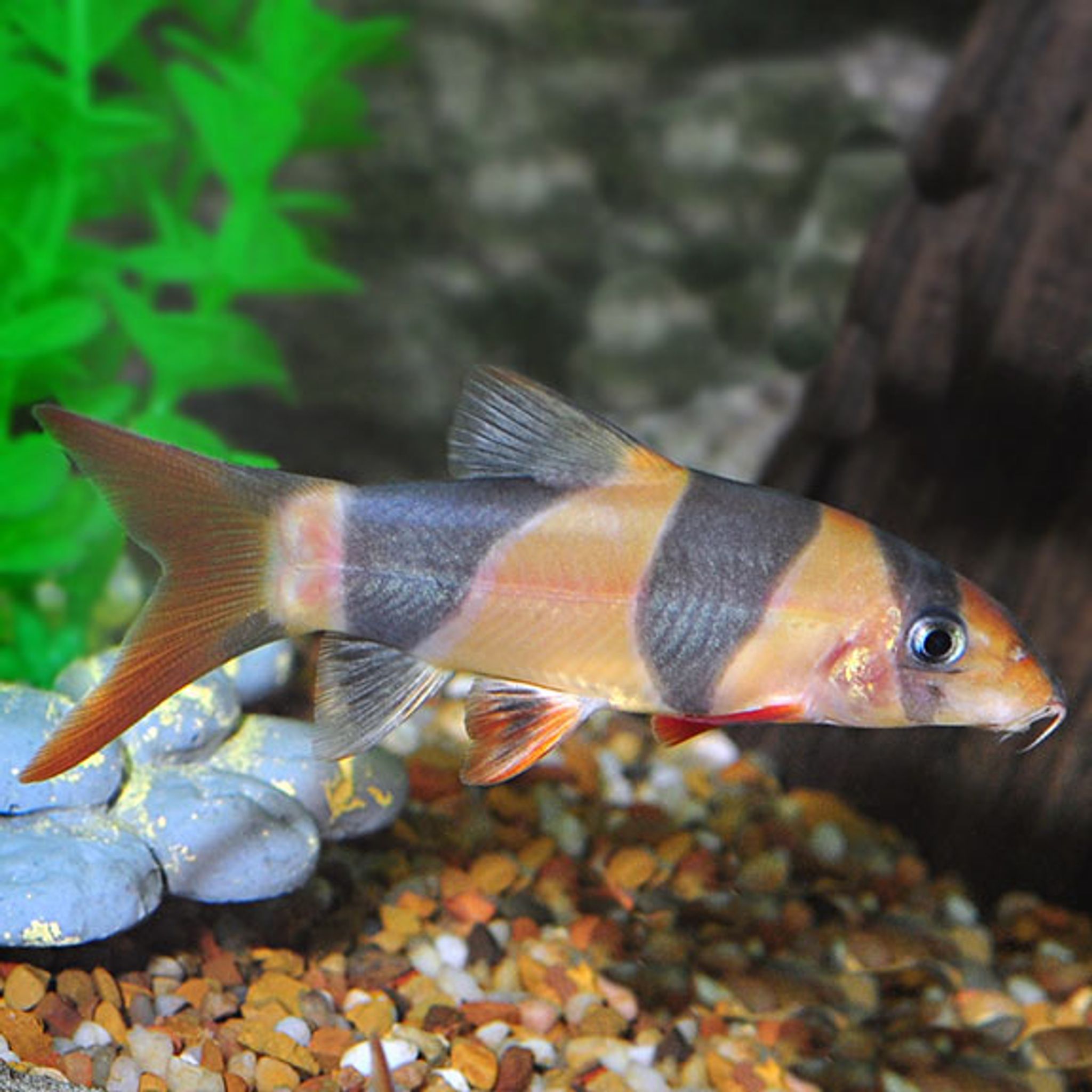
The clown loach (Chromobotia macracanthus) is a member of family Botiidae, native to the rivers of Sumatra and Borneo in Indonesia. It's easy to identify: an orange-gold body crossed by three bold black bands, with red-to-orange fins. Nearly all clown loaches in the US trade are either wild-caught or farm-raised overseas using hormone induction, since they essentially don't breed in home aquariums.
A few facts that surprise new owners:
- Adult size: typically 8-12 inches in home tanks, occasionally up to 12-13 inches and noticeably deep-bodied under excellent care.
- Growth rate: fast in year one, then slowing to roughly an inch or so per year — which is exactly why people underestimate their eventual size.
- Lifespan: 10-20+ years is realistic, with well-documented cases of 20-25 years. This is a multi-decade commitment, closer to a large parrot than a typical community fish.
- Scales: despite being called "scaleless" by some sources, clown loaches actually have tiny embedded scales. Either way, treat them as medication-sensitive (more on that below).
Tank Size: The Juvenile-to-Adult Arc
This is the single most misunderstood part of clown loach care, and it's worth planning for before you buy.
| Life stage | Group size | Tank size | Notes |
|---|---|---|---|
| Juvenile (2-4 in) | 5-6 minimum | 55-75 gal (208-284 L) | Temporary home only; they outgrow this within a couple of years |
| Sub-adult (4-7 in) | 5-6+ | 90-125 gal (340-473 L) | Transition tank as growth accelerates |
| Adult (8-12 in) | 5-8 | 125-150+ gal (473-568+ L), 6 ft (183 cm) length ideal | Long-term home; footprint matters more than height |
A simple planning rule: budget about 30 gallons per adult in the group, and prioritize a long, low tank over a tall one — clown loaches are floor-dwelling, active swimmers, and a 6-foot tank gives them room to patrol without cramping.
Never keep clown loaches alone or in pairs. They're a schooling, hierarchy-forming species. A group of two or three tends to hide constantly and can develop bullying dynamics. Five to six fish is the practical minimum; six to eight, if your tank allows it, produces the boldest, most visible group.
Water Parameters
Clown loaches tolerate a fairly wide range, but stability matters more than hitting an exact number.
| Parameter | Range | Sweet spot |
|---|---|---|
| Temperature | 78-86°F (26-30°C) | 80-84°F |
| pH | 6.0-7.5 (tolerate up to ~7.8) | 6.5-7.5, stable |
| General hardness (GH) | 5-12 dGH | Soft to moderately hard |
| Carbonate hardness (KH) | 3-12 dKH | Moderate |
| Ammonia / Nitrite | 0 ppm | 0 ppm, always |
| Nitrate | Under 20-40 ppm | Lower end via water changes |
Practical notes:
- Only add clown loaches to a fully cycled, mature tank — they're sensitive to ammonia and nitrite spikes.
- Run weekly 25-30% water changes and strong filtration — a canister filter or sump rated well above the tank's actual volume, with moderate flow and good oxygenation (they appreciate well-oxygenated water without a strong current pushing them around).
- The warmer end of the range (82-84°F) is also useful during an ich outbreak, since heat speeds the parasite's life cycle and shortens treatment.
- A large tank needs a reliably sized heater, and many keepers run two smaller heaters instead of one large one so a single failure doesn't crash the temperature.
Tank Setup
- Substrate: sand or smooth, fine gravel. Clown loaches dig and sift through substrate, and sharp gravel can damage their barbels over time.
- Cover: caves, driftwood, rock piles, and PVC pipes give them places to wedge into — a completely normal, favorite behavior.
- Lid: tight-fitting. Loaches can be surprisingly good jumpers when startled.
- Lighting: include dim, shaded areas; they're more active during low light.
- Plants: hardy species mounted on wood or rock — Java fern and Anubias — hold up well. Rooted plants tolerant of digging, like Vallisneria and crypts, also work. Soft-leaved plants may get nibbled.
Diet
Clown loaches are omnivores that lean toward protein-rich foods.
- Staples: quality sinking pellets and wafers, so food reaches the bottom before faster mid-water fish eat it all.
- Protein: frozen or thawed bloodworms, brine shrimp, mysis shrimp, and blackworms.
- Vegetables: blanched zucchini, cucumber, and peas.
- Gel foods work well as a convenient, balanced supplement.
Feed once or twice daily, and consider a portion right around lights-out, since clown loaches are more active in dim conditions. Watch that faster tankmates aren't intercepting every sinking pellet before it reaches the group.
A useful bonus, not a reason to buy them: clown loaches eagerly eat snails and will clear out a pest snail population (as well as any ornamental snails you're keeping on purpose). Once the snails run out, keep feeding a full varied diet — don't rely on snails as a food source.
Temperament and Everyday Behavior
Clown loaches are peaceful toward other species but busy, boisterous, and highly social within their own group. Squabbling among group members to establish a pecking order is completely normal and not a sign of aggression toward tankmates.
A few behaviors alarm new owners unnecessarily:
- Resting on their side or upside-down. Looks like a dead fish; usually isn't. Check breathing, color, and overall activity rather than assuming the worst.
- Audible clicking sounds when excited or feeding — a normal communication behavior in this species.
- Wedging into tight crevices, sometimes so snugly it looks stuck. It isn't.
Good Tankmates
Active, medium-to-large, peaceful fish that enjoy warm water: rainbowfish, larger tetras (Congo, bleeding heart), tiger and other barbs, danios, larger rasboras, bristlenose or other plecos, other botiid loaches, and peaceful gouramis. Adding a few active "dither fish" tends to make clown loaches bolder and more visible.
Fish to Avoid
- Very small fish that adult loaches may eventually eat.
- Slow, long-finned species like bettas or fancy goldfish — fin-nipping risk and, in goldfish's case, a temperature mismatch (goldfish prefer cooler water than clown loaches need).
- Aggressive large cichlids.
- Cool-water species in general.
Handling note: each clown loach has a sharp, erectile spine below each eye that can snag in fishing nets and can nick fingers. Move them with a cup or container rather than a net.
Ich: The Clown Loach's Weak Point
Clown loaches are notoriously among the first fish in a tank to break out with white spot disease (ich) — tiny white salt-grain-like spots, flashing against decor, and clamped fins.
- Quarantine every new arrival for 2-4 weeks before adding it to an established tank.
- If ich appears, raise the temperature toward the top of the safe range (around 86°F) to speed the parasite's life cycle, and treat the whole tank for 10-14 days, continuing a few days past when visible spots disappear.
- Clown loaches are sensitive to copper, formalin, and malachite green, and salt can also stress them. Use medications made for sensitive or scaleless species, often dosed at a reduced rate (frequently around half strength), and read the label's species warnings before treating. A heat-only approach, run carefully, is a common option specifically because of this sensitivity. Medications suited to sensitive species can be browsed in FishyHub's medication category.
Common Mistakes
- Buying one or two "for snails" and housing them long-term in a 20-40 gallon tank. This is the single most common clown loach mistake.
- Adding them to a new, uncycled tank, or skipping quarantine on new arrivals.
- Dosing ich medication at full strength, risking losses in a medication-sensitive species.
- Panicking at normal behavior — side-lying or clicking — instead of checking breathing, color, and appetite.
- Constant hiding, which usually points to too small a group, lighting that's too bright, not enough cover, or no dither fish for confidence.
- Thin or sunken bellies, often from being outcompeted at feeding time by faster fish, or from internal parasites, which are common in wild-caught imports. Target-feed the affected fish and consider a deworming treatment if the problem persists.
- Sharp gravel damaging barbels over time — switch to sand or smooth fine gravel.
Loaches Overview: Where Clown Loaches Fit
Clown loaches are one species among a much larger group of loaches kept in aquariums, spread across several families. All are social bottom-dwellers that appreciate groups and soft substrate, but their care needs vary a lot.
| Family | Examples | Typical size | Notes |
|---|---|---|---|
| Botiidae | Clown, yoyo, zebra, skunk, blue botia | 3.5-12+ in | Social, snail-eaters, need groups |
| Cobitidae | Kuhli, dojo (weatherfish) | 3-11 in | Kuhli nocturnal; dojo tolerates cool water |
| Gastromyzontidae | Hillstream loaches | 2-3 in | Need strong flow and high oxygen |
| Nemacheilidae | Sumo, zodiac loach | 2-3 in | Small, peaceful, less commonly available |
Smaller Alternatives if 125+ Gallons Isn't Realistic
If a full-grown clown loach group isn't in your plans, several relatives scratch a similar itch on a smaller footprint:
- Dwarf chain loach (Yasuhikotakia sidthimunki): about 2 inches, an active mid-water schooler, comfortable in a 30-gallon tank.
- Zebra loach: around 3.5 inches, peaceful and hardy.
- Kuhli loach: 3-4 inches, nocturnal, needs a sand substrate.
- Yoyo loach: 5-6 inches, a bit feistier than the others on this list.
A Note on the Redtail (Red-Tailed Squirrel) Loach
The redtail or red-tailed squirrel loach is a small, semi-aggressive, territorial Asian loach suited to a species tank or a robust community — it is not a peaceful substitute for clown loaches and shouldn't be assumed to fit the same community role.
Oriental Weatherfish (Dojo Loach): The Opposite Water Needs
The dojo loach, also called oriental weatherfish, is a cool-water species (roughly 50-75°F), grows 8-11 inches, and is known for gulping air at the surface — a popular companion for unheated goldfish tanks. Because of the temperature mismatch, never mix dojo loaches with clown loaches. Dojo loaches are also an established invasive species in some US waterways, so they should never be released outdoors under any circumstances.
"Loach Catfish" Isn't a Real Category
You may see the term "loach catfish" used online for various unrelated or misidentified fish. True loaches are relatives of carp, not catfish — even though both groups have barbels around the mouth, which is likely the source of the confusion.
Which Loaches Eat Snails
Clown, yoyo, skunk, blue botia, zebra, and dwarf chain loaches all hunt snails readily. Kuhli loaches will only manage very small snails. In every case, treat snail-eating as a nice bonus rather than a primary food source, and supplement with a full diet once the snail population is gone.
Is a Clown Loach a Good First Fish?
No — not because they're difficult to feed or unfriendly, but because of the combination of eventual tank size, sensitivity to ich, and a 10-20+ year commitment. They're a better fit for a hobbyist who has already run a cycled tank successfully and is ready to plan for a large, long-term setup. If you're building toward that setup, FishyHub's loach selection is worth browsing once your tank and group size are ready.
Frequently Asked Questions
How big do clown loaches get, and how fast?
Most reach 8-12 inches in home aquariums, occasionally up to 12-13 inches under excellent care. Growth is fast in the first year, then slows to roughly an inch or so per year, which is why many owners are caught off guard by their eventual size.
Can I keep one clown loach?
No. Clown loaches are a schooling species that needs company to feel secure and to establish normal social hierarchy. Five is the practical minimum, and six to eight is better if your tank allows it.
Can they live in a 55-gallon tank?
Only temporarily, as juveniles. A 55-75 gallon tank works for a young group, but they'll need to move into 125-150+ gallons as they mature, ideally a 6-foot-long tank.
Do they eat snails and shrimp?
They eat snails readily and will clear out a pest population quickly. Small shrimp, especially shrimplets, are also at risk, so don't count on clown loaches being fully shrimp-safe.
Why is my clown loach lying on its side?
In most cases, it's simply resting — a normal behavior for this species that alarms new owners. Check breathing, coloration, and appetite; genuine illness usually comes with other signs, not just the resting posture alone.
Are clown loaches aggressive?
They're peaceful toward other fish species. Squabbling within their own group to sort out a pecking order is normal social behavior, not true aggression, and doesn't usually cause lasting harm.
How long do clown loaches live?
10-20+ years is typical with good care, and well-documented cases reach 20-25 years. This is a genuinely long-term pet, so plan the tank and its eventual home accordingly.
Can clown loaches live with goldfish or bettas?
No. Goldfish need cooler water than clown loaches require, creating a temperature mismatch, and slow, long-finned bettas are at risk of fin-nipping and stress around an active, boisterous group.
Planning a clown loach group means planning the whole multi-year arc, not just the starter tank. When you're ready to stock or upgrade, explore FishyHub's bottom-dweller and loach selection for options that fit your tank size and timeline.


