
Chili Rasbora Care Guide: Tank Size, Diet, Water Parameters and Temperament
Chili rasboras do best in a mature, heavily planted tank of 10 gallons (38 L) or more, kept in groups of at least 10, in soft, slightly acidic water at 76–79°F (24–26°C), and fed foods small enough for their tiny mouths. They are peaceful and surprisingly hardy once settled, but they are delicate during shipping and their first month in your tank. This guide covers everything you need to get them through that window and keep them coloring up for years.
Chili Rasbora at a Glance
The chili rasbora (Boraras brigittae), also sold as the mosquito rasbora, is not a true Rasbora; it belongs to the genus Boraras. It comes from the tea-colored blackwater peat swamps of southwest Borneo (Indonesian Kalimantan), where water is soft, acidic and stained by fallen leaves.
| Trait | Details |
|---|---|
| Adult size | About 0.6–0.8 in (1.5–2 cm) |
| Lifespan | Typically 4–6 years with good care |
| Minimum tank | 10 gal (38 L) for beginners; 5 gal (19 L) for experienced keepers |
| Group size | 10 or more; 12–20+ is better |
| Temperature | 72–82°F (22–28°C), target 76–79°F (24–26°C) |
| pH | 5.0–7.0 preferred |
| Hardness | GH about 1–8 dGH, KH low |
| Temperament | Completely peaceful, timid, mid-water |
| Diet | Micropredator; tiny live, frozen and powdered foods |
Appearance and Sexing
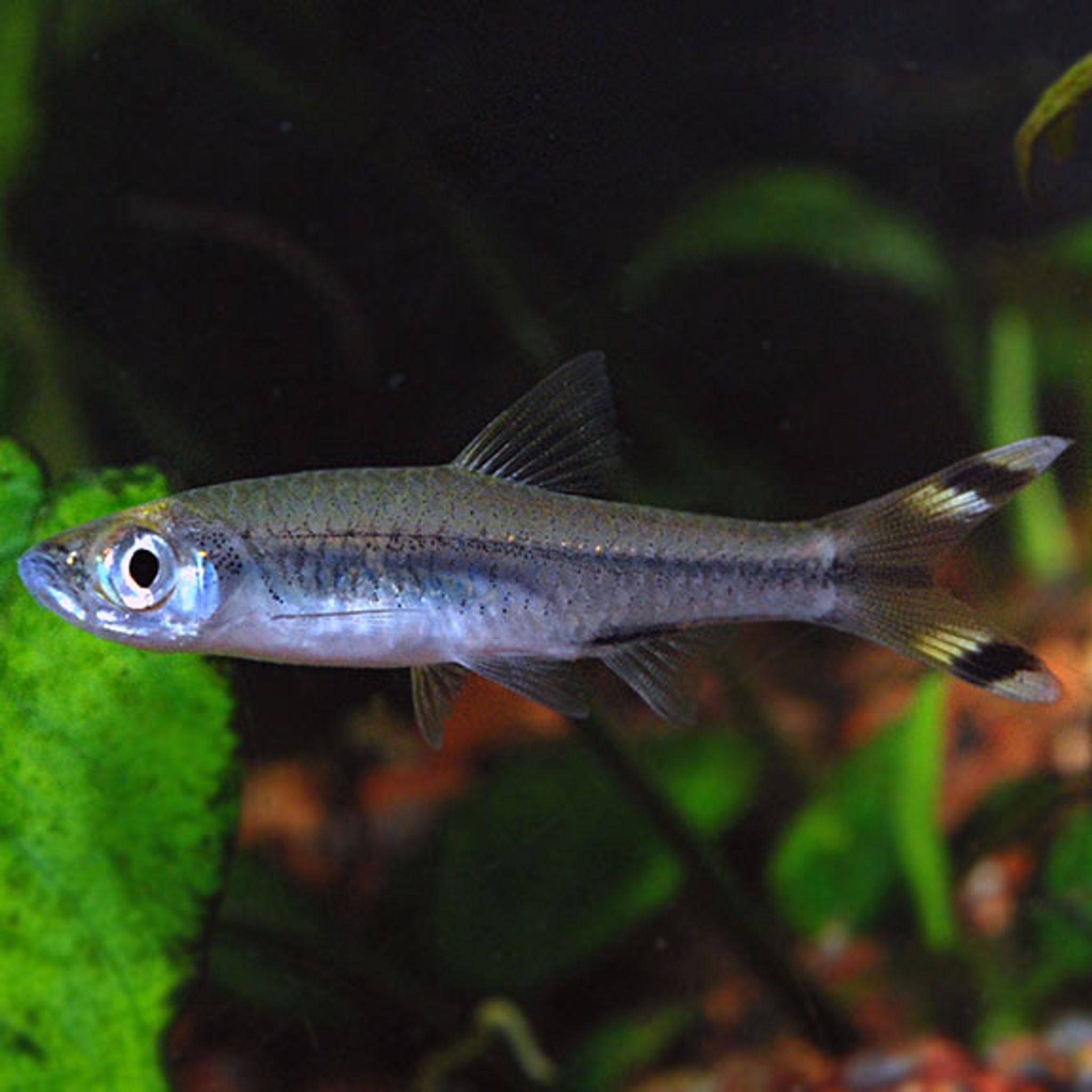
Expect a red to orange body with a dark lateral stripe and a thin red or orange line running above it, plus dark spots near the tail and fin bases. Males are slimmer, slightly smaller, the deepest red, and show red in the dorsal and anal fins. Females are rounder and a little paler.
Juveniles usually arrive washed out. Full color develops over weeks to months with good food, dark decor and stable water, so don't judge a new group on day one.
Lifespan
Estimates run anywhere from 2 to 8 years. A realistic expectation for a well-kept group is 4–6 years.
Tank Size and Group Size
Chilis are shoalers. Kept in small numbers they hide constantly and never show natural behavior.
- Group size: Six is the absolute floor and tends to produce shy fish. Aim for 10 or more, and 12–20+ if space allows.
- Tank size: A 5-gallon (19 L) tank can work for a small group, but small volumes swing quickly in temperature and chemistry. A standard 10-gallon (38 L) is the recommended starting point and comfortably holds 15–20 fish with plants. A 20-gallon long (76 L) is ideal for a large, active school.
Sample Stocking Plans
| Tank | Chili rasboras | Suggested extras |
|---|---|---|
| 5 gal (19 L) | 8–10 | A few nerite snails or a small group of dwarf shrimp |
| 10 gal (38 L) | 15–20 | Cherry or amano shrimp, snails, or 2–3 otocinclus in a mature tank |
| 20 gal long (76 L) | 25–30+ | Pygmy corydoras, dwarf pencilfish or ember tetras, plus shrimp |
Keep stocking conservative and add fish gradually so the biological filter can keep up.
Water Parameters
| Parameter | Target |
|---|---|
| Temperature | 76–79°F (24–26°C); acceptable 72–82°F (22–28°C) |
| pH | 5.0–7.0; tolerates about 7.5–8 if acclimated slowly |
| GH | 1–8 dGH, softer is better |
| KH | Low |
| Ammonia / nitrite | 0 ppm |
| Nitrate | Under 20 ppm |
Soft vs. Hard Water
Keepers disagree here. Some treat chilis as hardy across pH 6–8 and in harder water; others insist on soft, acidic blackwater and warn that hard water stresses the kidneys and slime coat. The practical middle ground: soft, slightly acidic water is best, but tank-bred fish usually adapt to neutral, moderately soft tap water as long as it stays stable. Don't chase a pH number with chemical adjusters; the swings do more harm than a steady, slightly-off value.
What US Tap Water Means for Chilis
Check your local water quality report or test your tap for GH and KH.
- Soft-water regions such as the Pacific Northwest and much of the Northeast often suit chilis straight from the tap after dechlorinating.
- Hard-water regions such as the Southwest, Texas and Florida may need a blend of RO water and tap, or RO remineralized to a low GH.
Whatever you use, make every water change with the same recipe.
Temperature and Heating
Recommended floors range from 68°F to 77°F. Use 72–82°F (22–28°C) as the safe band and target the mid to upper 70s. Most US homes run cooler than that at night or in winter, so a heater is needed. In a nano tank, fit a heater guard so tiny fish can't get trapped against the element.
Setting Up a Chili Rasbora Tank
The Ideal 10-Gallon Setup
- A standard 10-gallon (38 L) tank with a tight-fitting lid, since chilis jump when startled
- A sponge filter for gentle flow and safe intake
- An adjustable LED you can run at low to moderate intensity
- A heater with a guard
- Dark sand or a dark planted substrate, and a dark background
Plants, Hardscape and Botanicals
Plant heavily. Cryptocoryne, mosses and stem plants give cover and grow the biofilm and microfauna chilis graze on. Floating plants dim the light, and driftwood plus leaf litter or botanicals release tannins that mimic their home water. Bright white light over pale substrate washes out their color, so keep lighting dim to moderate.
Filtration and Flow
Chilis are weak swimmers. Keep flow gentle. If you run a hang-on-back or canister filter, cover the intake with a pre-filter sponge; an unguarded intake can pull in and kill fish this small. Treat the heater guard and pre-filter as nano-tank must-haves.
Why Tank Maturity Matters
Add chilis only to a fully cycled tank. Some keepers want three months minimum; others are satisfied with any cycled tank. A sensible target is cycled plus a few weeks of plant growth and biofilm, and 2–3 months or more is even better. Adding them to a brand-new tank is the most common reason for sudden deaths in week one.
Tip: Keep a mature sponge running in an established tank. Moving it into a new setup gives you an instantly cycled filter.
Buying and Acclimating Chili Rasboras
What to Look For
- Active fish with rounded, full bellies; avoid thin or sunken ones
- Ask whether they are wild-caught or tank-bred; tank-bred fish usually adapt more easily to tap water
- Buy the whole group at once so they settle together
Acclimation Step by Step
- Turn the tank lights off and keep the room dim.
- Float the bag to match temperature.
- Drip acclimate slowly into a container, gradually mixing in your tank water.
- Net the fish across; never pour store or shipping water into your tank.
- Leave lights off for the rest of the day.
Ideally, quarantine new groups first. Wild stock in particular may carry internal parasites.
Diet and Feeding
Chilis are micropredators with very small mouths. Standard flakes and pellets are often too big, and fish can slowly starve while you think they are eating.
Good foods include:
- Crushed or powdered flakes and micro pellets
- Insect-based micro foods
- Frozen cyclops, daphnia and rotifers
- Live baby brine shrimp, microworms and vinegar eels
Feed small amounts 1–3 times a day and remove leftovers, which foul nano tanks fast. A varied, protein-rich diet is one of the main drivers of deep red color.
Culturing Live Food at Home
Microworms and vinegar eels are easy to culture on a kitchen counter and are sized perfectly for chilis and their fry. Vinegar eels also stay alive in the water column for a long time, so they don't pollute the tank.
Vacation Feeding
Healthy chilis in a mature planted tank can skip a few days of feeding, grazing on biofilm and microfauna. Avoid feeder blocks, which can foul small volumes.
Temperament and Tankmates
Chilis are completely peaceful, timid, mid-water fish. They are a victim species and never the aggressor, so tankmates must be small and gentle.
| Good tankmates | Avoid |
|---|---|
| Other Boraras species | Anything big enough to swallow them |
| Ember tetras | Fin-nippers |
| Dwarf pencilfish | Crayfish and crabs |
| Pygmy corydoras | Large barbs |
| Otocinclus (in mature tanks) | Angelfish |
| Sparkling gourami | Most gouramis |
| Least killifish | Badis badis |
| Dwarf and amano shrimp | Bettas (case by case, see below) |
| Nerite and other small snails |
Shrimp
Adult shrimp are safe. Chilis will pick off some newborn shrimplets, so if you want a shrimp colony to grow, add dense moss for the babies to hide in. You can browse freshwater shrimp on FishyHub for nano-safe options.
Other Nano Tankmates Worth Knowing
- Dwarf pencilfish: prefer near-still water and dark substrate; keep in groups of 10+.
- Least killifish (Heterandria formosa): a tiny, peaceful livebearer that tolerates cooler water.
- Sparkling gourami: small and calm enough for a planted nano community.
- Badis badis and plakat bettas: territorial predators and generally not suitable with chilis.
Bettas
A calm betta in a heavily planted 10-gallon or larger tank sometimes ignores chilis, but many bettas hunt micro fish. It is a risk, not a safe pairing.
Nighttime Behavior
At night chilis rest near plants or the substrate and turn pale. This is normal and not a sign of illness.
Maintenance
- Change 10–25% weekly, matching temperature and chemistry.
- Test weekly for ammonia, nitrite and nitrate.
- Avoid large water changes with mismatched water; the sudden shift can shock them.
- Feed less rather than more. Overfeeding is the fastest way to crash a nano tank.
Breeding
Chilis are continuous egg scatterers, laying a few eggs daily among fine plants. There is no parental care and adults eat eggs. Even so, a mature, mossy planted tank often produces a steady trickle of fry without any effort. To raise more, move moss clumps to a separate tank. Fry need infusoria or vinegar eels first, then baby brine shrimp as they grow.
Common Diseases
Poor or unstable water is the root cause of almost every problem.
- Ich: white salt-like spots.
- Velvet: gold dust sheen and clamped fins.
- Columnaris: white or gray patches from a bacterial infection.
- Internal parasites: thin, sunken bellies despite eating.
- Fin rot: ragged, deteriorating fins.
Quarantine new fish, raise temperature gradually if treating ich, and dose medications carefully at nano-appropriate levels. Micro fish are sensitive to overdosing, so measure precisely for your actual water volume.
Common Mistakes and Troubleshooting
| Problem | Likely cause | Fix |
|---|---|---|
| Fish hide constantly | Group too small | Add more chilis |
| Deaths in week one | Tank too new | Use a mature, cycled tank |
| Fish slowly waste away | Food too big | Powder foods, add live and frozen micro foods |
| Pale, stressed fish | Bright light, bare tank | Add plants, floaters and dark decor |
| Exhausted fish or losses in filter | Strong current, unguarded intake | Sponge filter or pre-filter sponge |
| Fish vanish overnight | Tankmates large enough to eat them | Rehome predators |
| Sunken bellies despite feeding | Internal parasites | Quarantine and treat |
| Poor red color | Juveniles, stress, light or diet | Wait, dim light, vary diet, check water |
| Sudden stress after water change | Mismatched water | Smaller changes with matched water |
Chili Rasbora Look-Alikes and Alternatives
Other Boraras Species
All stay under 1 inch (2.5 cm), need similar care and are often sold mislabeled. Tell them apart by spot pattern and color:
- Phoenix rasbora (B. merah): more orange, with less defined markings than the chili's bold stripe.
- Strawberry rasbora (B. naevus), dwarf or spotted rasbora (B. maculatus), least rasbora (B. urophthalmoides) and B. micros: each has its own arrangement of dark spots and shade of red or orange, so compare markings closely. If a label and the fish don't match, the markings are the better guide, and the care is the same either way.
Eyespot Rasbora (Brevibora exilis)
Slightly larger at about 1 inch (2.5 cm), with a glowing eye spot and a blue line. It is undemanding and a good alternative in groups of 10+.
Barboides gracilis
A West African micro barb under 0.75 inch (2 cm). It is short-lived (1–2 years), fragile in new tanks, and best kept in groups of 6–15+.
Frequently Asked Questions
How many chili rasboras can I keep in a 5 or 10-gallon tank?
About 8–10 in a 5-gallon (19 L) and 15–20 in a planted 10-gallon (38 L). The 10-gallon is more forgiving because temperature and chemistry stay steadier. Add the group in one go if possible.
Are chili rasboras good for beginners?
Yes, provided the tank is mature and parameters are stable. They are easy once settled but delicate during shipping and the first month. Most losses come from new tanks, oversized food or sudden water changes.
Can chili rasboras live with a betta?
Sometimes, in a 10-gallon or larger tank that is heavily planted with a calm betta. Many bettas will hunt fish this small, so treat it as a risk and have a backup tank ready.
Do chili rasboras need a heater?
In most US homes, yes. Room temperatures drop too low at night and in winter. Keep them at 76–79°F (24–26°C) with a guarded heater.
Why aren't my chili rasboras red?
They may be juveniles that haven't colored up yet, or they may be stressed. Bright light, pale substrate, a poor diet or unstable water all dull their color. Dim the lights, add plants and botanicals, and feed a varied micro diet.
What's the difference between a chili and a phoenix rasbora?
The chili has a bold dark lateral stripe and deeper red body. The phoenix rasbora is more orange with less defined markings. The two are often mixed up in stores, so compare the stripe before buying.
Bringing Home Your Chili Rasboras
A mature, planted tank, a proper group, gentle flow and tiny foods are what turn pale new arrivals into a glowing red school. When your setup is ready, browse the rasbora selection on FishyHub or explore more peaceful nano species in small community fishes.


