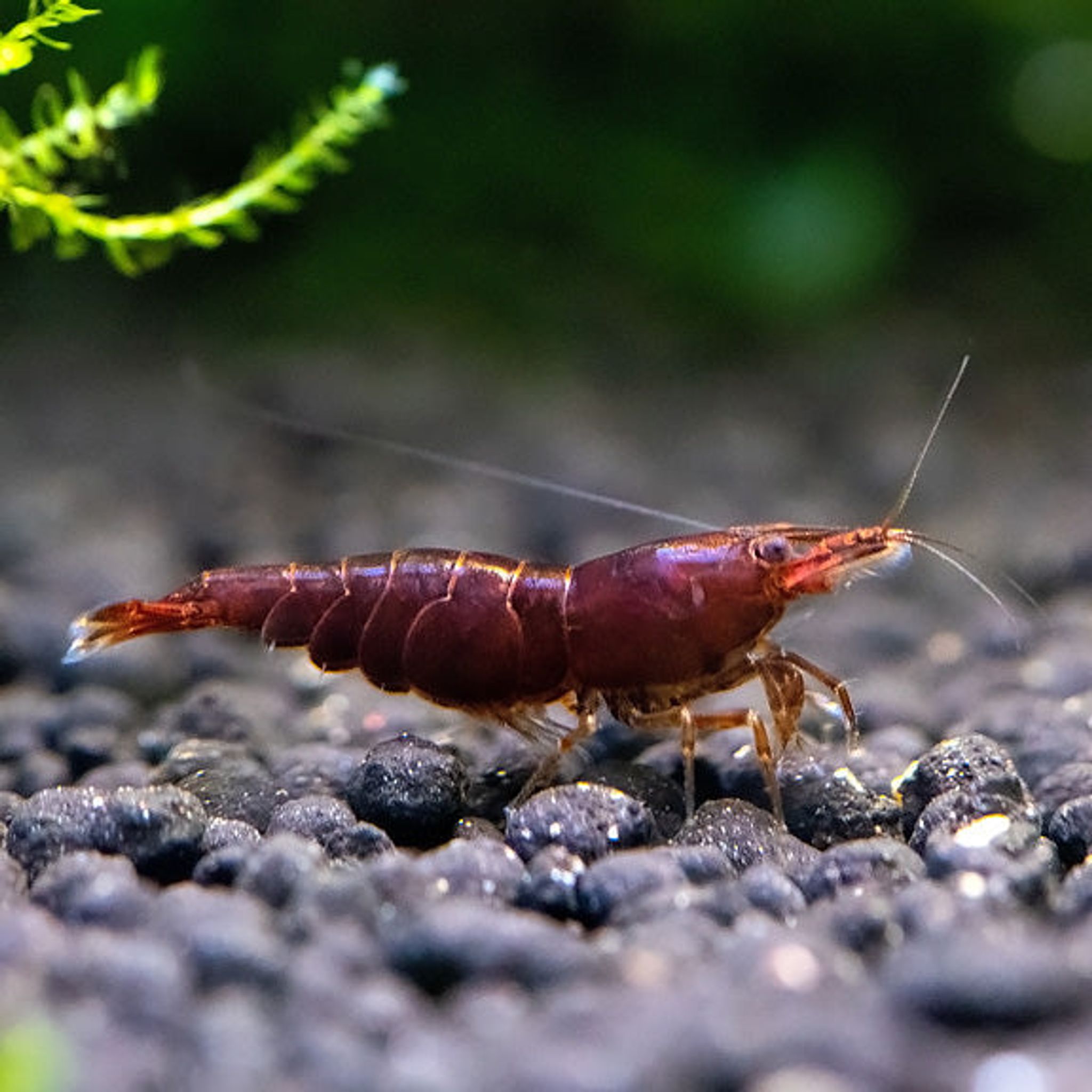
Cherry Shrimp Problems: Common Causes of Stress, Death and Poor Growth
Most cherry shrimp problems come down to four things: unstable water, trace toxins such as copper or pesticides, molting trouble caused by off-balance minerals, and too little food in a tank that hasn't matured. When shrimp die, lose color or stop growing, check those areas first. The sections below explain how to tell the causes apart and what to do about each one.
Start With the Symptoms
Different problems produce different patterns. Note what you see before changing anything, because a big emergency water change can make some problems worse.
| Symptom | Most likely causes | First thing to check |
|---|---|---|
| Several deaths within 24–48 hours | Toxin, ammonia spike, large sudden water change | Recent additions: new water, meds, plants, décor |
| One or two deaths every week | Chronic stress, poor molts, old age, slow parameter drift | GH, KH and TDS trends |
| Shrimp stuck in a half-shed molt | GH too low or too high, large parameter swings | GH and the size of recent water changes |
| Pale, washed-out color | Stress, bright bare tank, poor diet, recent shipping | Hiding places, background, food variety |
| Juveniles appear but few reach adult size | Not enough biofilm, predation, filter intake | Filter intake guard, tank maturity, tankmates |
Water Parameters That Keep Cherry Shrimp Healthy
Neocaridina davidi is one of the hardiest dwarf shrimp. It tolerates a fairly wide range but reacts badly to rapid change and to anything toxic in the water.
| Parameter | Widely accepted range | Notes |
|---|---|---|
| Temperature | 68–78°F (20–26°C) | Warmer water speeds up breeding but shortens lifespan |
| pH | 6.5–8.0 | Stability matters more than an exact number |
| GH (general hardness) | 6–12 dGH | Some keepers go as low as 4 or as high as 15 |
| KH (carbonate hardness) | 2–8 dKH | Buffers pH against swings |
| TDS | 150–300 ppm | A useful way to track drift between tests |
| Ammonia / nitrite | 0 ppm | Even small readings can kill shrimp |
| Nitrate | Below 20 ppm | Lower is better; many keepers aim for under 10 |
Experienced keepers don't agree on exact GH and TDS targets. Some colonies thrive well outside these ranges after generations in that water. What matters most is keeping your own numbers steady from week to week.
Uncycled or Immature Tanks
The most common reason new cherry shrimp die is an uncycled tank. Shrimp are much more sensitive to ammonia and nitrite than most community fish. A tank that has only just finished cycling can technically hold fish but still have little biofilm (the thin layer of microbes and algae that shrimp graze on all day). Waiting 4–8 weeks after the cycle finishes, or seeding the tank with mature filter media, gives the colony a much better start.
Water Changes That Are Too Big or Too Different
If tap water differs a lot from tank water in temperature, hardness or pH, a 50% change can set off mass molting or shock. Safer habits:
- Change 10–20% weekly instead of large, infrequent changes.
- Match the temperature within about 2°F (1°C).
- Always use a dechlorinator that neutralizes chloramine. Many US municipal water systems use chloramine rather than plain chlorine.
- Drip new water in slowly on nano tanks under 10 gallons (38 liters).
Dechlorinators and other conditioners are available in the water conditioner and additives category on FishyHub.
Toxins: The Silent Killers
When healthy-looking shrimp suddenly die in large numbers, suspect a toxin before you suspect disease.
Copper
Invertebrates are extremely sensitive to copper. Common sources include:
- Fish medications, especially ich and parasite treatments
- Some fertilizers and plant supplements (check the label for copper sulfate or chelated copper)
- Old copper plumbing, particularly water that has sat in the pipes overnight
- Some inexpensive decorations and metal objects
Pesticides on Plants
Plants grown for the pond and aquarium trade are sometimes treated with pesticides that don't bother fish but are deadly to shrimp. Tissue-culture plants are the safest choice. Otherwise, quarantine new plants in a separate container for a couple of weeks, or rinse and soak them thoroughly before adding them to a shrimp tank.
Molting Problems
Shrimp have to shed their exoskeleton to grow, so failed molts are a leading cause of adult deaths. A shrimp with a white ring across its back, where the head section meets the tail section, is often one that died partway through a molt.
Common causes:
- GH too low: not enough calcium and magnesium to build a new shell, which leaves it soft and weak.
- GH too high: some keepers believe very hard water makes the old shell harder to crack open, though this is less well established.
- Sudden changes: a big water change can trigger several shrimp to molt early, before they're ready.
- Iodine and protein: some keepers add mineral supplements or feed foods rich in calcium and iodine. Results vary, so don't assume more is better.
If you use RO or distilled water, you have to remineralize it with a shrimp-specific GH product. Leave shed exoskeletons in the tank, because shrimp often eat them to recover minerals.
Poor Growth and Weak Breeding
Not Enough Food, or the Wrong Food
A spotless tank is often a hungry one for shrimp. They rely on biofilm, algae and decaying leaves between feedings. To help growth:
- Keep some algae on the glass and décor instead of scrubbing everything.
- Add dried leaves such as Indian almond or oak to feed biofilm.
- Feed a varied diet: shrimp pellets, blanched vegetables (zucchini, spinach), and occasional protein.
- Feed only what the colony finishes in about 2–3 hours, then remove leftovers.
Overfeeding causes its own problems: ammonia spikes, planaria, and hydra, which can prey on baby shrimp. A good selection of pellets and supplements is in the food and supplements category on FishyHub.
Juveniles Disappearing
Baby cherry shrimp hatch at under 0.1 inch (2 mm) long and are easy prey. Common culprits:
- Filter intakes: cover them with a pre-filter sponge, or use a sponge filter.
- Tankmates: almost any fish that can fit a baby shrimp in its mouth will eat it, including tetras, gouramis and bettas.
- Hydra and dragonfly nymphs: these hitchhike in on plants and target small shrimp.
Dense cover like moss, floating plants and leaf litter greatly improves juvenile survival.
Stress and Color Loss
Pale shrimp are usually stressed, not sick. New arrivals often look washed out for a week or two after shipping, and ongoing paleness usually comes from:
- A bare tank with nowhere to hide
- A light-colored substrate or no background
- Aggressive or constantly active tankmates
- Unstable water
A dark substrate, plenty of plants and a peaceful setup usually bring color back within a few weeks.
Diseases and Parasites
True diseases are less common than environmental problems, but a few show up regularly:
- Vorticella: fuzzy white growth on the shell, often tied to poor water quality.
- Scutariella: tiny white worm-like parasites on the head. Usually treated with a short salt dip, though methods vary.
- Muscular necrosis: the body turns opaque white and the shrimp dies. It's usually linked to stress or sudden temperature change, and there's no reliable cure.
- Bacterial infections: reddish or cloudy patches, lethargy, rapid deaths.
Many common fish medications will kill shrimp, so read the ingredient list carefully and treat in a separate container if you can.
Frequently Asked Questions
Why are my cherry shrimp dying one by one?
Slow, steady losses usually point to chronic stress rather than one big event. Check GH, KH and TDS for drift, look for signs of failed molts, and make sure nitrate stays low. Old age is also possible, since cherry shrimp typically live about 1–2 years.
Why did my shrimp die after a water change?
The new water was probably too different from the tank water in temperature, hardness or pH, or it wasn't treated for chloramine. Smaller, more frequent changes with matched temperature and a good dechlorinator prevent most of these deaths.
What does the white ring on a cherry shrimp mean?
A white band between the head and tail sections usually means the shrimp is having trouble molting. It's often linked to GH that's too low or to sudden parameter changes. Shrimp with a pronounced ring frequently die during the molt, so stabilize the water rather than making large corrections.
Can cherry shrimp live with fish?
They can live with very small, peaceful fish such as otocinclus or some small rasboras, but most fish will eat baby shrimp. For a growing colony, a shrimp-only tank or one with plenty of dense cover works best.
How long before cherry shrimp start breeding?
In a stable, mature tank, females usually start carrying eggs within a few weeks to a few months of arriving. Eggs hatch in roughly 3–4 weeks, and warmer water speeds that up.
Keep Your Colony Stable
Cherry shrimp do best in a mature, stable tank that's free of toxins, with gentle water changes and a steady food supply. Deal with those basics and most problems go away on their own. When you're ready to start or expand a colony, browse freshwater shrimp on FishyHub.


