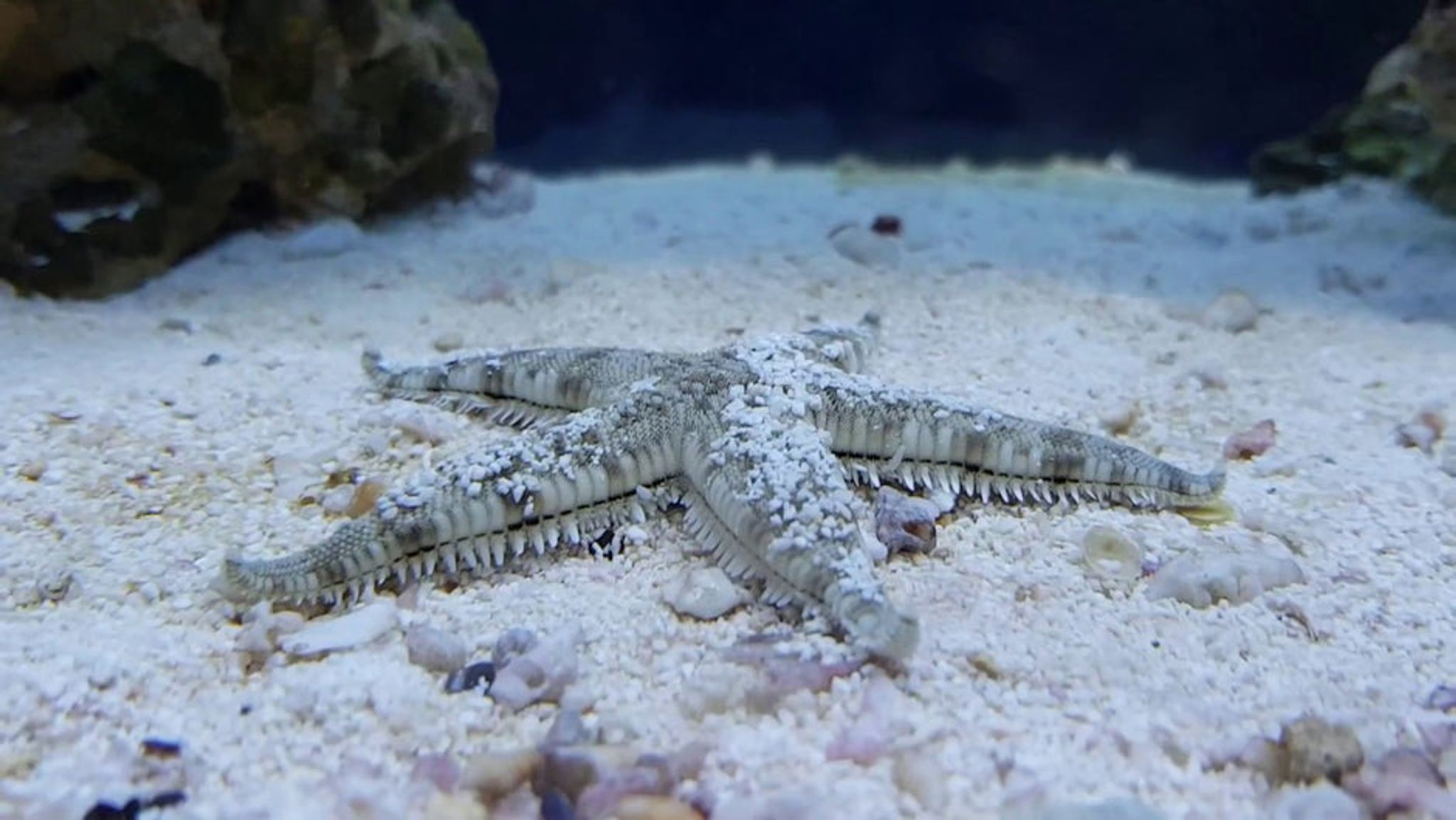

Best Tank Mates for Sand-Sifting Starfish in a Reef Aquarium
A sand-sifting starfish isn't a "set it and forget it" cleanup crew member — it's a slow-moving predator competing for a shrinking food supply. Choosing tank mates well, and being honest about whether your system is even large enough, is what separates a star that thrives for years from one that quietly starves within months.
What a Sand-Sifting Starfish Actually Needs
Before picking tank mates, it helps to understand what the animal is doing all day. Sand-sifting stars — most commonly Astropecten species, and the smaller Archaster typicus (dwarf sand-sifting star) — bury themselves in substrate and hunt live infauna: amphipods, copepods, small worms, and other meiofauna, along with organic detritus. They are not algae grazers and they don't clean up uneaten fish food the way a snail or hermit crab might.
That hunting behavior means the animal's survival depends entirely on the size and health of the "pod" population living in the sand bed — a resource that depletes over time and does not replenish itself quickly.
Baseline requirements:
| Factor | Guideline |
|---|---|
| Tank size | 75+ gallons (284+ L) for standard Astropecten; 30-40+ gallons (114-151+ L) for dwarf Archaster typicus |
| Sand bed age | Mature, established 1+ year, ideally seeded from live rock/live sand or a refugium |
| Temperature | 72-78°F (22-26°C) |
| pH | 8.1-8.4 |
| Salinity | 1.023-1.025 SG |
| dKH | 8-12 |
| Acclimation | Slow drip, 1-2+ hours minimum |
Starfish lack gills and scales, so they have almost no buffer against rapid salinity or pH swings, and they are far more sensitive to copper than most fish. Never expose one to air during acclimation or maintenance, and never dose copper-based medications in a display tank that houses any starfish.
Good Tank Mates
Most peaceful reef community animals coexist with sand-sifting stars without issue, since the star ignores fish, corals, and anemones and focuses entirely on the substrate.
Fish:
- Clownfish, gobies, blennies, dartfish, small wrasses, cardinalfish, and firefish
- Most reef-safe community species that don't pick at slow-moving invertebrates
Invertebrates:
- Peaceful shrimp — cleaner shrimp and fire shrimp
- Snails — Nassarius and Nerite species
- Small, peaceful hermit crabs (see the disagreement note below)
- Other peaceful sea cucumbers
Corals:
- Soft corals and LPS/SPS corals generally coexist fine — the star has no sting and won't eat coral tissue. The main risk isn't predation, it's a burrowing star occasionally bulldozing over a low-lying frag or disturbing a delicate aquascape while digging.
Reef keepers building out a mixed community can browse marine fish and marine invertebrates to round out a tank designed around a healthy sand bed.
Species to Avoid
Some fish and invertebrates are specialist or opportunistic starfish predators, and a few otherwise "reef-safe" fish will pick at a slow, defenseless animal.
- Pufferfish and triggerfish — will actively bite and eat starfish
- Large angelfish — some individuals target starfish, especially as they mature
- Harlequin shrimp — a specialist predator that feeds almost exclusively on starfish and will not leave one alone
- Harlequin tuskfish and some other large wrasses — known to pick at starfish
- Large, aggressive hermit crab species — opportunistic and may attack a weakened or molting star
Where Sources Disagree
A few points in the sand-sifting starfish conversation don't have one universal answer, and it's worth stating the honest, balanced take on each.
Hermit crabs — friend or risk? Some care guides list hermit crabs as fine tank mates across the board. Others point out that certain species are opportunistic scavengers that will attack a weakened or actively molting starfish, or pick apart one that's already dying — which then gets misread as the cause of death rather than a symptom. The reasonable middle ground: small, peaceful species like Scarlet Reef hermits are low-risk, but avoid stocking large or aggressive hermit species in a tank that houses a sand-sifting star.
Should sand-sifting stars be recommended at all? Some sources treat them as a standard cleanup crew staple. More experienced voices push back hard, arguing they're a poor fit for the vast majority of home aquariums because they starve slowly and invisibly in anything smaller than a large, mature system. The more defensible position: treat sand-sifting starfish as an advanced, large-tank animal rather than a beginner cleanup solution, and point smaller-tank keepers toward alternative sand-stirrers instead.
How many stars per tank? Some hobbyists say one star per 75-100 gallons is the safe ceiling. Others report success keeping pairs in very large, mature systems with abundant sand fauna. A sensible default: stick to one star per tank unless the system is 150+ gallons with a proven, robust pod population — since competition for the same shrinking food source, not aggression, is the real risk of doubling up.
Signs Your Starfish Is Starving
Because starvation happens gradually and the star spends much of its time buried, early warning signs are easy to miss until it's too late.
- Staying buried for days or weeks at a time, rather than surfacing periodically
- Arms curling under or going limp instead of holding a normal shape
- Losing an arm tip, or arms appearing to shrink
- White or discolored patches developing on the body
- No response to gentle touch or water movement
Any of these warrant immediate target feeding and a hard look at whether the tank's sand fauna has been depleted.
Supporting the Sand Bed's Food Web
Because a sand-sifting star's survival is really a food-supply problem, ongoing sand bed maintenance matters more than almost anything else in its care.
Practical strategies:
- Periodically seed the display with additional live sand or copepod/amphipod cultures
- Run a refugium as a continuous pod-breeding source that migrates infauna into the display over time — this is a proactive strategy, not just a reactive fix once the star is already declining
- Avoid overstocking the rest of the cleanup crew — too many snails and hermits competing for the same detritus and pods accelerates starvation for a star, which is slower and less efficient at foraging than crabs or snails
- Target-feed sinking pellets, frozen mysis, or other meaty foods directly near the star in smaller or younger systems, especially once natural pod populations start to thin
As a rough rule of thumb, expect supplemental feeding to become necessary somewhere in the 3-6 month range after introduction in anything short of a very large, well-established system — sand infauna simply can't reproduce fast enough to keep up with sustained predation in a smaller footprint.
Checking Sand Bed Health Before You Buy
A simple, actionable check before adding a star: shine a flashlight across the sand surface at night, after the lights have been off for an hour or two. A healthy, mature bed will show visible movement — small amphipods and other pods skittering across the surface. If you see little to no activity, the sand bed isn't ready to support a sand-sifting star yet, regardless of tank size.
Alternatives for Smaller Tanks
If your tank doesn't clear the size or maturity bar, several options provide similar sand-turning benefits with a lower bioload and less starvation risk.
| Option | Sand-Sifting Benefit | Notes |
|---|---|---|
| Nassarius snails | Burrow and scavenge detritus | Cheap, hardy, low bioload — a reasonable "insurance policy" against sand compaction |
| Chalk goby / orange-spot goby | Sift sand through gills continuously | More visible and interactive than a starfish; still depletes pods over time |
| Fighting conch | Grazes algae and turns over surface sand | Adds algae control alongside sand movement |
These species can be worked into a stocking plan as either a substitute for a sand-sifting star or as companions that spread out the sand-fauna workload rather than concentrating it in one predator. Nassarius and other burrowing snails are worth browsing under marine invertebrate snails, and gobies suited to smaller reef systems are listed under marine gobies.
An Important Ecological Trade-Off
One thing rarely discussed: a sand-sifting star competes directly with mandarin dragonets, scooter blennies, and other pod-dependent fish for the exact same food source. Stocking a sand-sifting star alongside these fish in a tank that isn't large and mature enough means the star can outcompete or eliminate the pod population those fish rely on to survive. If your stocking plan includes a mandarin or scooter blenny, weigh whether a sand-sifting star's predation pressure is a compatibility problem before adding both.
Common Mistakes to Avoid
- Adding a sand-sifting star to a tank under a year old or under 75 gallons "to clean the sand," then finding it dead or missing an arm within weeks — the root cause is almost always starvation, not disease
- Confusing "reef safe" with "fish safe" — the star won't harm corals, but fish and invertebrates that see it as food can harm the star
- Acclimating too quickly — starfish have no protective gills or scales against osmotic shock, making fast acclimation one of the most preventable causes of death
- Overcrowding the cleanup crew with too many snails and hermits competing for the same limited detritus and pod supply
- Handling the star out of water or leaving it exposed to air during tank maintenance, which stresses and damages its tube feet
- Using copper-based medications or certain dewormers anywhere in a system that has ever housed the star — nearly always fatal
A Quick Identification Note
Not every sea star sold as a "sand sifter" actually is one. Astropecten and Archaster typicus are genuine sand-sifting infauna hunters. Fromia species (commonly sold as marbled or red starfish) are not sand-sifters, feed differently, and have different care needs entirely — confirm the species before buying if sand-sifting behavior is specifically what you're after.
General Reef-Safe Compatibility Rules
- Quarantine all new fish before introducing them to a display that houses a starfish
- Add the star only after the tank has fully stabilized — never during early cycling, when the sand bed has no established infauna yet
- Avoid any history of copper-based medication in the system, since residual copper in rock or sand can affect invertebrates long after dosing stops
Frequently Asked Questions
How big does a tank need to be for a sand-sifting starfish?
Generally 75+ gallons (284+ L) for standard Astropecten species, though smaller dwarf species like Archaster typicus can work in established 30-40+ gallon (114-151+ L) tanks. Gallon minimums matter less than the actual food supply in the sand — a large tank with a young, sparse sand bed is still a poor fit.
What eats sand-sifting starfish?
Pufferfish, triggerfish, some large angelfish and wrasses (including harlequin tuskfish), harlequin shrimp, and occasionally aggressive hermit crabs targeting an already-weakened individual.
Can I keep two sand-sifting starfish together?
Only in large, mature tanks — generally 150+ gallons — with an abundant, proven sand fauna population. Otherwise, both stars compete for the same shrinking food source and both risk starving faster than a single star would.
Will a sand-sifting starfish eat my corals or clean-up crew?
No. It targets infauna and detritus within the sand, not coral tissue, though it may occasionally disturb small snails or worms incidentally while burrowing, or bulldoze over a low aquascape feature.
Why did my starfish suddenly die or disintegrate?
The most common causes are starvation from an undersized or immature tank, copper exposure, a rapid water parameter change, or physical injury sustained during acclimation or handling.
What's a good alternative if my tank is too small for a sand-sifting starfish?
Nassarius snails, chalk or orange-spot gobies, and fighting conch all provide similar sand-turning benefits with a lower bioload and much lower starvation risk than a full-size sand-sifting star.
Building a stocking list around a sand-sifting star's real needs — mature sand, compatible tank mates, and a plan for supplemental feeding — makes the difference between a thriving addition and a slow, avoidable loss. Explore compatible options across marine livestock to plan a reef community that supports the sand bed rather than competing it dry.


